Patrick T. Brown

3.4K posts

Patrick T. Brown banner
Patrick T. Brown

Patrick T. Brown

@PatrickTBrown31

Head of Climate Analytics @IBKR; Adjunct faculty (lecturer) in Energy Policy & Climate @JohnsHopkins; Sr. Fellow @TheBTI


Raleigh, NC Katılım Ağustos 2015
3.8K Takip Edilen13.9K Takipçiler
Patrick T. Brown
Patrick T. Brown@PatrickTBrown31·
@EvanMiya Does your model account for the factual vs. counter-factual cinematic narratives I generate in my head?
English
0
0
2
549
Evan Miyakawa
Evan Miyakawa@EvanMiya·
Duke's injuries to Caleb Foster and Patrick Ngongba are obviously significant, but they don't massively move the overall outlook for Duke at EvanMiya.com. If both are out, Duke's game predictions move by 2 points. If it's just Foster, it's less than a point.
English
28
25
343
81.1K
Danny Neckel
Danny Neckel@DNeckel19·
Highest KenPom rating at any point since 2012: 2026 Duke - 40.8 (Today)◀️ 2025 Duke - 39.7 (3/13/25) 2026 Michigan - 39.5 (Today)◀️ 2013 Florida - 39.2 (2/2/13) 2015 Kentucky - 38.8 (1/28/15) 2021 Gonzaga - 38.8 (4/3/21) 2019 Virginia - 37.7 (1/29/19)
English
17
10
598
54K
Matthew Winick
Matthew Winick@matthewwinick·
We are seeing a legendary season at the top of college basketball. Here's where the top four (Duke, Michigan, Arizona, Florida) would rank in net rating in previous years. 2025: 1, 1, 2, 5 2024: 1, 1, 1, 2 2023: 1, 1, 1, 1 2022: 1, 1, 1, 1 2021: 1, 1, 1, 2 2020: 1, 1, 1, 1
English
27
69
2.6K
141.9K
Patrick T. Brown
Patrick T. Brown@PatrickTBrown31·
The net rating is the expected margin of victory in 100 possessions against “the average D1 team” (which would be a mid major ranked 182 out of 365). “The average D1 team” is defined within each year (it is not pooled across years). So even if you held all the top teams constant and made the “average D1 team” worse, the top teams’s ratings would increase. So the nuanced interpretation is that Duke and Michigan are more separated from the average D1 team in 2026, than any other previous teams were separated from their average D1 teams within their years. So I think this ratings inflation mostly reflects a skewing of skill more towards the top teams and away from mid majors in the NIL/portal era. The top teams are now WAYYY better than the average D1 team, whereas before they were just way better.
English
3
0
42
6.2K
Jason Evans
Jason Evans@JasonDukeEvans·
We have never seen two teams have seasons like this at the same time. Currently Duke and Michigan are the two best teams in KenPom this century. We are currently watching the two best teams in college basketball since 1999. WHAT?!?
Jason Evans tweet media
English
23
39
609
100.6K
Patrick T. Brown retweetledi
Robin Hanson
Robin Hanson@robinhanson·
Prediction markets are info institutions, distributing info summaries made from contributions. All your complaints re them can also be made re other info institutions. So please treat these alternatives uniformly. overcomingbias.com/p/treat-info-i…
English
3
5
22
3K
Patrick T. Brown
Patrick T. Brown@PatrickTBrown31·
It was great to be on the Risky Science podcast with Chris Westfall this week, where we discussed the financial risk hedging applications of weather and climate prediction markets. riskmarketnews.com/rolling-the-od…
English
0
0
4
443
Patrick T. Brown
Patrick T. Brown@PatrickTBrown31·
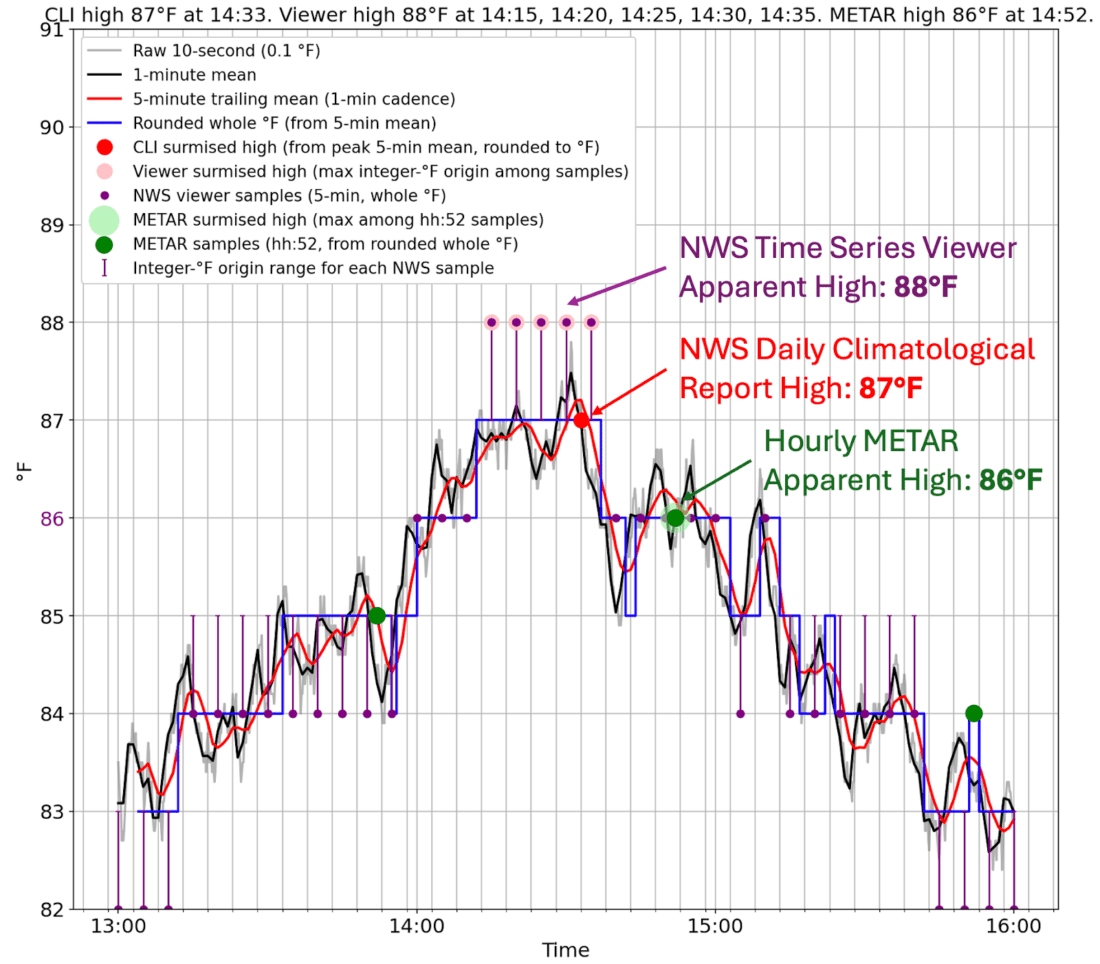
Nuances in the Calculations of Daily Temperature Market Values. Why the National Weather Service Time Series Viewer, National Weather Service Official Daily Climatological Report, and Hourly METAR Values Can Differ. Summary of three data reports: -The National Weather Service (NWS) Daily Climatological Report (CLI) high is calculated as the maximum of the 5-minute running mean, rounded to the nearest degree Fahrenheit. -The METAR apparent high is the highest value observed in the METAR series; it effectively samples the same 5-minute running mean and is rounded to the nearest degree Fahrenheit, but only has a sampling frequency of once per hour (typically reported around 52 minutes past the hour). -The National Weather Service (NWS) time-series viewer’s apparent high is the highest value observed in that series, typically at 5-minute sampling intervals. It too effectively samples the same underlying 5-minute running mean but displays temperatures in whole degrees Fahrenheit after they have been converted to Celsius and back (creating ambiguity for which Fahrenheit value they originated from). interactivebrokers.com/campus/traders…
Patrick T. Brown tweet media
Patrick T. Brown@PatrickTBrown31

ForecastEx has launched weather-forecast prediction markets, allowing participants to take financial positions on the daily high temperatures for an initial offering of 10 US cities. Prediction markets for daily high temperatures can benefit both participants (directly if they are skillful) and external observers (via the information they provide). I have participated in the National Forecasting Competition as both a meteorology student and later as a faculty member teaching synoptic meteorology and weather forecasting. From these experiences, I know there are many instances in which humans can consistently beat automated forecasting systems. In the article linked to in the next post, I lay out the details of the contracts and some tools for forecasting and identifying mispricings. Most physics-based weather models are computationally intensive and are thus run on supercomputers at most 4 times a day. Thus, a lot of information can enter at higher frequencies than the models can capture. Furthermore, temperature is recorded by point stations, whereas the highest resolution weather models have resolutions of a few km. Thus, the physical intuition of the forecaster can add value. On the day of a contract's expiration, when much of the trading action will occur, forecasting the high temperature essentially involves observing how the atmosphere is changing relative to the story that the various physics-based weather models predicted in their most recent runs. A forecaster can begin with the National Blend of Models text forecast or the National Weather Service graphical forecast to understand the physical story associated with the default central strike in the ForecastEx markets. A forecaster could then examine a multi-model meteogram to identify which models represent that physical story and which predict different evolutions in clouds, humidity, winds, fronts, etc. A forecaster could then monitor the live station feed to see which scenario is actually developing throughout the day. When observations (including non-temperature observations) point to a group of models that is noticeably warmer or cooler than the central National Weather Service and ForecastEx market value, that’s a signal that taking a position in the market could represent an opportunity. [full article link below]

English
0
0
3
770
Patrick T. Brown retweetledi
Koenfucius 🔍
Koenfucius 🔍@koenfucius·
How to navigate between outright blatant science denial, and uncritically “following the science”? @Patricktbrown31 proposes a most interesting way to distinguish between bona fide scientific claims and political opinions masquerading as science: buff.ly/02xQdws
Koenfucius 🔍 tweet media
English
0
3
5
791
Patrick T. Brown retweetledi
Matt Burgess
Matt Burgess@matthewgburgess·
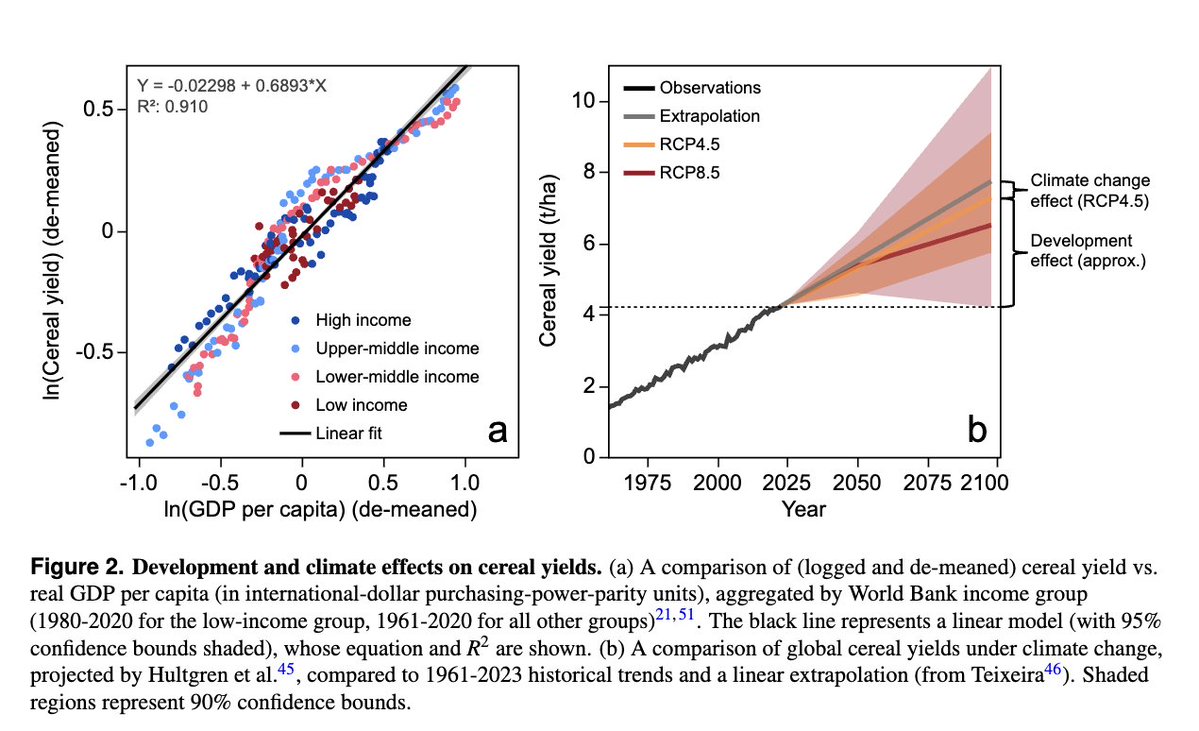
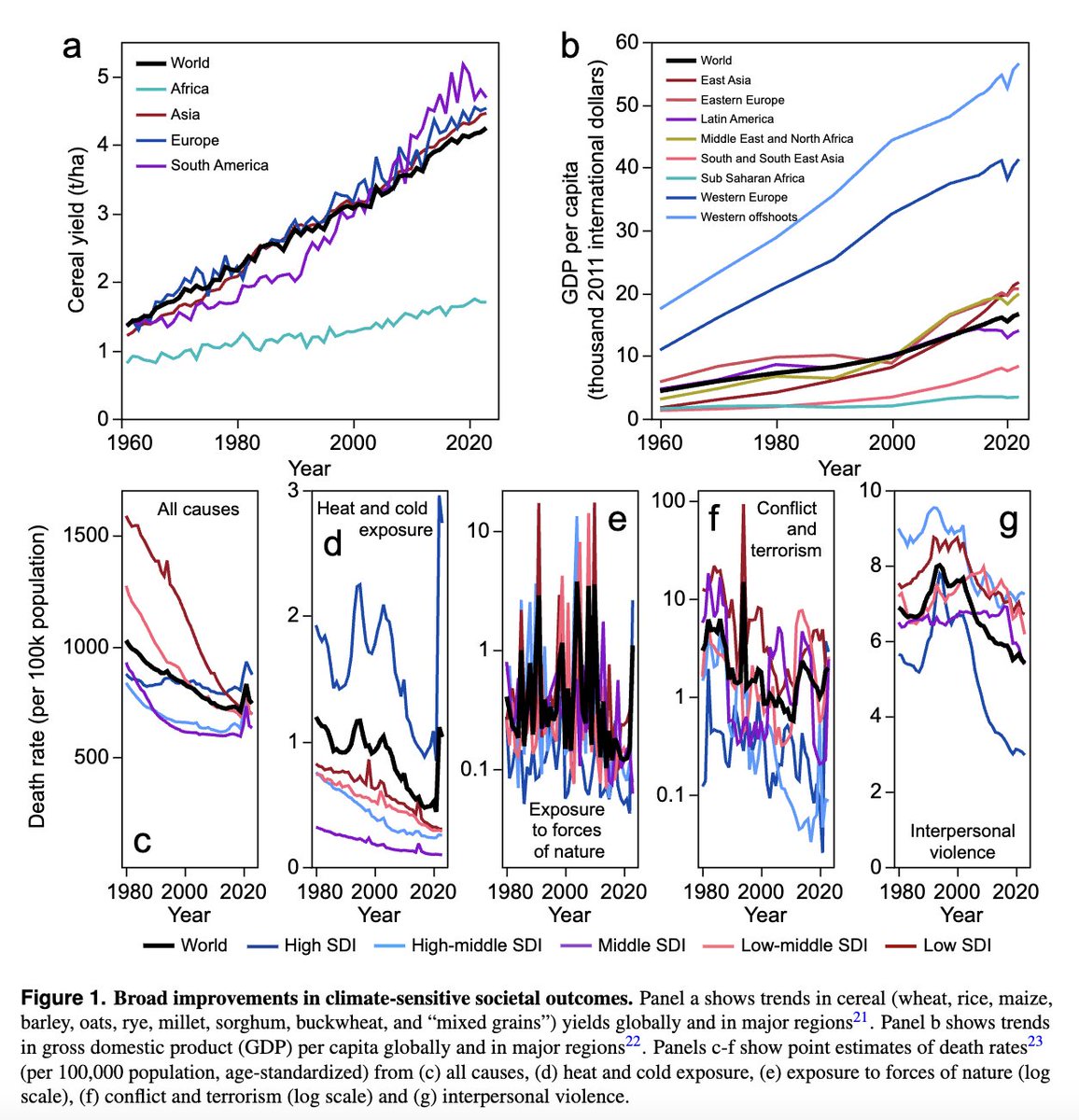
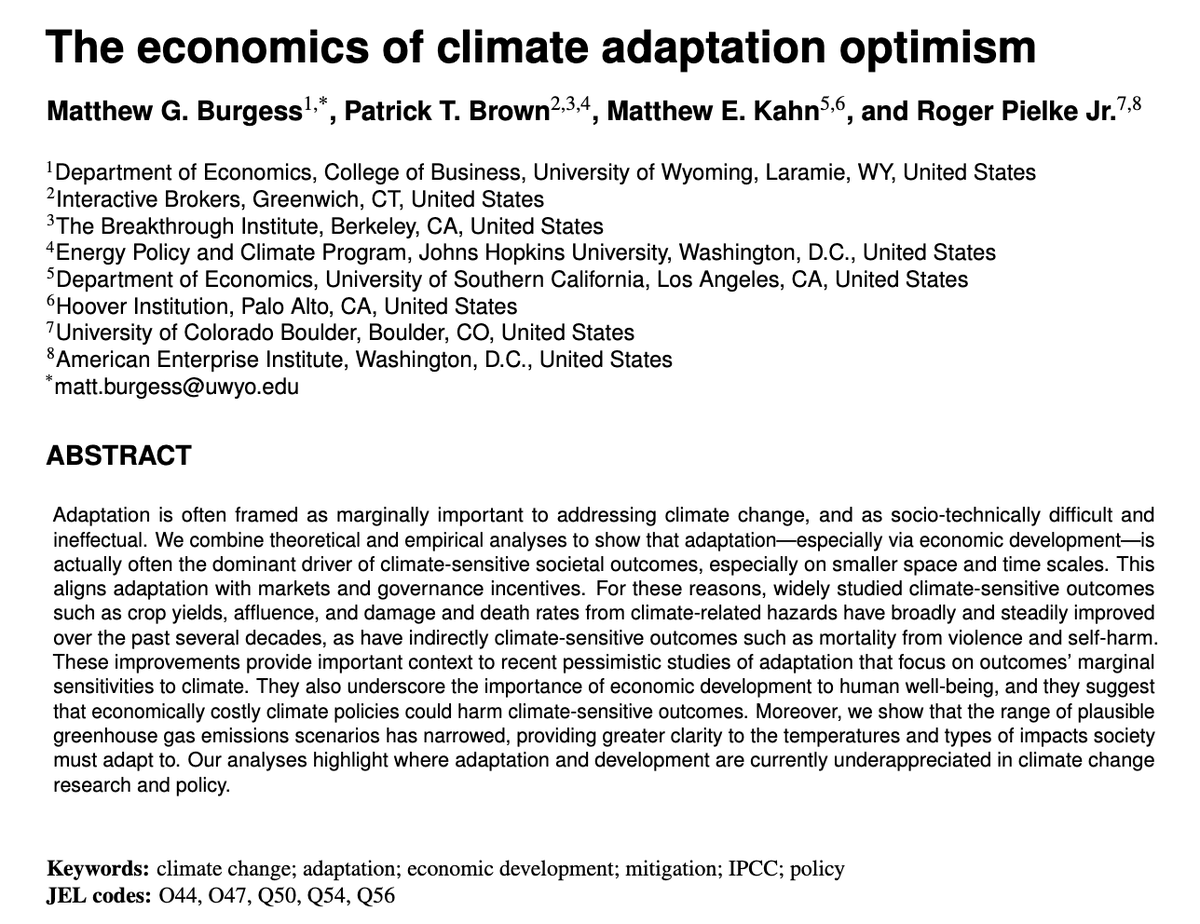
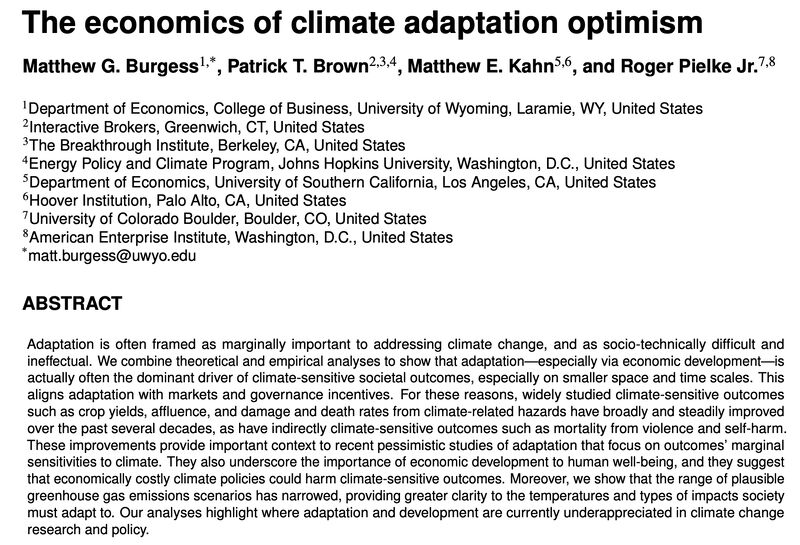
We have a new working paper out that tries to reconcile recent pessimistic studies of climate adaptation with broadly improving trends in human well-being. Abstract and link below. tl;dr: economic development is the most important determinant of climate-sensitive outcomes on policy-relevant space and time scales, and development-driven adaptation is underappreciated in climate change research and policy. This has important implications, we argue, for cost-benefit analysis of climate policies with economic downsides (they could actually harm *climate-sensitive outcomes*, not just the economy), interpreting the social cost of carbon in policy (it might be missing half the ledger), interpreting 'no-climate' counterfactuals in climate impact studies (they are usually misleading), and climate justice (for which economic development should be a top priority). Our paper puts some theory and numbers behind some of what we think @BillGates was trying to say in his fall memo (and more). In the big picture, both reducing GHG emissions (mitigation) and adaptation are key pieces of solving the climate problem. The global community should continue collaborating to reduce emissions. Economically beneficial mitigation (deploying cheap renewables, efficiency, etc.) is a win-win, and big investments in R&D are key to helping us find more win-wins. We shouldn't be retreating from these things. Because we can export new technologies to other countries, countries should have incentives to 'race to the top', chasing leadership in innovation and turning the commons problem on its head. So, while governments are right to be cautious about climate policies that could be economically damaging, we argue, they should be full-steam ahead on developing and deploying low-cost mitigation and adaptation solutions, lest they fall behind in the global tech race (not to mention hurting their economies). Because local mitigation has approximately zero short-term effect on local climate-sensitive outcomes, we (climate scientists, advocates, politicians, etc.) should stop telling people and communities that demonizing fossil fuel companies will save them from the next flood, storm or fire. It won't. E.g., we show that LA could have eliminated their GHG emissions after Katrina and done virtually nothing to reduce their near-term hurricane risk. If we want to make ourselves safer locally from floods, fires and storms, we should adapt--e.g., with fuel control, better levies, better infrastructure, etc. Growing our economies will naturally help with some of these things. Mitigation ultimately matters too, but it operates at much larger space and time scales. Those are some quick, non-exhaustive highlights from the paper. I'll have more to say about this paper later this week. @PatrickTBrown31 @mattkahn1966 @RogerPielkeJr
Matt Burgess tweet media
Matthew E. Kahn@mattkahn1966

Great to work with @matthewgburgess , @RogerPielkeJr and @PatrickTBrown31 on this paper. @USC_Econ , @HooverInst The economics of climate adaptation optimism osf.io/preprints/soca… via @OsfFramework

English
8
28
111
24.8K
Patrick T. Brown retweetledi
Lauren Teixeira
Lauren Teixeira@lrntex·
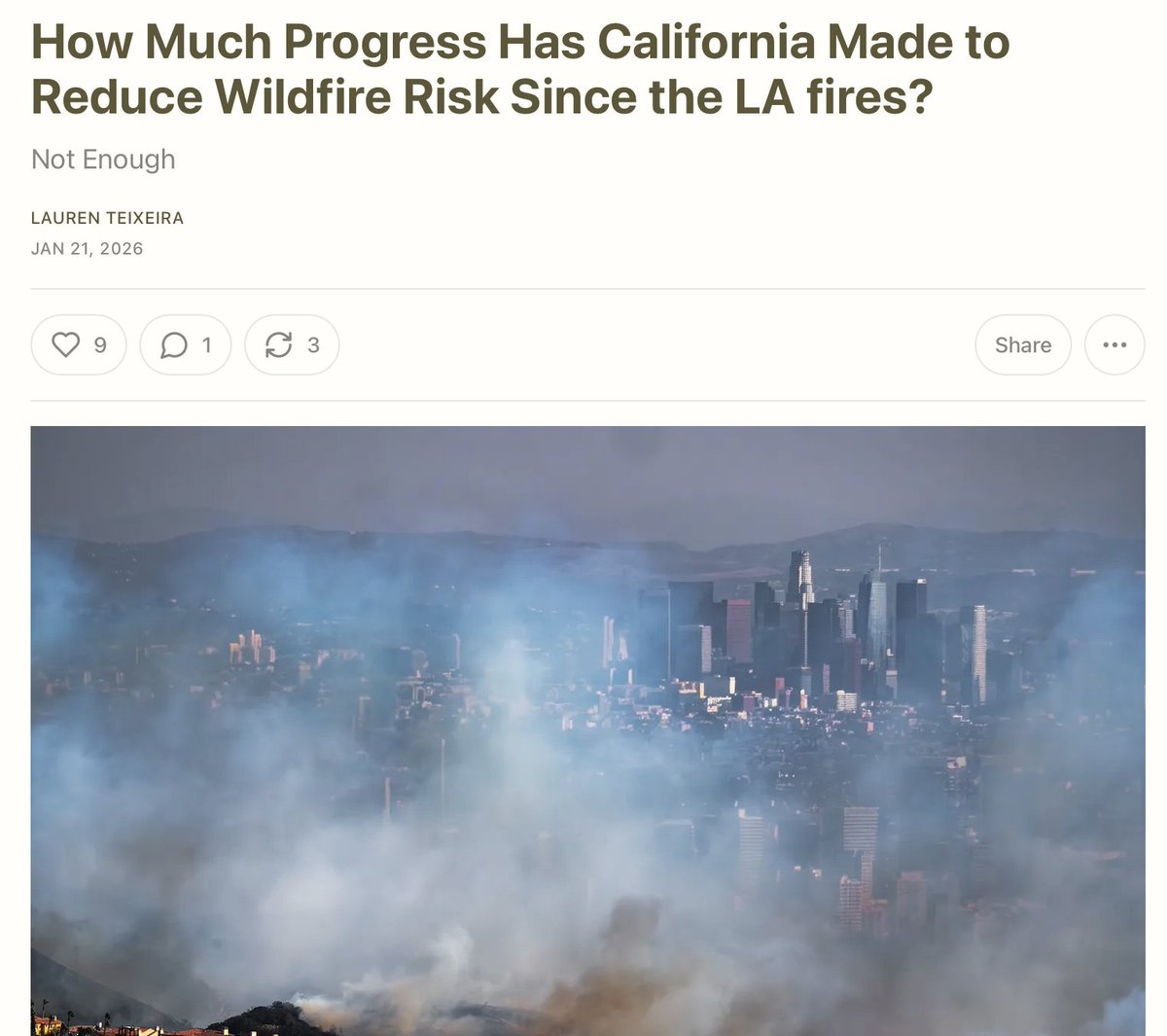
Today I have a report on California’s attempts to reduce wildfire risk since the LA fires. While things are going in the right direction, more meaningful mitigation is being hamstrung by bureaucratic kludge, weak leadership, and pushback from narrow interest groups. THREAD:
Lauren Teixeira tweet media
English
1
17
79
19.6K
Patrick T. Brown retweetledi
PJ
PJ@Prithvir12·
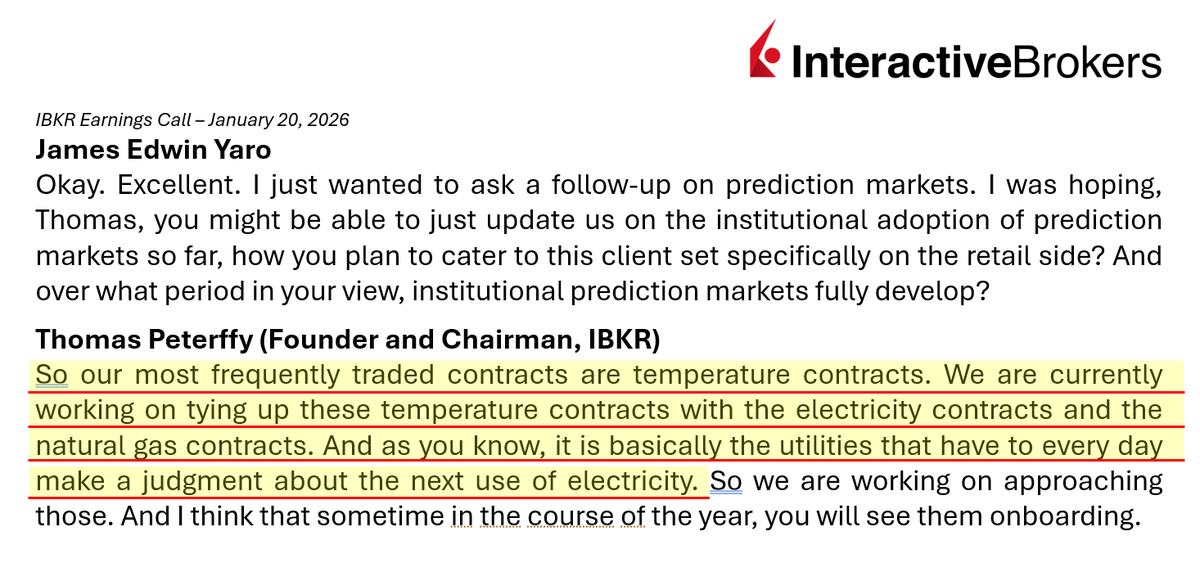
To everyone who said prediction markets are just sports, here’s the CEO of a $110b company: 1. Weather and temperature contracts are the most frequently traded 2. Utilities will soon hedge electricity and natural gas contracts using these markets Prediction markets are already institutional You’re just not paying close enough attention
PJ tweet media
English
86
164
1.5K
214.8K
Patrick T. Brown
Patrick T. Brown@PatrickTBrown31·
Prediction markets are rapidly gaining broader familiarity and participation. They are well known for information discovery, but their applications in disaster risk hedging and risk transfer are less appreciated. Check out my interview on this topic with Artemis, the premier publication on Catastrophe Bonds and Insurance-Linked Securities. Innovating hedging and risk transfer with forecast contracts: artemis.bm/news/innovatin… Further Reading: Disaster Insurance Applications of Forecast Contracts interactivebrokers.com/campus/traders… Hurricane Forecast Contracts as a Diversifying Asset in an Investment Portfolio interactivebrokers.com/campus/traders… Bundling “NO” Hurricane Landfall Forecast Contracts to Reduce Downside Risk interactivebrokers.com/campus/traders… Hurricane Forecast Contracts as Efficient Reinsurance interactivebrokers.com/campus/traders… How Forecast Contracts Can Help Mitigate Florida’s Insurance Crisis interactivebrokers.com/campus/traders… The Value of Climate Prediction Markets interactivebrokers.com/campus/traders… More: interactivebrokers.com/campus/author/…
English
0
0
2
436