Lauren Teixeira

3.8K posts

Lauren Teixeira banner
Lauren Teixeira

Lauren Teixeira

@lrntex

Analyst @TheBTI

San Francisco, California Katılım Temmuz 2011
938 Takip Edilen3.5K Takipçiler
Sabitlenmiş Tweet
Lauren Teixeira
Lauren Teixeira@lrntex·
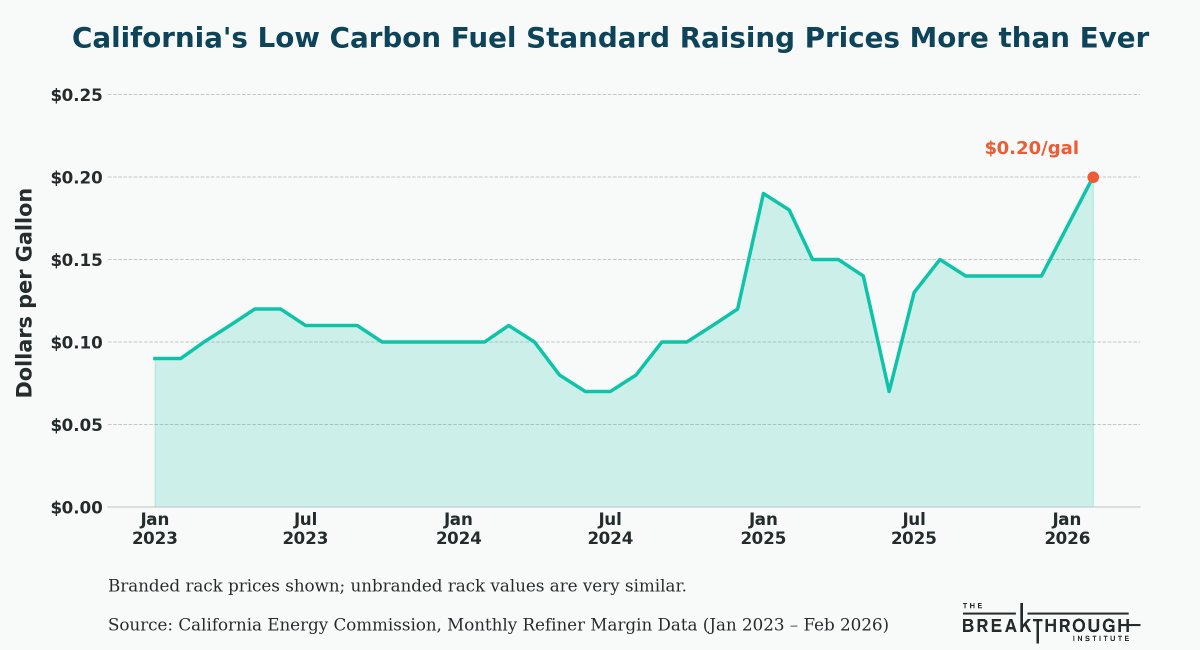
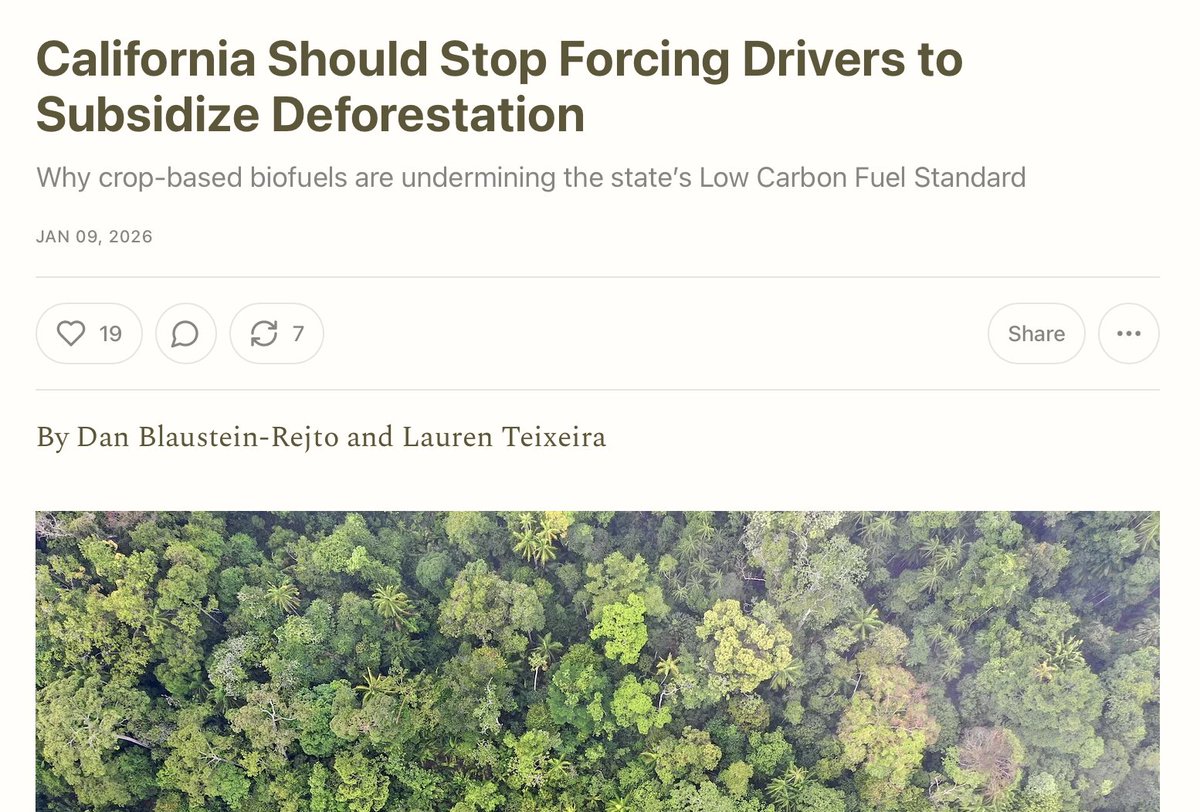
Today @danrejto and I tell the infuriating story of California’s Low Carbon Fuel Standard, a program that was supposed to decarbonize transportation but ended up forcing CA drivers to pay 18 billion dollars for biofuels that are worse for the climate than fossil fuels (THREAD):
Lauren Teixeira tweet media
English
10
49
205
66.8K
Bryce Johanneck
Bryce Johanneck@BryceJohanneck·
@lrntex When are we going to make the NFPA, NEC, and UL apply to the electric grid?
English
1
0
0
169
Lauren Teixeira
Lauren Teixeira@lrntex·
A typical CA household is now paying an extra $290-450 per year for wildfire mitigation through their electricity bill. About 80% of wildfire mitigation in CA is now being funded through the rate base, while only 20% is being funded through the tax base (CAL FIRE). This is not only a highly regressive way of funding wildfire mitigation but an extremely suboptimal method of reducing fire risk (most fires are not ignited by utilities)!!!
Jane Flegal@JaneAFlegal

One quick way to constrain electricity price increases? Take stuff out of the rate base and put it in the tax base.

English
10
18
128
15.1K
Lauren Teixeira retweetledi
Nicholas Decker
Nicholas Decker@captgouda24·
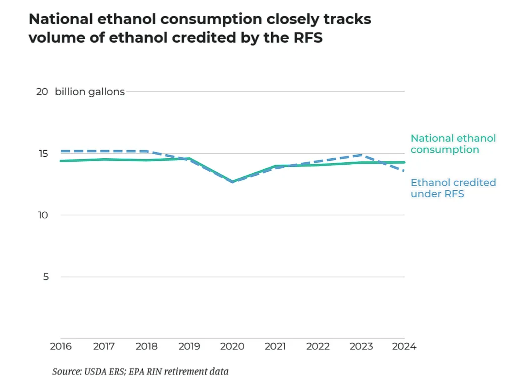
About five percent of the total caloric production of the world goes to making ethanol, which doesn’t even reduce emission! Learn why we should get rid of the Renewable Fuel Standard here: nicholasdecker.substack.com/p/get-rid-of-t…
Nicholas Decker tweet media
English
30
60
654
33.7K
Lauren Teixeira
Lauren Teixeira@lrntex·
Indeed! And I will be answering these questions, and many more, in a forthcoming whitepaper. Stay tuned!
Tom Hynes@TJH314

@lrntex You raised three issues: 1. How much wildfire mitigation around power systems be done? and 2. Who should do it - state or power companies? and 3. Should we pay for it through general taxes or ratepayers?

English
0
1
6
838
Lauren Teixeira
Lauren Teixeira@lrntex·
@Ed_of_O Both! Right now the costs that are hitting consumers are more the latter
English
1
0
2
142
Lauren Teixeira
Lauren Teixeira@lrntex·
@LadakArmaan @PolicyEngineer so it looks like overall wildfire costs are set to increase in PG&E but yeah bills should go down a bit bc the increase is in capex and taht enters the rate base more slowly
Lauren Teixeira tweet media
English
0
0
2
40
Armaan Ladak
Armaan Ladak@LadakArmaan·
@lrntex @PolicyEngineer do you have updated numbers from 2025? I think PG&E's wildfire RR dropped, which lowered bills YoY (I think like $5/mo 🤣)
English
1
0
0
39
Lauren Teixeira
Lauren Teixeira@lrntex·
@PolicyEngineer For now it's mostly operating (vegetation management and liability) but CapEx will start hitting the rate-base soon
Lauren Teixeira tweet media
English
2
0
4
286
Ken Girardin
Ken Girardin@PolicyEngineer·
@lrntex What's the breakdown between one-time capital fixes and recurring/operating costs?
English
1
0
0
404
Lauren Teixeira retweetledi
tweet davidson
tweet davidson@andyreed·
when claude creates subagents this is what i picture
tweet davidson tweet media
English
36
216
4.7K
87.6K
Lauren Teixeira retweetledi
Jane Flegal
Jane Flegal@JaneAFlegal·
An idea: hyperscalers get federal financing rates, clean firm power at scale, and procurement aggregation that breaks the transformer bottleneck. The public gets full cost causation, ratepayer insurance, and an organized constituency for FERC reform: searchlightinstitute.org/research/seizi…
English
12
38
234
102.5K
Lauren Teixeira retweetledi
Shanu Mathew
Shanu Mathew@ShanuMathew93·
Seven companies signed the White House Ratepayer Protection Pledge yesterday. Amazon, Google, Meta, Microsoft, OpenAI, Oracle, and xAI. 4 key pillars: -Build, bring, or buy all new generation needed for their data centers. No passing costs to households. -Negotiate separate rate structures with utilities and state governments. Pay for power and infrastructure whether they use the electricity or not. -Coordinate with grid operators and sell excess generation back to utilities. -Invest in local workforce development and hire from within the communities where they build. The take-or-pay structure in pillar two is the most consequential. It could de-risk new generation buildout from the developer side and gives power producers contracted offtake. That is positive for the investment case in power infrastructure and provides duration certainty. However, the pledge is voluntary and non-binding. The White House has no enforcement authority over electricity markets. That still lives at the state PUC and RTO level. Until these commitments show up in actual rate cases and interconnection agreements, this is more so symbolic than practical implementation/policy.
Rapid Response 47@RapidResponse47

.@POTUS signs a proclamation announcing the Ratepayer Protection Pledge to ensure American AI dominance, while also ensuring that Americans aren't stuck with higher electric bills as a result

English
5
13
53
10.7K
Lauren Teixeira
Lauren Teixeira@lrntex·
@TheTomArnold interesting. even if SF pays an exit fee, though, wouldn't the opt out still affect remaining ratepayers in the long term?
English
1
0
0
48
Tom Arnold
Tom Arnold@TheTomArnold·
@lrntex Unless the bill succeeds in moving it completely out of CPUC, the phase I decision involves SF paying to make both remaining ratepayers and PG&E shareholders "neutral" in the transaction.
English
1
0
0
50
Lauren Teixeira
Lauren Teixeira@lrntex·
This is a perfectly rational thing for San Francisco to do and will also make PG&E’s already eye-watering rates even more unaffordable for non-SF residents (who are on avg much lower income than San Franciscans).
Senator Scott Wiener@Scott_Wiener

Today I announced new legislation to un-rig the process for San Francisco & other cities to break up with PG&E & form their own publicly owned utilities. Over the years, PG&E has managed to insert provisions into state law to make it harder to break away. SB 875 reverses that.🧵

English
2
4
12
2.4K
Heather Hoff
Heather Hoff@Heather_mom4nuk·
@lrntex And because they don’t have obligation to deliver service. There are so many issues with villainizing PGE over rates.
English
1
0
1
27
Lauren Teixeira
Lauren Teixeira@lrntex·
Institutional boomerization 💀😭
Ajey Pandey@GridGodAjey

@lrntex People really seem to think the issue with utility bills is “greed” As if the utility industry pays that well and the bigger problem isn’t institutional boomerization even older than the boomers

English
0
0
4
469
Lauren Teixeira
Lauren Teixeira@lrntex·
If you are a politician promising to lower utility bills and not talking about getting wildfire liability out of the rate base you are not serious about energy affordability!!!
English
1
3
16
474