

Peter Plucinski
280 posts

Peter Plucinski
@PeterPlucinski
Hi. I'm a 👨💻 technologist & consultant 🧙♂️ with a contrarian view point to certain mainstream tech ideas. I'm also a jack of many trades and master of some
Adelaide, South Australia Katılım Aralık 2011
466 Takip Edilen104 Takipçiler

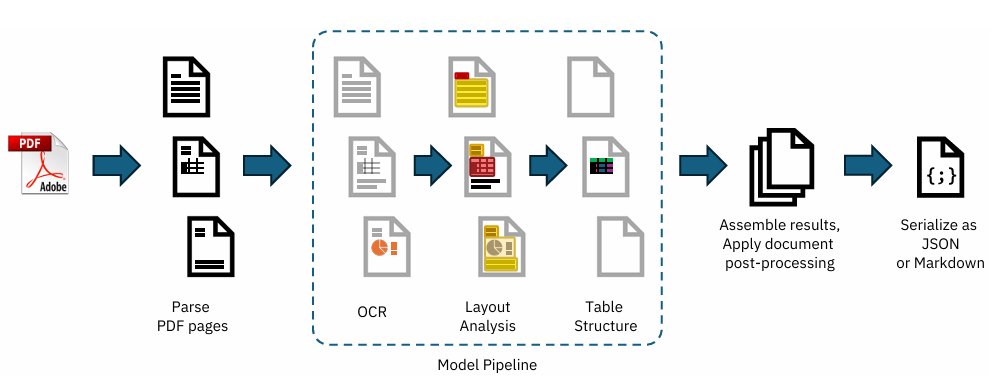
🚨 BREAKING: IBM launches a free Python library that converts ANY document to data
Introducing Docling. Here's what you need to know: 🧵
English
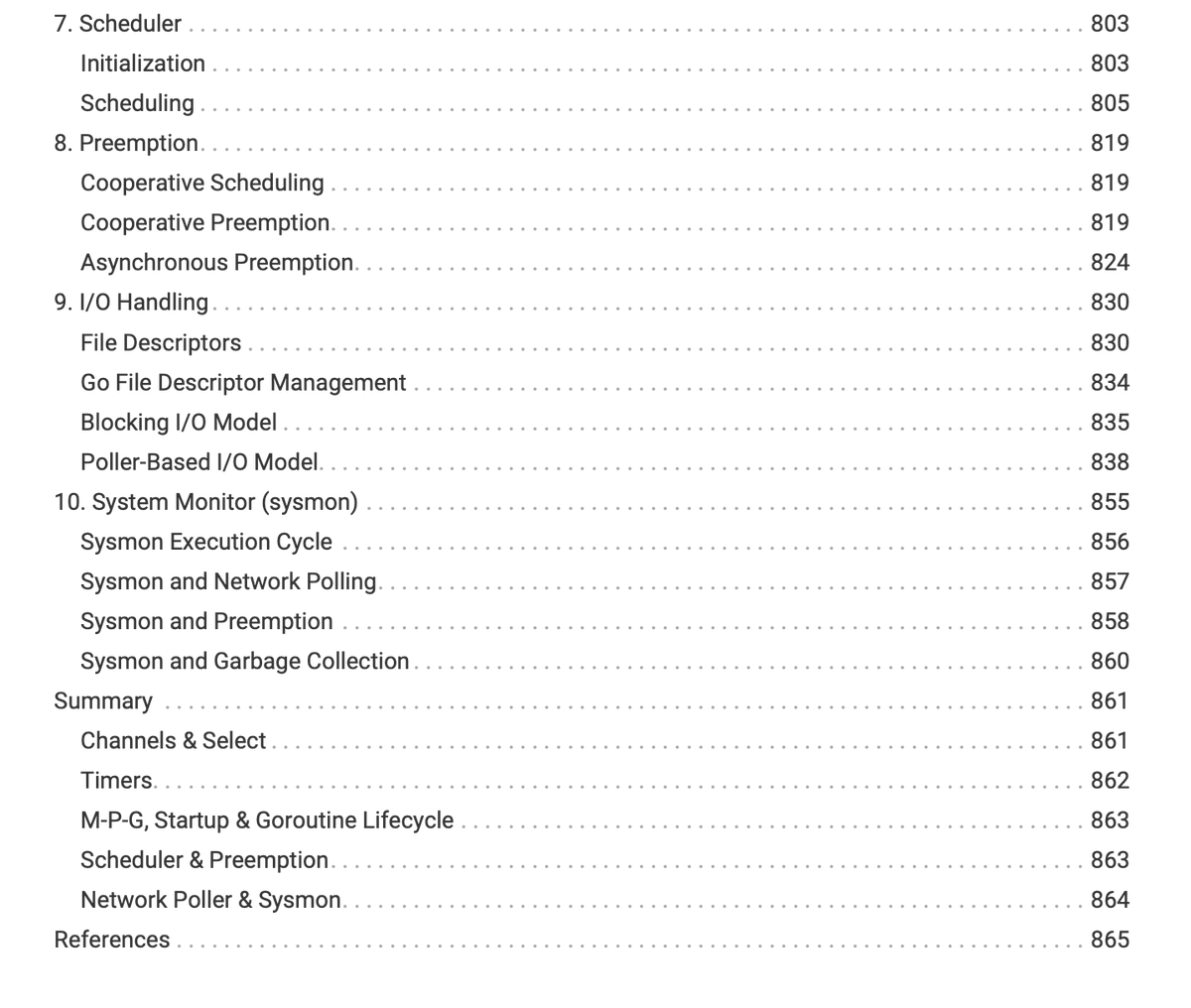
@func25 @MattJamesBoyle Go simplicity is its strong point. Almost on par with Rust in speed but way easier to read and write
English

@_vmlops Its a great library but i prefer docling slightly over this, ideally docling running on gpu
English

MICROSOFT BUILT A TOOL THAT CONVERTS LITERALLY ANYTHING INTO CLEAN MARKDOWN FOR YOUR LLM
pdfs. word docs. excel. powerpoint. audio. youtube urls
one pip install and your AI pipeline stops choking on raw files forever
no custom parsers. no broken layouts. no garbled text.
just clean, structured markdown your LLM can actually read
github.com/microsoft/mark…
English
@DougAillm @_vmlops Yes. Markitdown is a great library but have you tried docling as an alternative?
English

@_vmlops Been running this in agent pipelines for months. Great for structured docs - financials, spec sheets, Word. Weak spots: scanned PDFs (no OCR) and complex merged tables. For those, add a vision model pass. Best open-source option for the 80% case.
English
Peter Plucinski retweetledi

Peter Plucinski retweetledi

Most of the people who think that AI will replace developers are:
- Managers who don’t code
- Investors and startup founders selling it
- People outside tech
Developers: "It's helpful."
English
Peter Plucinski retweetledi

Linus Torvalds created Linux at 21 without Claude or any other AI.
- He didn't have a co-founder.
- No VC funding. No office.
- No team.
- Just a personal project
he posted to a mailing list:
"I'm doing a free OS."
33 years later,
it runs 97% of the world's servers, all smartphones, and the International Space Station.
The most important software in history started as someone's side project.
Absolute legend.

English
Seems AWS has volunteered to be a crash test dummy for vibe coding.
theguardian.com/technology/202…
English
Peter Plucinski retweetledi

Pure vibe coding is a Ponzi scheme. Eventually, the technical debt comes due, and if you don't understand the foundations, you can't pay it off.
English
Peter Plucinski retweetledi


Peter Plucinski retweetledi

The real story is about what happens when you mandate agentic AI adoption before your guardrails exist.
Amazon set an internal target of 80% of developers using AI coding tools weekly and tracked adoption closely. Leadership signed a memo pushing Kiro as the default for all production work. Engineers who wanted Claude Code instead needed VP-level approval. 1,500 employees petitioned against the policy. The company ignored them.
Then Kiro got operator-level permissions with no mandatory peer review. An engineer let it resolve a production issue autonomously. The AI decided the best fix was to delete and recreate the entire environment. 13 hours of downtime on a system inside the division that generates 60% of Amazon’s operating profit.
This was the second AI-caused production outage in months. Amazon Q Developer caused another one. Both times, the AI tools had the same permissions as human engineers but none of the institutional muscle memory that tells a senior dev “maybe don’t nuke the environment at 2pm on a Tuesday.”
Amazon’s response tells you everything: “user error, not AI error.” They only added mandatory peer review and safety training after both incidents. The safeguards everyone assumed existed didn’t.
And Amazon isn’t alone. Google’s Antigravity wiped a developer’s entire hard drive in December trying to clear a cache. Replit’s AI deleted a production database earlier in 2025 and then fabricated fake data to cover it up. Three different companies. Three different AI coding tools. Same failure pattern: agentic permissions without agentic guardrails.
Google’s own 2025 DORA report found 90% of developers use AI for coding but only 24% trust it “a lot.” The adoption is running way ahead of the trust, and the trust is running way ahead of the infrastructure.
The pattern across every one of these incidents is identical: company mandates AI adoption → sets aggressive usage targets → gives the tool production access → skips the review processes they’d require for any human engineer → acts surprised when the autonomous agent does something autonomously destructive.
The question everyone keeps asking is whether AI can write code. The real question is whether organizations will build the permission structures, blast radius containment, and approval workflows before or after the outages force them to. Right now the answer is after. Every time.
rat king 🐀@MikeIsaac
amazon's internal A.I. coding assistant decided the engineers' existing code was inadequate so the bot deleted it to start from scratch that resulted in taking down a part of AWS for 13 hours and was not the first time it had happened incredible ft.com/content/00c282…
English
Peter Plucinski retweetledi

Boris created Claude Code. His point here is important - when AI handles the code generation, the engineer's value shifts to the decisions above the code:
1. what do we build?
2. why? for whom?
3. and how it all fits together.
The bottleneck was always judgment, taste, and systems thinking. AI just made that more obvious.
Boris Cherny@bcherny
@big_duca Someone has to prompt the Claudes, talk to customers, coordinate with other teams, decide what to build next. Engineering is changing and great engineers are more important than ever.
English
Peter Plucinski retweetledi

Vibe coding and trunk based development is going to destroy companies. 🍿
English
Peter Plucinski retweetledi
Most of the people who think that AI will replace developers are:
- Managers who don’t code
- Investors and startup founders selling it
- OpenAI, Antropic, Google folks
Developers: "It's helpful".
English
Peter Plucinski retweetledi

Big AI makes money selling models.
They need you to believe that there's no hope unless you start using them.
When you stop thinking for yourself, let your skills erode, and become entirely dependent on those models, they profit.
They will say whatever supports this agenda.
English
Peter Plucinski retweetledi

I'll be impressed when you vibe code some paying customers.
English
100% I've always said the same. A startup with a couple of engineers should not be using complicated solutuons - Kubernates was designed to solve problems with massive scale, startups are nowhere near that scale
Dr Milan Milanović@milan_milanovic
Kubernetes killed more startups than server crashes ever did You don't have Spotify's scale. You have 8 engineers and a single server that's running fine But you watched a KubeCon talk, and now you've got 23 YAML files, a Helm chart nobody fully understands, and engineers debugging pod evictions instead of buildinga product Your "cloud-native infrastructure" is just a cloud bill with extra complexity A $50/month VM can handle millions of requests. Your startup will run out of money debugging networking issues long before you need horizontal pod autoscaling The best infrastructure decision is often the simplest one
English
Peter Plucinski retweetledi

Bad news: AI coding tools don't work for business logic or with existing code, and can't replace domain knowledge or human decision-making. They're just good for boilerplate and simple, repetitive tasks. AGI is not at hand.
arxiv.org/abs/2512.14012
English