Phil Wainewright

4.6K posts

Phil Wainewright banner
Phil Wainewright

Phil Wainewright

@philww

Go cloud SaaS digital @diginomica, author The XaaS Effect, LibDem @rawliberal, dad

London, UK Katılım Nisan 2009
180 Takip Edilen6.7K Takipçiler
Phil Wainewright
Phil Wainewright@philww·
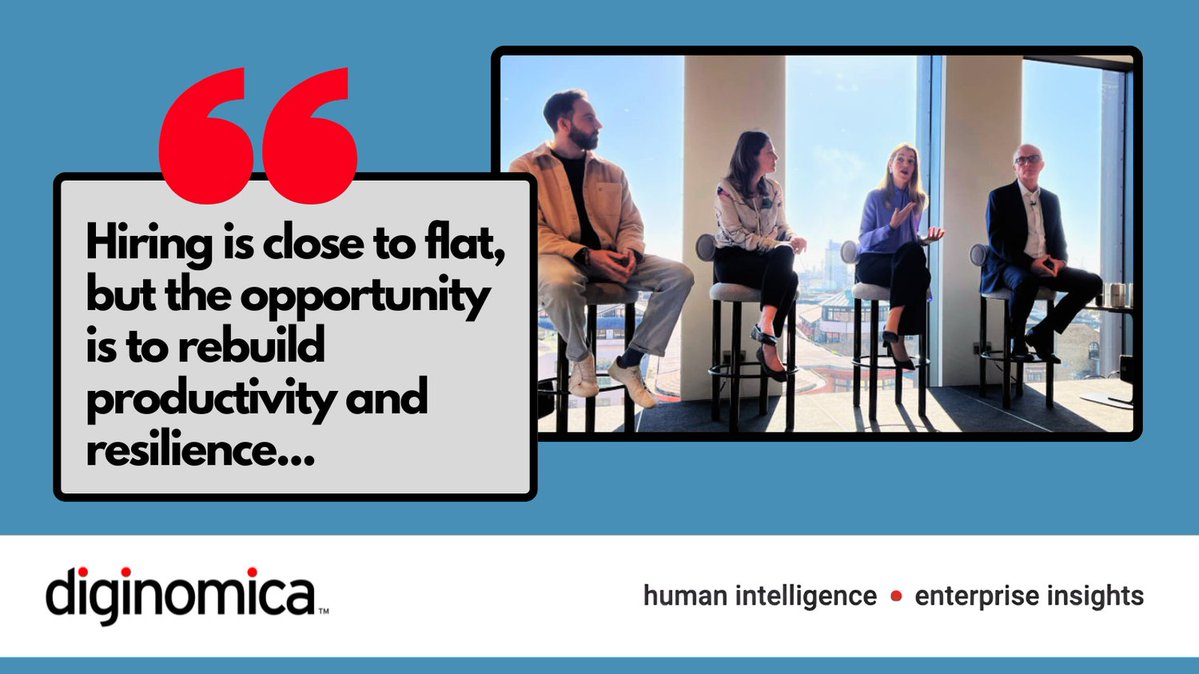
My interview with @amcdermo contradicts the narrative that AI automation inevitably brings headcount reductions
diginomica@diginomica

.@Zendesk is bringing on AI-native agentic CX capabilities with its acquisition of Forethought. What will the benefits be? What are the challenges? And what lies ahead for enterprises using these new technologies? @philww shares some thoughts: bit.ly/4sIey8J

English
0
0
1
71
Phil Wainewright retweetledi
diginomica
diginomica@diginomica·
.@Zendesk is bringing on AI-native agentic CX capabilities with its acquisition of Forethought. What will the benefits be? What are the challenges? And what lies ahead for enterprises using these new technologies? @philww shares some thoughts: bit.ly/4sIey8J
English
0
2
1
133
Phil Wainewright retweetledi
diginomica
diginomica@diginomica·
A new survey series is out from @sageuk. It's based on the analysis of aggregate data from hundreds of thousands of small and medium-sized UK businesses that use its software, providing insights into the UK economy's growth prospects. @philww takes a look: bit.ly/4bJOvGP
diginomica tweet media
English
1
1
1
72
Phil Wainewright retweetledi
Luis Garicano 🇪🇺🇺🇦
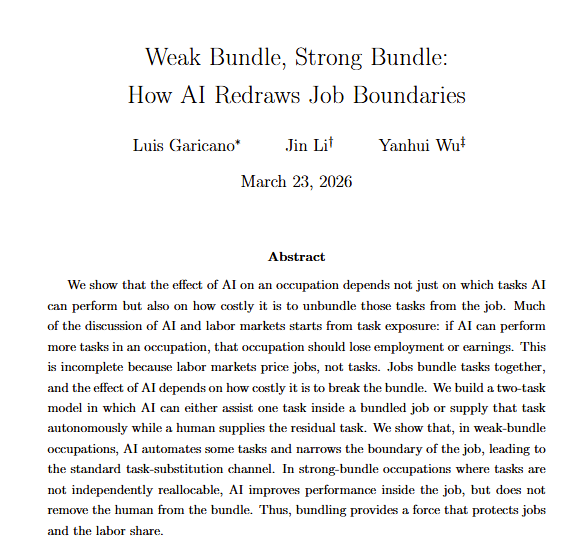
Famously (there is a beautiful Works in Progress piece on this) in 2016, Geoffrey Hinton told an audience in Toronto that medical schools should stop training radiologists, since AI would soon outperform them at reading scans. Ten years later, there are more radiologists than ever, and they earn more than they did then. Hinton was right about the task, but he was wrong (so far!) on the future of the radiology profession. Times have never been better for them. The gap between those two claims, the difference between tasks and jobs, is the subject of a paper I have written with Jin Li and Yanhui Wu, and that we release today: "Weak Bundle, Strong Bundle: How AI Redraws Job Boundaries." (Very relatedly we are also finishing the first draft of our book "Messy Jobs" on AI and Jobs!! You will be the first to hear). We start from the observation that the growing literature on AI and labor markets measures the AI shock by task exposure: people count how many tasks AI can perform in a given occupation AI can perform, and infer that more exposure means more displacement. Eloundou et al. published a paper in Science in 2024 that started this literature, and many follow the same logic. The inference they make is that the more exposed tasks, the worse the outcomes. This is incomplete, because labor markets price jobs, not tasks. A radiologist does not just sell image classification, but does many other jobs: triages cases, communicates with other physicians, trains residents, makes the difficult decisions, and signs a diagnosis. The market buys a bundled service. The question AI poses is not whether it can do one task inside the bundle. The question is whether that task can be pulled out. Thread (1/3) dropbox.com/scl/fo/689u1g7…
Luis Garicano 🇪🇺🇺🇦 tweet media
English
42
438
1.8K
357.3K
Phil Wainewright retweetledi
diginomica
diginomica@diginomica·
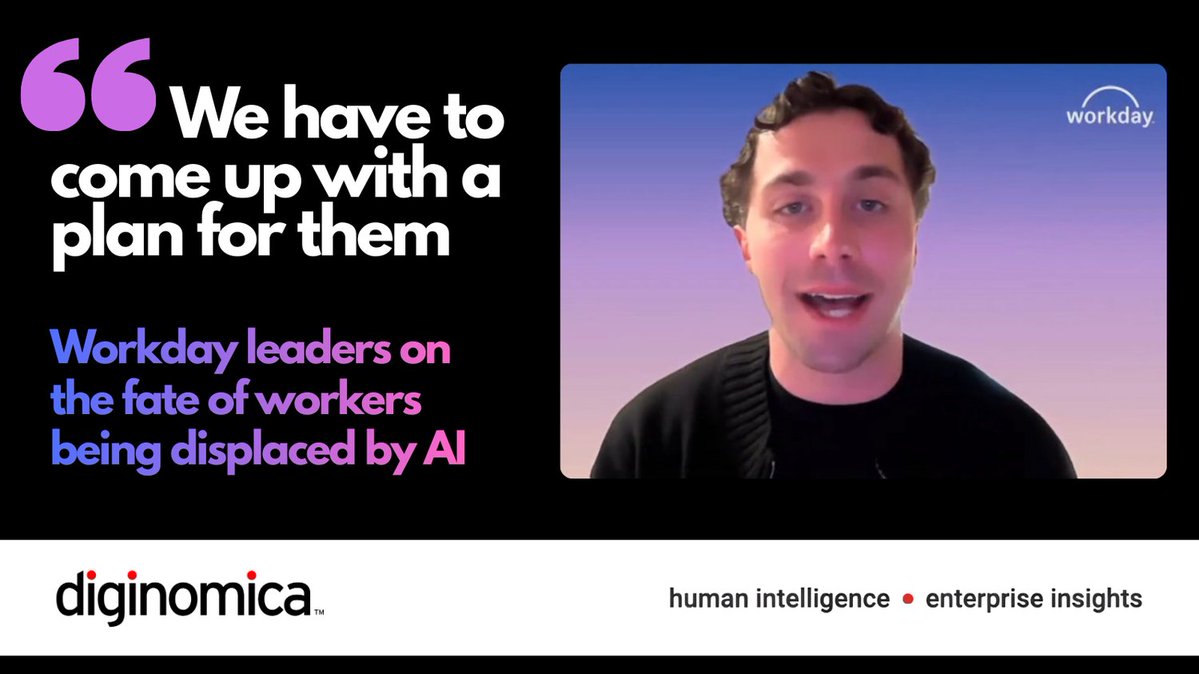
The latest AI agents from @Workday will displace a lot of 'low-level HR work' says its CEO. Following the launch of its multi-purpose, self-service AI agent @philww reviews what Bhusri and colleagues say about the impact on existing workers and their roles bit.ly/4bmWAT6
diginomica tweet media
English
0
2
1
95
Phil Wainewright retweetledi
diginomica
diginomica@diginomica·
.@Workday's new conversational UX for its own applications and other enterprise workflows is based on its acquisition of Sana. @philww analyzes what changes lie ahead for customers, and how the AI-led UX can help this SaaS leader stay relevant in an AI era bit.ly/3PGizf2
diginomica tweet media
English
0
1
0
62
Phil Wainewright retweetledi
diginomica
diginomica@diginomica·
Based on its own proprietary foundation model, a new AI tool from @canva analyzes the visual structure of flat image files and makes them editable. @philww explains how Canva's design-specific foundation model unlocks editing of any AI-generated image: bit.ly/475hkw1
diginomica tweet media
English
1
1
1
102
Phil Wainewright retweetledi
diginomica
diginomica@diginomica·
Everyone's asking if SaaS is dead. @Zoho's asking how to deliver more for customers? Vijay Sundaram answers with the same candour he shares with his own team. 4 things vendors must do to stay relevant - bit.ly/4uoJ5cW #SaaS #AI #ERP
diginomica tweet media
English
0
2
1
105
Phil Wainewright retweetledi
diginomica
diginomica@diginomica·
How you treat an AI agent determines the results you'll get, says Professor @TahaYasseri. @philww was at a recent @Workday event in London to find out why, and here he shares more findings from the Joint Centre for Sociology of Humans and Machines: bit.ly/4rjH9iU
diginomica tweet media
English
0
2
1
172
Phil Wainewright retweetledi
diginomica
diginomica@diginomica·
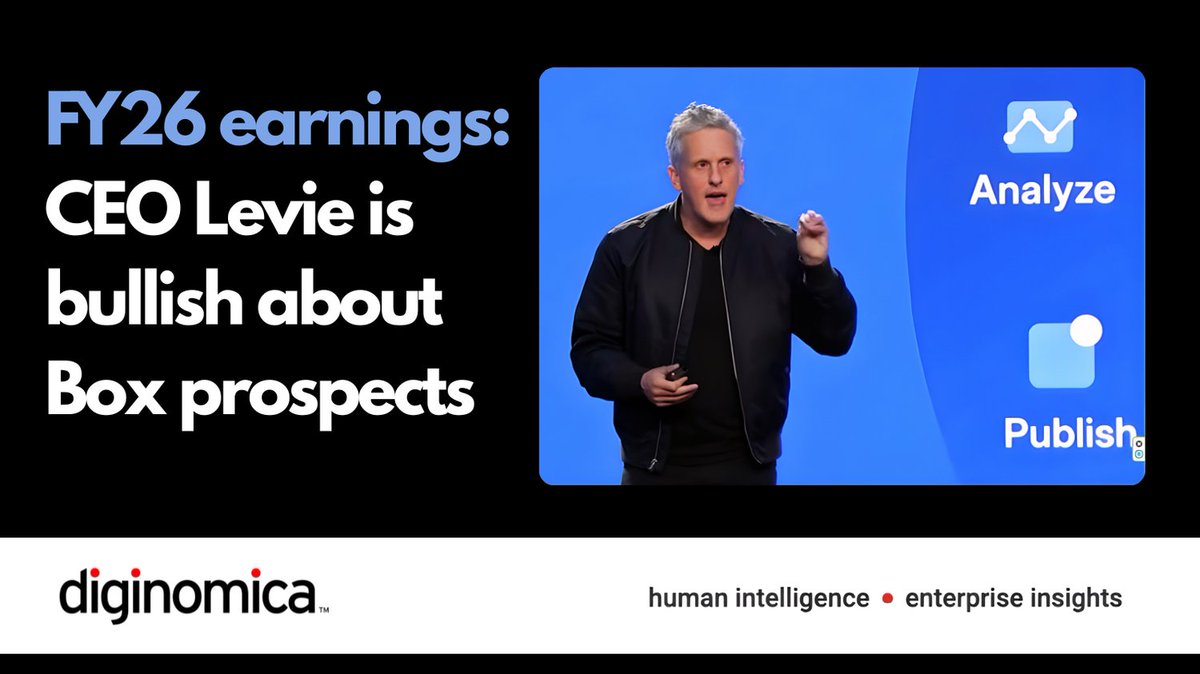
.@Box has capped out FY26 with solid growth and its CEO, @levie, is bullish about its prospects in the agentic AI era. @philww on why more agents mean more files, and that's good for Box: bit.ly/3N5cSq5
diginomica tweet media
English
0
1
0
74
Phil Wainewright retweetledi
diginomica
diginomica@diginomica·
Deb Ashton has been one of the constants at @CertiniaInc through more than two decades of change. In our latest podcast she chats to @philww, reflecting on lessons learned, the challenges for services businesses today, and being ready to seize opportunity bit.ly/47pC69B
English
0
1
0
70
Phil Wainewright retweetledi
diginomica
diginomica@diginomica·
Hot on the heels of two new acquisitions last week, @philww caught up with visual design vendor @canva to dig into its strategy for winning over the enterprise market, including the addition of video to its pro design toolset: bit.ly/4aIRWhP
diginomica tweet media
English
0
1
0
76
Phil Wainewright
Phil Wainewright@philww·
Meant to post this here
rawliberal 🔸@rawliberal

@thedarshakrana This is ridiculous, it’s nothing to do with consciousness. Typical humans, thinking they’re at the center of everything. The act of observation is coincidental. State is only fixed *when you apply a time to it*

English
0
0
0
91
Phil Wainewright retweetledi
diginomica
diginomica@diginomica·
.@Dropbox earnings are at a standstill at around $2.5 billion, but will the roll-out of its Dash AI assistant and underlying enterprise context engine spur new growth? @philww talks us through its latest numbers and ambitions: bit.ly/4rwvQVN
diginomica tweet media
English
0
1
0
94
Phil Wainewright retweetledi
Aakash Gupta
Aakash Gupta@aakashgupta·
The AI drug discovery industry just ran a $15 billion experiment proving a 2011 Turing Award winner right. Judea Pearl has argued for decades that statistical models trained on text learn how we describe the world, not how the world actually works. That distinction sounds philosophical until you watch it destroy capital at scale. 2025 was supposed to be the validation year. AI-designed drugs entered clinical trials backed by billions. The result? Zero FDA approvals. Multiple candidates shelved after Phase II. Several well-funded AI drug companies shut down entirely. One CEO said publicly that AI has delivered “failure after failure” over the last decade. The failure pattern is exactly what Pearl predicted. These companies trained models on published papers and genomic databases. The models found correlations. The correlations didn’t survive contact with human biology. Here’s the number that should terrify the industry: $15 billion in announced AI drug discovery partnerships in 2025. The actual upfront payments? About 2% of headline value. That 50:1 ratio between announced deals and real money tells you pharma knows the correlation-mining approach hasn’t cracked clinical success rates beyond the historical 90% failure baseline. Meanwhile, the companies integrating Pearl’s causal inference into their pipelines are telling a different story. BPGbio ran a Phase Ib oncology trial with 104 patients using Bayesian causal AI models trained on biospecimen data. They identified a metabolic subgroup that responded significantly better. That’s the difference between “this gene correlates with cancer” and “this metabolic pathway causes treatment response in these specific patients.” The FDA noticed. In January 2025, they announced plans to issue formal guidance on Bayesian methods for clinical trial design. Regulators are moving toward causal frameworks before most AI companies have. Pearl’s “ladder of causation” maps three levels: association (what correlates), intervention (what happens if we act), and counterfactuals (what would have happened differently). Most AI drug discovery is stuck on rung one. The companies that climb to rung three will compress drug timelines from 10 years to 3. Everyone else will keep generating impressive correlations that collapse in Phase II. The gap between “learning how we describe biology” and “learning how biology works” costs $2 billion per failed drug. Pearl quantified the problem decades ago. The bill is coming due now.
Bo Wang@BoWang87

Professor Judea Pearl — the pioneer who invented causal reasoning in AI — says scaling won't save us. "Mathematical limitations that are not crossable by scaling up." The brutal truth: LLMs aren’t learning how the world works. They are learning how we describe the world. This resonates with most biologists: Drug discovery is hitting the same wall. We have mountains of genomic data, but most AI models just find patterns in published papers — not in the raw biology itself. They're learning what scientists think causes disease, not what actually does. Pearl's causal revolution? That's how we move from "this gene correlates with cancer" to "this gene causes cancer" — and finally design drugs that work. Until then, we're building very expensive parrots.

English
74
394
1.9K
238.3K
Phil Wainewright retweetledi
diginomica
diginomica@diginomica·
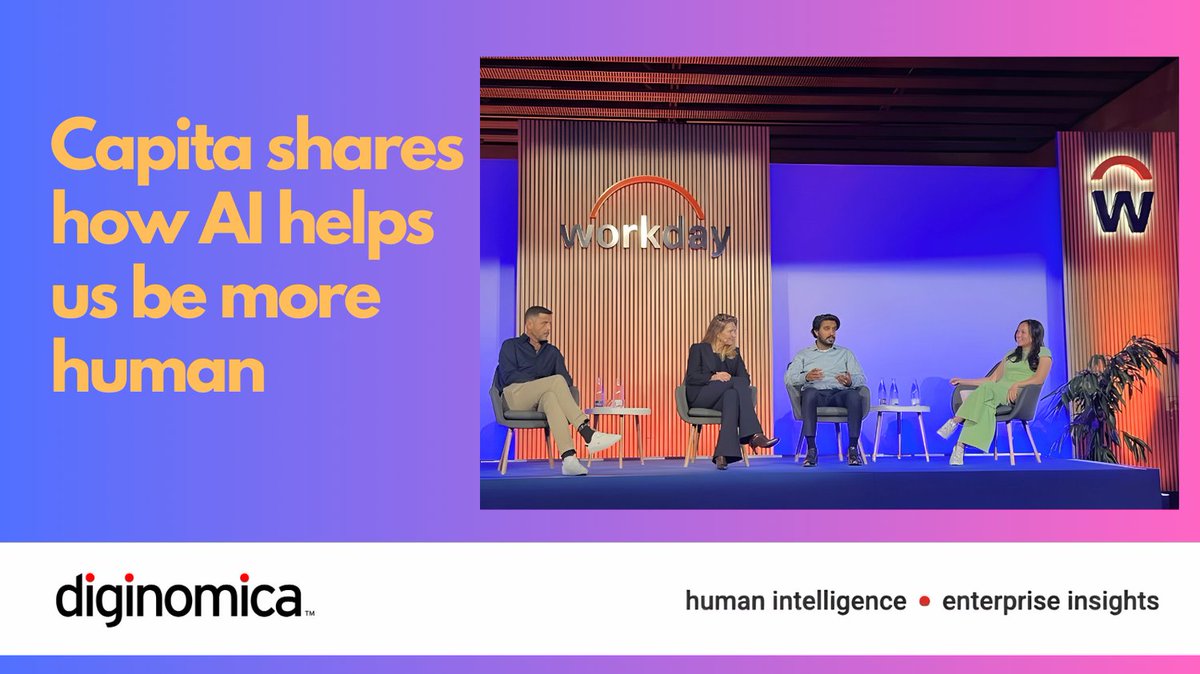
Outsourcer Capita is using AI to automate processes and make more space for human interaction. And it's not just the entry-level, typically younger colleagues who are embracing AI. @philww on what CPO Scott Hill said about lessons learnt along the way: bit.ly/4qEtUcy
diginomica tweet media
English
0
1
0
67