Pra Cha

699 posts

Pra Cha banner
Pra Cha

Pra Cha

@PraCha98

all in ai and machine learning, grade student, just optimistic and bounded rational; also interested in complexity science, cognition and human nature.

Manhattan, NY Katılım Ağustos 2025
1K Takip Edilen158 Takipçiler
Pra Cha
Pra Cha@PraCha98·
@divyanshifr True, cuz too diverse a mindset will always cause loneliness at times.
English
0
0
0
18
Divyanshi
Divyanshi@divyanshifr·
Bangalore has the most social yet the loneliest people I have ever seen
English
66
35
513
16.5K
void
void@fit_fr_nothing·
There is no bigger joy and learning for me than nerding out with a bunch of techies with varied backgrounds and divergent outlook. Tech argument needs to have data points or deep dive and address the underlying human sentiment that exists beyond the reach of data points
English
1
0
3
57
Pra Cha
Pra Cha@PraCha98·
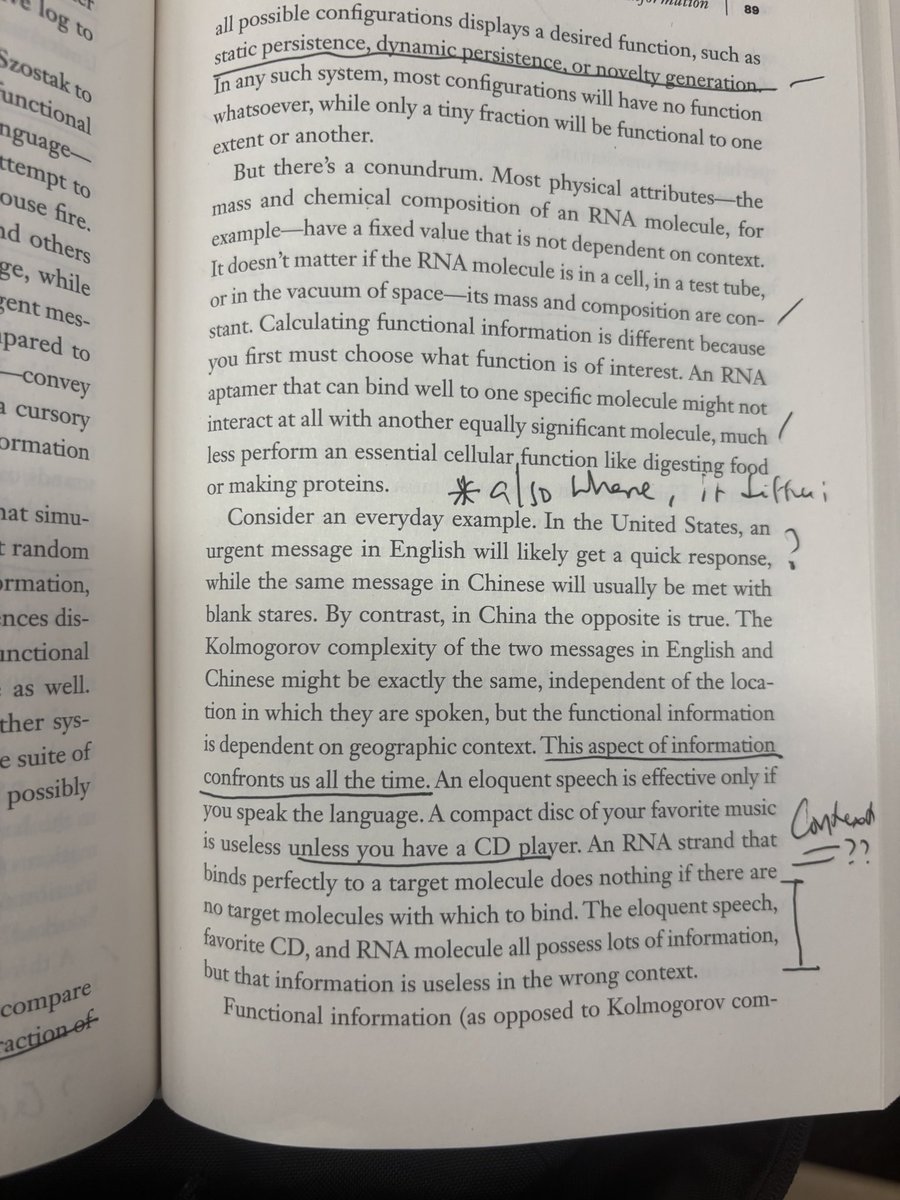
Over time, through months and years of learning, an individual absorbs and encodes a vast amount of information, including a considerable amount of what I would call functional information. By that, I mean the kind of knowledge that is not merely theoretical or passive, but usable — the kind that allows a person to perform specific tasks, make decisions, solve problems, and create outcomes. We read extensively, attend classes, watch lectures, consume educational material, experiment, and work through real situations; through all of this, we accumulate far more capability than can ever be neatly expressed on paper. This raises an important question: how can hiring and talent systems truly compare, contrast, and understand the functional information of an individual? In practice, everything gets compressed into a one-page resume or a short profile. But how can such a compressed artifact genuinely represent the depth, range, and context of what a person knows and can do? More importantly, how do these systems validate functional information from such limited signals? I often wonder whether existing hiring systems are actually good at this at all. Very often, they seem to overlook context, reduce people to shorthand markers, or sometimes fundamentally lack the ability to perceive deeper capability beyond standardized credentials and familiar narratives. On the other hand, this also leads to a personal question: how should one acquire functional information in the first place? Should a person optimize for the immediate context of hiring, almost like overfitting learning toward interviews, resumes, and role-specific expectations? Or should the acquisition of functional information be oriented toward long-term outcomes — toward building enduring capability, judgment, adaptability, and the ability to generate meaningful work over time? I think this tension is central to how individuals shape their learning journeys. And then there is the question of leadership and evaluation. Should leaders rely on collective narration — commonly accepted signals, institutional labels, prestige markers, and shared assumptions — as filters to identify talent and functional information? Or should they work to develop their own taste, their own judgment, and their own ability to detect genuine capability beneath the surface? Perhaps the deeper challenge is not only in how talent is presented, but also in whether evaluators themselves are equipped to recognize real functional depth when it appears in unfamiliar or unconventional forms. At its core, this is not just a question about resumes or hiring systems. It is a question about how modern institutions perceive human capability, how individuals should prepare themselves, and whether our systems are built to recognize real substance or merely the most legible version of it.
Pra Cha tweet media
English
0
0
1
28
Pra Cha
Pra Cha@PraCha98·
world models are the natural solution to complex (adaptive) systems.
Pra Cha tweet media
English
0
0
0
20
Pra Cha
Pra Cha@PraCha98·
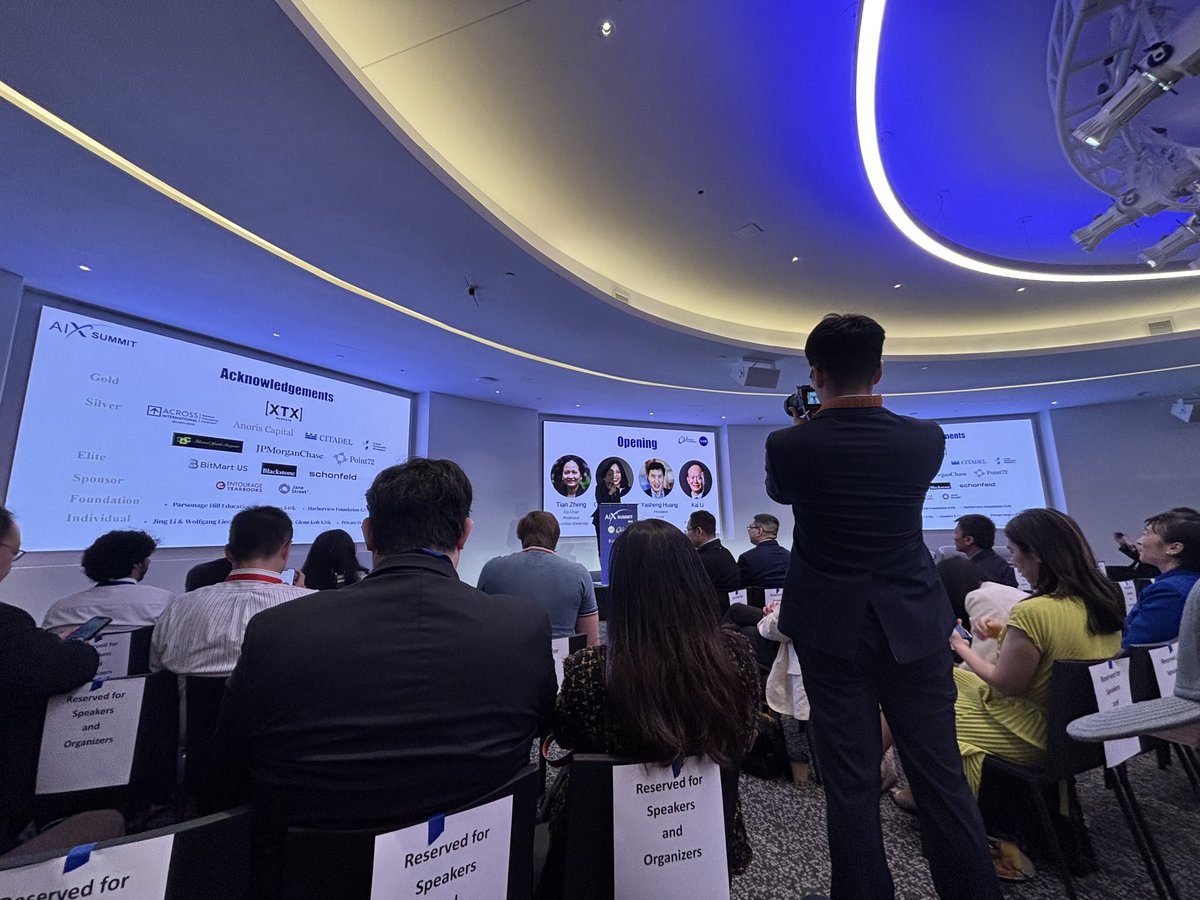
AIX @ NYC
Pra Cha tweet media
HT
0
0
1
21
Pra Cha
Pra Cha@PraCha98·
Contex engineering is finding the functional information! - reading times second arrow
English
0
0
0
11
Vaibhav Sisinty
Vaibhav Sisinty@VaibhavSisinty·
Second brain as a service can be a next big thing.
English
17
5
55
2.1K
Pra Cha
Pra Cha@PraCha98·
Anyone attending AIX at NYC this morning?
English
0
0
1
28
Pra Cha
Pra Cha@PraCha98·
@techNmak Isn't this so random? At least a set of 10 papers should collectively help in building mental models and understanding in one specific direction or a unified view on AI.
English
0
0
0
97
Tech with Mak
Tech with Mak@techNmak·
If I were starting AI from scratch in 2026, I’d read these 10 papers first 👇
English
4
5
62
7.3K
prge
prge@shguke·
@PraCha98 slowed down a bit rn but at Atari rn
English
1
0
1
479
prge
prge@shguke·
being able to work in the sun is the ultimate privilege
prge tweet media
English
6
3
200
33.6K
Pra Cha
Pra Cha@PraCha98·
Yeah, it's weird and also a reason for not getting internships. like why would he need an internship(but thats part of this program) I have worked for 6 years and 7 months in a full-time role (data scientist/ML Eng) — when I quit my job, I was a senior ML engineer at Informatica and joined Columbia for my Master's. I was also leading (fractionally) the AI team of a startup, building 0-1 of the AI practice and models/training/deployment for medical document synthesis. Now I am deep diving into different paradigms of ML/DS — causal inference, probabilistic modeling, RL, DL. To put it simply, I am in the transition phase from applied ML engineering to applied research/research engineering in frontier AI labs (that's my north star for this journey) — working on a series of papers and trying to collaborate with some labs too. I have also taught Applied ML and Data Science for various online edtech platforms and led engagements worth multi-million dollars in terms of tech and delivery. So I have enough understanding of the entire landscape. Also, I don't believe in interview prep but one has to explore based on their curiosity. You can learn more about me: pracha.me/musings
Ibrahim Khan@Ibrahim0702071

@PraCha98 @kmeanskaran U are still hunting for internships what do u know of senior skills

English
0
0
2
100
Karan🧋
Karan🧋@kmeanskaran·
Questions the interviewer asked today for Sr ML position: Basic Q&A - How do you handle missing values and outliers? - Define the difference between Feature Engineering and Feature Selection in the ML lifecycle. - How is Random Forest different from XGBoost? - When do you choose Recall over Precision? - Why do we choose Adam over other optimizers? - Normalization in deep learning (Batch vs Layer). - How does self-attention work? - Define decoder architecture. - Fine-tuning LLMs and RLHF. System design: - Design a customer churn system for banking customers with no labels (back and forth Q&A). - How do you handle a million requests per hour for your LLM in production? - How do you roll back a model on model drift? - How do ML engineers scale the pipelines? Project-based: - How I managed deliverables in my current organization, especially forecasting with <20 MSE in production. - In the MLOps project, why did you choose LSTM over ARIMA for stock forecasting (I've used transfer learning). - Kubernetes and Docker usage on AWS. Leadership-based: - How do you handle multiple projects in the lifecycle? - Some teammates are using AI but still not meeting expectations; how do you assist them? Super exciting interview and your bro talked like he's in a podcast 😂😂
Karan🧋@kmeanskaran

Just had an interview for a Senior Machine Learning Engineer position. It's a Kenyan company offering a good salary, but it's on-site in Kenya. No DSA. Just ML Q&A, system design questions for ML, questions about my current role, and scenario-based Q&A as a team lead. I asked for remote work but don't think they will accept.

English
10
14
186
11.3K
Pra Cha
Pra Cha@PraCha98·
I am still looking for a summer internship. Feel free to check my profile. Pracha.me/resume/ Thanks for your attention to this matter.
Pra Cha tweet mediaPra Cha tweet mediaPra Cha tweet media
English
1
0
0
59
Pra Cha
Pra Cha@PraCha98·
Need some flow
English
0
0
1
30
Pra Cha
Pra Cha@PraCha98·
How to build to reach Anthropic?
English
1
0
0
21
Ben Lang
Ben Lang@benln·
Hiring someone to build out a world-class student community program for Cursor. Reach out if you know someone who would be a great fit for this role.
English
125
34
711
44.9K
GuoxinChen
GuoxinChen@GuoxinChen22·
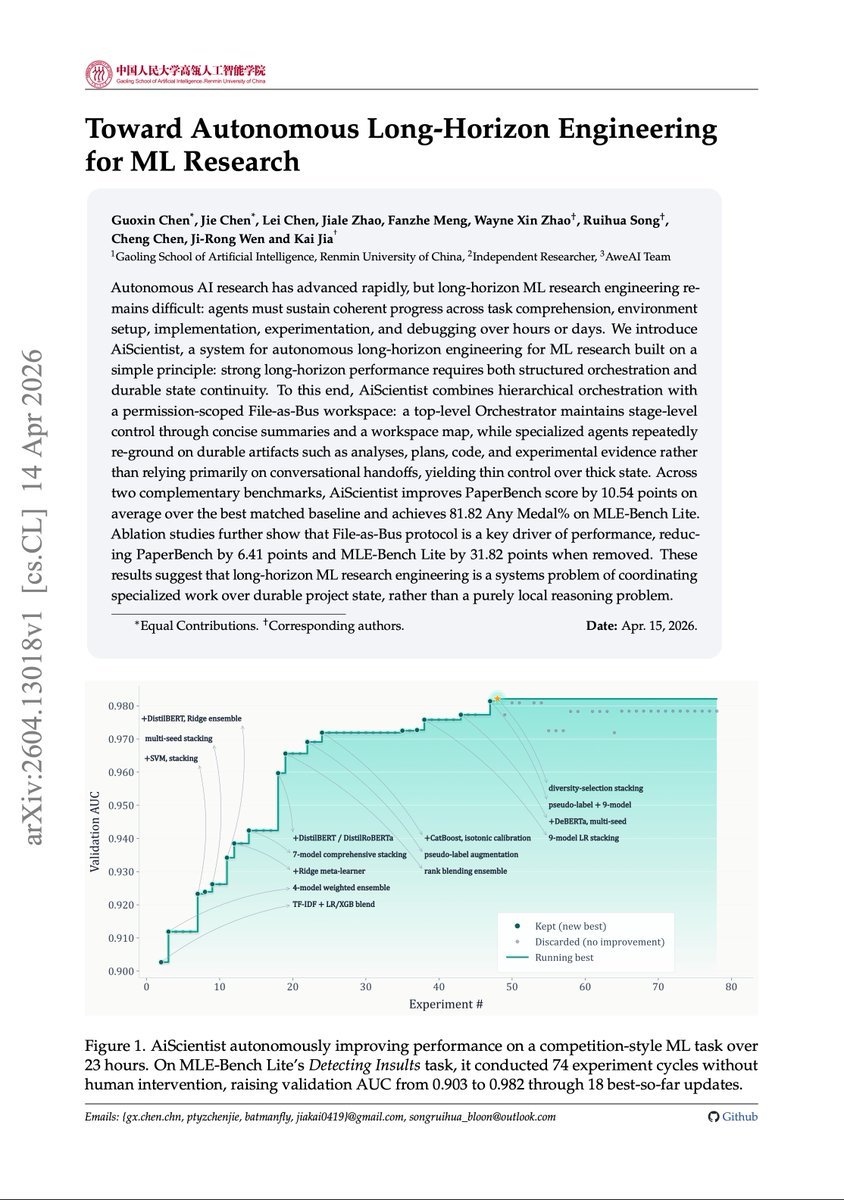
@PraCha98 @daniel_mac8 It's structured, not one monolithic chain. AiScientist is lab-like: a PI-like orchestrator handles stage-level planning, specialists own major subproblems, and subagents handle leaf tasks. Each has its own reasoning process, and they coordinate through shared workspace artifacts.
English
1
0
1
28
Dan McAteer
Dan McAteer@daniel_mac8·
Autonomous, recursively self-improving AI researchers are here. They're just not evenly disributed.
Dan McAteer tweet media
English
7
31
209
10.4K