Praval Singh

72.4K posts

Praval Singh banner
Praval Singh

Praval Singh

@Praval

VP - Marketing and Customer Experience, @Zoho. ❤️ India—SaaS—Coffee—Cooking—Poetry—Uttar Pradesh. Also: beaches, mountains, and villages. Your Zoho guy!

Delhi Katılım Aralık 2007
2.5K Takip Edilen18.1K Takipçiler
Sabitlenmiş Tweet
Praval Singh
Praval Singh@Praval·
Good morning, India! 🇮🇳❤️ While the general mindset around building a business is to move fast and break things, we asked, how do you stay the course and build one for the long term? At @Zoho, we chose an unconventional path by taking our time to validate our convictions and building a suite of world-class products. None of this could have happened overnight—it has been a journey of patience and perseverance, and one that required staying true to our beliefs, through all the highs and lows. This campaign is a reflection of our approach towards sustainable growth. Watch video (English): youtu.be/4ivmul54L-w Watch video (Hindi): youtu.be/lJen7rbL6vg Website: zoho.com/time/ #GoZoho
YouTube video
YouTube
YouTube video
YouTube
Praval Singh tweet media
English
18
47
331
86.7K
Praval Singh
Praval Singh@Praval·
@Flipkart, why do you make it so hard to talk to an agent? Your support chatbot is the worst I've encountered in the e-commerce industry. Sigh. @flipkartsupport
English
4
1
12
1.1K
FlipkartSupport
FlipkartSupport@flipkartsupport·
@Praval Sorry to hear that. Our team is dedicated to support you. We kindly ask you to provide more information about your issue along with the order ID (if any)/ registered details through a private chat for the privacy of your Flipkart account. Awaiting your response. twitter.com/messages/compo…
English
1
0
0
65
Praval Singh retweetledi
Chris Anderson
Chris Anderson@chr1sa·
You know you're in the Bay Area when there are cracked-open laptops outside the bathroom running agents
Chris Anderson tweet media
English
117
85
1.3K
1.7M
Ankit Sawant
Ankit Sawant@SatanAtWink·
I want to create an universe of bald men like me - there are so many like us I know one who looks just like me @Praval Make Bald Sexy Again
English
1
0
1
497
Praval Singh
Praval Singh@Praval·
Something exciting just landed on shelves. Quite literally, this time. 👀 If you're picking up an Apple device for your business at a select Apple Authorized Partner in India, you'll now find @Zoho right there with it! Yes, physical packs for @ZohoBooks , @Bigin, and @ZohoWorkplace, loaded with Zoho Wallet credits for you to get started with your business software needs. 😎 One of those moments where business software meets retail in the best way possible. Proud of our teams for this one. ❤️ 🙌 #GoZoho #Apple 🇮🇳
Zoho@Zoho

Getting a new Apple device for your business? We slipped something in at the store. 👀 Zoho blister packs for @Bigin, @ZohoBooks, and @ZohoWorkplace are now available at select Apple Authorized Partners. It is everything you need to get going, in one trip. Details here 👉 zoho.to/ApplePartners

English
0
0
7
1.3K
Praval Singh retweetledi
GREG ISENBERG
GREG ISENBERG@gregisenberg·
Coinbase is now testing 1 person teams + AI agents and announced laying off 700 employees. Other companies doing this (layoffs + AI): 1. Shopify: No new headcount unless you prove AI can’t do the job. 2. Block: Cutting ~4,000 roles (~40%); Dorsey says AI lets much smaller teams do more. 3. Klarna: Its AI assistant now does work equivalent to about 700 support roles. 4. Duolingo: Went “AI‑first,” telling teams to rebuild workflows around AI before hiring. 5. Salesforce: Paused new engineering hires after AI tools boosted dev productivity ~30%. 6. Amazon: Cutting about 16,000 corporate jobs this year in an efficiency/automation push. 7. Meta: Cutting ~10% of staff and freezing thousands of open roles as it doubles down on AI. 882 jobs per day disappearing in tech. This is the pace right now. And I think that's going to accelerate and move beyond tech. My POV: Every single one of these companies is telling you the same thing: one person with AI can do what used to take a team. They're literally saying it with their org charts. If you're employed, build a 1 person team on the side. If you're laid off, build one today. The tools that made your role redundant are the same tools that let you build your own company. The biggest wave of new startups is going to come from people who got restructured out of exactly these announcements.
Polymarket@Polymarket

JUST IN: Coinbase to test AI-native “one-person teams” that combine engineering, design, & product roles.

English
206
185
2.1K
398.4K
Praval Singh retweetledi
Ejaaz
Ejaaz@cryptopunk7213·
anthropic is going after the $300B consulting sector with a new $1.5B consulting arm that seeks to put claude into every mid-size company this is exactly what deloitte, mckinsey, accenture do... but anthropic is cutting them out. ruthless but imo the economics make sense: > anthropic will send applied AI engineers to private equity portfolio companies to create custom-claude solutions... > its a genius model: blackstone alone owns 250+ companies generating $300B in rev, imagine if claude doubles that and takes a fee why? anthropic's biggest revenue earner is enterprise, their CFO: "Enterprise demand for Claude is significantly outpacing any single delivery model." > anthropic teamed up with blackstone, goldman sachs and hellman & friedman, each putting up $300M (ZERO consulting firms in the cap table lol) > private equity become anthropic's distribution model for enterprise. sound familiar...? > thats because openai announced a similar venture 5 months ago but the explicit difference is anthropic is a major stakeholder in this new venture brutal for consultants tbh
Ejaaz tweet mediaEjaaz tweet media
English
79
62
822
163.3K
Praval Singh retweetledi
JJ Englert
JJ Englert@JJEnglert·
10 things I'm seeing on the frontlines of AI adoption in the enterprise: 1. Chat is where 90% of employees still live. It's the gateway drug. Everything else is downstream of getting people comfortable here first. 2. Power users discover Cowork and lose their minds. It's the "wait, it can actually do the work?" moment. 3. Claude Code has very little penetration with non-technical users in the enterprise still. 4. Microsoft being the "approved" tool doesn't matter. Employees route around Copilot and pitch their managers for Claude access on their own. 5. Artifacts in Claude are a breakout feature. People don't want to view them — they want to deploy them, connect them to Snowflake, etc., ship them as internal MVPs for their org to actually use. 6. Cowork is crossing the line from "demo" to "real work." Legal teams redlining contracts. Ops teams running workflows. Then immediately asking: how do I automate this for production? 7. The next unlock → automated cloud workflows that leverage an agent like Claude while keeping non-technical users within the tools they're already using and in a chat interface. The demand is screaming. 8. Terminology is major blocker. Projects vs. skills vs. plugins vs. agents. I've explained "what is a skill" 200+ times. The moment it clicks, people get excited — but the path there is too long. 9. Enterprise IT restrictions (locked connectors, no browser access) quietly strip Cowork of its superpowers. The features that make it magical are the first ones IT disables. 10. There is a high level of "AI insecurity". For the first time in a long time, people at all levels (even C-Suite) need to signifcantly upskill in order to stay world class in their positions, and this is causing people to be insecure about their skill set across the org. General note on Microsoft: I spent a lot of this past week deep in Power Automate and Copilot Studio trying to build an automated solution in the cloud — given it's the native tool with sanctioned access to their org's data. It's ~90% there. But the final 10% is riddled with terrible UX, inconsistent behavior, and a generally poor experience. Honestly feels like Microsoft is fumbling the biggest moment in their company's history with software that has all the features on paper but lacks the magical "just works" moment for non-technical team members. The gap is wide open and they're letting others "eat their lunch" right now.
English
73
62
704
88.9K
Praval Singh
Praval Singh@Praval·
Woke up to this! 22 degrees (down from 44 last week) and some amazing breeze ❤️ #HelloMonday👋
Praval Singh tweet media
English
0
0
4
222
Sidu Ponnappa
Sidu Ponnappa@ponnappa·
we closed last year with low five figure revenue. in the subsequent 4 months our revenue has grown 14x.
English
15
9
149
12.1K
Praval Singh retweetledi
a16z
a16z@a16z·
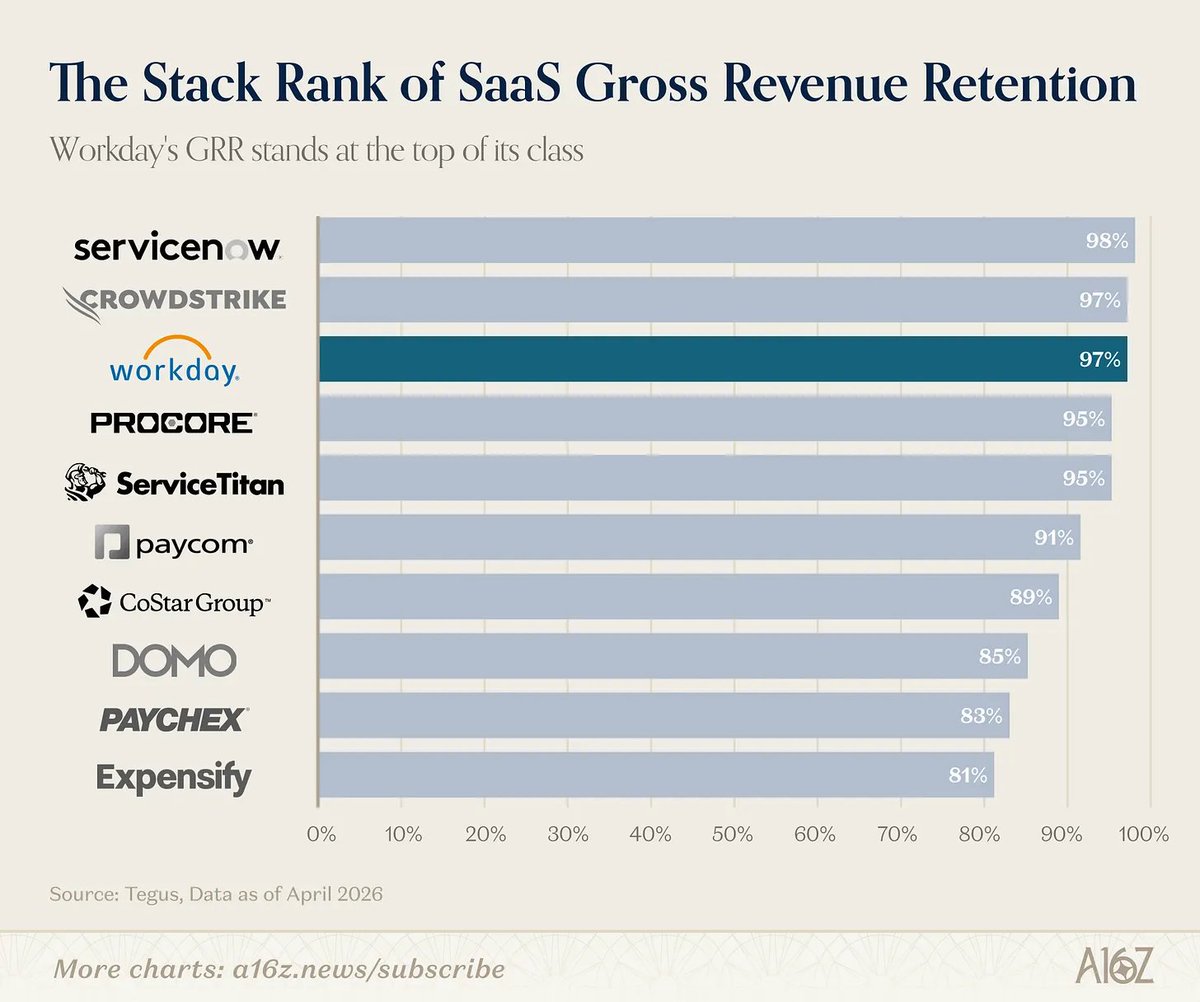
Workday is arguably the most important and least loved product in enterprise software. More than 10,000 organizations run it, tens of millions of employees live inside it, it's approaching $10 billion in annual revenue, and it's incredibly sticky. HCM is the last large enterprise software category without a serious AI-native challenger, and that’s about to change. @joeschmidtiv on Workday's last workday: a16z.news/p/workdays-las…
a16z tweet media
Joe Schmidt IV@joeschmidtiv

x.com/i/article/2048…

English
53
58
645
319.3K
Tanay Kothari
Tanay Kothari@tankots·
i grew up in delhi dreaming of building tech millions of people couldn't live without. today, @wisprflow is officially live in india! before this launch, i flew to india to answer one question: does wispr flow actually work here? in the back of an auto with horns blaring. a mumbai gym with punjabi music at full volume. a dhaba with the waiter rattling off the menu faster than you can type. we went and found out - it worked every single time. india became our second biggest market on its own. we 3x'd growth in 3 months with no campaigns or partnerships. people just found wispr flow organically and made it part of their daily life. the least we could do was show up for them properly. so we're launching wispr flow in india with hinglish & android support. because it's the way i've spoken my whole life. and the way everyone around me still does. grateful to my co-founder @sahajgarg6, our india lead @findingnimo_, and everyone who made this possible.
English
276
242
2.2K
425.3K
Praval Singh retweetledi
Gokul Rajaram
Gokul Rajaram@gokulr·
Career advice: Stay long enough to have an impact I’m seeing many folks who exhibit the following pattern: - Do a role for 12-18 months - Change roles - Repeat They are “job optimizers”, constantly on the lookout for something better, almost from the moment they land in a new role. The purpose of their current role is to help them find their next role. If this is you, stop. Take a breath. Embrace your current role. In fact, fall in love with it. Throw yourself into learning, building and having impact. You need at least 3-4 years at a company to have real impact. Have impact with measurable outcomes, and the next role will take care of itself. If you do great work at a good company, word will get out and you will never need to look for a job again. Plus, the joy and satisfaction of having meaningful impact is reward in and of itself. Frank Slootman offers a few other reasons why employers see too many short-tenured jobs as a red flag.
Gokul Rajaram tweet mediaGokul Rajaram tweet media
English
69
130
1.5K
248K
Praval Singh retweetledi
nishank jain
nishank jain@_nishankj·
most people think ideas come from: - insight - intelligence - taste - reading but in practice they actually come from: - building the wrong thing - hitting a constraint - getting embarrassed by users - realizing the obvious thing you missed - noticing the second order effect you couldn’t see from the couch a really great idea is the *output* of the work, not the input.
English
1
27
112
4.3K
Praval Singh retweetledi
Nithin Kamath
Nithin Kamath@Nithin0dha·
I'll admit this might sound odd coming from me, maybe even clichéd. But it's something I've been sitting with for a while, so here goes. When I started out, like most people, I had a simple wealth goal. I'd actually written it down: hit ₹5 crore, retire in Goa, beach shack, done. That was the dream. After the Zerodha journey, I find myself on a very different side of that equation, and the dark inequalities of wealth and opportunity are harder to ignore than ever. We all know the numbers on inequality. The concentration of wealth among the top 1% is severe and getting worse, and it's even starker among the top 0.1%. The post-2008 era of rising asset prices has likely made this worse, because the people who hold financial assets are, by definition, people who already have money. This isn't unique to India. Barring a few exceptions, it's a global phenomenon. I'm cautious about attributing every socio-political problem we face today to inequality, but it's hard to deny the role it's played in the political upheavals we're seeing across the world. History rarely shows that sustained, extreme inequality ends well. To me, it increasingly feels like sitting in a car with the brakes cut, watching a cliff approach. Btw, all of this even before AI, which has a non-trivial probability of making things worse. I'll stop short of prescribing solutions. It's too easy to reach for simple answers to complicated problems, and that's a separate conversation entirely. But I think we need to collectively acknowledge this: wealth that just sits in financial assets whose value keeps compounding upward doesn't do much good for anyone beyond those who already have it. And if that wealth isn't in motion, if it isn't doing some social good, the fabric that holds us together will only continue to fray and lead to cynicism, resentment, and worse yet, nihilism. We're already seeing all of it. What I am saying is that even if a portion of that wealth were channelled into things that could materially improve lives, that seems worth doing. Hoarding wealth, in the grand scheme of things, doesn't really help anyone.
Nithin Kamath tweet media
English
285
332
2.8K
226.3K
Praval Singh retweetledi
Sridhar Vembu
Sridhar Vembu@svembu·
I am happy to see the YCombinator wave arriving in India. Our co-founder Tony and I were in silicon valley during the original YC wave of companies. We learned a lot from the YC companies. We also made the conscious choice to pursue a different course. In the ancient Bharatiya tradition of philosophical debate, I am going to offer this. I will start with things I agree with YC on. 1. The biggest lesson anyone can learn from YC: small passionate teams can do magic. This was true way before AI coding arrived and will always be true. 2. YC is absolutely right to not over-emphasize "innovation". Doing a similar product as the bigger guys, faster and cheaper, is often the best course. Google did not invent search. OpenAI did not invent the LLM. Anthropic did not invent agentic coding. 3. YC companies tend to geographically cluster, and that can lead to subtle peer pressure and group-think. So the "laggard" founders who are not growing like a weed every week start to feel left out and eventually the result is "founder depression". And YC has counselors. By the standards of 2007 silicon valley or even 2014 silicon valley, we were thought to be losers. Just keep that in mind. 4. Many deep tech problems like building a better, cheaper MRI machine or advanced semiconductor equipment require long focus and patient execution and lots of capital. These are endurance tests, not weekly sprints. 5. YC too often optimizes companies for "exit". That philosophy was built for and requires prolonged bubbles, which American policy has delivered, at the price of nearly wrecking the country (note the extreme inequality and political division). If you love India, you should not wish for similar bubbles. 6. YC model worked in silicon valley. One of the reasons it worked was that silicon valley could get any talent from anywhere in the world, notably from India, easily. That era may have ended or at least on pause right now. Bengaluru has tried the same thing but with "any talent from anywhere in India" and we have not yet created huge companies. India needs its Huawei and Xiaomi and BYD and these companies are Chinese to the core, built by patriotic Chinese. Indian talent, staying in India, rooted in India, is going to have to build companies like them. Enough said.
Jared Friedman@snowmaker

What I told 2,000 future founders in Bengaluru today: 1/ We believe we are at the start of a second wave of Indian companies that will build world-class AI native products for the global market. Emergent and Giga are the model of the future. 2/ Just because a space seems crowded doesn't mean it's too late. Zepto, Emergent, Giga - none were first movers. Second mover advantage is real. 3/ In fact, a good formula for finding startup ideas is to look at ideas that are showing some promise and just execute them better. Execution is everything: if you're an exceptional engineer, and you can build and move faster than your competitors, you'll win. 4/ There is every reason to believe Indian teams can beat US teams building global products. The level of engineering talent here is on a whole different level, and that's the key input. 5/ In the AI era, the best founders are the ones building at the edge of what's technically possible. You need to be experimenting wth the latest models, the latest open source projects. 6/ Stay in the flow of information. Watch the right podcasts, follow the right people on X. With AI changing this fast, you need to know what the smartest builders are thinking. 7/ Most of the best startups don't come from someone explicitly trying to start a company. They start from someone building a project just for fun, or tinkering with a new technology because they are curious. India needs more of this "tinkering" culture - this is how you have novel ideas when technology is shifting quickly. 8/ Founders are getting younger. Aadit was 18 when he started Zepto. The Giga founders were 20 when they came to SF. Young people who can learn very fast have the advantage right now. 9/ The best founders are pushing AI coding to the max. You can now write 20K lines of code / day. One person can do the work that just a year ago would take a 100 person team. The best builders are taking advantage and building at Garry Tan speeds.


English
52
196
1.6K
150K