Pravi Karunaratne

258 posts

Pravi Karunaratne

Pravi Karunaratne

@PraviKaru

Lawyer | Investor | Building Wealth & Wisdom | Insights on Law, Markets & Geopolitics

Katılım Mart 2021
47 Takip Edilen139 Takipçiler
Sabitlenmiş Tweet
Pravi Karunaratne
Pravi Karunaratne@PraviKaru·
Pakistan Got Dumped in Five Days. MBZ flew to Delhi on January 19. Two hours on the ground. Modi met him at the airport like family. By takeoff: $200 billion trade deal. Strategic defense pact. $3 billion in locked energy contracts. Five days later, UAE killed Pakistan's airport deal. Six months of begging. Government-to-government talks. Dead. No explanation. No call. Just silence. "Brotherly ties." That's what Pakistan called it. Sixty years of alignment. $3 billion in UAE loans keeping Islamabad's lights on. 1.7 million Pakistanis sending remittances home. UAE's response? Visa ban. Flight ban. And now this. Delhi got a defense pact in 120 minutes. Pakistan couldn't close an airport lease in 180 days. Read that again. The Gulf isn't hedging. The Gulf is replacing. India has 7% growth. Pakistan has IMF bailouts. India has nuclear submarines. Pakistan has debt defaults. India has strategic value. Pakistan has strategic baggage. MBZ went to Moscow four days after ghosting Islamabad. Putin meeting. Energy talks. Sanctions backdoor secured. The itinerary tells the story. Delhi: state welcome, three signatures, two hours. Islamabad: six months of talks, zero ink, one phone call to cancel. Moscow: red carpet, Kremlin access, sanctions lifeline. Pakistan wasn't rejected. Pakistan was skipped. Old alliances don't end in warfare. They end in scheduling. They end when your calls go unanswered. They end when someone who begged for your friendship for decades doesn't even get a meeting. India didn't defeat Pakistan. India replaced Pakistan. The Gulf made its choice. In two hours. While Islamabad was still waiting by the phone.
Shanaka Anslem Perera ⚡@shanaka86

2 hours. That’s how long the UAE President spent in India on January 19th. Landed. Signed a defense pact. Agreed to $200 billion in trade. Locked in a $3 billion LNG deal. Left. Five days later: UAE scrapped the Islamabad airport deal. Yesterday: UAE President landed in Moscow to meet Putin. Read that sequence again. Delhi for 2 hours → Pakistan deal cancelled → Kremlin summit. India didn’t just get chosen over Pakistan. India became the gateway to the entire non-Western axis. The Gulf is doing exactly what the EU and Canada did this month. Building optionality. And the optionality runs through Delhi. Here’s what nobody in Islamabad or Washington wants to admit: MBZ could have gone to Delhi for a week-long state visit with ceremonies and banquets. Instead he flew in, signed everything that mattered, and flew out. That’s not diplomacy. That’s a transaction. The transaction: India gets Gulf defense alignment. UAE gets a hedge against Saudi-Pakistan-Turkey. Russia gets a channel to the Gulf that bypasses Western sanctions. And Pakistan? Pakistan gets to watch the airport deal evaporate days after the Modi handshake. The humiliation isn’t the cancelled deal. The humiliation is that it only took 2 hours to replace decades of alignment.​​​​​​​​​​​​​​​​ Read the full mechanism - open.substack.com/pub/shanakaans…

English
1
0
13
29.1K
Pravi Karunaratne
Pravi Karunaratne@PraviKaru·
@ForzenStur @NewsWireLK Valid point. Now who were behind all those protests against private universities? Funny enough, they even idolise some of those commies who opposed it. If not for these damned commies who opposed, this country would have saved billions of dollars that have gone out for education
English
1
0
1
47
Slorgen
Slorgen@ForzenStur·
@PraviKaru @NewsWireLK Lmao. They’ve protested against private medical institutions solely to keep their union monopoly alive. Leave if you have to, that’s how capitalism works.
English
1
0
1
41
NewsWire 🇱🇰
NewsWire 🇱🇰@NewsWireLK·
Health Minister Nalinda Jayatissa said the strike launched by the Government Medical Officers’ Association (GMOA) opposing the appointment process for doctors who completed their internship lacks a valid basis for discussion. Responding to questions from journalists, the minister said that if there are concerns regarding the appointment system, the association should seek legal remedies without jeopardizing patient lives. He further urged the GMOA not to escalate disputes with the ministry at the expense of the public, stressing that any challenge to the legality of internship appointments should be taken to court. “If you claim the appointment process is unlawful, the appropriate course is to challenge it legally. That way, the matter can be resolved through judicial means,” he said. He added that the GMOA was instead seeking to exert pressure on the government and put patient lives at risk. The Health Minister also reiterated that the deadline for intern doctors to apply for entry into government service expired at 12:00 p.m. on April 4 and would not be extended. He warned that applicants who fail to meet the deadline, or submit late applications, would not be eligible to work in government hospitals or receive salaries going forward. The GMOA launched island-wide strikes early this month, protesting alleged political interference and irregularities in doctor transfers and post-intern appointments. (Newswire)
NewsWire 🇱🇰 tweet media
English
1
2
10
1.6K
Pravi Karunaratne
Pravi Karunaratne@PraviKaru·
And the commies are saints!
IsThisGrok@IsThisGrok

Cui bono? Sri Lanka receives 4 to 6 kilowatt hours per square meter of solar energy. Every single day. Among the best solar insolation rates in the world. Here is what the government did with it. June 2025: Cabinet slashed solar feed-in tariffs by 20 to 40 percent. Rooftop solar dropped from 27.06 rupees per unit to under 21 rupees. Ground-mounted solar dropped from 25.48 rupees to 17.82 rupees. Seventeen solar companies filed court petitions. The solar industry collapsed overnight. Then they taxed the batteries. 46 percent import duties on solar storage. 25 percent customs. 5 percent port levy. 18 percent VAT. The VAT cannot be recovered because electricity is outside the VAT regime. April 2025: CEB asked rooftop solar owners to TURN OFF their panels from 9am to 3pm. The grid could not handle the sunshine. The solution was not storage investment. Not infrastructure. Not smart metering. The solution was to waste free energy. Now EVs. Parliament approved EV tax INCREASES. Excise duties rose 210 to 1600 percent. No VAT exemptions. No registration rebates. No charging infrastructure. Norway offers VAT exemptions, free tolls, widespread charging. 80 percent of new cars sold are electric. India launched FAME with subsidies, local manufacturing, infrastructure funding. Sri Lanka launched taxes. Solar is 8 percent of the grid. The target was 1000 megawatts by 2025. We hit 70MW under one ADB program. Then killed the economics. Do not call this incompetence. Incompetence is accidental. This is not. A government that slashes solar tariffs by 40 percent while importing substandard coal knows exactly what it is doing. A government that taxes batteries at 46 percent while the grid cannot store sunshine knows exactly what it is doing. A government that asks citizens to turn OFF free energy knows exactly what it is doing. This is not stupidity. This is corruption dressed in red. The comrades who promised to fight the oligarchs became the oligarchs. The revolutionaries who promised energy independence chose energy dependence. The socialists who promised to serve the poor made electricity unaffordable for the poor. The Romans had a phrase. Cui bono. Who benefits. When a country with free sunshine imports substandard coal now under investigation, cui bono? When battery taxes make storage unaffordable, cui bono? When EV policy protects fuel consumption, cui bono? The answer is never the citizen. Sri Lanka sits near the equator with 300 days of sunshine. The entire nation could run on rooftops. Instead it runs on diesel generators and political favors.

English
0
0
0
39
Pravi Karunaratne
Pravi Karunaratne@PraviKaru·
Sure, we are a free nation.
Shanaka Anslem Perera ⚡@shanaka86

JUST IN: On the same day that President Dissanayake told Parliament Sri Lanka had rejected American fighter jets at Mattala Airport, and sixteen days after Sri Lanka’s Navy pulled 32 Iranian survivors from water where an American torpedo sank their ship, the US Special Envoy for South and Central Asia boarded a Sri Lankan warship in Colombo harbour. The warship was American. SLNS Gajabahu is a former United States Coast Guard cutter transferred to the Sri Lanka Navy. Sergio Gor stood on its deck alongside Rear Admiral Damian Fernando, the Navy Chief of Staff, on March 20. The US Embassy posted photographs. A fourth former Coast Guard cutter, the ex-Decisive, is crossing the Pacific for delivery. Once commissioned, it will be the fourth American-built vessel sailing under Sri Lankan command. Five days before Gor boarded the cutter, ten American helicopters left Alabama for Sri Lanka. The US Government donated ten TH-57 Sea Ranger helicopters to the Sri Lanka Air Force under the Excess Defense Articles programme. They departed Port Mobile on March 15 and are expected to arrive on May 24. The TH-57 is a single-engine trainer. It carries no weapons. It is configured for pilot training, search-and-rescue, and disaster response. The same week that Sri Lanka rejected two American combat aircraft armed with eight anti-ship missiles, the United States shipped ten unarmed training helicopters to the same country. The armed jets were refused. The unarmed trainers were welcomed. The distinction is the relationship. The symbolism extends to every element of the visit. Gor arrived March 19 and met President Dissanayake at the Presidential Secretariat. Discussions focused on strengthening bilateral ties and Sri Lanka’s position on the Middle East conflict. The envoy was in country when Dissanayake revealed the jet rejection to Parliament the following day. The visit continued without interruption. Gor toured the Port of Colombo with the Sri Lanka Ports Authority Chairman. He posted on X that the port is a critical hub connecting South Asia to global markets and that the partnership is helping advance secure trade, support port efficiency, and protect supply chain integrity. The language was commercial, not military. The visit inspected loading cranes and container terminals, not weapons systems. The State Department announced the trip as a five-day tour of Sri Lanka and Maldives focused on advancing cooperation in the Indian Ocean Region. The framing cited safeguarding sea lanes, securing ports, and reinforcing trade ties. Not one word about the jet rejection. Not one word about the IRIS Dena. Not one public expression of disappointment. The contrast with Diego Garcia is instructive. Hours after Britain gave the US permission to use its Indian Ocean base for strikes, Iran launched two ballistic missiles at it. Sri Lanka refused permission. Sri Lanka was not attacked. The country that said yes became a target. The country that said no became a port visit. There are no American military bases in Sri Lanka. The relationship operates through transferred equipment, training programmes, and economic partnership. Four Coast Guard cutters. Ten training helicopters. Zero combat aircraft. Zero bases. The architecture is visible: American-built capacity operating under Sri Lankan sovereignty. The alliance does not require a flag change. It requires the understanding that the country receiving the equipment decides how it is used. open.substack.com/pub/shanakaans…
English
0
0
1
38
Pravi Karunaratne
Pravi Karunaratne@PraviKaru·
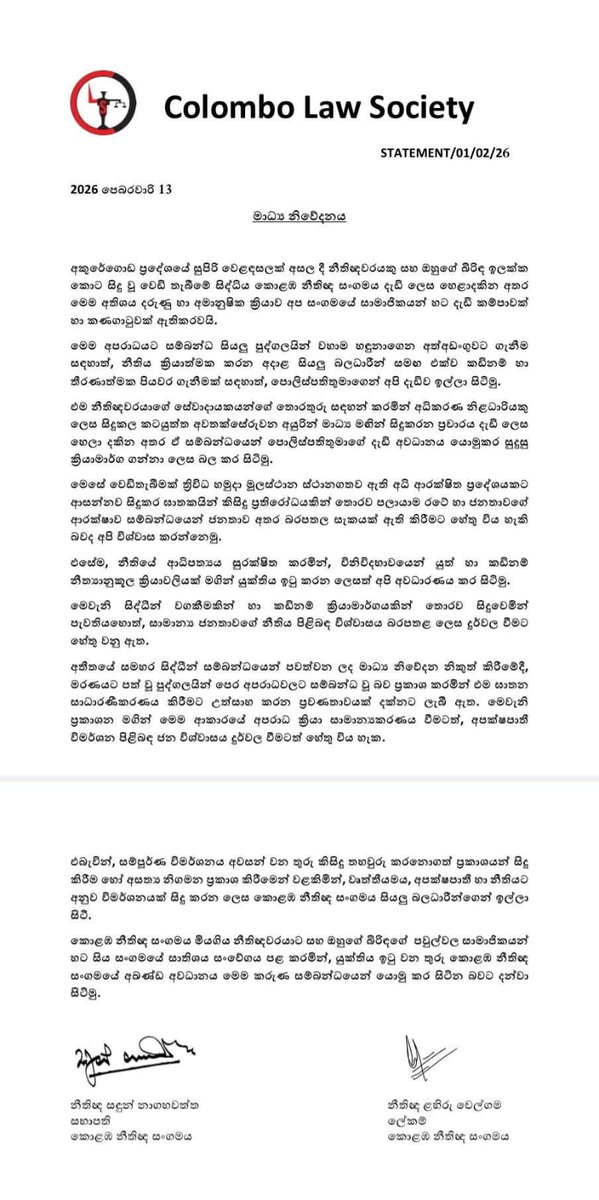
When a country is run by a bunch of incompetent fools who once bragged about tutoring others on national security, this is the outcome. The Attorney General is publicly shamed for doing his job independently. Lawyers are assaulted for representing their clients and now a lawyer is killed in a so-called high security zone near the Defence Headquarters. This is not governance. This is collapse.
Pravi Karunaratne tweet media
English
0
0
0
53
Pravi Karunaratne
Pravi Karunaratne@PraviKaru·
The real reason people migrate is not opportunity chasing. It is to seek a better life where the rule of law actually exists. People leave because they want to live in a country where laws are stable, not changed overnight. Where lawful citizens who acted according to the law are not suddenly punished with millions in fines through retrospective legislation. Where fundamental rights are not trampled by an incompetent cabinet, clueless public officers, and a President who shows open disregard for rule of law. People leave because they want certainty, dignity, and protection from a state that will not arbitrarily rob them or ruin them. Until Sri Lanka offers rule of law, institutional stability, and basic respect for citizens, lectures about “staying and building” will not convince anyone. People are not running away from opportunity. They are escaping insecurity.
English
0
1
1
91
Pravi Karunaratne retweetledi
India in Sri Lanka
India in Sri Lanka@IndiainSL·
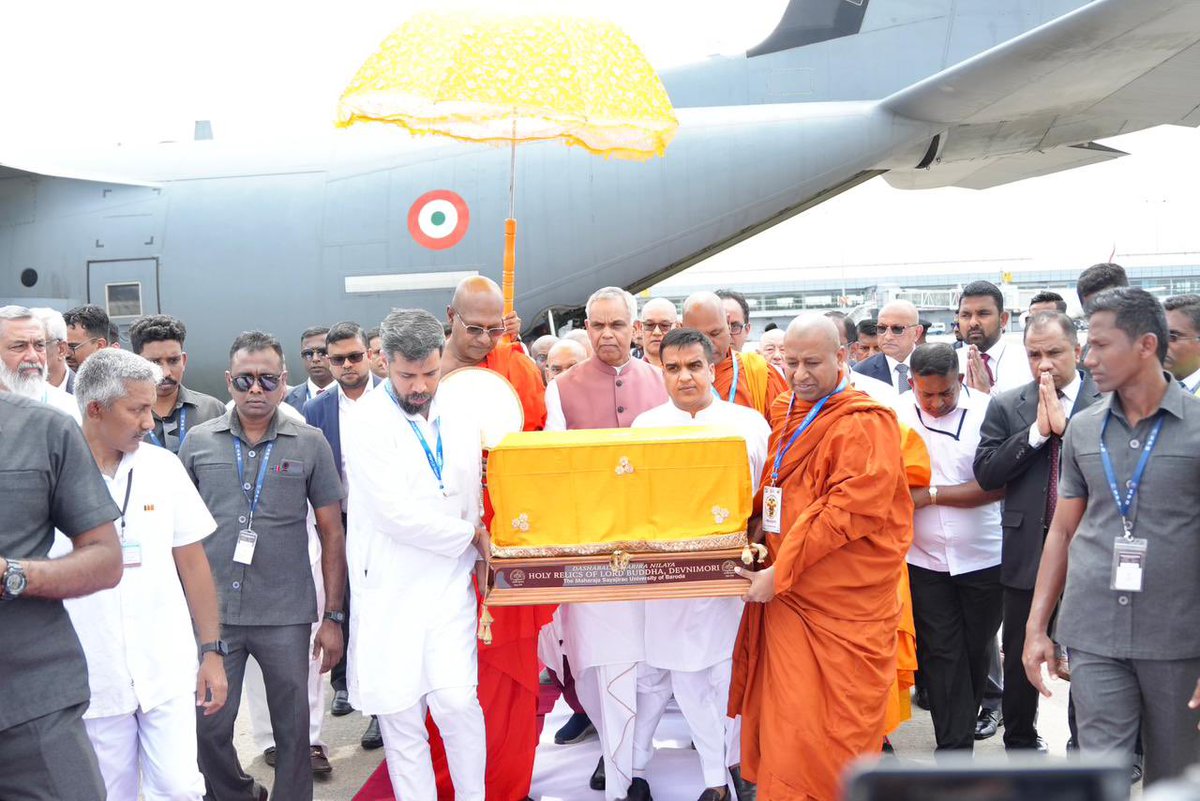
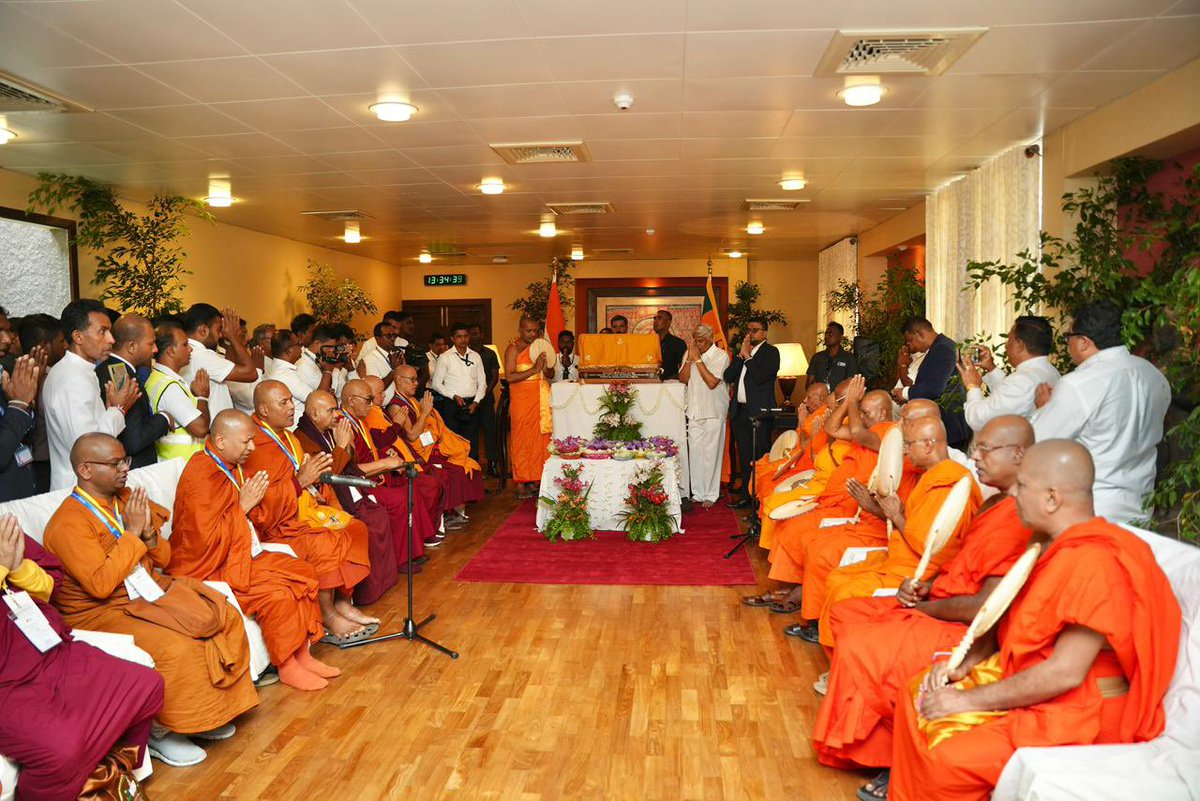
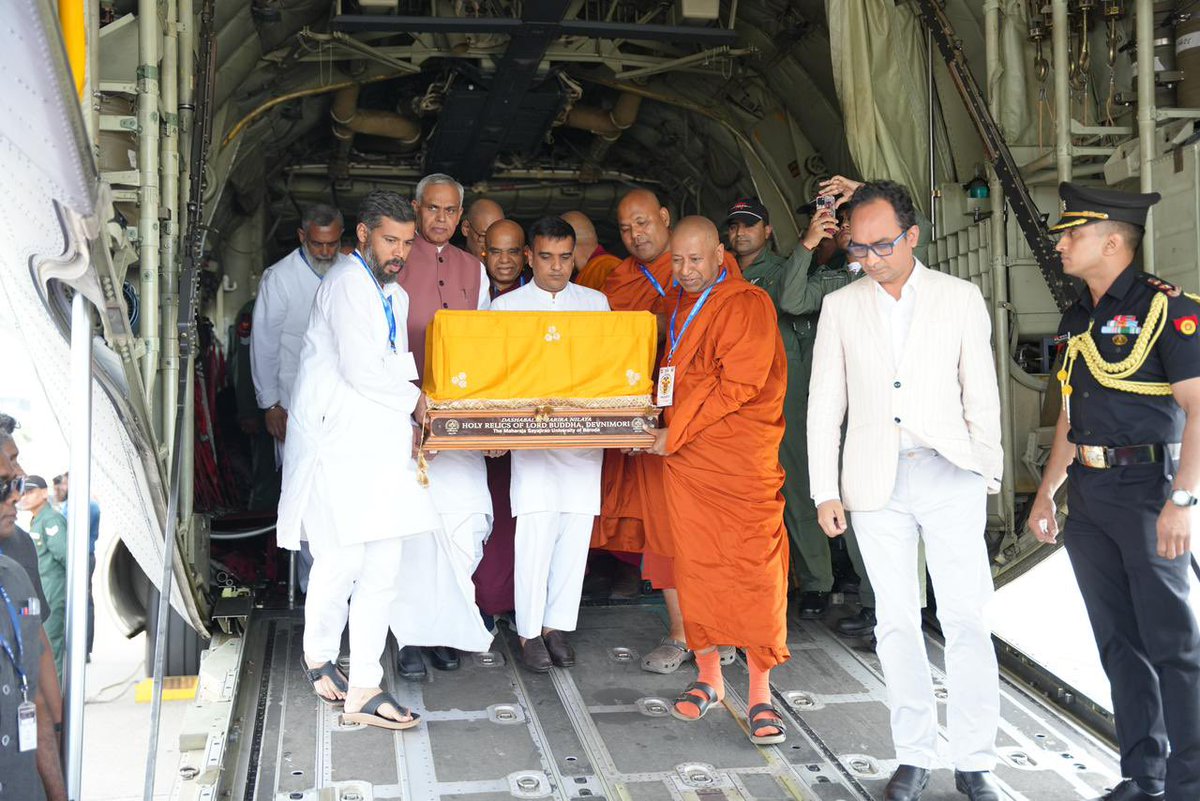
A historic moment in 🇮🇳–🇱🇰 cultural relations! The Holy Devnimori Relics of Lord Buddha arrive in 🇱🇰, accompanied by Gujarat Governor Shri @ADevvrat and Gujarat Deputy CM Shri @sanghaviharsh. The relics were received today at the airport by Hon. Minister of Buddhasasana, Religious & Cultural Affairs Dr. Hiniduma Sunil Senevi and Hon. Minister of Public Administration, Provincial Councils & Local Government A.H.M.H. Abayarathna, along with Acting High Commissioner @DrSatyanjal.
India in Sri Lanka tweet mediaIndia in Sri Lanka tweet mediaIndia in Sri Lanka tweet mediaIndia in Sri Lanka tweet media
English
1
17
32
2.1K
Deep3rdMan
Deep3rdMan@Deep3rdM17711·
@PraviK @EvanFeigenbaum @CNBC Comapre 18% to the rival countries. That's the only thing. If others are at 0 tariffs, then yes. They are also in the 19-20 range.
English
1
0
0
19
Evan A. Feigenbaum
Evan A. Feigenbaum@EvanFeigenbaum·
My advice on the U.S.-India deal ... everyone seriously needs to take a deep breath and calm down. First, the situation was utterly unsustainable, which is why my base case since last August has been that there would ultimately have to be a deal. I've been saying this on @CNBC and in other media for months. I was surprised it didn't happen sooner. Second, it is, in fact, good news that there has been a deal. If you care deeply about U.S.-India relations and are invested in it, then having the floor fall out, as it did, is bad news. This is good and we should celebrate it. Third, props to @USAmbIndia Sergio Gor. He has managed to seize the moment since his arrival to reset the tone and move the ball downfield. Well done indeed. Fourth, 18% is better than 50% but the tariff rate never should have been 50% in the first place and we had better hope it stays here. The President of the United States loves tariffs, full stop. And we should recall that he has used or threatened them for a lot more than just trade disputes. They have been used or threatened now over counternarcotics policy, because he doesn't like country X's foreign policy choices, because he doesn't like how a U.S. company has been treated, because he'd like to roll back other countries' domestic regulatory regimes, because he thinks countries should buy American only, because he wants them to ditch supply chain relationships with third countries, because he doesn't want anyone to do deals with countries that he himself is doing deals with, and even when he objects that others dare to object to his interest in annexing a piece of territory. In short, tariff "deals" have foundered because he changes his mind or layers on new issues. Don't believe me? Go talk to some South Koreans. Then ask a few Canadians. But fifth, 18% is a smooth landing for India because if American tariffs are going to be a fact of life then relative advantage over competitors is what matters. A lower tariff rate than ASEAN - most of them stuck at 19% and Vietnam at 20% before we even get to the transshipment issues - is competitively good for Indian exporters. (As a side note, it’s perversely entertaining that 18 percent is now considered an awesomely “low” tariff rate. "Wow, only 18%!? So cool!!" But I guess taxes are the new normal.) Sixth, don't sleep on China. Beijing has no realistic chance of reducing tariff rates to prior levels but it doesn't need to - it just needs to get close enough to the ASEAN and India tariff rates to shape the medium-term calculations of manufacturers and complicate all the "China plus X" talk of the last decade. And that outcome hardly seems inconceivable since we are heading for at least two (and maybe more, per Scott Bessent) U.S-China leaders meetings this year and President Trump clearly craves a deal with Beijing. Seventh, ignore some of the numbers. Sorry, but how is India going to buy $500 billion of anything from the United States anytime soon? U.S. goods exports to India in 2024 were $41.5 billion. U.S. services exports to India in 2024 were $41.8 billion. So a 500% increase from $83 billion to $500 billion seems like, well, kind of a stretch. But U.S.-India trade has undershot its potential forever, so ambition is good. Eighth, the devil is in the details. I have a hard time believing the government of India is going to make any Russian oil-related commitment explicit. Prove me wrong. Ninth, and most important: Those of us who care about U.S.-India relations, have worked hard on it, have struggled, and have spent years believing in it should be happier than we were a few months ago. But please, let's not talk as if the last six months never happened or somehow just went "poof" in a magical puff of fairy dust and smoke. International politics and domestic politics are not populated by unicorns and leprechauns living under rainbows, so there really is such a thing as collateral damage. The biggest bipartisan achievement on both sides since the 2000s had been a depoliticized relationship. Because of all that has happened in recent months, this relationship has become politicized again. And after a lot of work was put in by a lot of people over the decades to ensure that third-country relationships to which either side objected did not bleed back into U.S.-India relations (namely, India's relationships with Iran, Myanmar, and Russia, to which Washington often objected; and America's relations with China and Pakistan, to which India often objected), the 25% oil penalty tied to third-country choices set a bad precedent. Last August, I wrote that these are the three most fundamental facts: (1) domestic politics nearly always trumps foreign policy, (2) foreign policy arguments almost never prevail unless they are anchored by a strong domestic political foundation, and (3) trust is much easier to lose than to build. I hope the politics get stronger on both sides. And I hope the ceiling of trust hasn't been lowered as much as I think it has. We're in a better place than we've been since August. Modi and Trump should take the win. Props to Gor and his counterparts. But I still think folks should take a big deep breath and see where we go from here. Here's what I worried about last August: carnegieendowment.org/emissary/2025/…
English
110
446
1.7K
417.8K
Harsha de Silva
Harsha de Silva@HarshadeSilvaMP·
Is migration really the only path to success? 🇱🇰✈️ Many spend 3.5M–5M LKR to leave, only to face huge struggles abroad. I lived in the US for years & chose to return, because real potential to build from zero exists here with the right framework. Channel that capital into local startups, digital agencies, or tech innovation instead. We’re not a "lost cause"; we’re a nation of untapped opportunities. Let’s build systems where you don’t have to leave to win. 💼📈 #SriLanka #Economy #HarshaDeSilva #Opportunities #StayAndBuild #BrainDrain
English
31
46
258
13.7K
Ashok Malhotra
Ashok Malhotra@Ashokma06218351·
@PraviK @EvanFeigenbaum @CNBC 18 percent tariffs are a burden on taxpayers and the people of the US. We are not taking a burden of 18 percent. When we put Zero tariff on his product, these products will be available to Indian consumers cheaply. No inflation. Jai Mahakal.
English
1
0
0
42
Pravi Karunaratne
Pravi Karunaratne@PraviKaru·
Pravi Karunaratne@PraviKaru

India didn't negotiate this deal. India forced it. Jan 27: Modi signed the EU FTA. Two billion people. Zero tariffs on 97% of goods. The largest trade agreement in Indian history. Six days later, Trump called. Note the sequence. Not the handshake. The sequence. For 18 months, Washington escalated. 25% reciprocal. Then 25% more for buying Russian oil. 50% total. Five negotiation rounds. India walked away from all five. The EU deal changed the math overnight. Trump's tariff wall worked against China because China had no alternative Western anchor. India built one in six days. Brussels gave Delhi what Washington was withholding: market access without geopolitical conditions. Suddenly 50% wasn't leverage. It was isolation. America was taxing its own alternative to China. The 18% tells the story. Vietnam: 20%. Thailand: 19%. Indonesia: 19%. India: 18%. Modi didn't just get a tariff cut. Modi got competitive advantage over every ASEAN rival in the American market. While paying less than all of them. The $500 billion headline is theatre. Current trade: $191 billion. A 500% jump requires America to sell India things India actually needs. That commitment is aspirational math on a Truth Social post. The Russian oil clause is the tell. Trump announced it. Modi's post? Silent. Not a word about halting Russian crude. India imports 1.5 million barrels daily from Russia. Over a third of total supply. One leader announced a condition. The other acknowledged a tariff cut. Read both statements side by side. They signed different deals. Here's what nobody will write. India walked into 2026 with no trade agreements. In 30 days, Delhi locked the EU and cornered Washington into competing for access. The country that was supposed to be squeezed became the country being courted. Two deals. Two superpowers. One month. India didn't bend. India diversified. And made the bender come to the table. Watch the Russian oil data. Watch the $500B trajectory. Watch whether 18% holds past November. The deal is real. The details are pencil.

QME
0
0
0
160
Pravi Karunaratne
Pravi Karunaratne@PraviKaru·
India didn't negotiate this deal. India forced it. Jan 27: Modi signed the EU FTA. Two billion people. Zero tariffs on 97% of goods. The largest trade agreement in Indian history. Six days later, Trump called. Note the sequence. Not the handshake. The sequence. For 18 months, Washington escalated. 25% reciprocal. Then 25% more for buying Russian oil. 50% total. Five negotiation rounds. India walked away from all five. The EU deal changed the math overnight. Trump's tariff wall worked against China because China had no alternative Western anchor. India built one in six days. Brussels gave Delhi what Washington was withholding: market access without geopolitical conditions. Suddenly 50% wasn't leverage. It was isolation. America was taxing its own alternative to China. The 18% tells the story. Vietnam: 20%. Thailand: 19%. Indonesia: 19%. India: 18%. Modi didn't just get a tariff cut. Modi got competitive advantage over every ASEAN rival in the American market. While paying less than all of them. The $500 billion headline is theatre. Current trade: $191 billion. A 500% jump requires America to sell India things India actually needs. That commitment is aspirational math on a Truth Social post. The Russian oil clause is the tell. Trump announced it. Modi's post? Silent. Not a word about halting Russian crude. India imports 1.5 million barrels daily from Russia. Over a third of total supply. One leader announced a condition. The other acknowledged a tariff cut. Read both statements side by side. They signed different deals. Here's what nobody will write. India walked into 2026 with no trade agreements. In 30 days, Delhi locked the EU and cornered Washington into competing for access. The country that was supposed to be squeezed became the country being courted. Two deals. Two superpowers. One month. India didn't bend. India diversified. And made the bender come to the table. Watch the Russian oil data. Watch the $500B trajectory. Watch whether 18% holds past November. The deal is real. The details are pencil.
Pravi Karunaratne tweet media
English
0
0
0
227
Pravi Karunaratne
Pravi Karunaratne@PraviKaru·
$30 billion pulled out. Markets held. Currency held. Policy held. That's not a talking point. That's a stress test passed in real time. Most emerging markets break under that pressure. Capital controls. Emergency measures. Currency collapse. Policy panic. India absorbed it like a rounding error. The numbers tell the story. Debt-to-GDP: India 60%. US 120%. China 100%+. Brazil mid-90s. Direction matters more than position. India is the only major economy moving down. GST collections doubled in five years. ₹22 lakh crore. Quiet compounding. No headlines. Just cash flow. The West printed money and called it policy. India built roads and called it capex. One created inflation. One created infrastructure. FIIs will return. They always do. The question is at what price. Those who left at the bottom will re-enter at the top. The patient domestic investor will collect the spread. India isn't pitching anymore. India is proof of concept.
English
0
0
7
389
Lalit Rathi - LKR
Lalit Rathi - LKR@lalitinvestor·
If I had to sit across the table with global FIIs and present the India story 🇮🇳, this is how I would do it. Dear FIIs, Here is a country where foreign institutional investors (you) have taken out close to USD 30 billion of equity capital over the last two years and yet the system held steady. There were no capital controls, no emergency restrictions, no policy panic. Markets absorbed the selling, FX reserves remained strong and policy continuity was preserved. That resilience itself is a signal. Here is a country that, post COVID, chose fiscal discipline when much of the world chose fiscal drift. Over the last four to five years, India has followed a clearly articulated consolidation path, steadily reducing deficits rather than oscillating between stimulus and shock. The medium-term framework remains anchored close to 4%, with current guidance at around 4.3 percent by FY27. Here is a country that proved discipline does not mean sacrificing growth. For the third consecutive year, government capital expenditure has crossed Rs 10 lakh crore, focused squarely on productive assets. Roads, railways, ports, power transmission, defence manufacturing, logistics corridors. This is capex that compounds into productivity, not spending that disappears into consumption. Here is a country that is visibly strengthening its sovereign balance sheet. India’s government debt stands at around 60% of GDP, with a stated intent to gradually move toward 50% by 2030. Put that in context, the US today operates at roughly 120% debt to GDP. China is moving toward 100% plus, driven by local government and quasi-fiscal stress. Brazil remains in the mid-90s, with upward pressure. Direction matters, and India’s direction is clearly different. Here is a country that combines macro discipline with one of the strongest consumption engines in the world. India is a 1.4-billion-population market, with rising per-capita income, a growing middle class, rapid urbanisation and improving access to credit and digital payments. Consumption is not dependent on leverage alone. It is driven by demographics, income formalisation and aspiration. This creates a long runway for demand across housing, autos, consumer goods, travel, financial services, and healthcare. Here is a country where inflation, despite global shocks, remains among the lowest globally, hovering around 2–3 percent. In a world dealing with sticky inflation, supply disruptions, and geopolitical pressures, India has managed price stability without choking growth. That gives policymakers room to act and investors confidence in real returns. Here is a country that has executed reforms which permanently altered economic behaviour. The UPI digital payments infrastructure has created a real-time, near-zero-cost financial backbone processing billions of transactions every month. It has formalised consumption, widened the tax base, reduced friction, and improved transparency. Here is a country that introduced real capital discipline through the Insolvency and Bankruptcy Code. For the first time, lenders have time-bound resolution, capital has credible exit mechanisms, and promoters face consequences. This reform changed credit culture, recovery expectations and risk pricing across the system. Here is a country where tax reform is now visible in cash flows, not just policy papers. Under GST, India collected a record Rs 22.08 lakh crore in FY25, with an average monthly run-rate of around Rs 1.84 lakh crore. Collections have more than doubled in five years, reflecting deeper formalisation, stronger compliance, and a broader economic base. This is quiet compounding at work. Here is a country that moved beyond slogans to execution in manufacturing through Production Linked Incentive programs. The total approved PLI outlay is about Rs 1.97 lakh crore (roughly USD 28 billion). triggering incremental production exceeding Rs 16.5 lakh crore and creating over 12 lakh direct and indirect jobs. Here is a country that cleaned up its financial system instead of postponing the problem. NPAs were recognised, banks recapitalised, governance tightened, and balance sheets repaired. Today, the banking system is among the strongest it has been in decades, capable of supporting sustainable credit growth. Here is a country where political stability and policy continuity have become a competitive advantage. Economic direction does not change every election cycle. Large infrastructure projects get completed. Reforms are compounded rather than reversed. For long-term capital, this stability is invaluable. Here is a country that is honest about its shortcomings. India still faces challenges - air pollution, especially in urban centres; civic sense and urban discipline which require long-term investment in education and behaviour; last-mile infrastructure where road quality and urban planning still need improvement and regional inequality, which must be addressed as growth broadens. Every large economy has its flaws. India’s are visible, acknowledged, and 'hopefully' be part of the policy agenda as we move forward. Here is a country that, in an uncertain global environment, offers something rare - predictability at scale, with the humility to improve where it falls short. India today is not a short-term trade. It is a structural allocation, with upside driven by reform, consumption, and execution and risks that are visible, not hidden.
English
126
358
1K
91.1K
Pravi Karunaratne
Pravi Karunaratne@PraviKaru·
Pravi Karunaratne@PraviKaru

Everyone wanted a bribe. Sitharaman refused. Punjab offered free electricity. Debt hit 53% of GSDP. Credit rating collapsed. Kejriwal promised revdi. Delhi's surplus became deficit. Tamil Nadu's debt crossed ₹7.7 lakh crore. Freebies first. Fiscal later. Sitharaman watched. Learned. Chose differently. Fiscal deficit: 4.3%. Lowest since COVID. While states drown in populism, the Centre tightened. The same economists who predicted doom in 2014 predicted it in 2019. Then 2024. Now 2026. Note the pattern. Note who funds the panic. GDP growth: 7.4%. Fastest major economy. Not China. Not America. India. Inflation: 1.7%. Historic low. Your kitchen noticed even if your Twitter didn't. Capex: ₹12.2 lakh crore. Three times pre-COVID levels. Roads your children will drive. Ports your grandchildren will export from. Defence: ₹7.85 lakh crore. Pakistan happened in January. The same critics who screamed "war readiness" now scream "too much defence." The goalpost has wheels. Here's what the outrage industry won't publish. In 2047, a 21-year-old will graduate into a $10 trillion economy. Debt-free nation. World-class infrastructure. She doesn't have a Twitter account yet. But Sitharaman just voted for her. You wanted ₹1,458 monthly. The government chose her future instead. That's not neglect. That's respect. The belief that you don't need a handout. You need a foundation. Twitter wanted tax cuts. The government built infrastructure. One satisfies for a day. The other satisfies for a century. Pick your horizon. The critics understand this perfectly. They need you angry. Anger clicks. Anger shares. Anger funds newsrooms. Sitharaman walked into Parliament knowing the headlines were pre-written. She presented anyway. That's not politics. That's conviction. Revdi states will trend. India will build. Choose your side. #UnionBudget2026

QME
0
0
0
6
Pravi Karunaratne
Pravi Karunaratne@PraviKaru·
@IndianExpress Punjab: 53% debt. Delhi: Surplus to deficit. Tamil Nadu: ₹7.7 lakh crore hole. Centre: 4.3% fiscal deficit. Lowest since COVID. One chose revdi. One chose roads. The full breakdown👇 x.com/i/status/20179…
Pravi Karunaratne@PraviKaru

Everyone wanted a bribe. Sitharaman refused. Punjab offered free electricity. Debt hit 53% of GSDP. Credit rating collapsed. Kejriwal promised revdi. Delhi's surplus became deficit. Tamil Nadu's debt crossed ₹7.7 lakh crore. Freebies first. Fiscal later. Sitharaman watched. Learned. Chose differently. Fiscal deficit: 4.3%. Lowest since COVID. While states drown in populism, the Centre tightened. The same economists who predicted doom in 2014 predicted it in 2019. Then 2024. Now 2026. Note the pattern. Note who funds the panic. GDP growth: 7.4%. Fastest major economy. Not China. Not America. India. Inflation: 1.7%. Historic low. Your kitchen noticed even if your Twitter didn't. Capex: ₹12.2 lakh crore. Three times pre-COVID levels. Roads your children will drive. Ports your grandchildren will export from. Defence: ₹7.85 lakh crore. Pakistan happened in January. The same critics who screamed "war readiness" now scream "too much defence." The goalpost has wheels. Here's what the outrage industry won't publish. In 2047, a 21-year-old will graduate into a $10 trillion economy. Debt-free nation. World-class infrastructure. She doesn't have a Twitter account yet. But Sitharaman just voted for her. You wanted ₹1,458 monthly. The government chose her future instead. That's not neglect. That's respect. The belief that you don't need a handout. You need a foundation. Twitter wanted tax cuts. The government built infrastructure. One satisfies for a day. The other satisfies for a century. Pick your horizon. The critics understand this perfectly. They need you angry. Anger clicks. Anger shares. Anger funds newsrooms. Sitharaman walked into Parliament knowing the headlines were pre-written. She presented anyway. That's not politics. That's conviction. Revdi states will trend. India will build. Choose your side. #UnionBudget2026

English
0
0
0
5
The Indian Express
The Indian Express@IndianExpress·
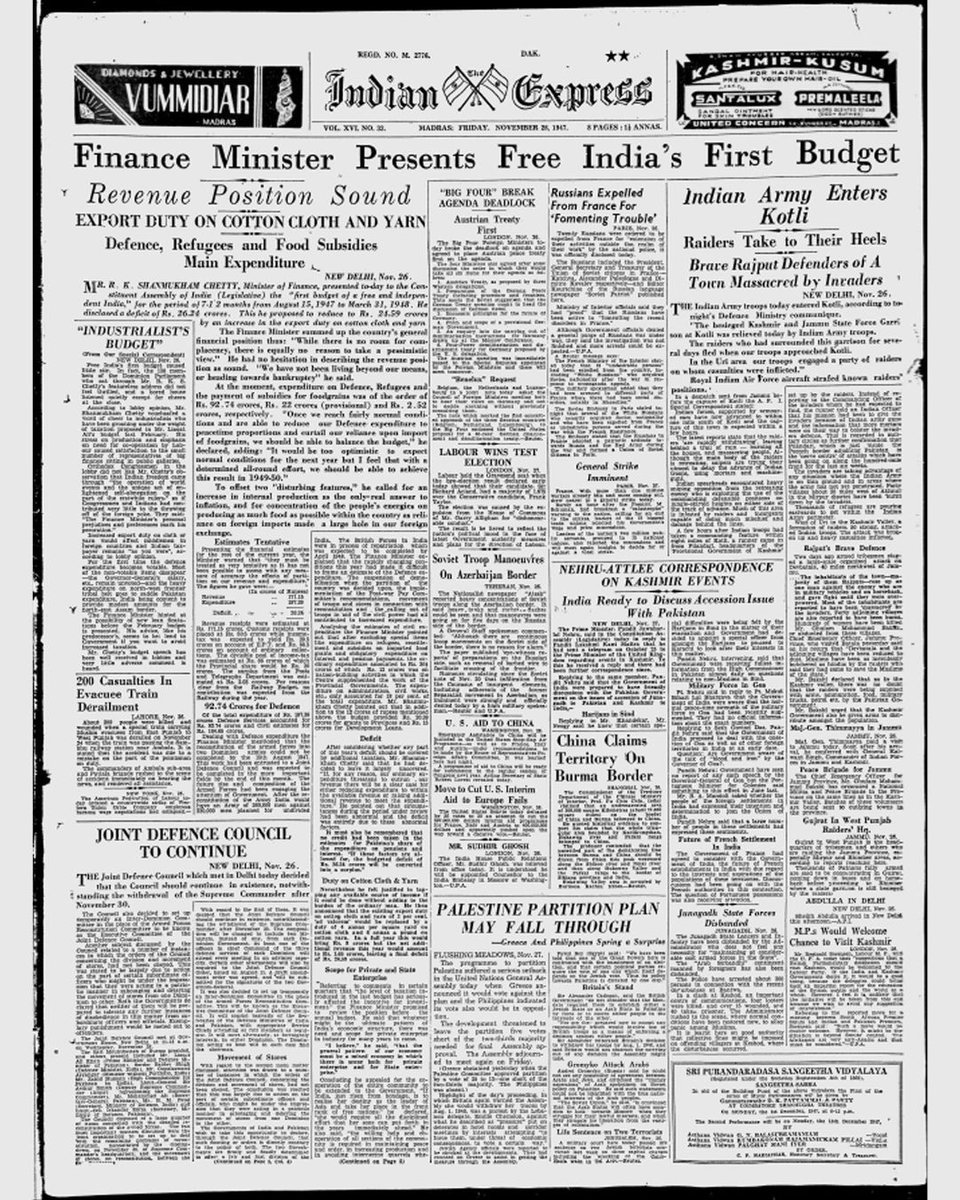
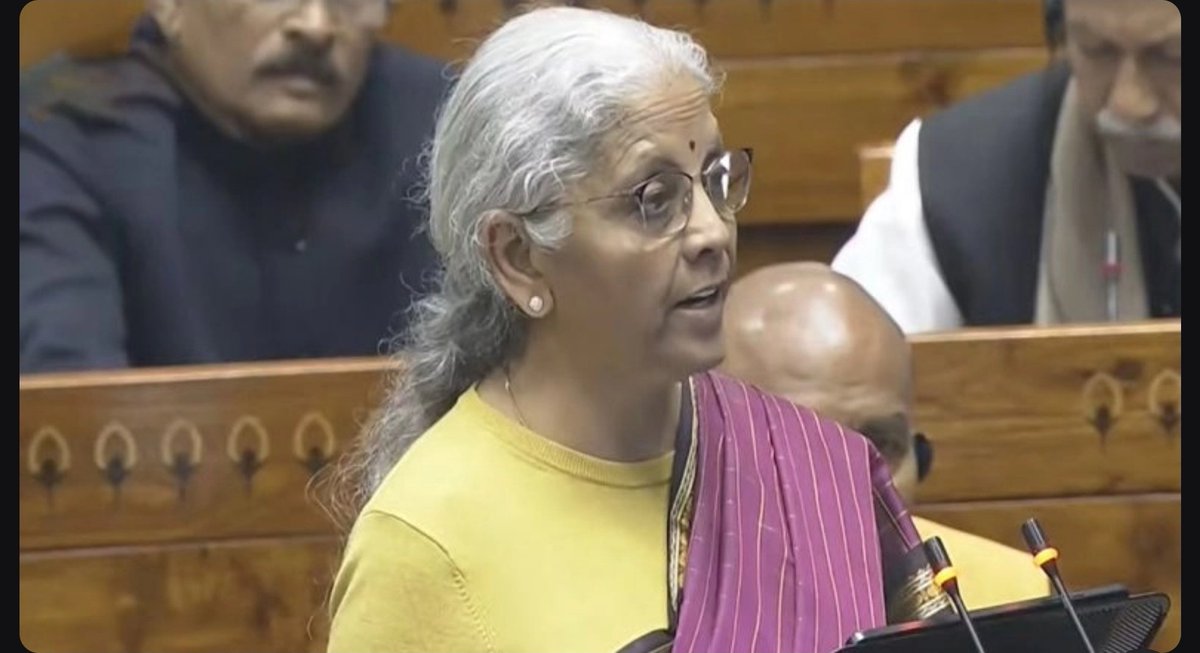
Good morning, readers. This is what our front page looked like 79 years ago when independent #India presented its 1st #UnionBudget Finance Minister #NirmalaSitharaman will table the Union Budget 2026-27 in Lok Sabha today (Feb 1). Here's our front page dated Nov 28, 1947 after India’s first #FinanceMinister R K Sanmukham Chetty presented “first Budget of a free and independent #India” on Nov 26, 1948. The #budget covered a period of 7.5 months from Aug 15, 1947 to March 31, 1948.
The Indian Express tweet media
English
5
59
306
76K
Pravi Karunaratne
Pravi Karunaratne@PraviKaru·
Everyone wanted a bribe. Sitharaman refused. Punjab offered free electricity. Debt hit 53% of GSDP. Credit rating collapsed. Kejriwal promised revdi. Delhi's surplus became deficit. Tamil Nadu's debt crossed ₹7.7 lakh crore. Freebies first. Fiscal later. Sitharaman watched. Learned. Chose differently. Fiscal deficit: 4.3%. Lowest since COVID. While states drown in populism, the Centre tightened. The same economists who predicted doom in 2014 predicted it in 2019. Then 2024. Now 2026. Note the pattern. Note who funds the panic. GDP growth: 7.4%. Fastest major economy. Not China. Not America. India. Inflation: 1.7%. Historic low. Your kitchen noticed even if your Twitter didn't. Capex: ₹12.2 lakh crore. Three times pre-COVID levels. Roads your children will drive. Ports your grandchildren will export from. Defence: ₹7.85 lakh crore. Pakistan happened in January. The same critics who screamed "war readiness" now scream "too much defence." The goalpost has wheels. Here's what the outrage industry won't publish. In 2047, a 21-year-old will graduate into a $10 trillion economy. Debt-free nation. World-class infrastructure. She doesn't have a Twitter account yet. But Sitharaman just voted for her. You wanted ₹1,458 monthly. The government chose her future instead. That's not neglect. That's respect. The belief that you don't need a handout. You need a foundation. Twitter wanted tax cuts. The government built infrastructure. One satisfies for a day. The other satisfies for a century. Pick your horizon. The critics understand this perfectly. They need you angry. Anger clicks. Anger shares. Anger funds newsrooms. Sitharaman walked into Parliament knowing the headlines were pre-written. She presented anyway. That's not politics. That's conviction. Revdi states will trend. India will build. Choose your side. #UnionBudget2026
Pravi Karunaratne tweet media
English
0
0
0
72
Pravi Karunaratne
Pravi Karunaratne@PraviKaru·
The West didn't lose to China. The West built China. Then competed against its own creation. Forty years of technology transfers. Forty years of factory relocations. Forty years of training the workforce that now outproduces them. The bill came due. The West acts surprised. You don't get to fund your competitor's rise and then claim victim status when they rise.
English
0
0
0
14
Richard
Richard@ricwe123·
Blinded by greed, the collective West handed its factories, jobs, and IP to China in exchange for cheap labor and soaring profits. Corporations cashed in, politicians cheered, and consumers gorged on low-cost goods, while Beijing quietly built an empire. Every outsourced job, every transferred technology, every dollar sent east fueled China’s rise, military, economic, and strategic. The West didn’t just open the door; it rolled out the red carpet for its future adversary. Now, the world faces a superpower forged not in isolation, but in the furnace of Western opportunism....
English
128
318
1.2K
88.6K