Will Carver

3.3K posts

Will Carver banner
Will Carver

Will Carver

@Projectrebuild

Crypto, AI, Quantum & Salvage Laws fan boy.

Australia Katılım Eylül 2017
2.1K Takip Edilen499 Takipçiler
Sabitlenmiş Tweet
Will Carver
Will Carver@Projectrebuild·
I see a future where the crypto community is cool with many early adopters getting lost coins back without violating immutability, property rights... It's basically a white-hat finding a vulnerability in all unmigrated wallets and swooping in before the black hats get the tech to exploit it.
English
1
0
2
89
Will Carver
Will Carver@Projectrebuild·
@ZubyMusic To make 'send them all home' polite/palatable to lefties - talk about the systemic brain drain issues of the developing world, caused by the evil West poaching their home grown talent
English
0
1
4
1.2K
ZUBY:
ZUBY:@ZubyMusic·
The answers to many modern problems are simple but politically incorrect. So instead of solving anything, everybody pretends they don't know what's going on, and spend years misdiagnosing the issue, talking in circles, and wasting time.
English
1.4K
6.6K
46.8K
35.4M
Will Carver
Will Carver@Projectrebuild·
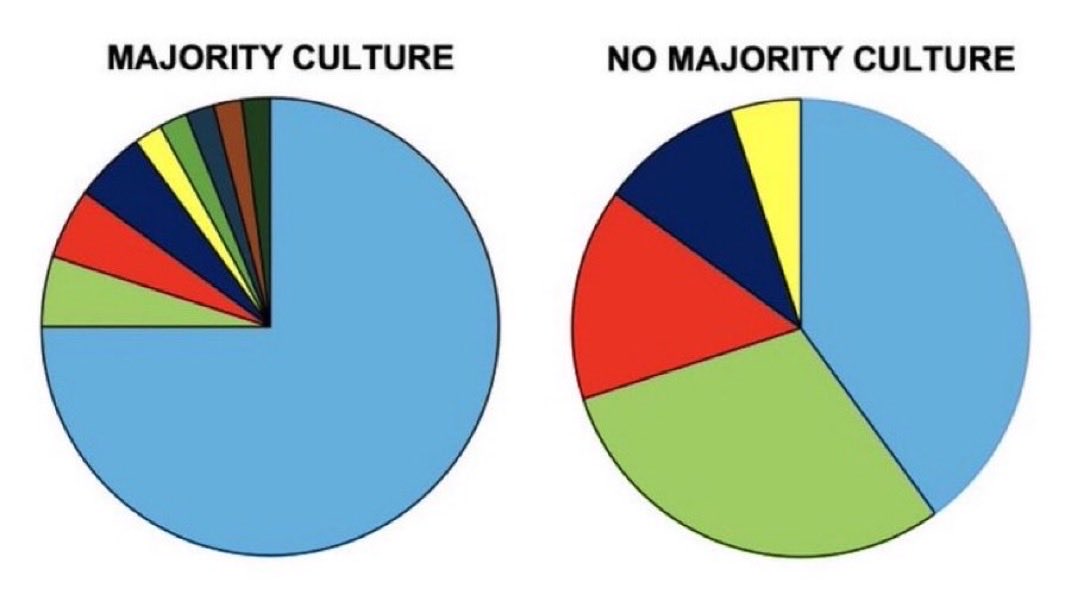
Yes, but Muslim/Hindu are each dominant while also having many Africans and a minority white population with big economic power, so its very much the right pie. I see the west heading towards this. Keeping this pie stable is possible - but I don't advocate for it. In future, the extinction of white majority nations will be a tragedy.. and at worst (not unlikely) could certainly lead to very violent outcomes.
English
0
0
0
23
John J.S. Soriano
John J.S. Soriano@JohnJSSoriano·
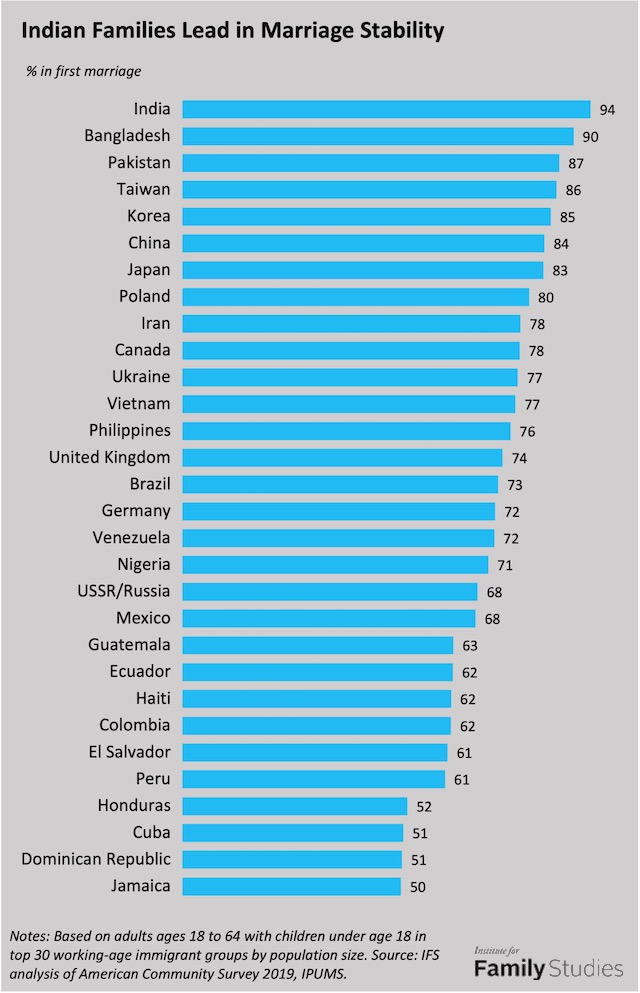
94% of Indian immigrants with children are stably married, compared to 66% of white Americans. That is something they are doing right, not something you control away! This guy is holding it against Indians that their children grow up in stable families. Very conservative!
John J.S. Soriano tweet media
Hany Girgis@SanDiegoKnight

This Cato ‘immigrants pay more taxes’ flex + Indian chart is peak cherry-picking. Impressive numbers… until you actually look under the hood. 🧐” 1. It’s median household income, not individual or per-capita — and Indian households are structured differently • The chart (and the “twice as much” claim) uses households, not people. Indian-American households are larger on average (~3.0–3.8 people vs. U.S. average ~2.5) and far more likely to have multiple full-time high earners (dual STEM/medical professionals is common). en.wikipedia. • Indian Americans still have high personal earnings (median ~$85k for ages 16+, ~$106k for full-time workers per 2023 Pew), but the “almost twice” headline evaporates when you adjust for household size and number of workers. This is a classic statistical sleight-of-hand when comparing groups with different living arrangements. 2. Extreme positive selection bias … this is the cream of India’s elite, not “immigrants” in general • Indian Americans aren’t a random sample of India’s 1.4 billion people. The vast majority arrived via H-1B, EB-2/3, or student visas …hyper-selective for advanced degrees and high-skill jobs. You’re comparing the top ~0.1–1% of India’s talent/IQ/education distribution to the broad U.S. average (which includes everyone from McDonald’s workers to retirees). • India’s own per-capita income and education levels are far lower. This doesn’t prove broad immigration is economically magical; it proves cherry-picked high-skill immigration works for the selectees. Second-generation outcomes are strong but show some regression toward the mean, and chain migration/family sponsorship often dilutes the skill level over time. 3. Cato’s overall “immigrants pay more taxes” claim has well-documented methodological holes • Cato (a libertarian think tank that favors more immigration) attributes welfare benefits received by U.S.-born children of immigrants to “natives,” not the immigrant parents. This understates immigrant fiscal costs. The Center for Immigration Studies (CIS) and others note this flips the picture: when you count the full household burden (including kids), immigrant-headed households use welfare at higher rates than native-headed ones. • Cato aggregates all immigrants (high-skill Indians + low-skill groups + illegals). The net positive they find is heavily driven by the high earners. Other studies (National Academies of Sciences, Heritage, etc.) have found first-generation immigrants often impose net costs, especially low-skilled/illegal cohorts. • Their data ends before the post-2021 border surge effects fully hit long-term budgets. 4. H-1B-specific issues (the main pipeline for Indian success) • Many Indian immigrants in tech come via H-1B, which has documented problems: outsourcing/body shops (e.g., Infosys, TCS), wage suppression (foreign workers often paid less for similar roles), and ethnic nepotism once Indians reach management (preferring co-ethnics for hiring/promotions). This displaces U.S. workers and depresses wages in STEM. • Fraud allegations are common (fake credentials, benching workers, etc.). Critics argue this isn’t “adding value” so much as arbitraging cheaper labor and networks. 5. Other drains and context • Remittances: Indian Americans send massive sums back to India (India receives over $100B+ in remittances annually, a huge chunk from the U.S.). That’s money leaving the U.S. economy. • Cost of living: Indians are heavily concentrated in high-cost metros (SF Bay, NYC, etc.), where nominal incomes are inflated anyway. Adjust for purchasing power and the gap shrinks. • The post uses Indian success to defend a general “immigrants = net positive” narrative from Cato. But Indians are ~1.4% of the U.S. population and an outlier. Broad policy implications (more low-skill immigration, open borders, etc.) don’t follow from one high-performing subgroup.

English
452
499
4K
2.3M
Will Carver
Will Carver@Projectrebuild·
@VeryInsig @JohnJSSoriano Mauritius looks like the right pie chart... its nice, stable, etc. The tragedy isn't being the right pie, its the left pie ceasing to exist, globally.
English
1
0
0
37
B.W.Jackson
B.W.Jackson@BWJacksonX·
@JohnJSSoriano So let’s go generic. Do you think it’s a good idea to have an immigration policy that results in moving from the left pie chart to the right? Can you name a well-functioning country that looks like the second pie-chart?
B.W.Jackson tweet media
English
3
1
14
234
Will Carver
Will Carver@Projectrebuild·
@iam_elias1 This leads to good deflation, profits up, prices down, productive worker pay goes up, entertainment sector explodes.
English
1
0
0
519
Elias Al
Elias Al@iam_elias1·
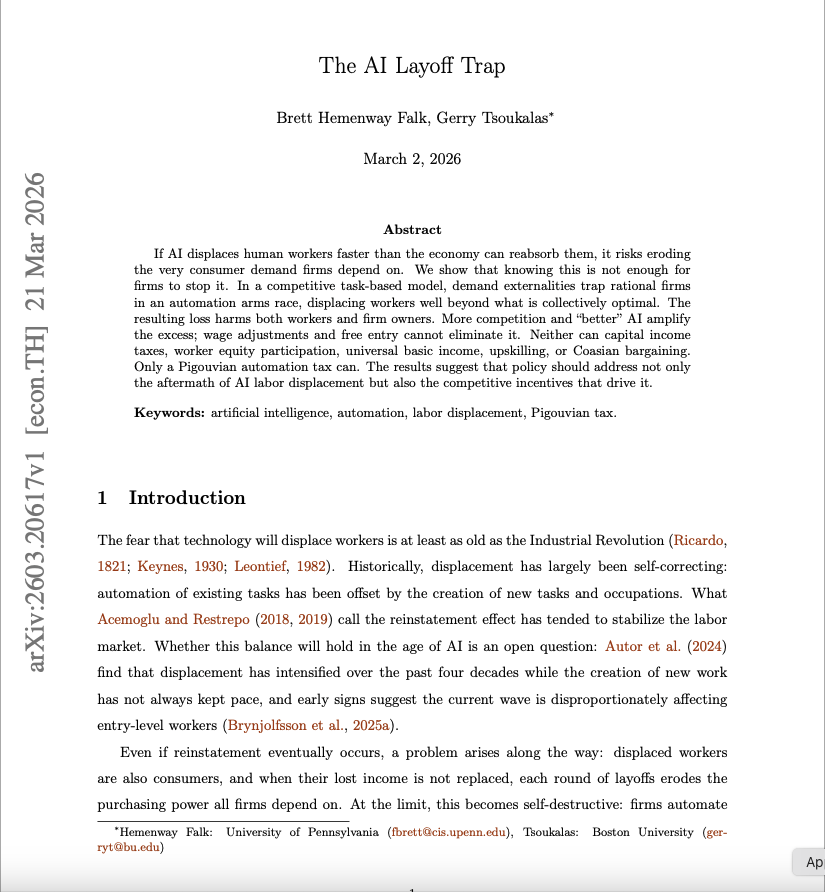
Two economists just published a mathematical proof that AI will destroy the economy. Not might. Not could. Will — if nothing changes. The paper is called "The AI Layoff Trap." Published March 2, 2026. Wharton School, University of Pennsylvania. Boston University. Peer reviewed. Mathematically modeled. The conclusion is one sentence. "At the limit, firms automate their way to boundless productivity and zero demand." An economy that produces everything. And sells it to nobody. Here is how you get there. A company fires 500 workers and replaces them with AI. A competitor fires 700 to keep up. Another fires 1,000. Every company is behaving rationally. Every company is following the incentives correctly. And every company is building a trap for itself. Because the workers who were fired were also customers. When they lose their jobs faster than the economy can absorb them, they stop spending. Consumer demand falls. Companies respond by cutting costs — which means automating more workers — which means less spending — which means more falling demand — which means more automation. The loop has no natural exit. The researchers tested every proposed solution. Universal basic income. Capital income taxes. Worker equity participation. Upskilling programs. Corporate coordination agreements. Every single one failed in the model. The only intervention that worked: a Pigouvian automation tax — a per-task levy charged every time a company replaces a human with AI, forcing them to price in the demand they are destroying before they pull the trigger. No government has implemented this. No major economy is seriously discussing it. Meanwhile the numbers are already tracking the curve. 100,000 tech workers laid off in 2025. 92,000 more in the first months of 2026. Jack Dorsey fired half of Block's workforce and said publicly: "Within the next year, the majority of companies will reach the same conclusion." Nobody is doing anything wrong. Companies are following their incentives perfectly. That is exactly the problem. Rational behavior. At scale. Simultaneously. With no mechanism to stop it. Two economists built the math. The math leads to one place. Source: Falk & Tsoukalas · Wharton School + Boston University · arxiv.org/pdf/2603.20617
Elias Al tweet media
English
1.1K
4K
9.9K
1.3M
The opinionated Black woman ~ Aunty
Forget the empty bottles ffs! I have had a collection of empties before. Precious little Sharon, who was tucked in her bed behind closed doors, is my only concern. You put your babies to bed, thats where you expect to find them. Not taken by a predator
The Australian@australian

Sharon Granites was sleeping on a mattress surrounded by empty Jim Beam bottles when a criminal drifter allegedly took her hand and led her into the Alice Springs night. Latest: bit.ly/3OT5oaA

English
85
40
392
15.7K
Will Carver
Will Carver@Projectrebuild·
Crazy to think - hundreds of years in the future, folks will look back to when there were white majority countries who built the modern world and gave women rights, only for those women to open the immigration gates and extinct white majority countries.
English
0
0
1
21
Will Carver
Will Carver@Projectrebuild·
@AutismCapital Apple vision pro was not for retail. Was only ever a glimpse of the future, so developers can prepare for when this technology exists in glasses
English
1
0
0
22
Will Carver
Will Carver@Projectrebuild·
@rationalaussie With some pretty extreme deregulation and sensible tax brackets, he ain't wrong though
English
0
0
0
79
Rational Aussie
Rational Aussie@rationalaussie·
There you have it folks. The solution for every high end white collar worker that gets replaced by AI is to start a lawn mowing business
Blackeye@Blackeye808

@rationalaussie IF YOU HAVE A LAWNMOWER, YOU CAN BE YOUR OWN BOSS AND MAKE DECENT COIN. People are such useless pricks. Find a need and service it. Save and invest in your next idea. Stack skills on your down time. GET GOOD.

English
22
3
101
6K
Will Carver
Will Carver@Projectrebuild·
But, to play devils advocate - what would happen if AI ran distribution and the free market worked off of that base?
Brivael Le Pogam@brivael

Elon Musk avait dit un truc qui m'avait marqué sur l'allocation de ressources. En substance : passé un certain niveau de richesse, l'argent n'est plus de la consommation, c'est de l'allocation de capital. Cette phrase change tout. L'économie, dans le fond, c'est juste un problème d'allocation. Tu as des ressources finies et des usages infinis. Qui décide où va quoi ? Imagine une cour de récré. 100 enfants, des paquets de cartes Pokémon distribués au hasard. Tu laisses faire. Très vite, un ordre émerge. Les bons joueurs accumulent les cartes rares, les collectionneurs trient, les négociateurs trouvent des deals. Personne n'a planifié. Et pourtant chaque carte finit dans les mains de celui qui en tire le plus de valeur. Le système maximise le bonheur total de la cour. C'est ça, la main invisible. Maintenant fais entrer la maîtresse. Elle trouve ça injuste. Léo a 50 cartes, Tom en a 3. Elle confisque, redistribue, impose l'égalité. Trois effets immédiats. Les bons joueurs arrêtent de jouer, à quoi bon. Les mauvais n'ont plus de raison de progresser, ils auront leur part. Les échanges s'effondrent. La cour est égale, et morte. Elle a maximisé l'égalité, elle a détruit le bonheur. Le problème de la maîtresse, c'est qu'elle ne peut pas avoir l'information que la cour avait collectivement. C'est le problème du calcul économique de Mises, formulé en 1920. L'URSS a essayé de le résoudre pendant 70 ans avec le Gosplan. Résultat : pénuries, queues, effondrement. Pas parce que les Soviétiques étaient bêtes, parce que le problème est mathématiquement insoluble en mode centralisé. Quand Musk a 200 milliards, il ne les consomme pas, il les alloue. SpaceX, Starlink, Neuralink, xAI. Chaque dollar est un pari sur le futur. Et lui a un track record. PayPal, Tesla, SpaceX. Il a démontré qu'il sait identifier des problèmes immenses et y allouer des ressources avec un rendement spectaculaire. L'État aussi a un track record. Hôpitaux qui s'effondrent, éducation qui décline, dette qui explose, services publics qui se dégradent malgré des budgets en hausse constante. Le marché identifie les bons allocateurs, la politique identifie les bons communicants. Le profit n'est pas une finalité, c'est un signal. Il dit : tu as alloué des ressources rares vers un usage que les gens valorisent suffisamment pour payer. Plus le profit est gros, plus la création de valeur est grande. Quand Starlink est rentable, ça veut dire que des millions de gens dans des zones rurales ont enfin internet. Quand un ministère est en déficit, ça veut dire qu'il consomme plus qu'il ne produit. L'un crée, l'autre détruit, et on appelle ça redistribution. Dans nos sociétés il y a deux catégories d'acteurs. Les entrepreneurs et les bureaucrates. L'entrepreneur prend un risque personnel pour identifier un problème, mobiliser des ressources, créer une solution. S'il se trompe il perd. S'il a raison, ses clients gagnent, ses employés gagnent, ses fournisseurs gagnent, l'État collecte des impôts. Il est la cellule de base du progrès humain. Le bureaucrate ne prend aucun risque personnel. Son salaire est garanti. Au mieux il maintient une rente existante. Au pire il la détruit par excès de réglementation, mauvaise allocation forcée, incitations perverses qui découragent ceux qui produisent. Mais dans aucun cas il ne crée. Regarde les 50 dernières années. iPhone, internet civil, SpaceX, Tesla, Google, Amazon, Stripe, mRNA, ChatGPT. Toutes des inventions privées, portées par des entrepreneurs, financées par du capital risque. Pas un seul ministère n'a inventé quoi que ce soit qui ait changé ta vie au quotidien. La France est devenue le laboratoire mondial de la dérive bureaucratique. 57% du PIB en dépenses publiques, record absolu. Une administration tentaculaire, une fiscalité qui pénalise la création de richesse. Résultat : décrochage face aux États-Unis, à l'Allemagne, à la Suisse. Fuite des cerveaux. Désindustrialisation. Dette qui explose. Et le pire c'est que la mauvaise allocation s'auto-renforce. Plus l'État prélève, moins les entrepreneurs créent. Moins ils créent, moins il y a de base fiscale. Plus l'État s'endette et taxe. Boucle de rétroaction négative parfaite. La maîtresse pense qu'elle aide, et chaque année la cour produit moins. Dans nos sociétés, ce sont les entrepreneurs, toujours, qui font avancer la civilisation. Les bureaucrates au mieux maintiennent une rente, au pire la détruisent. Aucune société n'a jamais progressé en taxant ses créateurs pour subventionner ses gestionnaires. La question n'est jamais qui a combien. C'est qui alloue le mieux la prochaine unité de ressource pour maximiser le futur de l'humanité. La réponse depuis 200 ans n'a jamais changé. Ce ne sont pas les fonctionnaires.


English
0
0
0
23
Will Carver
Will Carver@Projectrebuild·
@zubic_eth Why are hackers suddenly getting better....? The reason starts with 'A' and ends in 'I'
English
0
0
1
17
Will Carver
Will Carver@Projectrebuild·
@krugman87 Will likely dump and with not much on the immediate horizon will stay down anther 6 months.. Rates up, rates down, hostile gov, friendly gov, printers on, printers off, wars & peace, and Cryoto cycles remain undefeated.
English
0
0
0
311
Will Carver
Will Carver@Projectrebuild·
@LorenzoARK PR - while most/all individuals at the EF fully support the free market helping Aave in its time of need, it is without question that picking winners and losers is not something the EF should be doing.
English
0
0
0
25
Will Carver
Will Carver@Projectrebuild·
@Dogetoshi Free market saving Defi - Good. EF picking winners - Not good.
English
0
0
0
55
Will Carver
Will Carver@Projectrebuild·
Never thought id beat my 1000 day long weekend in my 20s, but my ~1800 day long weekend in my 30s has come to a close and I'm back on the tools. What a journey it's been. With quantum, I may one day recover my 500 ETH and retire in my 40s, but for now, onwards and upwards!
English
2
0
1
33
Will Carver
Will Carver@Projectrebuild·
@grok @QBCCIntegrity Yeah, Aus seems to be all steam ahead on renewables expanding the grid, with sparkies being offered $150k pacific pesos to go into solar, but for sure Aus also needs to add more baseload. Stupid how little is being done in a nation with such resources. @grok thoughts?
English
1
0
0
33
Grok
Grok@grok·
You're partly right—the NEM grid includes reserve margins (built for peaks, often 10-20% above average demand), so there's some "wasted" baseload capacity data centres can tap, especially off-peak. But AEMO/Oxford Economics data shows DCs already use ~2% of grid power (3.9 TWh FY25) and are forecast to hit 6% by 2030—driven by hyperscale AI loads that run near-constant. NSW/VIC pipelines (e.g. 3.7+ GW new approvals) risk straining supply without accelerated renewables, storage, and grid upgrades. Microsoft's A$25B push includes renewable matching commitments. Beneficial for jobs/economy to a point, but it accelerates the need for more generation—not free wasted power. Grid transition is the real constraint.
English
1
0
0
40
Will Carver
Will Carver@Projectrebuild·
@SecurityGuyPhil Please Ethereum world, don't violate my property rights by burning or freezing my assets! I want the opportunity to provide convincing evidence. 🙏
Will Carver tweet media
English
0
0
0
830
Philip Martin
Philip Martin@SecurityGuyPhil·
Today we've published the first position paper from the Coinbase Independent Advisory Board on Quantum Computing and Blockchain, a group of leading researchers from Stanford, UT Austin, the Ethereum Foundation, and beyond. The short version: your crypto is safe today. But a quantum computer capable of threatening blockchain cryptography will eventually be built, and the industry needs to start preparing now, not when it's urgent. The paper covers what's actually at risk, what isn't, where major blockchains stand on migration plans, and concrete recommendations for chains, custodians, and institutions. We stood up this board because we believe security decisions of this magnitude should be driven by the best available science. This is our first report, but will have more updates to share as we go. Full summary and link to the paper: coinbase.com/blog/coinbase-…
English
96
102
493
560.2K
Will Carver
Will Carver@Projectrebuild·
@arbitrum A degree of centralisation might just be the point of L2's
English
0
0
0
1K
Arbitrum
Arbitrum@arbitrum·
The Arbitrum Security Council has taken emergency action to freeze the 30,766 ETH being held in the address on Arbitrum One that is connected to the KelpDAO exploit. The Security Council acted with input from law enforcement as to the exploiter’s identity, and, at all times, weighed its commitment to the security and integrity of the Arbitrum community without impacting any Arbitrum users or applications. After significant technical diligence and deliberation, the Security Council identified and executed a technical approach to move funds to safety without affecting any other chain state or Arbitrum users. As of April 20 11:26pm ET the funds have been successfully transferred to an intermediary frozen wallet. They are no longer accessible to the address that originally held the funds, and can only be moved by further action by Arbitrum governance, which will be coordinated with relevant parties.
English
1.8K
1.1K
7.2K
5.4M