Some of you don't know how good Wendy's was when he was alive. It's been driven into the ground by private equity, but there was a time when there was no better burger.
In 1946, Soviet Marshal Georgy Zhukov reportedly asked the United States for a clear, unbranded version of Coca-Cola so he could drink it without attracting Stalin’s suspicion. The company created a vodka-like variation in plain glass bottles marked only with a red star, which became known as “White Coke.”
After World War II, Soviet Marshal Georgy Zhukov reportedly developed a taste for Coca-Cola after being introduced to the beverage by General Dwight D. Eisenhower. Under Joseph Stalin’s rule, however, openly consuming an American product could be seen as a sign of sympathy toward Western capitalism, creating a political dilemma for one of the Soviet Union’s most celebrated military figures.
To avoid unwanted attention, Zhukov allegedly used diplomatic channels through General Mark W. Clark to request a version of Coca-Cola that resembled vodka. The request eventually reached President Harry S. Truman, who passed it along to The Coca-Cola Company. A chemist at a bottling plant in Austria removed the drink’s caramel coloring while preserving its familiar flavor.
The resulting clear Coca-Cola, later nicknamed “White Coke,” was placed in plain, straight-sided glass bottles with white caps featuring a red star instead of the company’s iconic branding. In 1946, a shipment of 50 cases was reportedly delivered discreetly to Zhukov, moving through Soviet-controlled areas without being inspected.
Back in 2011, Turntable.fm had just come out. It was a website where you could DJ for a room of digital people dressed up like furries. It was weird and wonderful at the same time. I had a room called Folking Indie, and I loved the people who were members of that room. The few months that site existed is right up there with high school for influencing my musical choices up to this day. I miss it.
Trump's judicial picks so far in his second term have been solid. Something has to have gone wrong if the rumors that he's going to make a dud of a choice are true.
Good overview by @mike_frags on why the vacancy on the Eighth Circuit is so big. It's 10-1 GOP appointees, but not nearly as conservative as that suggests. This pick would make it a majority of Trump nominees. And then it would be that conservative. nationalreview.com/bench-memos/ei…
Buc-ee's is going viral after an employee pay sign revealed that some store managers can earn up to $275,000 a year — without a college degree.
The sign lists hourly positions like cashiers, warehouse workers and grocery stockers starting at $20 an hour, while food service managers can earn $150,000 to $200,000 and general managers can make $200,000 to $275,000.
The pay rates sparked debate online, with some saying it's proof that six-figure careers don't always require a college degree, while others argue the salaries reflect the responsibility of running one of Buc-ee's massive stores.
Experts say the Texas-based chain has become much more than a gas station: It's a road trip destination, known for its oversized stores, food offerings and famously clean bathrooms.
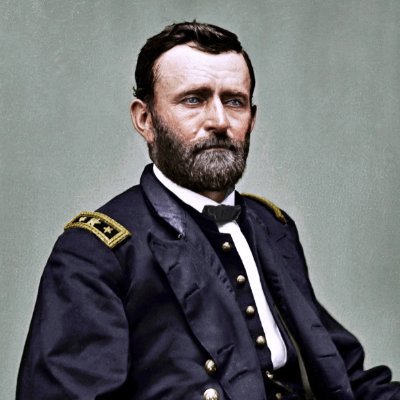
141 years ago today, on July 23, 1885, Ulysses S. Grant died at 63.
Most people know him as the general who won the Civil War and the two term president on the fifty dollar bill. Almost nobody knows how his story actually ended, and it's one of the most quietly heroic things in American history.
Start with the fact that "Ulysses S. Grant" was never even his name. He was born Hiram Ulysses Grant. When he got to West Point, a congressman filled out the paperwork wrong and wrote him down as Ulysses S. Grant. The S stood for nothing at all. Grant just shrugged and kept it for the rest of his life. Later, when he forced a Confederate fort to give up with no conditions, soldiers said the U.S. stood for "Unconditional Surrender."
Here's the strange thing though. Before the war, Grant was a failure at nearly everything he tried. He flopped at farming. He flopped at real estate. By his late thirties he was working as a clerk in his father's leather goods store, hauling hides for his younger brothers. Then the war came, and the quiet clerk turned out to be one of the greatest military minds the country ever produced. He took Vicksburg. He ground down Lee. He accepted the surrender at Appomattox and, instead of gloating, let the Confederate soldiers keep their horses so they could plant crops. Then he won the White House twice.
So how does a man like that end up dying broke?
In 1884 Grant trusted his savings to a Wall Street firm run by a young hotshot named Ferdinand Ward, basically the Bernie Madoff of his day. Ward was running a con. When it collapsed, Grant lost everything. He was so wiped out that he had to borrow money just to cover his household, and he handed over his war trophies and swords to pay a debt. The most famous soldier in America was suddenly poor.
Then it got worse. Doctors found throat cancer. Grant had smoked as many as twenty cigars a day, a habit the public actually fed. After his victories, admirers mailed him cigars by the thousands, and it very likely killed him.
Now here is the part that gives me chills.
Grant knew he was dying, and he knew he was leaving his wife Julia with nothing. So a man in constant pain, throat closing up, some days unable to speak above a whisper, sat down to write his memoirs and out earn death itself. Mark Twain, who admired him, offered him a stunning book deal, far better than anything normal authors got. Grant took it and went to work.
He wrote something like three hundred thousand words in about a year while cancer ate his throat. On the days he couldn't talk, he wrote on slips of paper. Witnesses said the pain was constant. He kept going anyway. He finished the manuscript just days before he died.
And it worked. The memoirs became one of the best selling books of the century and are still considered maybe the finest memoir ever written by an American president. The royalties sent to Julia came to roughly four hundred fifty thousand dollars, an enormous fortune then, enough that she never had to worry about money again. He couldn't win the money back on Wall Street, so he wrote his way out and crossed the finish line with almost nothing to spare.
When he died, the country stopped. Around a million and a half people lined the streets of New York for his funeral, the largest the city had ever seen. And look at who carried him. His pallbearers included Union generals and Confederate generals, side by side. One of them, Simon Bolivar Buckner, was the very man who had surrendered to Grant at Fort Donelson decades earlier. He came to Grant's sickbed near the end, two old enemies making peace, and then helped carry him to his grave.
That grave became Grant's Tomb in New York, the largest mausoleum in North America.
A failed store clerk who saved the Union, lost everything to a con man, and then, dying and in agony, wrote a masterpiece to protect his wife.
141 years ago today. They really don't make them like that anymore.
New allegations in the Karen Read case raise concerns about the federal investigation into law enforcement, including the conduct of the US Attorney's Office in Boston. For a short primer, read our latest on Substack.
🔗 bit.ly/45gyFAD
The Karen Read story is truly remarkable, a testament to how an astroturfed campaign can generate a mob that subverts justice and punishes the innocent. Quite a long-form article laying it all out from Boston Magazine. You wonder if all the creators who either fell for the lie or were complicit in spreading it will ever admit what they did.
bostonmagazine.com/news/2026/07/2…
One of my favorite genres of music is what I call "well" songs. These are songs that use the word "well" to transition between the verse and the chorus. Weird? Maybe. But I get a kick out of them. There's just something about singing the word "well" in the middle of a song that I find delightful.
I've listed five below, but I'm always looking for more. If you have other examples, hit me with them.
1. The Impression That I Get -- Mighty Mighty Bosstones @mmbosstones
2. Lips of an Angel -- Hinder @hindermusic
3. Got You (Where I Want You) -- The Flys
4. If I Die Young -- The Band Perry @thebandperry
5. Old Joe's Place -- The Folksmen (the fact this is a parody song makes me wonder if they noticed this phenomenon)
Scott Macklem was murdered in a college parking lot. Within hours, police named a suspect — Temujin Kensu — even though witnesses placed him far from the scene.
Aaron Habel joins me to revisit the case and explain why Framed is asking a deeper question this season.
bit.ly/4flWUlG