Josh Farkas MD 💊

14.3K posts

Josh Farkas MD 💊 banner
Josh Farkas MD 💊

Josh Farkas MD 💊

@PulmCrit

Author of the Internet Book of Critical Care 🖋️ Board certified in critical care, pulmonology, and neurocritical care 🤓 Zentensivist 🧘‍♂️ No COI 💰

University of Vermont 🐄 Katılım Ekim 2012
530 Takip Edilen65.1K Takipçiler
Dor Cohen
Dor Cohen@dorcodoc·
@RafaelOliveLeit @mac_eden @IM_Crit_ Few weeks ago we had a very difficult patient on VA ECMO I went to brachial without any complaints, but got some ricochets from my senior colleague 😜
English
0
0
2
77
IMCrit
IMCrit@IM_Crit_·
Unpopular ICU opinion: Switching from a radial to a femoral arterial catheter often reveals adequate pressure and allows for de-escalation of vasopressors. The opposite can happen too... 😩 Welcome to my life!
IMCrit tweet media
English
8
11
120
17.9K
Josh Farkas MD 💊 retweetledi
the EMCrit Crew
the EMCrit Crew@emcrit·
EMCrit RACC-Lit Review for July 2026 This month: • Does prehospital whole blood actually improve outcomes? • Can DSD damage your defibrillator? • Go big or go home for adenosine & SVT? and so much more... emcrit.org/cpyu
the EMCrit Crew tweet media
English
1
8
21
4.6K
IMCrit
IMCrit@IM_Crit_·
Inconvenient truth: I don’t want to sound judgmental but if the patient is making 100 cc of urine per day for the last 3 days, switching the Lasix drip to Bumex drip will not save the day… 🤷‍♂️
English
6
2
103
14.6K
Josh Farkas MD 💊
Josh Farkas MD 💊@PulmCrit·
@TrackYourHeart pulse tapping artefact. lead I looks normal but II and III are totally bizzare with a unphysiologic QT interval.
English
0
2
6
2.2K
CardiovascularCorner
CardiovascularCorner@TrackYourHeart·
A 58-year-old man with a chronic cervical spinal cord injury develops sudden severe hypertension and abdominal pain. His ECG is shown below. What is the most likely diagnosis
CardiovascularCorner tweet media
English
12
14
125
17.6K
Elliot Tapper
Elliot Tapper@ebtapper·
Lactulose is hard to beat 1. Prevents HE 2. Reduces mortality 3. Low risk of adverse events A systematic review with Bayesian meta-analysis led by Kasmikha @UMIntMed doi.org/10.1111/liv.70…
Elliot Tapper tweet mediaElliot Tapper tweet media
English
1
26
68
8.1K
IMCrit
IMCrit@IM_Crit_·
ICU Procedures: Someone has to say it: I love subclavian central lines, but ultrasound guidance hasn't made the procedure easier for me. In fact, it's still the most technically challenging central venous access I perform. Is it just me?
GIF
English
43
11
173
29.2K
Josh Farkas MD 💊 retweetledi
Airway of the Month
Airway of the Month@AirwayOTM·
The July 2026 Airway of the Month is here! 🫁 (2nd try the first seemed out of order) The cords are visible. The ETT is…less convinced. 😅 This case shows why laryngoscopy must be optimized not only to see the glottis—but to create a path for tube passage. 🎥 kumc.hosted.panopto.com/Panopto/Pages/…⁠� A glottic view can look “good” and still be poor for tube delivery. 👀 Here, a right-lateral, oblique blade position creates competing angles between the blade, glottis, and ETT. First optimize the laryngoscopy. Then troubleshoot the tube. The ETT stops. That’s feedback—not a challenge to push harder. 🛑 After 1–2 gentle attempts, withdraw and change something meaningful: re-center, suction, rotate, restyle, use a bougie, downsize the ETT, or reset Repeated pushing can turn a geometry problem into a trauma problem: bleeding, less working space, a contaminated view—and then a “sundowning” epiglottis. 🩸🌅 When the view deteriorates, pause and rebuild the pathway. July’s airway sequence: CLEAN → CENTER → ALIGN → PASS → PIVOT 🔄 A view is not a pathway. Keep pushing airway education forward—just don’t keep pushing the ETT. 😉 #DifficultETTpassage #Sundowning #LeadWithSuction #FOAMed
English
3
10
47
8.4K
Josh Farkas MD 💊
Josh Farkas MD 💊@PulmCrit·
Disagree - I think the concept that an apnea period during intubation will cause your pCO2 to skyrocket is dogma. During apnea, pCO2 rises by ~3 mm/minute. Anyone who does apnea tests to certify brain death knows this is a slow process (most apnea tests = 10 minutes without a single breath!). For intubating a patient with metabolic acidosis, you surely want to get the tube in quickly. But an experienced operator will have enough time to get the tube in before the pCO2 rises much. I don't think the fear of this apnea period should be driving people to do weird stuff like awake intubation or ketamine-only intubation in these patients. Just do a fast RSI. The real problem is often that it's often impossible to match the patient's endogenous minute ventilation with the ventilator. But this problem exists regardless of the details of intubation.
Emergency Medicine News@EMNews

Intubation + severe metabolic acidosis = high risk. Lose respiratory compensation, even briefly, and patients can crash fast. Know when to hold off, how to prep, and how to ventilate if you must tube. Read EM:RAP Corner: 👉 ow.ly/W6sc50ZeF4Z

English
23
23
193
43.8K
Josh Farkas MD 💊
Josh Farkas MD 💊@PulmCrit·
@eyegenedrb 3 months seems reasonable. a negative PE workup doesn't mean you will never get a PE for the rest of your life. if someone comes into the ED and gets a negative PE workup and then gets a PE 5 months later it's probably a separate event.
English
1
0
0
96
Jordan Black
Jordan Black@eyegenedrb·
@PulmCrit YEARS is great...until you remember the 3-month exclusion. I appreciate the efficiency, but calling it undefeated without site-specific validation is premature.
English
1
0
0
255
Josh Farkas MD 💊
Josh Farkas MD 💊@PulmCrit·
DKA patients are notorious for having gastroparesis and lots of fluid in their stomach so the concept of doing a ketamine-only intubation on a patient in DKA is scary. I grew up in the era before ICU rapid-sequence intubation and there's nothing worse than a patient in that purgatory where they're moving around too much to intubate them, yet they aren't really breathing or protecting their airway.
English
1
0
3
220
Derek Smith
Derek Smith@derekedsmith·
@PulmCrit @smithECGBlog Ketamine intubations are terrible ideas. Your patient isn’t awake enough to follow commands, and it’ll alter their respiratory status no matter what people say. And they’re not asleep and paralyzed, so difficult to bag mask and potent. intubate. Tiger country.
English
1
0
0
290
Josh Farkas MD 💊
Josh Farkas MD 💊@PulmCrit·
@jaywood18 most of the time I think its’s clinically silent. the kidneys may get adequate blood flow during systole. but I do worry that it could increase the risk of AKI.
English
0
0
2
496
j
j@jaywood18·
@PulmCrit So does this complication manifest with renal injury/failure? A tolerable temporary reduction in renal function in deference to the coronaries? Or it can be bigger deal than that
English
1
1
2
537
Josh Farkas MD 💊 retweetledi
the EMCrit Crew
the EMCrit Crew@emcrit·
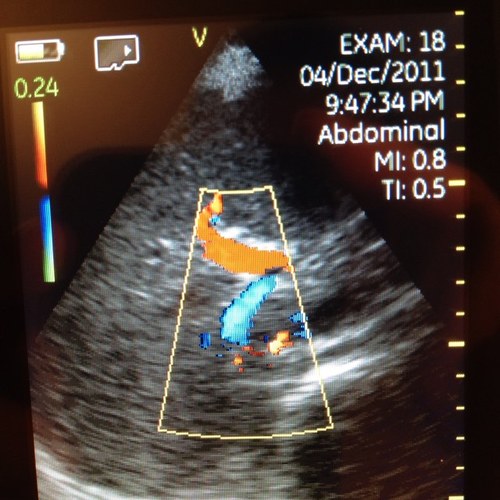
EMCrit 429 - RUSH 2.0 - The I-RUSH and CRUSH Exams Finally dropping the RUSH Exam 2.0 on this week's EMCrit Podcast! We're moving past just the crashing patient to bring you the Interface-Informed RUSH. Get ready to standardize your hemodynamic assessments at the bedside. [#FOAMed] emcrit.org/429
the EMCrit Crew tweet media
English
1
9
27
4.8K
Joel M. Topf, MD FACP
Joel M. Topf, MD FACP@kidney_boy·
Leaping into the week-end with a potassium of 9.5 Intern: How much calcium should we give? Me: All of it.
Joel M. Topf, MD FACP tweet media
English
17
12
128
16.4K
Gerald Creager
Gerald Creager@GeraldCreager·
@PulmCrit Thanks, you saved me a trip to OpenEvidence. Very informative. And timely. Perhaps CDC will catch up on case reporting when they get a Director?
English
1
0
1
200
Josh Farkas MD 💊
Josh Farkas MD 💊@PulmCrit·
fair points, but the real clinical issue here is selecting RSI vs some sort of awake or ketamine intubation. awake/ketamine intubation will generally involve some amount of systemic sedation which often *blunts* the respiratory drive thereby pushing CO2 up. Giving a large bolus of ketamine can also cause a short period of apnea. So this strategy *still* increases CO2. ultimately, I think either strategy will probably involve a bump in pCO2 of ~5-10 mm. and the other major factor to consider (maybe not true at Hennepin but true elsewhere) is that people often aren't great at awake/ketamine intubations. When folks try out unfamiliar approaches to intubation the risk of things going really sideways increases (e.g., poor views, emesis).
English
1
0
9
5.5K
Stephen W. Smith
Stephen W. Smith@smithECGBlog·
@PulmCrit In severe metabolic acidosis (e.g. bicarb = 4), pCO2 is ~14. rise in pCO2 from 14 to 20 ->pH drop 7.08 to 6.92. pCO2 of 28 will give pH of 6.78. And the rise i PCO2 of a brain dead person is far slower than of a person who has been using skeletal muscle and producing more CO2.
English
1
1
16
1.7K