The PurdonLab

44 posts

The PurdonLab

The PurdonLab

@PurdonLab

A neuroengineering lab at Stanford University focused on brain dynamics, brain health, and the neural mechanisms of anesthesia.

Stanford School of Medicine Katılım Haziran 2020
131 Takip Edilen146 Takipçiler
Sabitlenmiş Tweet
The PurdonLab
The PurdonLab@PurdonLab·
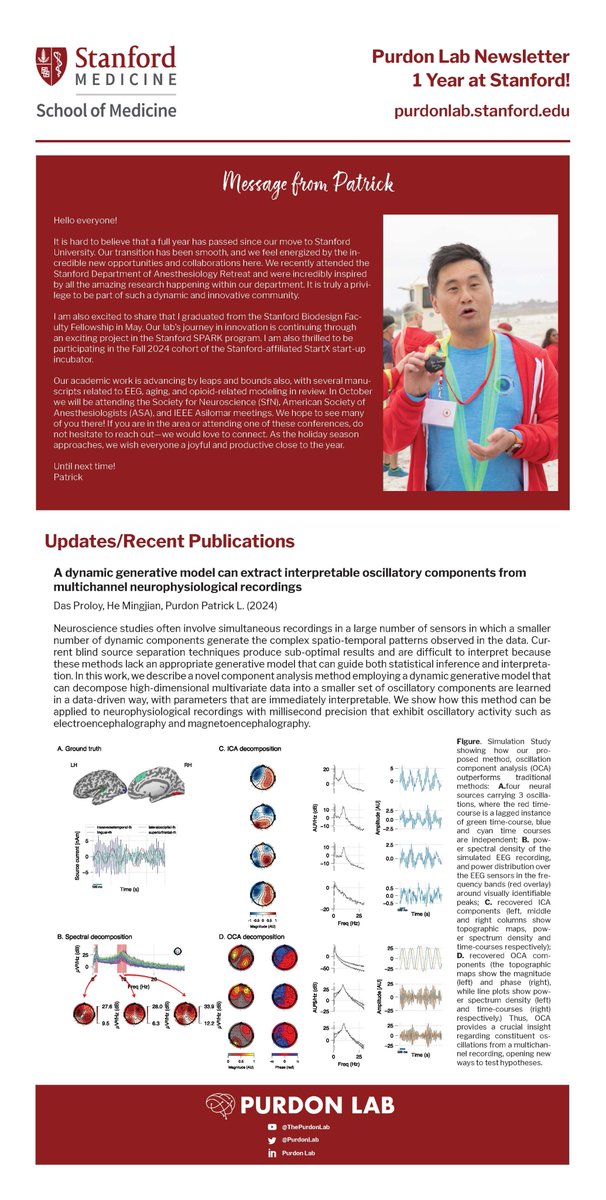
We are marking the beginning of our journey at Stanford University with the inaugural PurdonLab newsletter! Read all about our recent accomplishments and publications, and meet our new lab members.
The PurdonLab tweet mediaThe PurdonLab tweet media
English
1
1
5
558
The PurdonLab
The PurdonLab@PurdonLab·
Happy Holidays from the Purdon Lab! As we wrap up the year, we’re grateful for the collaborations, progress, and community that made this such a meaningful year for our lab. We’re excited to share a few highlights from the past months and to look ahead to what’s coming next.
The PurdonLab tweet mediaThe PurdonLab tweet media
English
0
1
2
64
The PurdonLab
The PurdonLab@PurdonLab·
Excited to share a new important paper about peripheral nerve blocks: while they reduce pain and opioid use right after surgery, they may lead to up to 22% more opioid use later during the hospital stay, likely due to rebound pain. @BJAJournals
Rory Vu Mather@rvmather

What started out as a side project to teach one of my research assistants about clinical machine learning and statistics has turned into a full publication in @BJAJournals! authors.elsevier.com/sd/article/S00…

English
0
1
4
254
The PurdonLab retweetledi
Stanford Anesthesiology
Stanford Anesthesiology@stanfordanes·
Can brain waves during surgery predict who’s at higher risk after? What’s going on: Every year, millions of people die after surgery. Doctors need better ways to spot who’s most at risk—while the surgery is happening.
English
1
11
31
3.8K
The PurdonLab
The PurdonLab@PurdonLab·
We are excited about the possibility of using EEG monitoring to increase system-wide efficiencies in OR scheduling, PACU resources, and both patient and caregiver satisfaction! (4/4)
English
0
0
0
51
The PurdonLab
The PurdonLab@PurdonLab·
We are excited that Mae’s case report has been published! Here we show that anesthetic-induced neural signals from EEG can be used as a direct measure of an Alexander’s Disease young patient’s anesthetics sensitivity. pmc.ncbi.nlm.nih.gov/articles/PMC11… (1/4)
English
3
2
3
152
The PurdonLab
The PurdonLab@PurdonLab·
Application of EEG monitoring decreased anesthetic wash-off and PACU recovery times by 50%! Overall, this case highlights the potential benefits EEG monitoring could provide our pediatric patients and clinical staff with almost no additional changes to anesthetic workflow. (3/4)
English
0
0
1
46
The PurdonLab
The PurdonLab@PurdonLab·
Rather than relying on anesthetic dosing schemes that are based on adult physiology and don't account for changes to anesthetic sensitivity associated with neurodegenerative disorders, the EEG can provide real-time feedback to minimize anesthetic exposure and improve outcomes.
English
0
0
0
41
The PurdonLab
The PurdonLab@PurdonLab·
We have officially started collecting data on our Awake EEG and Aging Study which looks at EEG brain activities associated with aging and preclinical Alzheimer's! Here is the study design poster that Amber and Julia presented at the Stanford Anesthesia Department Retreat
The PurdonLab tweet media
English
0
2
5
183
The PurdonLab retweetledi
Rory Vu Mather
Rory Vu Mather@rvmather·
Excited that my first 1st authored paper from my PhD research has been published in Anesthesiology! We found that neural oscillations in the alpha band of frequencies (8-12 Hz) during anesthesia can predict the risk of postop mortality up to a year after surgery. 🧵 (1/3)
Rory Vu Mather tweet media
English
2
7
10
1.1K
The PurdonLab
The PurdonLab@PurdonLab·
@rvmather Amazing work! We definitely need more ways on how to predict postoperative mortality and adverse outcomes, and brain signaling power gives us great insights. Congrats!
English
0
0
0
13
The PurdonLab retweetledi
Rory Vu Mather
Rory Vu Mather@rvmather·
Excited that our case report has been published! Here we show how the neural signals from a readily available forehead EEG sensor can be used to titrate anesthetic dosing for a child with neurodegenerative disease and decrease postop recovery times. journals.lww.com/aacr/fulltext/…
Rory Vu Mather tweet media
English
2
2
6
467
The PurdonLab
The PurdonLab@PurdonLab·
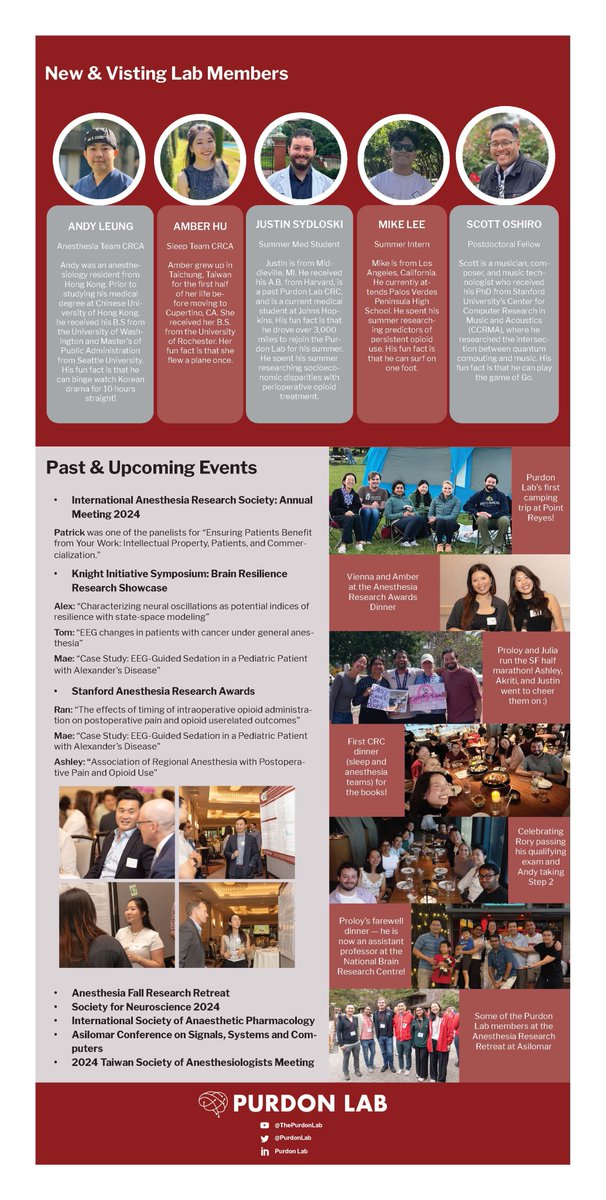
We're celebrating our 1-Year anniversary at Stanford University! Check out our next edition of our newsletter for our recent publications, new lab members, and upcoming events.
The PurdonLab tweet mediaThe PurdonLab tweet media
English
1
2
10
307
The PurdonLab retweetledi
G. Burkhard Mackensen
G. Burkhard Mackensen@gb_mackensen·
Enjoying our @UWAnesthPainMed 16th Academic evening in the beautiful UW WƎⱢƎBʔALTXʷ – Intellectual House: a huge display of the rich science that our departmental members pursue in biomedical & clinical sciences. Our 🔑 note speaker is Dr. Patrick Purdon from @stanfordanes
G. Burkhard Mackensen tweet mediaG. Burkhard Mackensen tweet media
English
0
3
21
1K
The PurdonLab
The PurdonLab@PurdonLab·
Currently, we are working on gathering such empirical evidence in response the the reviewer's comment.
English
0
0
0
64
The PurdonLab
The PurdonLab@PurdonLab·
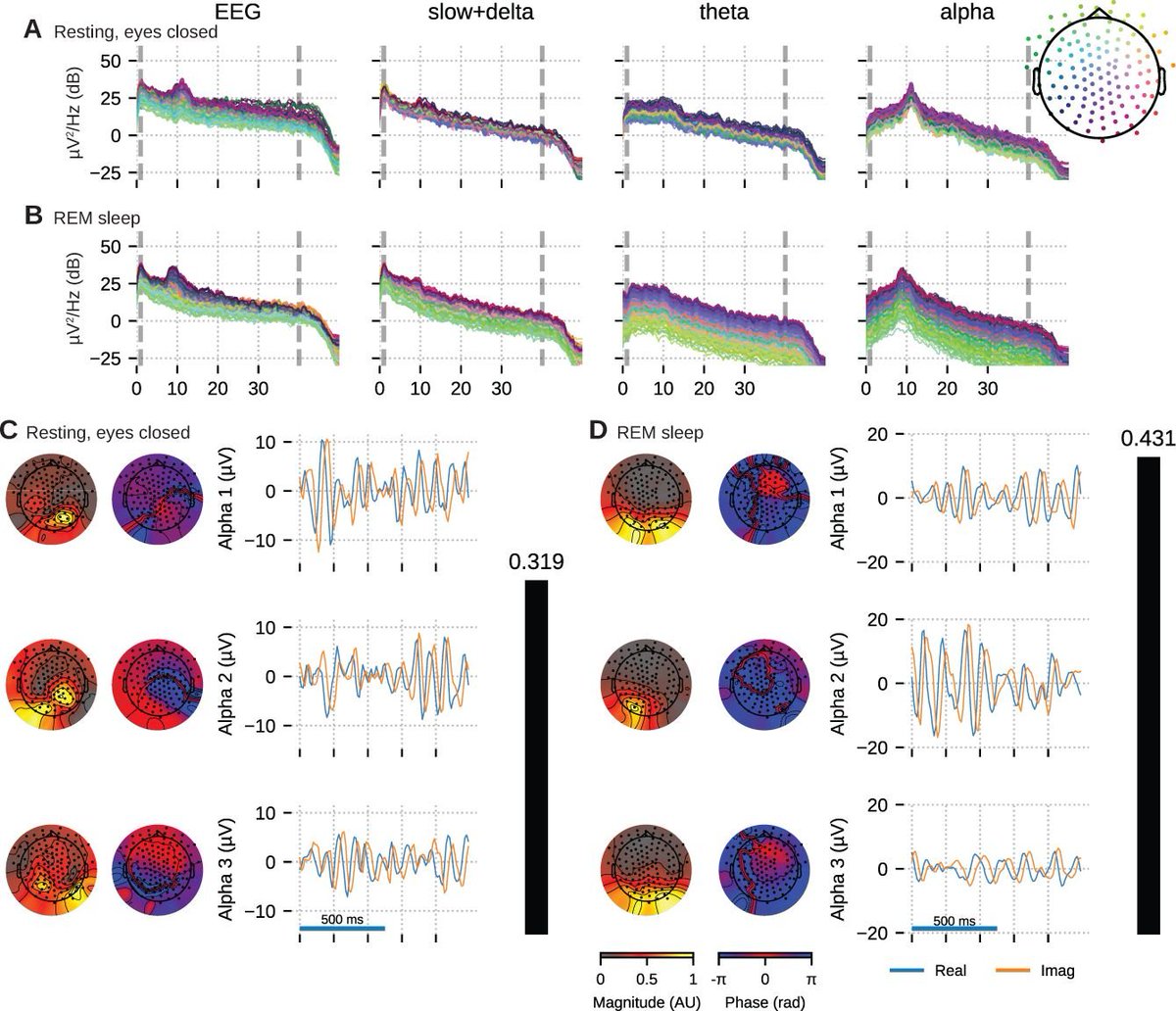
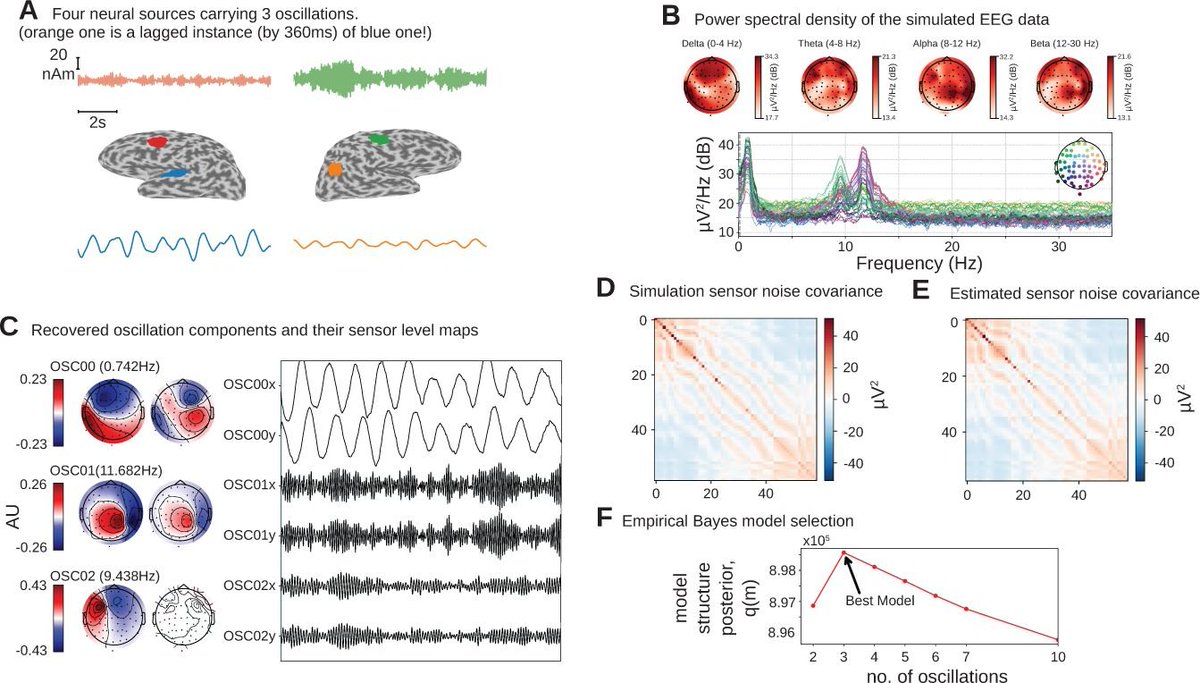
Although we demonstrated several utilities of the methods, the reviewer (correctly) pointed out lack of empirical evidence for the approach's advantage.
The PurdonLab tweet media
English
1
0
0
82
The PurdonLab
The PurdonLab@PurdonLab·
In the reviewed preprint, we propose a Oscillation Component Analysis (OCA) approach, in analogy to Independent Component Analysis (ICA), in which source separation is achieved through biophysically inspired generative modeling of neural oscillations. doi.org/10.7554/eLife.…
The PurdonLab tweet media
English
1
5
12
902