Rahul Ramchandani 🤖

8.7K posts

Rahul Ramchandani 🤖 banner
Rahul Ramchandani 🤖

Rahul Ramchandani 🤖

@Rahul_Ramc

curious, mostly. see https://t.co/JYZVtIB0B5, https://t.co/22kBfRL2Zc, @sindhipapadsays
Mumbai, India Katılım Haziran 2014
921 Takip Edilen1.7K Takipçiler
Ankur Nagpal
Ankur Nagpal@ankurnagpal·
Announcing my new thing: I'm launching a new public venture fund USVC is built by AngelList with @naval shaping our investment strategy in the technology companies building our future And unlike traditional venture funds, everyone can invest along with just $500:
English
323
144
3.5K
698.3K
Rahul Ramchandani 🤖
Rahul Ramchandani 🤖@Rahul_Ramc·
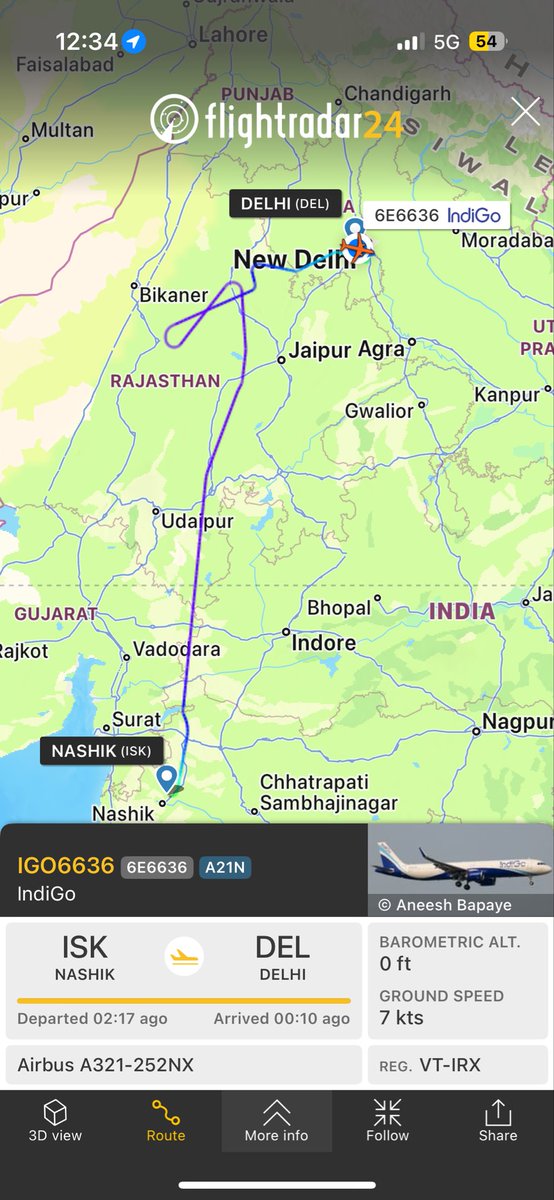
@swarajk_ @IndiGo6E Apparently weather/thunderstorms, my flight from Nashik to Delhi was also quite delayed due to this and we had to spend some time in the air waiting to be cleared
Rahul Ramchandani 🤖 tweet media
English
1
0
1
202
Swaraj
Swaraj@swarajk_·
tf is wrong w @IndiGo6E, and what kind of air traffic congestion is delaying the flight by more than 3 hours??
Swaraj tweet media
English
6
0
24
2.4K
Shantanu Goel
Shantanu Goel@shantanugoel·
There are so many things I've fixed by just simple strength training that otherwise had crippled me at various points of life. My 45y body is in a much better shape than even my 25y self Shoulder: skipped surgery suggested by doc Foot: skipped alternate shoes/soles for plantar fasciitis Back: Got rid of the lumbar support belts that I had started using due to chronic pain even in my late 20s Wrist: fixed severe cases of CTS and ulnar nerve entrapment Fingers: avoided surgery that was suggested for my trigger finger issues And probably quite a few more with all the blood and health markers in lab tests
Shantanu Goel@shantanugoel

@micheal_ws18 My story is one of those, but on the opposite track. I had a messed up shoulder with constant pain. Doc advised surgery. I went to gym instead, built muscle and it's all fixed now :D

English
5
2
64
7.6K
James Rosen-Birch ⚖️🕊️
James Rosen-Birch ⚖️🕊️@provisionalidea·
I have a lot of *thoughts* on the Dorsey piece, but tonight I’ll just reiterate — while I very much love that people are starting to care about org design again, 1) human context is not the same thing as LLM context, and environments of ubiquitous surveillance and documentation do not miraculously transmute one into the other 2) reinventing the flat org for the umpteenth time will not magically make its flaws go away just because you plug in AI. I know tech perennially fantasizes about flat orgs and ‘firing all the managers’ once every two to three years, but there are much cooler and more impactful ways to redesign your org around AI that actually optimize for what the AI’s good at as opposed to trying to force AI to resurrect an undead fantasy 3) strategy, planning, resource delegation, coordination, assignment, advocacy, conflict resolution, mentorship, accountability, and decision-making under uncertainty (collectively: management) makes up a distinct skillset and area of expertise that becomes *more* valuable in an agentic world, not less. when you give every engineer ten agents to assign work to, what you’ve done is turned those engineers into managers of digital workers. this then *increases* the administrative and coordination burden of the org geometrically despite headcount remaining stable. 4) the exciting thing about AI in this moment is that it can empower people to make faster, better-informed decisions, not that you can hand your decisions off to a machine to make them in your stead.
jack@jack

our lead independent director @roelofbotha and i wrote about the history of organizational structures, and our intent to rebuild block as a mini-AGI. x.com/jack/status/20…

English
11
15
189
33.8K
Santi Ruiz
Santi Ruiz@rSanti97·
Some professional news: I'm joining Anthropic's editorial team! I'll be leading the team's work on economics and policy, and working closely with the Anthropic Institute (about which more here: x.com/AnthropicAI/st…). Dramatic AI progress is coming in the next two years, and researchers+policymakers+the public alike will need the best information available about that shift. It's a big new challenge, and I can’t wait to get started. [Some important housekeeping: I’ll keep running Statecraft at @IFP as a Nonresident Senior Fellow! And will remain on the board at Recoding America/ as a journalist-in-residence at @johnshopkins School of Government and Policy. I start at Anthropic in a few weeks.] The move from frontier think tank to frontier lab is bittersweet. I’ve been at IFP for three years, and it’s been the most formative professional experience of my life. In a short period of time, IFP has become one of the most effective institutions in DC, generating a truly shocking amount of counterfactual policy impact (not all of it public). Being on this team has permanently raised my ambitions. I'm very grateful.
Anthropic@AnthropicAI

Introducing The Anthropic Institute, a new effort to advance the public conversation about powerful AI. anthropic.com/news/the-anthr…
English
203
65
1.6K
285K
Haldilal
Haldilal@haldilal·
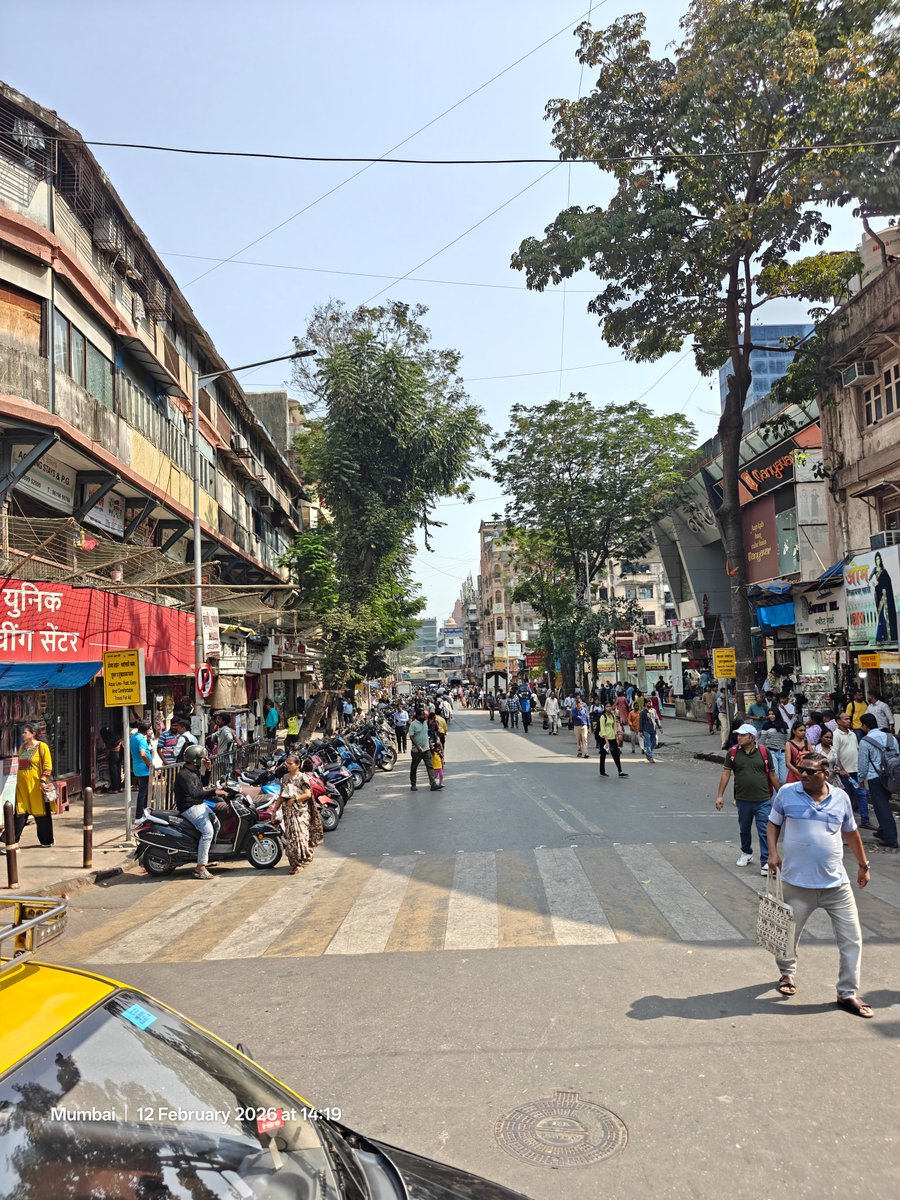
Road towards Dadar Station without Hawkers,
Haldilal tweet media
English
65
98
1.1K
29.7K
mas.to /
mas.to /@kingslyj·
#help Folks using a CO2 meter at home in India. What are the typical levels you see in a room with open door?
English
3
2
9
1.7K
Nabeel S. Qureshi
Nabeel S. Qureshi@nabeelqu·
I'm surprised that so many people, including smart people and journos, fell for the fake viral DoorDash outrage post. So many signs it was implausible and/or AI-generated: • Library wifi? Do you guys know any software engineers who use "library wifi" for opsec reasons? • "Drunk and angry" but perfect spelling and punctuation, short, punchy sentences. • Plenty of em-dashes with no spaces on either side (we will soon lose this obvious tell btw, so enjoy the training wheels while you can) • "we purposefully delayed non-priority orders by 5 or 10 minutes" if you believe any real company in the insanely competitive food delivery space would do this you have no idea how anything works. Let alone "management loved the results" (it didn't hurt any of your KPIs? Really?) • "under a massive NDA" "I hope they sue me" lol • Way too many details that add up to perfect outrage-bait -- "desperation score" (no corporation would actually call it that, they'd use a euphemism); "human assets" (I'm pretty sure they just call them dashers or couriers); •"We generated millions in pure profit" engineers in bigcos do not talk this way. Plenty of other implausible details in there too. Everyone will need to upgrade their personal cogsec for the next few years.
English
75
56
983
114.1K
Lal Chand Bisu
Lal Chand Bisu@lcbisu·
After seeing such a banger support for @deepigoyal, I can safely say the energy this time is different. India feels unstoppable. We’ve seen enough socialist logic that sounds very promising but never works. It’s time to work hard and uplift everyone in India, not slow progress with endless rules and bans.
English
61
817
5.7K
70.7K
Raj Kunkolienkar
Raj Kunkolienkar@kunksed·
I was in fifth grade when I learned to read my parents' silence. They were talking in the kitchen, late at night, in that particular hush that parents use when they think children are asleep. I caught fragments. Bombay. Tests. Something about a doctor. The next morning, everything was normal. Chai, school, the shop. But I had heard the frequency shift. It was 2004. My father was 39. We had just moved out of the room behind our kirana store—a chawl on the outskirts of Panaji—into a proper apartment. Our first EMI. Things were looking up in the way they do for Indian middle-class families who have spent years looking at the same ceiling: slowly, carefully, one calculated risk at a time. Then the diagnosis. Stage 3 follicular lymphoma. I didn't know what lymphoma meant. There was no internet to tell me, no Google to spiral into. Cancer was a word from movies—something that happened to people in cities, in dramatic hospital scenes with violins. Not to shopkeepers in Goa. Not to fathers who opened shutters at 7 AM and counted change at night. They kept me in the dark. The logic was simple: don't disturb the boy's studies. So I went to school. I came home. I did homework. And in the margins of this ordinary life, my father was taking buses to Mumbai for chemotherapy. I still don't fully understand how he did it. A biopsy, then a bus. Chemo, then the overnight journey back. Tata Memorial to Kadamba bus stand. The same man who winced when he cut his finger slicing onions was now traveling eight hours each way with poison in his veins, because what else was there to do? Goa didn't have the facilities. We didn't have the money for flights or hotels. So he sat on buses, probably in pain I can't imagine, probably next to someone complaining about the AC being too cold. My mother ran the shop. Not "helped out"—ran it. Wholesale orders, inventory, customers, credit books, all while her husband was in the jaws of something that might kill him. New scans kept showing the cancer spreading. The word "spreading" did a lot of work in those days. And I? I was a child. Which means I was selfish in the way only children can be—not out of cruelty, but out of not knowing. My father was alive and not going bald like he did so I assumed things were now fine. I was still in the dark. I remember crying for days because I wanted a geared cycle. All my friends had them. The fancy ones with the grip shifters. I needed it for school, I argued. I needed it because everyone else had one. I remember my parents' faces when I wouldn't let it go—that particular exhaustion of people who cannot explain why they're saying no, because the explanation would break something. Every rupee mattered. I didn't know that yet. I didn't know that they were borrowing money from friends, from family, sometimes from customers at the shop—the same aunties who haggled over soap prices were quietly lending us cash to keep my father alive. That's the thing about the Indian middle class: the safety net is made of relationships. Of people who've known you long enough to trust you'll pay them back, eventually. No paperwork. Just faith, and shame, and gratitude all mixed together. My father then spent 40 days in Mumbai for radiation. He stayed with my aging grandparents in a small flat while I finished my exams and my mother kept the shop open. I don't know what those 40 days were like for him. He never talked about it. Men of that generation don't. They just endure, and then they come home, and life continues as if nothing happened. The magnitude of what was happening to my family didn't hit me until years later. No health insurance, of course—it was unheard of for people like us. The treatment, the travel, the lost income from the shop, the interest on loans that weren't from banks. It drained us completely. Not metaphorically. Actually. The kind of drained where you stop going to movies. Where eating out becomes a memory. Where "vacation" is a word other families use. Miraculously—and I use that word carefully—things stabilized. By 2007, the cancer was in remission. Whether it was the radiation, the medication, or the wheatgrass cow dung milk ayurvedic concoctions my mother sourced from god-knows-where, I don't know. Probably all of it. Probably none of it. Cancer does what cancer does, and we tell ourselves stories about why. But remission doesn't mean freedom. It means waiting. It means every annual checkup is a held breath. It means the knife never really leaves—it just hangs higher for a while. It took us until 2015 to recover financially. Eleven years. A whole decade of my adolescence spent in the aftermath of something that happened in three months. That's the part nobody tells you about illness: the medical crisis has a timeline, but the financial crater doesn't. It just sits there, and you fill it in slowly, one repaid loan at a time, one favor returned, one customer you finally pay back. In 2012, I got admits to colleges abroad. Good ones. The kind of opportunity that I'd dream about for my children. My mother sat me down and gently suggested I reconsider. She didn't say "we can't afford it." She said: "What if it comes back?" The knife, always dangling. She was right to think it. I knew she was right. So I gave the BITSAT, got into BITS Pilani with a generous scholarship from the Goa government, and made it through. It was the practical choice. The safe choice. The choice you make when you've learned that life can pivot on a diagnosis. It did come back. In 2022, the lymphoma transformed—DLBCL this time, more aggressive—and everything we'd feared for eighteen years arrived all at once. My father went through treatment again. CAR-T therapy, a clinical trial. Brief remission. Then not. He passed in 2023. But the thing I think about now, the thing that connects that fifth-grade boy crying about a cycle to the man I became: when it came back, I was ready. Not emotionally—you're never ready for that. But financially. I could go all out. Best doctors. Best facilities. No borrowed money from customers. No buses to Mumbai. When the bill came, I could pay it. The CAR-T didn't work. Cancer won anyway. But I sleep at night. I sleep because I know I did everything that could be done. There's no version of me lying awake wondering: what if I'd had more? What if I could have afforded that other treatment? That guilt would have eaten me alive. It would have been worse than grief. I think about this when people ask me why I care so much about money. Why I write about financial security. Why I'm building what I'm building. It's not ambition. It's not greed. It's not even wisdom. It's trauma response. The boy who cried about a geared cycle grew up to understand something about money that no finance book teaches: it's not about the stuff. It's about what happens when the phone rings and someone says the word "biopsy." It's about having options when you have no good choices. It's about not borrowing from the aunty who buys soap from your shop. My father ran a kirana store. He woke up early. He counted change at night. He took buses to chemo because that's what was available to him. He never complained. He came home and opened the shop the next day. I don't know what he would think about me writing this. He wasn't the type to share. But I think he'd understand why I'm sharing it: because somewhere, there's a family in a small town, getting a diagnosis, doing the math, realizing the numbers don't work. I want them to know they're not alone. And I want the version of me that comes after them—the child who doesn't fully understand yet—to grow up in a world where this story is a little less common. That's all. Now go, get some insurance and take your parents out for dinner while they're still around.
Raj Kunkolienkar tweet media
Loop@LoopHealthHQ

💚1M members milestone giveaway! Quote tweet with your story of the medical incident in your family that changed your perspective on life, health, and finances. We're doing this to raise awareness around preventive healthcare. 3 air purifiers for stories picked at random.
English
449
788
6.7K
606K
Rahul Ramchandani 🤖 retweetledi
Zucker Doctor
Zucker Doctor@DoctorLFC·
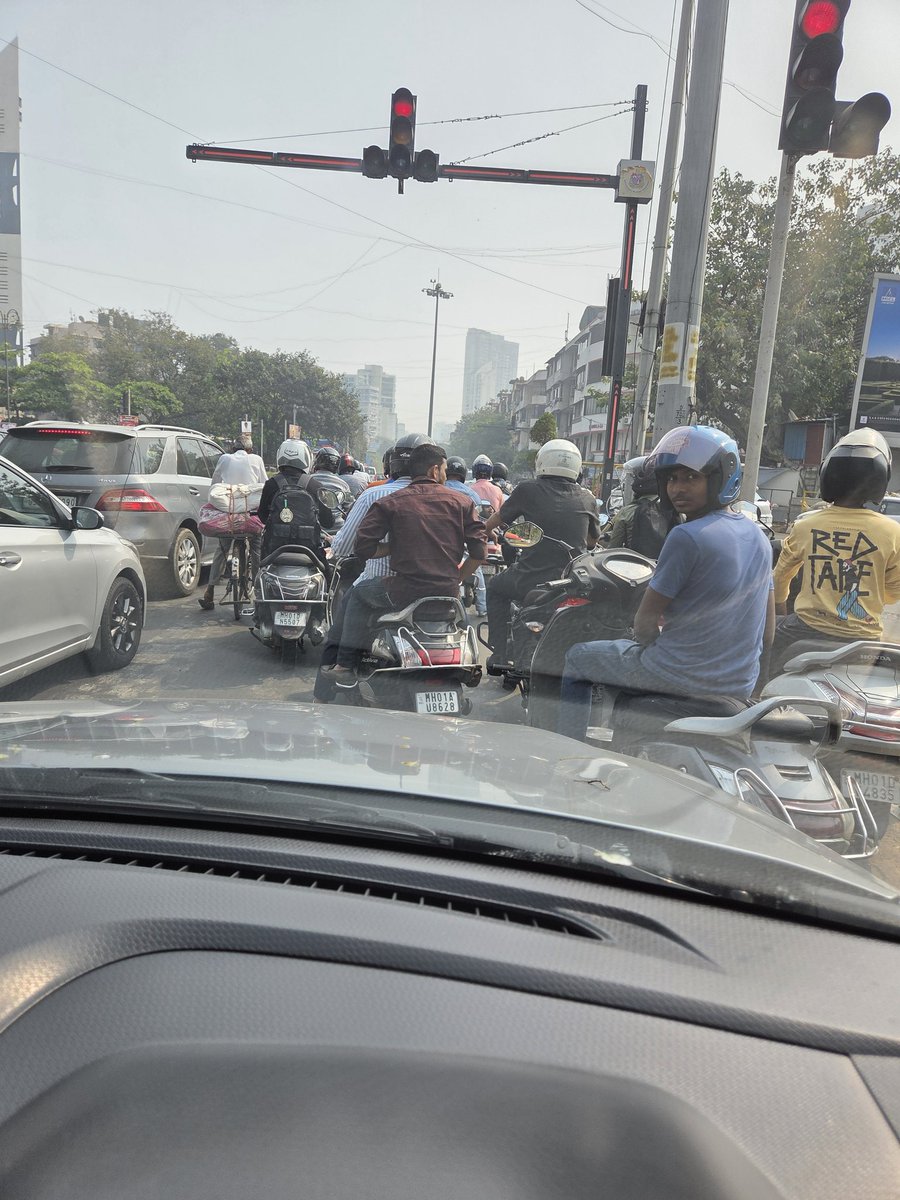
My car was the first to reach the signal. I stopped behind the pedestrian crossing and the white line and within a minute, this is the situation in front of me. In our country, those who follow rules are actually punished for doing so.
Zucker Doctor tweet media
English
924
1.6K
12.3K
292.9K
Rahul Ramchandani 🤖 retweetledi
Vishal Ganesan
Vishal Ganesan@vjgtweets·
An account of Swami Vivekananda’s first encounter with John D. Rockefeller: “Mr. X, in whose home Swamiji was staying in Chicago, was a partner or an associate in some business with John D. Rockefeller. Many times John D. heard his friends talking about this extraordinary and wonderful Hindu monk who was staying with them, and many times he had been invited to meet Swamiji but, for one reason or another, always refused. At that time Rockefeller was not yet at the peak of his fortune, but was already powerful and strong-willed, very difficult to handle and a hard man to advise. But one day, although he did not want to meet Swamiji, he was pushed to it by an impulse and went directly to the house of his friends, brushing aside the butler who opened the door and saying that he wanted to see the Hindu monk. The butler ushered him into the living room, and, not waiting to be announced, Rockefeller entered into Swamiji’s adjoining study and was much surprised, I presume, to see Swamiji behind his writing table not even lifting his eyes to see who had entered. After a while, as with Calvé, Swamiji told Rockefeller much of his past that was not known to any but himself, and made him understand that the money he had already accumulated was not his, that he was only a channel and that his duty was to do good to the world — that God had given him all his wealth in order that he might have an opportunity to help and do good to people. Rockefeller was annoyed that anyone dared to talk to him that way and tell him what to do. He left the room in irritation, not even saying goodbye. But about a week after, again without being announced, he entered Swamiji’s study and, finding him the same as before, threw on his desk a paper which told of his plans to donate an enormous sum of money toward the financing of a public institution. “Well, there you are”, he said. “You must be satisfied now, and you can thank me for it.” Swamiji didn’t even lift his eyes, did not move. Then taking the paper, he quietly read it, saying: “It is for you to thank me”. That was all. This was Rockefeller’s first large donation to the public welfare.”
English
5
23
90
8.4K
Artful Dodger
Artful Dodger@RahulChels·
r/Goa has locals crying about migrants from Delhi, MH, KN r/Maharashtra has manoos crying about entire country grabbing a piece of MH be it jobs or land We already know plenty about the tomfoolery of Kannadigas State of us.
English
12
3
108
4.7K
Gena Gorlin
Gena Gorlin@Gena_I_Gorlin·
Today I’m 40. My day so far: -6:30am tour of living room decorations -7am impromptu math lesson prepped and delivered by 5yo -8am project of removing Sharpie stains left over from math lesson, assisted by ChatGPT Already my favorite decade, and the book’s not even out yet!
Gena Gorlin tweet mediaGena Gorlin tweet mediaGena Gorlin tweet mediaGena Gorlin tweet media
English
30
3
164
5.9K