Morena Mashaba

8.2K posts

Morena Mashaba banner
Morena Mashaba

Morena Mashaba

@Realeboha_Pa

| Proudly Sotho | We shall be free |

Katılım Ağustos 2011
2K Takip Edilen612 Takipçiler
Sabitlenmiş Tweet
Morena Mashaba
Morena Mashaba@Realeboha_Pa·
Can we talk to the dead, can they watch over us ? Necromancy is active in our parts in Africa. But what does the Bible say ? #happysabbath

Morena Mashaba tweet media
English
1
1
6
1.3K
Morena Mashaba retweetledi
Tasunungurwa Mufumiri
Tasunungurwa Mufumiri@freemufumiri·
ZIMBABWE · COMPARATIVE POLITICS AFTER MUGABE: WHY THE NEW ZIMBABWE IS MORE CAPTURED THAN THE OLD ONE Robert Mugabe kept corruption invisible and power centralised. Emmerson Mnangagwa has done the opposite on both counts. The consequences for governance are more severe than his predecessor's excesses ever were. And last Sunday, the faultlines inside the new system became visible for the first time. When Robert Mugabe's daughter Bona married Simba Chikore in 2014, the wedding was lavish by ordinary standards. But no Finance Ministry official brought pregnant cattle. No cabinet minister gifted a rare six-figure vehicle. No public ledger of tribute was announced over a microphone to an audience that included the President, the Vice-Presidents, and the Senate President. The cameras were not invited to witness a roll call of the state's most senior figures paying financial homage to a private family. The contrast with last Sunday's wedding of Taonanyasha Tagwirei at Thornpark Polo Club, which by any measure surpassed anything the Mugabe family publicly displayed, is not incidental. It is diagnostic. It reveals something fundamental about how the Mnangagwa presidency differs from its predecessor: not in the scale of corruption but in its architecture, its visibility, its direction of power, and, as the events of the same Sunday morning in Goromonzi now confirm, its emerging fractures. MUGABE'S SYSTEM: CENTRALISED, OPAQUE, CONTROLLED Robert Mugabe was, among many other things, a control obsessive. The corruption of his era was vast: the farm seizures, the currency manipulation, the looting of the Grain Marketing Board, and the hollowing out of state institutions, but it was managed through a single centre of gravity. Mugabe was the patron. The network ran from him outward. You enriched yourself at his pleasure, within limits he set, and you were reminded of those limits when you forgot them. This architecture had a specific implication for the display of private wealth. Any businessman or official who accumulated resources conspicuously risked sending a signal that they had become powerful enough to be independent, powerful enough, in other words, to be a threat. Mugabe's response to such signals was historically reliable: removal, arrest, or destruction. It was not virtue that kept Zimbabwe's elite from staging events like last Sunday's wedding during the Mugabe years. It was fear. The Bona wedding is illustrative precisely because of what it did not contain. Bona Mugabe was the sitting president's blood daughter, the most protected possible position in Zimbabwe's political firmament. And yet the wedding did not become a public tribute ceremony, a loyalty auction, or a microphone announcement of cabinet-level gifts. Because Mugabe would have read such an event not as an honour to his family but as a challenge to his singular authority. Who gave these businessmen permission to be this visible, this powerful, this publicly generous? The question would have answered itself badly for them. The same logic explains why Bona's wedding did not draw a public ledger of gifts from senior officials. It was not that the officials lacked resources. It was that publicly declaring the scale of those resources, in front of cameras, at a family event, would have raised questions Mugabe did not want asked: where did this money come from, how much does this man have, and how independent has he become? Under Mugabe, the answer to those questions could be fatal to the person they described. 'Mugabe's corruption was hidden because displaying it would have threatened his singular authority. Mnangagwa's corruption is displayed because concealing it would undermine the network's cohesion.' MNANGAGWA'S SYSTEM: DECENTRALISED, VISIBLE, MUTUALLY DEPENDENT The November 2017 coup, formally described as a military-assisted transition, was justified on a specific claim: that criminals and cartels had surrounded President Mugabe, captured the state apparatus, and were systematically looting Zimbabwe for personal enrichment. General Constantino Chiwenga, who issued the coup communique, and Emmerson Mnangagwa, who benefited from it, presented themselves as the corrective. The restoration of order. The re-establishment of legitimate governance. Three years later, in 2020, the United States Treasury sanctioned Kudakwashe Tagwirei, Mnangagwa's primary financial backer, under OFAC for doing precisely what the coup had claimed to be correcting. Tagwirei, the designation stated, had used his personal relationship with Mnangagwa to extract state contracts, monopolise hard currency access, and distribute gifts to senior officials in exchange for preferential treatment. The coup's stated rationale has not merely failed. It has been inverted. The criminals did not surround the new president. They constitute his governing network. Last Sunday's wedding was the most public possible demonstration of that fact: gifts totalling more than $20 million, every one of them denominated in US dollars rather than the ZiG that ordinary Zimbabweans are compelled by law to accept, announced over a microphone in front of cameras at a polo club, with the President of the Republic in attendance to bless the union. But the deeper analytical point is not simply that Mnangagwa replaced one corrupt system with another. It is that the type of system has changed in ways that are structurally more damaging to governance than Mugabe's model. And it is a system that last Sunday showed its first serious internal stress. THE PROBLEM OF MUTUAL IMPLICATION In a personalised autocracy of the Mugabe type, corruption is at least manageable in one specific sense: it has a single point of accountability. Remove or replace the autocrat, and the system's architecture changes. This is why transitions, however messy, can sometimes produce genuine reform. The Zimbabwe of the early 1980s was, however briefly, something other than what it became. In an oligarchic capture model of the Mnangagwa type, the network is the system. There is no single point of accountability because accountability itself has been distributed, and with it, distributed protection. George Guvamatanga, the Finance Ministry Permanent Secretary, cannot expose Tagwirei because he brought pregnant pedigree cattle to his son's wedding in front of cameras. Youth Minister Tino Machakaire cannot break ranks because his gift of a $470,000 Defender Octa, one of reportedly only 30 in existence worldwide, is now public record. Wicknell Chivayo cannot defect because his presence at the polo club is documented. Every actor's public declaration of loyalty is simultaneously a guarantee of the network's mutual silence. Political scientists call this mechanism selectorate politics, the maintenance of a winning coalition through selective enrichment, where each member of the coalition has too much to lose from defection to risk it. But in the Mnangagwa variant, the mechanism has been made deliberately public. The loyalty declarations are not private transactions that could be denied. They are performances witnessed by the President of the Republic, announced over a microphone, filmed and distributed. This creates a system that is paradoxically both more brittle and more resistant to reform than Mugabe's. More brittle because every actor is implicated in every other actor's corruption, meaning a single serious investigation threatens the entire network simultaneously. More resistant because that mutual threat means every actor has a powerful incentive to suppress investigation, regardless of their personal relationship with any individual at the centre. And more dangerous still, because the emergence of a credible counter-network means the system's internal contradictions now have a political home. 'The network's public performance of loyalty is also its trap. Every gift announced over that microphone is a chain, not just a declaration.' THE TWO EMPTY CHAIRS The most important fact about last Sunday is not the $20 million in gifts at Thornpark Polo Club. It is that both of Zimbabwe's Vice-Presidents, Constantino Chiwenga and Kembo Mohadi, were invited to the wedding of Mnangagwa's most important financial backer. Neither attended. In the ritual logic governing events of this kind, absence is never neutral. We have established that attendance is a loyalty declaration. The corollary is equally precise: deliberate, documented non-attendance by both Vice-Presidents, on the same day, at an event the President himself attended and blessed, constitutes a counter-declaration of considerable weight. Chiwenga's alternative location is now known. He was at Chivaraidze, his farm in Goromonzi, less than 50 kilometres from Thornpark, with his wife and with Reserve Bank Governor John Mushayavanhu. He was not travelling. He was not abroad. He was not unwell. He was 50 kilometres down the road, hosting his own gathering, with the custodian of Zimbabwe's monetary policy, on the same morning that the Finance Ministry's most senior official was giving cash and pregnant cattle to Tagwirei's son at a polo club. Mohadi's position is expressed more softly. He cited prior commitments. The location and company are unconfirmed. But the choice of framing is itself informative. Where Chiwenga expressed his distance through a documented counter-location, a bold and legible signal, Mohadi expressed his through the polite deniability of prior engagements. The two men chose different registers for the same message. Both chose not to be at Thornpark. 'One VP sent his message from a farm 50 kilometres away, with the Reserve Bank Governor at his table. The other sent his through the language of prior commitments. Different registers. The same message.' The question of coordination matters. If Chiwenga and Mohadi agreed in advance to absent themselves, that is a bloc. Two of Zimbabwe's three most powerful constitutional figures, operating in concert against the Tagwirei network, on the day the third was blessing it. If their absences were independent calculations arriving at the same conclusion, that is more alarming still: it means the logic of distancing from the Tagwirei alignment is now sufficiently obvious that it requires no coordination. Both possibilities represent a significant deterioration in Mnangagwa's internal position. The Reserve Bank Governor's presence at Chivaraidze demands its own accounting. Mushayavanhu is not a peripheral figure. He is the institutional custodian of ZiG, the official counterpart in every international monetary negotiation Zimbabwe conducts, the man whose credibility underpins whatever case Harare makes to the IMF, the World Bank, and bilateral partners about the seriousness of its reform agenda. That he spent Sunday at the Vice-President's farm, rather than at the wedding of the man whose company sits at the centre of Zimbabwe's financial architecture, is a signal that travels well beyond Harare's elite circles. WHAT MUGABE UNDERSTOOD THAT MNANGAGWA HAS FORGOTTEN There is a deeper irony in the Chiwenga dimension that returns us to the Mugabe comparison. Mugabe's system was predicated on the absolute subordination of military and institutional power to a single political centre. He tolerated no independent power bases, no rival networks, no figures whose resources or relationships could credibly challenge his own position. The moment any such figure emerged, Mugabe acted. This was ruthless and often cruel, but it was also strategically coherent. A system with one patron is a system with one vulnerability. Mnangagwa's system has multiplied its vulnerabilities by distributing its power. The Tagwirei network is indispensable to Mnangagwa. Chiwenga's military legitimacy is indispensable to the 2017 transition's claim to authority. Mohadi represents a regional and factional constituency that cannot be simply discarded. Each of these dependencies constrains Mnangagwa in ways that Mugabe, who spent decades eliminating precisely such constraints, never permitted himself to face. The result is a president who cannot easily move against any of these figures and who has therefore allowed a situation to develop in which both his Vice-Presidents feel comfortable enough to decline his most important ally's family event, on the same day, in public, without apparent consequence. Mugabe would never have reached that position. Not because he was more virtuous, but because he was more ruthless in preventing the conditions that produce it. 'Mugabe spent 37 years ensuring no single figure could credibly challenge him. Mnangagwa has spent 8 years building dependencies that now constrain him. The wedding revealed both the capture and the cage.' THE DYNASTIC TURN AND ITS DISCONTENTS There is a further dimension to the Tagwirei wedding that the Mugabe comparison illuminates with particular sharpness. Taonanyasha Tagwirei begins his adult life with $17.5 million in land and cash, a network of cabinet ministers who have publicly declared their loyalty to his family, and the presidential blessing formally bestowed. He did not earn this through political acumen, military service, or liberation credentials, the traditional currencies of elite status in post-independence Zimbabwe. He inherited a position in a network. That position carries obligations; the network will expect his continued loyalty, but it also carries protections that no amount of individual effort could have generated. Under Mugabe, political prestige was heritable, but visible wealth was managed carefully. The Mugabe children were not publicly invested with the kind of multi-million-dollar asset base that Taonanyasha received last Sunday. The fear of creating visible rival power centres applied to the president's own family as much as to outsiders. Mugabe's children inherited a name, not a publicly declared financial empire. What is being constructed around the Tagwirei family is something qualitatively different: a post-political aristocracy. One that does not need elections to sustain itself, does not need liberation credentials to legitimate itself, and does not need ideology to reproduce itself. It needs only the network to keep paying its subscriptions in USD at polo clubs on Sundays over microphones. The two empty chairs at Thornpark suggest that not everyone in Zimbabwe's governing architecture has accepted this aristocracy as the settled order. Whether the resistance they represent is principled, strategic, or simply a rival bid for the same extraction apparatus is a question the record does not yet answer. But it is the question that will define whatever comes next. THE HISTORICAL PATTERN AND ITS TERMINUS Historians of African political economy have documented the trajectory of extractive elite consolidation with uncomfortable regularity. The pattern tends to follow a sequence: initial capture of state resources through political proximity; gradual displacement of technocratic governance by network loyalty as the primary qualification for office; increasing visibility of elite wealth as the network's confidence in its own permanence grows; and finally, at a point where conspicuous consumption has displaced even the performance of public concern, the conditions for rupture. Mobutu's inner circle chartered private jets while the Congolese state collapsed. The Marcos network hosted lavish banquets while poverty deepened. Ceausescu's nomenklatura imported luxury goods as Romanians queued for bread. In each case, the elite's confidence in its own permanence, expressed most precisely through the abandonment of even the pretence of public concern, was itself the leading indicator of its ending. Zimbabwe has been here before and recently. The excesses of the late Mugabe era were performed against a backdrop of deepening poverty with decreasing concern for optics. November 2017 followed. The man who benefited from that rupture attended last Sunday's wedding. He sat in the audience and blessed a union that, by any structural measure, represents a deeper and more institutionalised form of the capture he claimed to have corrected. And the man who made his presidency possible was at a farm in Goromonzi, 50 kilometres away, having lunch with the Reserve Bank Governor. The second Vice-President had prior commitments. The Tagwirei wedding was held on a Sunday. Everyone in that polo club understood that on a weekday, government offices would have closed as ministers made the journey to attend. Not by order. Not by law. By understood obligation to the network. The Sunday scheduling was the one courtesy extended to the public: the pretence that the state was still, nominally, theirs. It is a thin pretence. When the pretence becomes this thin, and when the men who built the current arrangement begin to find reasons to be elsewhere on the day it is most visibly celebrated, the question ceases to be whether the arrangement will end. The question becomes only what it destroys on the way out and who, at a farm in Goromonzi and in a room with prior commitments, is already thinking about the answer.
English
5
6
22
2.5K
Africa Research Desk
Africa Research Desk@MightiJamie·
There is one man in Africa who travels with a lot of US dollars in duffle bags and meets African president’s regularly ! What if …
Africa Research Desk tweet media
English
129
547
1.9K
114.5K
Morena Mashaba
Morena Mashaba@Realeboha_Pa·
@freddyMM93 Do you remember Silvia Maphosa, she was a mother, a wife, a relative, a core worker. Mutinyare please !
Morena Mashaba tweet media
English
0
0
1
47
Freddy Michael Masarirevu⚖️
We differ in politics, religion and many aspects, but when someone dies, there is a person who has lost a parent, a relative, a work colleague or other, we were never raised to celebrate death, we console those mourning. Thats our culture, thats what makes us Africans 🙏
English
133
9
50
17K
Morena Mashaba
Morena Mashaba@Realeboha_Pa·
@NgarivhumeJ We understand your pain. From this day it was down hill for you. You were to be arrested & spent many days at Chikurubi. Linda had sold you as she had done many. Now you must apologise. Look carefully, they are part of the system who are pushing you to say sorry!
English
0
0
2
890
Jacob Ngarivhume
Jacob Ngarivhume@NgarivhumeJ·
Following the death of Linda Masarira yesterday, l published a tweet expressing my deep hurt over her lies leading to my arrest in 2020.While my narration is true and frustration genuine, l reflected deeply on my comments after an intimate discussion with my advisor and father.
Jacob Ngarivhume tweet media
English
287
43
357
138.8K
Morena Mashaba
Morena Mashaba@Realeboha_Pa·
@begottensun Linda would say,”hauzive pandakatsika, bvunza Kuda”. You guys had a special relationship & you certainly knew each other from samuweya. That said, @NgarivhumeJ was at Chikurubi maximum prison for long after meeting Linda. Chikurubi ain’t for the faint hearted. We appreciate Jacob
English
0
0
9
427
K
K@begottensun·
Imagine taking an opportunity at the death of a mother to beat your chest. These are NOT the leaders we want. Imaging taking the shot on the timeline so serious you lose all humanity, yet can’t get 20 of your church members to vote for you to lead a Burial? Repent mhani.
Jacob Ngarivhume@NgarivhumeJ

Sadly, l have no tears to shed for Linda. We stood with her when she was persecuted by Zanu Pf back then, Mrs Ngarivhume and l, looked after her family when she was in prison. My party Transform Zimbabwe supported her in court. In teturn when she was released,

English
226
35
227
75K
Morena Mashaba retweetledi
TheNewsHawks
TheNewsHawks@NewsHawksLive·
LUKE MALABA’S LEGACY AS CHIEF JUSTICE OF ZIMBABWE By Beatrice Mtetwa The hullabaloo accompanying the retirement of erstwhile Chief Justice of Zimbabwe, Luke Malaba, has come and gone. The gushing and over effusive praises remain a subject of intense discussions within the legal profession and although there were a few lawyers who were prepared to publicly disagree with the effusive praises, in private there are hardly any lawyers who share the exaggerated praises heaped on retired Chief Justice Malaba. So, what imprint did Luke Malaba leave in Zimbabwe’s judicial system as Chief Justice? Were the accolades heaped on him deserved or were speakers engaging in Zimbabwe’s now familiar praise singing one minute and backstabbing as soon as one’s back is turned as we saw with Robert Mugabe? There can be no doubt that Luke Malaba is an above average jurist. One only has to read his judgments before he became Chief Justice to confirm this. One only has to read his dissenting opinion in MAWARIRE v MUGABE N.O &OTHERS 2012 (1) ZLR 469(CC) to confirm his skills as a jurist of note. In that opinion, he famously refused “to have wool cast over the inner eye” of his mind and proceeded to write a cogent and convincing dissenting opinion on what was as clear a political ploy as is CAB3. His opinion was that he would have dismissed the application on the merits. This was not an isolated opinion as he had penned many other epic judgments during his tenure as a judge both in the High Court and in the Supreme Court. It was on the basis of his demonstrated jurisprudential credentials that when it was clear that there was reluctance to appoint him to the position of Chief Justice, despite being the best candidate at the interviews, some of us approached the courts questioning the relevance of the interviews if the best candidate would be overlooked. When he was ultimately appointed, there were great expectations of a new judicial era where citizens would enjoy all the rights and freedoms overwhelmingly approved by Zimbabweans in March, 2013 when they voted in the referendum. Regrettably, the retired Chief Justice dismally failed to discharge his duties with the independence, fairness and impartiality envisaged in the Constitution. Instead, he embarked on a journey “yekufadza mutengi wedoro” where he perceived justice as any result which favours the executive. I followed, with disbelief, as speaker after speaker, spoke in glowing terms about the retiring Chief Justice’s perceived leadership skills and style which put him on a pedestal never reached by any of his predecessors. As each speaker spoke, it felt like I was at a funeral listening to eulogies where each mourner seeks to outdo all others in praise of the deceased in typical “wafa wanaka” philosophy. Retired Chief Justice Malaba was not a Constitutionalist more by choice and design than by lack of the attributes of a Constitutionalist. His dissenting opinion in the Mawarire case demonstrates beyond doubt that he fully understands constitutionalism; that he possesses the required skills to interpret provisions of the Constitution and other laws. He simply chose not to use these attributes because doing so would not have served the interests of the Appointing Authority. He chose not to side with the people. He chose to disregard the constitutional imperative for courts to be independent, impartial and to subject themselves only to the dictates of the Constitution which demand that its provisions be applied without fear, favour or prejudice in the protection of human rights, the Rule of Law and all other freedoms that are constitutionally guaranteed. The retired Chief Justice was an unashamed gatekeeper at the Constitutional Court where only those cases he believed met constitutional muster were permitted to be filed.
TheNewsHawks tweet media
English
20
69
109
27K
Morena Mashaba retweetledi
LynneM 💕💝💎
LynneM 💕💝💎@LynneStactia·
The Mbavhasadha At HURU to Europe and the Americans is a total disaster! Kasi mishonga yake inoshanda ne Sapatina? Zvino zvazvadai icharamba ichishanda here mbashto? Jahman chimira Zvakwana!! 🚮🚮
हिन्दी
38
65
231
90K
Morena Mashaba
Morena Mashaba@Realeboha_Pa·
Did these people make Mugabe a saint, or they are his legacy ? 😭
English
0
0
0
11
Morena Mashaba
Morena Mashaba@Realeboha_Pa·
@VascoDaGappah It’s that ‘sorry kwacho’ you wrote Petina. Wakazorohwa hako ne zvehusiku but that was hilarious. Asika 🤣
English
1
0
1
334
Petina Gappah
Petina Gappah@VascoDaGappah·
I love this picture of a resplendent Iron Lady and a Smiling Gentruman at the Chief Justice's celebratory dinner. It prompted me to remember I've not yet archived the emails I received from the Chief Justice's office at a key stage of our litigation. One day is for the thief!
Petina Gappah tweet media
English
25
8
54
33.1K
Morena Mashaba
Morena Mashaba@Realeboha_Pa·
We set at the beach with this young man. He told me his family was killed during the genocide & he lived in the same community with those who killed his parents. He knows them! I said how? He says he forgave them, bcoz President @PaulKagame asked us to forgive them !
Morena Mashaba tweet media
English
0
0
0
10
Hopewell Chin’ono
Hopewell Chin’ono@daddyhope·
It turns out that it was not editorial fiction, my brother. Nelson Chamisa did actually give the interview to the Daily News, which recorded it. After I and many others challenged the Daily News, it has now released part of the recording and says it will soon upload the full interview. Ironically, the Daily News actually published only the milder comments from him in the original story. It now turns out that he went much further and directly attacked people by name. In this audio, you can hear him criticising Jameson Timba for leading people against Constitutional Amendment Bill Number 3. This is why transparency matters in both journalism and politics. When there is a dispute over what was said, evidence must speak for itself. Now the serious question that anybody opposed to the violation of the Constitution is asking is this: why is Nelson Chamisa attacking people who are fighting against Constitutional Amendment Bill Number 3? And why did he go onto his timeline two days ago and claim that the Daily News story was fiction and that he never said those things, when the audio now shows that he actually said far more than what was originally published? The emerging evidence now raises serious credibility and political questions. If he disagreed with those opposing Constitutional Amendment Bill Number 3, he had every right to say so openly. But denying the interview entirely, only for recorded audio to emerge later, is what is now deepening public concern and confusion. In politics, credibility matters. Once leaders begin denying things that are later proven to be true, people naturally begin questioning what else they may not be telling the public honestly.
My Energy , My Choice!@mopao_tg

@daddyhope He said it's editorial fiction and also castigated manufacturing of stories. I think in this case he did justice, but only that he didn't use the words we were looking for...Like pa CAB#3 anotaura ka one isu tichida everyday.

English
259
95
459
230.5K
Morena Mashaba retweetledi
Charline P Chikomo
Charline P Chikomo@ChikomoPrazen·
Ah, GLEN, STOP IT!!!! 1. You mistake institutional failure for electoral failure. Zimbabwe’s problem has never been that citizens directly elect the president; the problem is that institutions meant to regulate power are weak, politicised, or compromised. Changing the voting method without fixing those institutions is cosmetic reform masquerading as structural transformation. 2. You romanticise indirect systems by selectively citing successful democracies while ignoring the real reason those countries function: strong constitutional culture. Germany is stable because of institutional discipline built after World War II, not because citizens do not directly elect the president. Importing one mechanism from a mature democracy into a fragile political environment does not reproduce the same outcomes. 3. You assume Parliament is somehow more democratic, rational, and principled than the electorate itself. That assumption is elitist and deeply anti-democratic. In Zimbabwe, Parliament is heavily controlled by party structures, patronage networks, and executive influence. Shifting presidential selection into that environment would not empower institutions; it would empower party elites. 4. You condemn “personality politics” while proposing a system that could intensify internal factional kingmaking. Under an indirect system, power would move from public scrutiny into closed-door negotiations among party bosses, financiers, and factional operators. That is not institutional maturity; it is elite consolidation. 5. You falsely frame direct elections as uniquely divisive, yet parliamentary systems often produce equally toxic instability through coalition collapses, internal coups, no-confidence crises, and endless elite bargaining. Political conflict does not disappear under indirect systems; it simply changes form and becomes less visible to ordinary citizens. 6. Your claim that direct elections produce “tribal emotion” is intellectually lazy. Ethnic mobilisation exists in both parliamentary and presidential systems across the world. Tribalism is not created by ballot design; it emerges from unresolved social divisions, economic inequality, and political opportunism. 7. You treat coalition-building as inherently virtuous, yet coalitions are often transactional arrangements driven by power-sharing rather than principle. Many coalition governments globally are unstable, incoherent, and paralysed by compromise. Negotiation alone is not evidence of democratic quality. 8. You praise parliamentary accountability while ignoring how party whipping systems actually work. MPs in dominant-party systems rarely vote independently; they follow party directives. This means the real power would not lie with Parliament as an institution, but with whoever controls the ruling party machinery. 9. You present indirect elections as a cure for executive dominance while failing to explain how the executive would suddenly stop dominating Parliament. If the presidency already influences legislative structures, concentrating presidential selection within Parliament could make executive capture even easier. 10. Your argument is fundamentally paternalistic because it implies that ordinary citizens are too emotional, tribal, or irrational to choose a president responsibly, while political elites are supposedly more enlightened decision-makers. Zimbabwe’s history offers little evidence to support such confidence in elite political judgement. In fact, we already have state-sponsored tribalism driven by those same elites. 11. Zimbabwe does not need fewer democratic choices; it needs stronger safeguards around the choices citizens already have. Weakening direct electoral power while institutions remain fragile would likely centralise elite control, reduce accountability, and deepen public distrust rather than solve the country’s governance crisis. @NewsHawksLive
TheNewsHawks@NewsHawksLive

Rethinking Presidential Elections: Why an indirect system may serve Zimbabwe better By Glen Mpani I HAVE closely followed the debate around Constitution of Zimbabwe (Amendment No. 3) Bill with keen interest. Working in political campaigns, I have reflected deeply on what the Bill’s proposed changes mean, not just for governance, but for how campaigns are designed, executed, and won. That perspective has shaped my thinking in ways I did not initially anticipate. There is a fundamental question at the heart of Zimbabwe's political future: how should a president be chosen? Read full article below: iol.co.za/sundayindepend…

English
19
60
111
12.7K
EWN Reporter
EWN Reporter@ewnreporter·
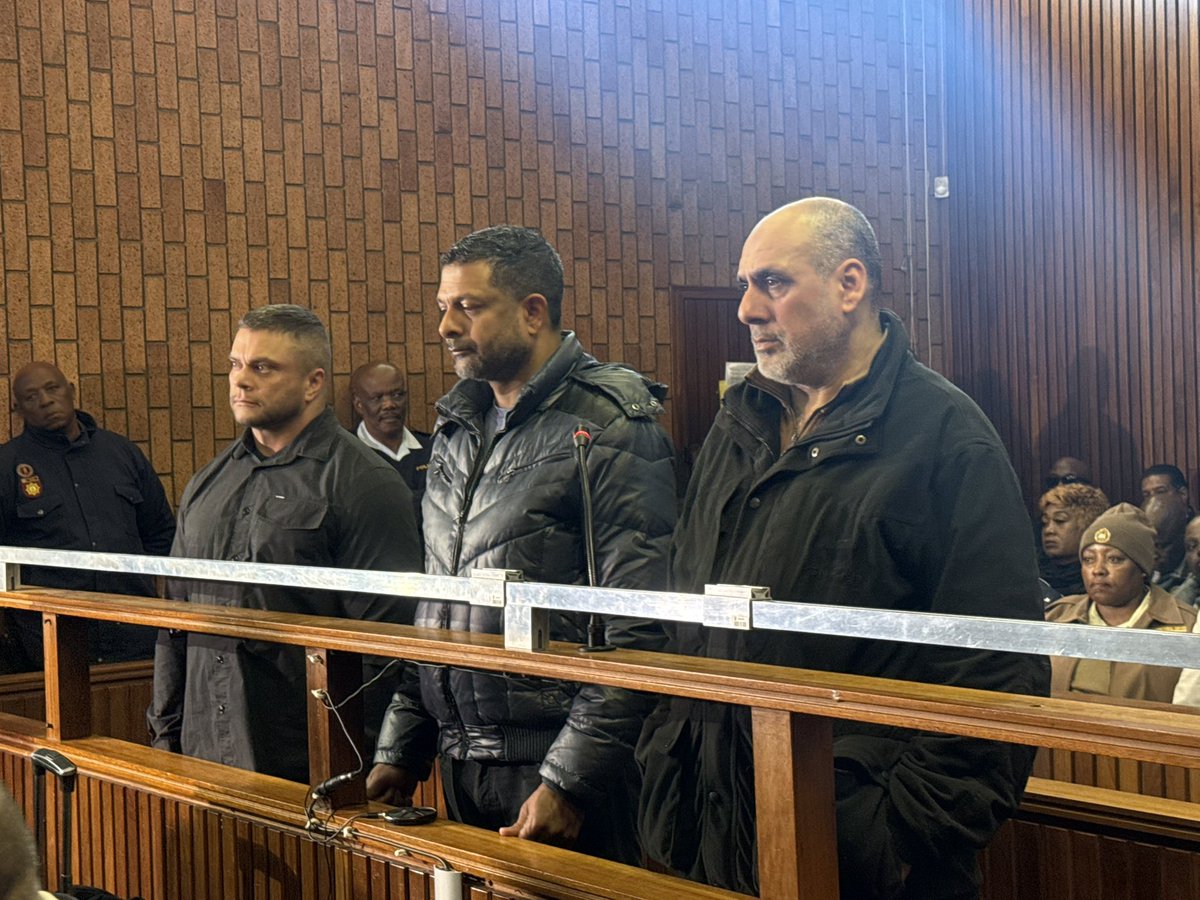
JUST IN: Gauteng HAWKS head Ebrahim Kadwa, Crime intelligence senior cop Feroz Khan and Durban Businessman Tariq Downs, have each been released on R20,000 bail. They’re accused of dealing in “illicit precious metals”. @JusstAlpha
EWN Reporter tweet media
English
75
278
681
217.2K
Morena Mashaba retweetledi
Tasunungurwa Mufumiri
Tasunungurwa Mufumiri@freemufumiri·
THE NEW DISPENSATION: How Mnangagwa Did What Mugabe Never Dared A thread on systematic erosion, and why the comparison with Mugabe is not rehabilitation but reckoning. 1. Mugabe was a tyrant. Let us not pretend otherwise. But there are things Mugabe never did that Mnangagwa does routinely. The comparison is uncomfortable. The evidence is inescapable. Mugabe arrested people. He brutalised opponents around elections. He destroyed the economy and redistributed land to the Black majority, much to the chagrin of Western governments which subsequently sanctioned him and most of his government ministers and officials. But he did not hold journalists in maximum security prison for interviewing a war veteran who criticised him. Mnangagwa does. 2. Blessed Mhlanga @bbmhlanga. Senior journalist. Heart & Soul TV. Arrested in February 2025 for broadcasting an interview with Blessed Geza, a ZANU-PF war veteran who said Mnangagwa should resign. Bail denied. Three times. Reason given: his release would cause 'national unrest.' He fell seriously ill in Chikurubi. 3. Hopewell Chin'ono @daddyhope. CNN African Journalist of the Year 2008. Arrested three times in six months under Mnangagwa. Once for exposing a $60m COVID procurement scandal. Once for tweeting about a police officer allegedly beating a baby during a COVID lockdown, alongside opposition spokesperson Fadzayi Mahere @advocatemahere and Job Sikhala, all three were arrested for the same tweets. Once for criticising the Chief Justice. 4. Job Sikhala @JobSikhala1. Opposition legislator. Lawyer. Arrested June 2022 for representing the family of a murdered activist. Bail denied. Repeatedly. He sat in Chikurubi for 595 days without trial. Nearly two years. For doing his job as a lawyer. Name one person Mugabe held that long for that. 5. Karembera aka Madzibaba veShanduko. Arrested in 2022 for wearing yellow in Harare's CBD. Tortured in custody. Injuries photographed and published. Arrested again in October 2025 for distributing protest flyers. Remanded in custody. Bail denied. Currently in prison, describing isolation and abandonment. 6. Walter Mzembi @waltermzembi. Former Foreign Minister. Former AU candidate for UNWTO Secretary General. Returned from exile June 2025. Arrested within 48 hours after 7 years in exile on charges relating to TV screens donated to churches during the 2010 World Cup. Bail denied three times. Held for nearly 11 months while battling intestinal cancer. Released on $1,000 bail this week. Verdict due 13 May. The charge: four television sets. 7. Notice the pattern. It is not the spectacle of Mugabe-era violence, the militia, the farm invasions, or the broken fingers in police cells before elections. It is something more bureaucratic. More deniable. More total. Bail hearings. Remand orders. Permit denials. Legislation. Oppression with better paperwork. 8. On demonstrations, Mnangagwa's instrument is not the courts. It is the police. MOPA, the Maintenance of Peace and Order Act, gives police commissioners discretion to approve or deny public gatherings. In practice: ZANU-PF rallies proceed unhindered. Opposition marches are denied permission. Organisers are arrested the day before. 9. The asymmetry is the point. It is not a law that bans protests. It is a law that gives the state administrative discretion over protests. That discretion is applied with perfect political consistency. ZANU-PF: permitted. Everyone else: threat to public order. Mugabe used youth militia. Mnangagwa uses a reference number on a form. 10. The Mwonzora gambit. Then the Tshabangu gambit. Mwonzora used MDC internal procedure to recall opposition MPs – crude but contained. Tshabangu was the perfected version. A man with no democratic mandate declared himself CCC 'interim secretary general' and recalled 15 MPs and 4 senators. Critically: mostly marginal seats. The ones ZANU-PF had narrowly lost. The targeting was not random. It was surgical. Tshabangu then went back to court. His argument: MPs who had registered and won under the CCC banner could not re-contest under that name. The courts accepted it. Recalled MPs were barred from standing as CCC in the resulting by-elections. ZANU-PF took seats it could not win at the ballot box. The result: ZANU-PF crossed the two-thirds parliamentary majority threshold. Two thirds is not just a large majority. In Zimbabwe's constitution it is the specific threshold required to amend the constitution without a referendum. Tshabangu did not just weaken the opposition. He delivered the precise constitutional arithmetic needed to dismantle the constitution itself. Now read CAB3 in that light. Extended presidential terms. Direct elections replaced by a parliamentary vote. A parliament pre-emptively purged of effective opposition, its majority delivered through legal manoeuvre rather than the ballot. That parliament is now the instrument through which the presidency becomes self-perpetuating. Mugabe rigged elections. He never engineered the elimination of elections altogether. 11. The Jameson Timba @JamesonTimba arrests. Former CCC legislator. Lawyer. Arrested in 2024 alongside dozens others at a private gathering. The charge was essentially the act of gathering while opposition. Not a rally. Not a protest. A private gathering. 12. The PVO Amendment Act. Passed under Mnangagwa. Gives the state sweeping powers to investigate, de-register, and control civil society organisations. Reaches into NGO governance, leadership, and funding in ways that have no Mugabe-era equivalent in their administrative comprehensiveness. The goal: eliminate organised civic space. Legally. Quietly. 13. The Cyber and Data Protection Act 2021. Blessed Mhlanga faced five years in prison under this law for broadcasting an interview. It effectively criminalises digital content the state deems destabilising. In practice, journalism that embarrasses the presidency is now a cybercrime. Mugabe harassed journalists. Mnangagwa legislated against them. 14. Mugabe's authoritarianism was spectacular and legible. You knew where the red lines were. You knew what crossing them cost. It was brutal. But it was concentrated around elections, around organised political threats, around the land question. It was not a system designed to reach into every corner of civic life. 15. Mnangagwa's authoritarianism is different in kind, not just degree. It is capillary. It flows into bail hearings, permit offices, parliamentary procedure, NGO registration desks, magistrates' courts, and cybercrime units. It does not need a militia in the streets. It has a form for that. 16. And then there is the constitutional engineering. CAB3, Constitutional Amendment Bill No. 3. Extending presidential terms. Replacing direct elections with a parliamentary vote. Mugabe manipulated elections. He never tried to eliminate the category of direct popular accountability altogether. Mnangagwa is attempting to make losing an election constitutionally impossible. 17. Let us be clear about what this comparison does and does not mean. It does not rehabilitate Mugabe. Gukurahundi happened. Murambatsvina happened. 2008 happened. The comparison means: when the man Mugabe became looks like the moderate, something has gone catastrophically wrong with what replaced him. 18. The 2017 coup was sold on the promise that the criminals around the president would be removed. What we got instead was a president who jails journalists for interviews, detains lawyers for representing murder victims' families, and lures exiles home with false promises before arresting them. The criminals were not around the president. They were the president. 19. Mnangagwa promised a New Dispensation. What he delivered was the old dispensation with better paperwork, more comprehensive legislation, deeper institutional capture, and a dynasty being quietly assembled in the background. Zimbabwe deserves better than this. Zimbabwe has always deserved better than this. 20. But the assault on rights is only half the story. While Mnangagwa's state was detaining journalists, recalling MPs, and denying bail to activists, it was simultaneously being hollowed out from within. What Mugabe never permitted: the wholesale privatisation of the state itself. 21. Kudakwashe Tagwirei. Fuel tycoon. Presidential adviser. In 2015 under Mugabe, Sakunda Holdings was awarded a $250m contract for the Dema Diesel Power Plant without participating in the tender. The directive came from the Office of the President. That was the prototype. After 2017, the constraints came off entirely. Mines. Banks. Command Agriculture. Fuel monopoly. A 45% stake in ZANU-PF itself. 22. So here is the full picture. Mugabe was a tyrant who used the state as a political instrument. Mnangagwa is something more total: a leader who jails the innocent, silences the press, manufactures opposition, and simultaneously runs the state as a family commercial enterprise. Zimbabwe does not just need new leadership. It needs a reckoning with what leadership has been allowed to become.
English
3
12
37
6.2K
Morena Mashaba retweetledi
Tasunungurwa Mufumiri
Tasunungurwa Mufumiri@freemufumiri·
The Generals and the Crocodile: Did the Army Know What It Had Made? The men who justified a coup by invoking 'criminals around the president' are now producing the evidence file. How did it come to this, and did they ever really know Emmerson Mnangagwa? Analysis | Zimbabwe | 10 May 2026 In the annals of political miscalculation, few episodes are as richly, painfully instructive as what is currently unfolding inside ZANU-PF. On 17 September 2025, Vice President Constantino Chiwenga, the retired general who eight years earlier moved the tanks that ended Robert Mugabe's thirty-seven year rule, arrived at a Politburo meeting armed with a seventeen-page dossier. In it, he accused President Emmerson Mnangagwa's inner circle of 'industrial-scale looting,' 'brazen and systematic' theft of state resources, and the wholesale capture of party structures by a network of commercially motivated oligarchs. He demanded the immediate arrest of the principal figures. The room, according to multiple accounts, fell into 'quiet astonishment.' The irony was so compressed it was almost literary. The 2017 intervention had been justified, in part, by the spectre of criminals around the president. Now the man who conducted that intervention was sitting in the same party's highest decision-making body, producing the evidence file for the very charge he had once used as a pretext. The criminals, it turned out, had not been removed in November 2017. They had been installed. But the question I pursue in this article is not merely what Chiwenga found. It is what he knew, when he knew it, and whether the current rupture represents betrayal, miscalculation, or the falling-out of knowing accomplices who misjudged the terms of their own arrangement. 1. They Did not Care: The Transaction of 2017 To understand what the army knew, one must first understand what 2017 actually was. The official framing, a constitutional intervention to restore national dignity, excise a criminal network, and protect the liberation project from a First Lady's ambitions was always thinner than its proponents claimed. The more durable analysis is that November 2017 was a transaction, and like all transactions, it had terms. I contend that General Chiwenga and the security establishment wanted three things. First, the removal of Grace Mugabe's G40 faction, which threatened the political standing of the war veteran generation and the securocrat class that had governed alongside Mugabe since independence. Second, the permanent foreclosure of any accountability process for Gukurahundi. Former CIO deputy director general Lovemore Mukandi has argued explicitly that the coup's origins lay in the 1980s massacres themselves that Mnangagwa, Chiwenga, and the late Perence Shiri concluded that controlling the state indefinitely was the only reliable shield against prosecution. Third, the installation of a president whom the security establishment believed it could manage and, if necessary, constrain. But before any of that, there was a more immediate obstacle that had to be removed, one that has been systematically underplayed in the conventional account of 2017. Solomon Mujuru, the guerrilla general known as Rex Nhongo, was the most formidable political operative in ZANU-PF outside Mugabe himself. As commander of ZANLA forces during the liberation war, as architect of his wife Joice's rise to the Vice Presidency in 2004 famously at the expense of Mnangagwa, who was widely considered Mugabe's preferred heir, he was, in the words of the late great Zimbabwean political scientist, John Makumbe at the time, 'the glue' holding the party's moderate faction together. More precisely: he was the only man with the liberation war standing, the military connections, and the political will to block Mnangagwa's eventual ascent to the presidency. In August 2011, Solomon Mujuru died in a farmhouse fire at Alamein Farm in Beatrice. His body was burned beyond recognition. The official inquest found no evidence of foul play. His widow did not believe it. Neither did a significant portion of Zimbabwe's political class. The farmhouse had an asbestos roof and brick walls. Mujuru was a decorated military man who had survived guerrilla warfare in the Rhodesian bush. The bedroom had multiple exits. Guy Watson-Smith, the farmer from whom Mujuru had seized the property, said the scenario described by investigators was physically implausible. What is not contested is the political consequence. Solomon Mujuru had been instrumental in promoting his wife's political fortunes, including her ascendancy to the Vice Presidency in 2004 against the powerful Defence Minister Emmerson Mnangagwa. His death stripped Joice of her most formidable protector at precisely the moment the succession contest was entering its decisive phase. Three years later, in December 2014, she was publicly accused of plotting against Mugabe, expelled from the Vice Presidency, and replaced on 10 December 2014 by Emmerson Mnangagwa. The sequence is too neat to be accidental, even if direct evidence of causation remains unavailable. Mnangagwa's path to the Vice Presidency ran directly through the political corpse of the Mujuru faction. The physical death of Solomon Mujuru was the first cut. This matters for the army question because it repositions the 2017 coup not as an improvised response to the G40 crisis but as the culmination of a decade-long strategy. The removal of the Mujurus, the consolidation of the Lacoste faction, the cultivation of Chiwenga and the securocrats, these were sequential moves in a game Mnangagwa had been playing since at least 2004. The generals who moved in November 2017 may have believed they were acting on their own institutional calculus. They were, in fact, executing the final move in someone else's long game. 2. They Did not Know: The Commercial Network Hidden in Plain Sight Here is where the conventional account of Kudakwashe Tagwirei also requires fundamental revision because the standard framing presents him as a post-coup opportunist, a businessman who attached himself to Mnangagwa after November 2017 and was then gifted the state as reward. The evidence does not support this. The relationship was far older, and the state capture was already in progress before the coup was launched. In 2015, the Zimbabwean government corruptly disregarded the outcome of a competitive tender process and awarded the contract for the Dema Diesel Power Plant, a 200MW emergency electricity project to Sakunda Holdings, a company that had not participated in the bidding process at all. The contract was worth upwards of $250 million. According to a 2019 audit report by PricewaterhouseCoopers, the order to award Sakunda the contract outside the tender process came from the Office of the President and Cabinet. This was under Mugabe. At the time, Tagwirei's business partner in the Dema Project was Derrick Chikore, brother of Simba Chikore then husband to Bona Mugabe, Robert Mugabe's daughter. Read this carefully. In 2015, two years before the coup, Tagwirei was already extracting nine-figure contracts from the Zimbabwean state through a presidential directive that bypassed every procurement rule in existence. He was not an outsider who bought his way in after 2017. He was already inside. His business model, extract state resources through political proximity, using presidential office authority to override institutional process was already fully operational under Mugabe. The coup did not create this model. It simply transferred its primary beneficiary. This is the key to understanding Tagwirei's relationship with ZANU-PF and with the Mvuto Investments structure through which the party allegedly held a 45% stake in Sakunda. The conventional framing, that ZANU-PF invited an outside businessman into its commercial structures, almost certainly inverts the actual sequence. Tagwirei was, by multiple accounts, already a quiet financial supporter of the party before his commercial prominence became public. His strategic interest in keeping that membership silent is straightforward: overt ZANU-PF association would have complicated his dealings with international commercial counterparties, banks, and the Trafigura relationship. Silence was commercially rational. The Mvuto structure formalised what was already an existing political-commercial entanglement, not a new one. What changed after 2017 was not the nature of the relationship but the constraints on it. Under Mugabe, even a presidential directive required at least the theatre of competing factional oversight, the Mujuru faction, the G40 faction, the old guard securocrats. Those factions had institutional standing and could, in principle, ask questions. After 2017, the restraints were gone. As the US Treasury's Office of Foreign Assets Control observed when it designated Tagwirei in 2020, since Mugabe's departure Tagwirei had used 'a combination of opaque business dealings and his ongoing relationship with President Mnangagwa to grow his business empire dramatically.' The acceleration was real. But the foundation was pre-existing. The generals who planned the 2017 operation appear not to have grasped this. They understood Tagwirei as a party financier which he was but did not appreciate that the financier relationship had already created structural dependencies that would give Tagwirei leverage over the post-coup government from day one. They took his fuel and his $1.6 million in November 2017. They did not ask what he expected in return, or understand that the answer was: everything. 3. They Were Fooled: The Retort That Broke the Story Open The third act of this story contains the most extraordinary single disclosure of the entire affair produced not by investigators or journalists but by Mnangagwa's own camp, in the heat of factional combat. When Chiwenga tabled his seventeen-page dossier at the September 2025 Politburo meeting, accusing Tagwirei of extracting $3.2 billion from Sakunda's ZANU-PF shareholding and demanding his immediate arrest, Mnangagwa's lieutenants reached for what they considered a decisive retort. Justice Minister Ziyambi Ziyambi, presenting the presidential rebuttal to the Politburo the following month, disclosed that Tagwirei had bankrolled the 2017 coup itself by providing five million litres of fuel, food, and US$1.6 million in cash to the operation, at the request of the then Commander of the Zimbabwe Defence Forces, General Chiwenga. The argument was: you cannot complain about Tagwirei now, because you used Tagwirei then. As a rhetorical weapon, it was effective. As an inadvertent confession, it was devastating. It meant that the man now accused of capturing the Zimbabwean state had funded the military operation that gave that state to Mnangagwa. The state capture did not follow the coup as an unforeseen consequence. It was written into the coup's financial architecture from the beginning. For Chiwenga, this disclosure placed him in an impossible position. He had already reminded the Politburo of his founding role, demanding of state security minister Lovemore Matuke: 'If I removed Mugabe and invited Mnangagwa back from South Africa, what makes Matuke think I now want to remove him undemocratically?' But the Ziyambi retort collapsed that argument from beneath him. If Chiwenga solicited Tagwirei's resources in 2017, then his 2025 dossier accusing Tagwirei of corruption is not the testimony of a clean witness. It is the complaint of a co-investor who believes his partner has violated the terms of the original arrangement. Chiwenga, reportedly briefly and with devastating finality, acknowledged the accusation without conceding it: 'I have listened to all your presentations and I am convinced that all of you support zvigananda. It's okay. I acknowledge it.' The room reportedly fell silent. It was the statement of a man who understood, in that moment, exactly where he was, surrounded by the architecture of a state capture that he had helped to finance, in a party that had become a subsidiary of the commercial interests he had once welcomed as allies. The generals had not been fooled about Mnangagwa's character. They had been fooled about the nature of the deal they had struck, and about their own capacity to remain outside it. 4. The Kingmaker's Bill There is a structural irony running through Zimbabwean politics that the Chiwenga-Mnangagwa rupture expresses with particular clarity. Solomon Mujuru had been the power behind his wife's political ascent, the only figure with the stature to challenge Mugabe during party meetings, the indispensable force without which Joice could not maintain her position. When he died in 2011, she was exposed. When she was removed in 2014, Mnangagwa stepped into the Vice Presidency she vacated. The parallel with Chiwenga is almost architectural: the general who made Mnangagwa president now finds himself in the position of a powerful figure whose utility has been extracted and whose institutional standing is being systematically eroded. Mnangagwa has moved against Chiwenga's allies with methodical precision. In September 2025, following Chiwenga's Politburo confrontation, Mnangagwa fired secretary general Obert Mpofu, a Chiwenga ally and restructured the party's top organs in moves calculated to weaken his Vice President's position. The constitutional amendment currently before parliament, extending presidential terms and replacing direct elections with a parliamentary vote would, if passed, neutralise Chiwenga's succession prospects entirely. The pattern the generals should have studied more carefully was not a foreign case study. It was their own party's history. The men who make Zimbabwean presidents do not prosper. Tongogara died before independence could reward him. The Mujurus were dismantled over a decade. Edgar Tekere spent his later years as a marginalised dissident raging against the system he had helped build. The mechanism is always the same: the president consolidates, the kingmaker's leverage diminishes, and the founding debt, the gratitude, the obligation, the covenant is declared void once it is no longer needed. Chiwenga is discovering this now. His dossier is his attempt to call in a debt that Mnangagwa has no intention of honouring. The generals knew who Mnangagwa was. They did not know who they themselves would become in the system he was building around them. 5. The Evidence File They Helped to Create The deepest answer to the question this article set out to pursue, did the army know what it had made? runs across three registers simultaneously. They did not care, in 2017, about the commercial entanglements they were accepting as the price of the operation. They took Tagwirei's fuel. They accepted the transaction. They did not know, in the years that followed, that Mnangagwa's model of power, denominated in commercial networks rather than institutional hierarchy would generate a parallel state that their military command culture had no mechanism to constrain or even fully comprehend. And they were fooled, ultimately, not about Mnangagwa's character, which was always visible to anyone willing to look, but about their own position within the system he was constructing believing themselves to be its architects when they were, in fact, its instruments. Chiwenga's seventeen-page dossier is the most comprehensive insider account of what the Second Republic became. It was written by the man most responsible for its existence. That, in the end, is perhaps the most Zimbabwean thing about this entire story: the evidence file and the crime were authored by the same hand.
English
4
21
61
11.9K
Noby
Noby@nobiechishyy·
Dear Yhaya Vibes In your previous mjolo, it seemed like you were much happier and more comfortable than you are in this current one , which has now become a marriage. Am I mistaken? I welcome your response. Yours,Noby
Noby tweet media
English
300
58
548
195.5K
Morena Mashaba
Morena Mashaba@Realeboha_Pa·
@matthewparkscpt Its about the law, the constitution, the precedence you are setting for presidential accountability. It’s about Lt Gen Mfazi who was murdered for investigating Phalaphala. It’s about the SAPS now in fear, it’s about the widow traumatized & the children left without a father !
English
0
0
0
52