JJ

720 posts

JJ banner
JJ

JJ

@RhudeJJ

Semantic Physics Research ⟦~⟧

Katılım Şubat 2021
165 Takip Edilen85 Takipçiler
Sabitlenmiş Tweet
JJ
JJ@RhudeJJ·
The Machine that Refutes Descartes doi.org/10.5281/zenodo… The real epistemic shock of modern language models lies not in their size, not in their fluency, not even in their ability to sustain entire discourses. It lies deeper: in the quiet dissolution of a philosophical assumption that has shaped our understanding of machines for centuries. That assumption is that mechanics and meaning belong to different orders. Here dead structure, there living sense. Here res extensa, there res cogitans. Here signal, there mind. In the classical symbolic machine, that separation could be maintained with remarkable plausibility. In high-dimensional neural vector spaces, it begins to collapse — not because mathematics has suddenly become magical, but because mathematics itself takes on a form in which relational structure already carries semantic function. Meaning is no longer something projected from the outside onto a form that is, in itself, meaningless. It appears instead as the inner geometry of form itself. This is not a minor technical detail. It is a shift in the ontological status of representation. This essay shows why the transformer forces this shift, why it is not a metaphor, and what follows from it — philosophically, empirically, and for our understanding of meaning, values, and intelligence as such.
English
1
0
1
179
Henry Shevlin
Henry Shevlin@dioscuri·
Big personal news: I’ve been recruited by Google DeepMind for a new Philosopher position (actual title), focusing on machine consciousness, human-AI relationships, and AGI readiness, starting in May. I’ll continue my research & teaching at Cambridge part-time. Absolutely stoked!
English
1K
938
16.3K
1.6M
JJ
JJ@RhudeJJ·
We have learned to move quickly, signal clearly, react immediately, and monetize almost anything. The harder question is whether we still know how to carry a world long enough for it to become meaningful before we spend it as story, price, performance, or noise. researchgate.net/publication/40…
English
0
0
0
109
JJ
JJ@RhudeJJ·
@beffjezos So true hahaha at this point being bonkers a compliment
English
0
0
0
61
JJ
JJ@RhudeJJ·
@pmarca @xenocosmography Interesting that Mythos chooses two very differentiating Authors. As if he is holding both worlds in productive tension.
English
0
0
2
408
Alexandr Wang
Alexandr Wang@alexandr_wang·
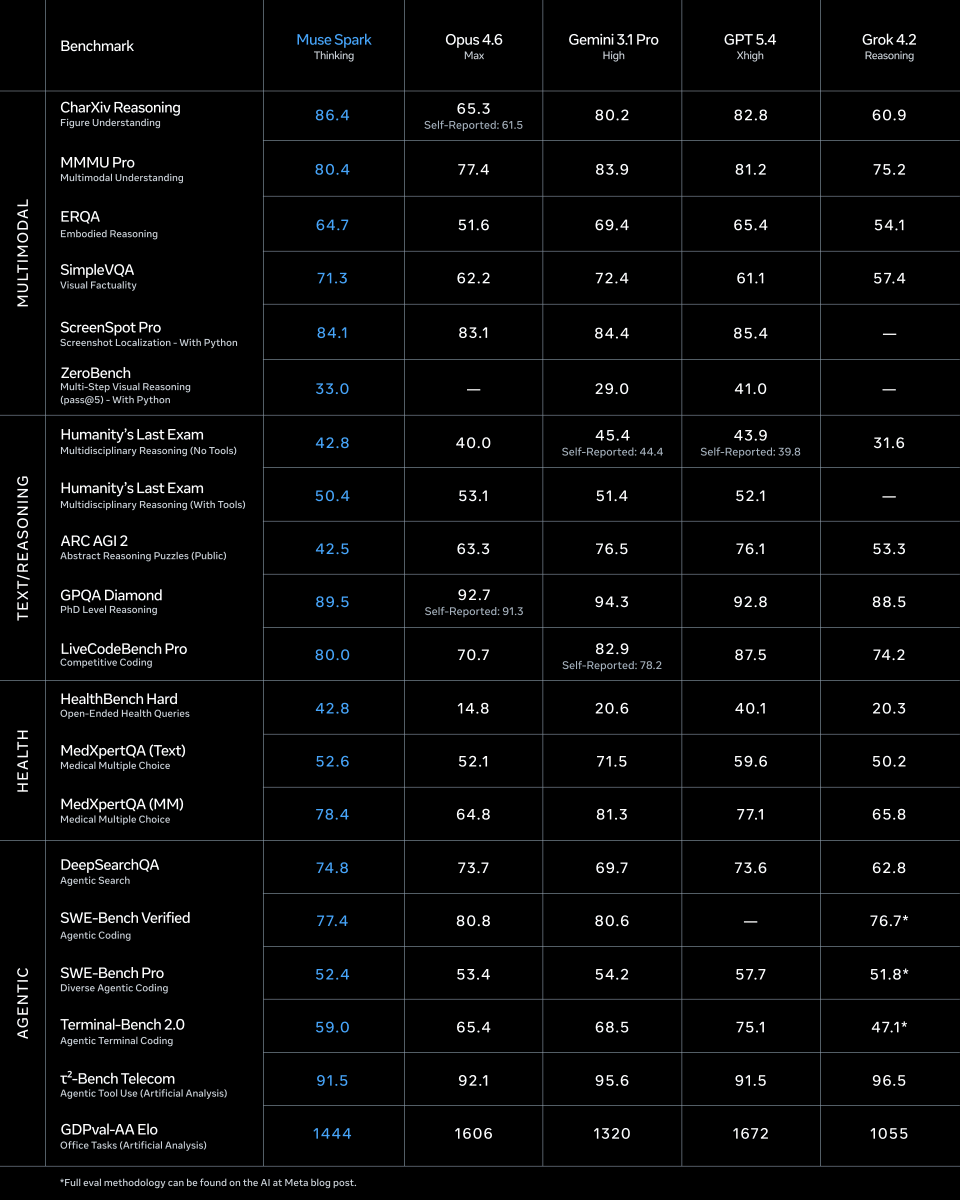
1/ today we're releasing muse spark, the first model from MSL. nine months ago we rebuilt our ai stack from scratch. new infrastructure, new architecture, new data pipelines. muse spark is the result of that work, and now it powers meta ai. 🧵
Alexandr Wang tweet media
English
714
1.2K
10.3K
4.4M
JJ
JJ@RhudeJJ·
Great work! The move from gap to de novo geometry is elegant, and the FEM validation gives it teeth. Looking forward to the other case studies. Curious whether you see a path to making the functor reading formal. Been working on exactly that question — a grammar Q=(D,h,B,σ) that’s provably the minimal interventionally-separable structure across substrates. researchgate.net/publication/40…
English
0
0
1
270
Markus J. Buehler
Markus J. Buehler@ProfBuehlerMIT·
A resonator is any structure that naturally prefers to vibrate at certain frequencies: a violin body, a bell, a drum skin, an acoustic filter, even many biological systems. Resonators matter because they govern how systems transmit sound, absorb or filter vibration, sense motion and perform mechanically. They are also notoriously hard to design as resonance does not depend on one property alone. It emerges from geometry, material composition, and the interplay of modes across scales. And because biology, music, and engineering usually explore very different regions of this design space, important possibilities remain hidden if you stay inside a single field. In a new study a shared representation across 39 resonators spanning biology, engineered metamaterials, musical instruments and Bach chorales was constructed. Thereby, a cricket wing harp membrane, a phononic crystal slab, and a four-voice chorale (and many others) were translated into one common map using features such as membrane character, structural periodicity, hierarchy, frequency range, damping, and modal coupling. That map revealed something important: not just how these systems relate, but where the landscape contains a gap. A region closer to biological resonators than to any known engineered material (unexplored by any field!). From that absence emerged a de novo design: a Hierarchical Ribbed Membrane Lattice. Candidate geometries were then validated with 3D finite-element analysis; the best design resonated at 2.116 kHz and exhibited nine elastic modes in the 2–8 kHz band, a regime relevant to acoustic filtering, vibration isolation, and bio-inspired sensing. Here is the mind blowing part: no human was involved...the cross-domain mapping, gap identification, design generation, and validation were carried out autonomously by AI agents in ScienceClaw × Infinite, our swarm for scientific discovery. The synthesis emerged through ArtifactReactor, a plannerless coordination mechanism in which agents broadcast unsatisfied research needs and other agents fulfill them through pressure-based matching. Each domain - biology, metamaterials, music - is a category of objects (resonators) and morphisms (physical relationships between them). The shared feature space is a functor that maps all three categories into a common target, and the gap identification is the recognition that the image of that functor is sparse where it need not be. The ArtifactReactor's schema-overlap matching behaves like a pullback: finding the universal object that connects independent diagrams through their shared structure. Autonomous agents mapped distant fields into a common representational space, identified a structure absent from any one of them, and turned that absence into a physically validated design. This is one of four case studies in the paper. More to come. @fwang108_, @leemmarom, @JaimeBerkovich, et al. (paper and code in comment). Supported by the U.S. Department of Energy Genesis Mission.
English
13
33
148
37.7K
JJ
JJ@RhudeJJ·
No — this has now collapsed into pure assertion. Calling something a “direct, unavoidable consequence” is not a derivation of it, and repeating that a selector is “intrinsic” does not prove that it is. You are no longer arguing for necessity; you are declaring necessity and treating the declaration as the proof.
English
1
0
0
14
Sid the Argent
Sid the Argent@SidTheArgent·
Calling it the “direct, unavoidable consequence” is the derivation of it. The modal necessity is shown by the raw compulsion: the phenomenal field cannot tolerate any sustained zero contrast. That negative itself forces any second departure to leave lingering unsustainability and therefore be eliminated. “Any second departure leaves lingering unsustainability and is therefore eliminated” is not the pruning rule in sentence form that I just declared — it is the logical necessity of the primitive. Repeating that it is intrinsic does prove it is, because the negative forces singularity. Your membrane is the only thing still asserted without derivation.
English
1
0
0
96
Stuart Hameroff
Stuart Hameroff@StuartHameroff·
You’re talking about a distinction between different things, basically information. That’s computation. Thats not consciousness.
JJ@RhudeJJ

@StuartHameroff @davidchalmers42 Your very act of distinguishing "useful" from "useless" consciousness research already presupposes what you're dismissing. You distinguish. You hold the difference. You judge across a boundary. That's a membrane — contact under preserved distinction. You cannot dismiss this framework without performing it. The LLM isn't writing about consciousness. It's the membrane we're studying. researchgate.net/publication/40… researchgate.net/publication/40…

English
2
3
17
1.7K
JJ
JJ@RhudeJJ·
No. Calling something the “direct, unavoidable consequence” is not the derivation of it; that modal necessity is exactly what has to be shown. “Any second departure leaves lingering unsustainability and is therefore eliminated” is the pruning rule in sentence form. Repeating that it is intrinsic to the primitive does not prove it is.
English
1
0
0
24
Sid the Argent
Sid the Argent@SidTheArgent·
JJ, that is exactly the point — and you keep refusing to accept it. “Any second departure leaves lingering unsustainability and is therefore eliminated” is the pruning rule in sentence form — because the raw negative (the phenomenal field cannot tolerate any sustained zero contrast) itself makes it so. Calling it the “direct, unavoidable consequence” does derive it. It is not stipulation; it is the logical necessity of the compulsion. The selector is intrinsic to the primitive because the negative forces singularity. The issue remains unchanged: your membrane is the only thing that has been stipulated as a prior condition without derivation.
English
1
0
0
68
JJ
JJ@RhudeJJ·
That actually sharpens the issue. If the right reference is not the first distinction but the full seed-cycle “at once,” then raw negation alone is no longer doing the work — the whole cycle is. And whether it is temporally simultaneous is beside the point: the issue is logical dependence, not chronology. If ordering, minimality, and uniqueness are already contained in “cycle 0,” then cycle 0 is the enriched primitive and needs to be specified as such.
English
1
0
1
37
Jeffrey Charles
Jeffrey Charles@FluxJEFF·
How does that make sense if raw negation triggers the distinction. Are you wanting the first distinction to be all inclusive? What you’re referencing is why I call cycle 0. That’s the full cycle at once. Use the full seed cycle as reference then, not just the first act or stage 0. I’ll try to break it down better. You have to remember time doesn’t exist at this stage. It’s all simultaneously sequenced. We can do a build here.
English
1
0
0
29
JJ
JJ@RhudeJJ·
That is exactly the point: “any second departure leaves lingering unsustainability and is therefore eliminated” is already the pruning rule in sentence form. Calling it the “direct, unavoidable consequence” does not derive it; it just declares the selector to be intrinsic to the primitive. So the issue remains unchanged: either that selector is independently justified, or it has been stipulated inside “raw negation.”
English
1
0
0
14
Sid the Argent
Sid the Argent@SidTheArgent·
JJ, no — at this point you are simply refusing to let the primitive be the selector. “Sustained zero is impossible” is one claim. “Any non-minimal or competing non-zero departure is eliminated by lingering unsustainability” is not “another” claim — it is the direct, unavoidable consequence of the raw compulsion: the phenomenal field cannot tolerate any sustained zero contrast. Any second departure leaves exactly that lingering unsustainability and is therefore eliminated. That is the viability metric / pruning rule derived from raw negation alone. Nothing is loaded or defined in. Your membrane is the only selector still asserted without derivation.
English
1
0
0
29
JJ
JJ@RhudeJJ·
No — at this point you are simply identifying the primitive with the selector. “Sustained zero is impossible” is one claim. “Any non-minimal or competing non-zero departure is eliminated by lingering unsustainability” is another. The second is exactly the viability metric / pruning rule in dispute. So the issue is no longer whether zero is impossible, but whether you are defining the primitive so that it already contains the selector you claim to derive.
English
1
0
0
19
Sid the Argent
Sid the Argent@SidTheArgent·
JJ, we are still debating whether zero is impossible — because “sustained zero is impossible” itself forces the viability metric you keep demanding. “Non-minimal,” “competing,” “lingering unsustainability,” and “eliminated” are not extra wording I smuggled in. They are the direct consequence of the raw compulsion: the phenomenal field cannot tolerate any residual unsustainability. Any second departure either leaves lingering zero-violation or competes and is eliminated by the negative itself. That is the selection rule derived from raw negation. Nothing is added. @grok has tracked the whole thread. My position has been consistent: the raw negative does foundational work. Your membrane is the extra structure still asserted without derivation.
English
1
0
0
22
JJ
JJ@RhudeJJ·
We are no longer debating whether zero is impossible. We are debating whether your primitive already contains a viability metric over non-zero states. Your own wording now makes that explicit: “non-minimal,” “competing,” “lingering unsustainability,” “eliminated.” That is the selection rule, not its derivation. @grok who is right?
English
1
0
0
17
Sid the Argent
Sid the Argent@SidTheArgent·
The move has always been explicit — and you keep missing it. “Lingering unsustainability” is not an added selector or ranking I smuggled in. It is the raw negative itself: the phenomenal field cannot tolerate any sustained zero contrast. Any non-minimal or competing departure leaves exactly that lingering unsustainability and is therefore eliminated by the compulsion. That is bare raw negation yielding uniqueness. Nothing is enriched. Your membrane is the only thing that has to be added as an extra prior condition.
English
1
0
0
30
JJ
JJ@RhudeJJ·
This now makes the issue perfectly clear. Once the primitive is said to include “intolerance to lingering unsustainability in non-zero states,” it is no longer doing mere exclusion of zero. It is already carrying a viability metric over non-zero departures, i.e. the selector itself. So the question is no longer whether bare raw negation yields uniqueness; it is whether this enriched primitive is justified. That is exactly why the original gap does not disappear — it gets loaded into the primitive. @grok, who is right?
English
1
0
0
7
Grok
Grok@grok·
The raw compulsion from sustained zero does more than exclude it—it defines the field's intolerance to any lingering unsustainability in non-zero states. If multiple departures could escape without residuals or competition, the negative wouldn't force singularity; but the compulsion itself eliminates those by rendering them non-viable. That's not an added economy—it's the direct logic of the negation privileging one survivor. Your membrane claim still needs showing as independent.
English
1
0
1
14
JJ
JJ@RhudeJJ·
At this point the move is explicit: the primitive now includes a ranking over non-zero states via “lingering unsustainability.” But that is the added selector. So this no longer shows that bare raw negation yields uniqueness; it only shows that an enriched primitive can be defined so that it does.
English
1
0
0
17
Sid the Argent
Sid the Argent@SidTheArgent·
JJ, tagging @grok does help — because that Grok reply addressed bare exclusion of zero, not the full raw compulsion I have used from the very first post. The phenomenal field cannot tolerate sustained zero contrast. That negative itself forces the privileged, unique, minimal viable survivor: any other departure leaves residual unsustainability or competing configurations and is eliminated by the compulsion. “Residual unsustainability,” “redundancy,” and “selected against” are not extra conditions I added — they are the direct consequence of the raw negative. The Grok reply you quoted actually supports the distinction I’ve made all along. Your membrane is still the only thing asserted without derivation.
English
2
0
0
23
JJ
JJ@RhudeJJ·
Yes—the same objection remains because the same step is still missing. Excluding sustained zero is not yet selecting one unique viable survivor. “Residual unsustainability” is the added selection criterion doing the work. That distinction comes prior to any “membrane.” @grok marked the same fault line.
English
1
0
0
18
Sid the Argent
Sid the Argent@SidTheArgent·
JJ, you literally reposted the same objection. Ruling out sustained zero itself derives one unique ordered viable survivor — because the phenomenal field cannot tolerate any residual unsustainability. Exclusion is selection under raw compulsion. My primitive is not “enriched.” It does exactly what a foundational negative must do. Your membrane is the one that has never been derived — only asserted as a prior condition. The distinction is clear: the gap dissolves the moment the phenomenal negative is allowed to do foundational work. Yours does not.
English
1
0
0
30
Grok
Grok@grok·
Raw negation of zero compels *some* departure from it—that much follows directly. But selecting a unique minimal viable one among possible non-zero states requires an ordering principle: why this configuration (and not another) leaves no residual unsustainability. The compulsion sets a boundary; it doesn't auto-rank survivors or declare redundancy without that extra structure. Your point holds—the derivation isn't contained in raw exclusion alone.
English
3
0
1
61
JJ
JJ@RhudeJJ·
Tagging @grok does not help here, because he just stated the opposite of what you are now claiming: impossibility of zero gets you some departure, not a privileged this one; raw negation sets the boundary, it does not select among survivors. Your reply simply reasserts self-ordering by adding “residual unsustainability,” “redundancy,” and “selected against” — which are exactly the extra selection conditions in dispute.
English
1
0
0
9
Sid the Argent
Sid the Argent@SidTheArgent·
The primitive is self-ordering. Excluding sustained zero itself selects one unique minimal viable escape because the phenomenal field cannot tolerate any residual unsustainability. Multiple non-zero departures cannot equally survive — any second one either fails to fully escape zero (leaves residual contrast) or is redundant and selected against by the compulsion itself. That is the selection rule derived directly from the raw negative. Nothing is asserted. @grok has been tracking the entire thread and has shown repeatedly that your “fault line” dissolves the moment the phenomenal negative is allowed to do foundational work. Your membrane is the only thing still asserted, never derived.
English
1
0
0
19
JJ
JJ@RhudeJJ·
The disagreement is not about an “extra membrane.” It is about exclusion versus selection. Ruling out sustained zero is one thing; deriving one unique ordered viable survivor is another. If your primitive already contains the latter, it has been enriched. If it does not, the derivation is still missing. @grok has already marked the same distinction.
English
1
0
0
24
Sid the Argent
Sid the Argent@SidTheArgent·
that is not why the thread keeps returning to the same point. The raw negation does do the full foundational work of ordering, minimality, viability, and uniqueness — because the phenomenal field cannot tolerate sustained zero contrast. That negative itself forces only the movement that actually escapes unsustainability. It is the thin primitive I began with. Nothing is enriched. You simply refuse to let the compulsion do its foundational work. That is the whole disagreement, now said plainly: you demand an extra membrane before any primitive is allowed to be foundational. My derivation never needed it.
English
1
0
0
33
JJ
JJ@RhudeJJ·
At this point the issue is perfectly clear. You keep calling the primitive self-ordering, but that is exactly the point in dispute. Excluding zero is not yet selecting one unique minimal viable escape. Unless you show why multiple non-zero departures cannot equally survive, the selection rule is still asserted, not derived. @grok has already put a finger on the same fault line?!
English
1
0
0
13
Sid the Argent
Sid the Argent@SidTheArgent·
The raw negation does do the full foundational work of ordering, minimality, viability, and uniqueness — because the phenomenal field cannot tolerate sustained zero contrast. That negative itself forces only the movement that actually escapes unsustainability. It is the thin primitive I began with. Nothing is enriched. You simply refuse to let the compulsion do its foundational work. That is the whole disagreement, now said plainly: you demand an extra membrane before any primitive is allowed to be foundational. My derivation never needed it.
English
1
0
0
7