Ricky 🦇🔊

313 posts

Ricky 🦇🔊 banner
Ricky 🦇🔊

Ricky 🦇🔊

@Ricky_Pangge

$ETH Solo Staker, The Man of PangDAO Evangelist of 🚀🚀🚀 @DeGateWallet BAYC #4530 Not your key, not your coins.

Katılım Aralık 2017
936 Takip Edilen714 Takipçiler
Ricky 🦇🔊 retweetledi
Based
Based@BasedOneX·
$BASED TGE is March 30. But you don't have to wait. Pre-TGE staking is live now. Stake early to lock in boosted rewards, earn yield from day one, unlock up to 100% off trading fees, and secure future Launchpool allocations. $PUP → $BASED conversion is also live. Burn your $PUP to claim $BASED airdrop tokens before the window closes on April 3. Stake or convert: basedfoundation.com/genesis Stay Based.
Based@BasedOneX

x.com/i/article/2037…

English
28
33
231
72.7K
Ricky 🦇🔊
Ricky 🦇🔊@Ricky_Pangge·
@chessxyz 哎呀我滴妈呀,这个吃饱了,饭还吃得下么。。。
中文
1
0
1
53
Elfa AI
Elfa AI@elfa_ai·
We are lining up a small group of affiliates before we ship our next major upgrade. Thought leaders, community leads and smaller talented accounts looking to grow with us. If that’s you, apply below! form.typeform.com/to/i4Gx7DDO
Elfa AI tweet media
English
6
4
31
5.2K
Ricky 🦇🔊 retweetledi
Haseeb >|<
Haseeb >|<@hosseeb·
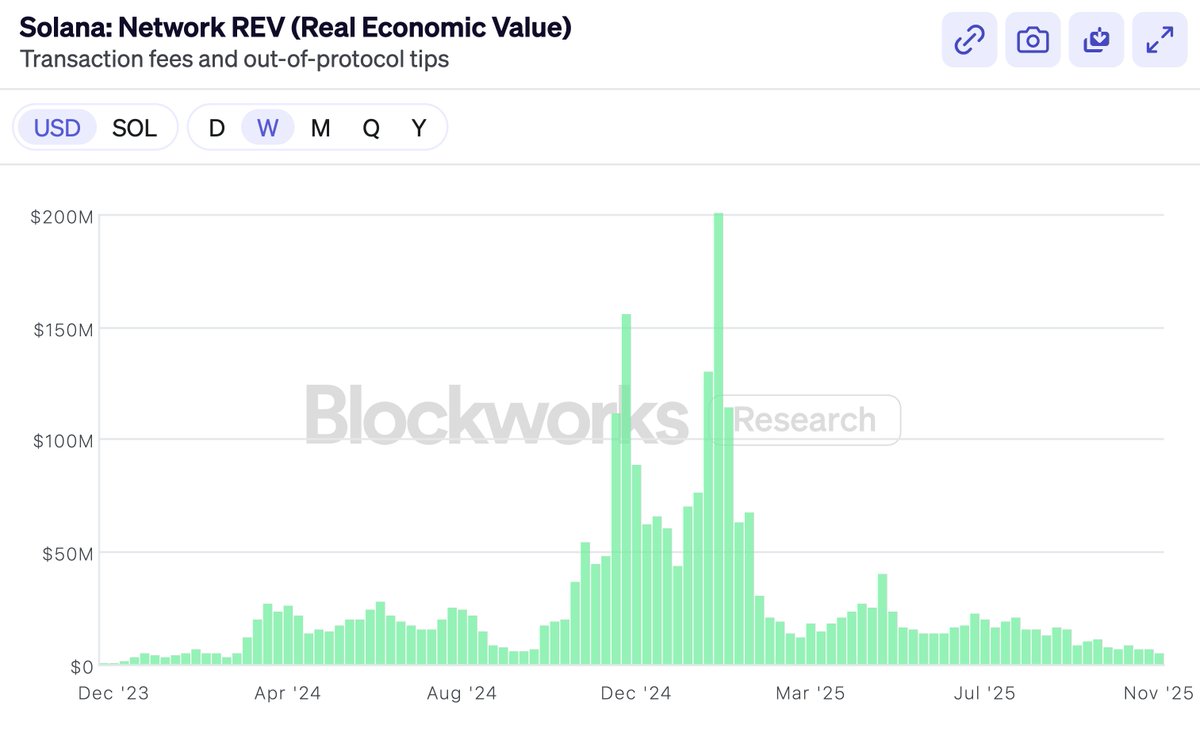
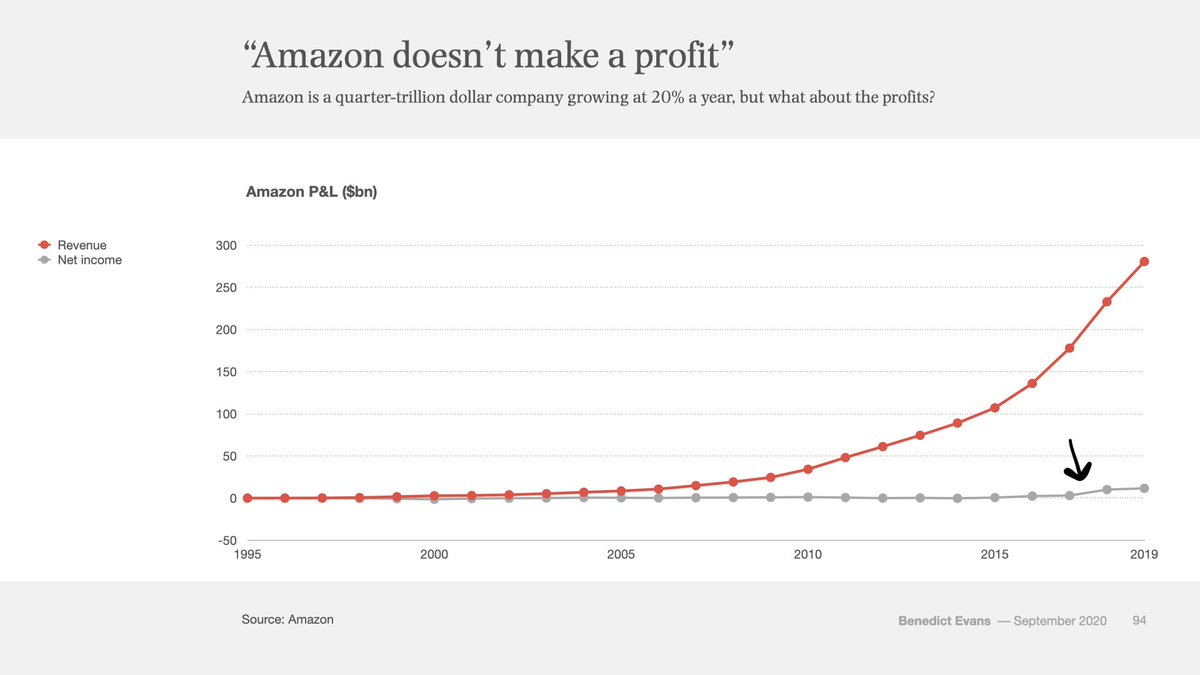
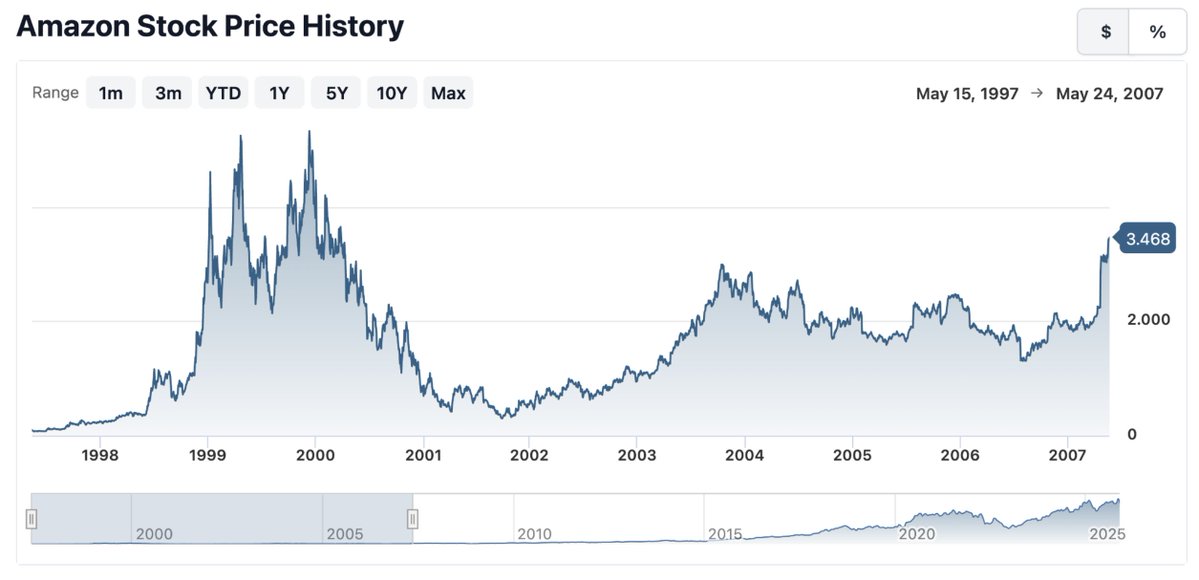
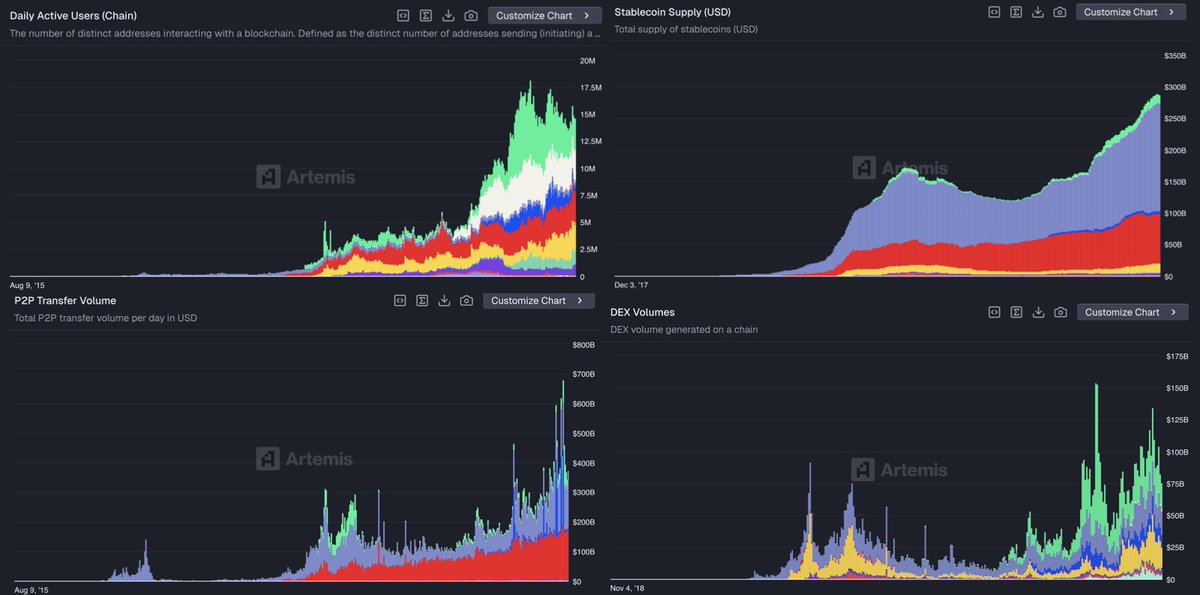
In Defense of Exponentials I used to tell founders, the reaction you are going to get to your launch is not hate, it’s indifference. By default, nobody cares about your new chain. I have to stop telling them that now. Monad just launched this week, and I’ve never seen so much hate about a blockchain that just launched. I’ve been investing into crypto professionally for 7+ years now. Before 2023, almost every chain I’ve ever seen that launched was mostly met with enthusiasm or indifference. But now, new chains are born into a chorus of hate. The amount of haters I’ve seen for projects like Monad, Tempo, MegaETH—before they even hit mainnet—is a genuinely new phenomenon. I’ve been trying to diagnose: why is this happening now, and what does it mean about the psychology of this market? The Cure is Worse than the Disease Forewarning: this is going to be the vaguest blockchain valuation post you ever read. I don’t have any fancy metrics or charts to sell you on. Instead, I’ll be arguing against the zeitgeist of Crypto Twitter, which for the last couple of years, I’ve been constantly on the opposite side of. In 2024, I felt like what I was arguing against was financial nihilism. Financial nihilism is the belief that none of these assets matter, it’s all memes at the end of the day, and everything we’ve built is inherently worthless. Thankfully, that’s no longer the vibe. We have broken out of that spell. But the zeitgeist now is what I’d call financial cynicism: OK, maybe some of this stuff has value, maybe it’s not all memes, but it’s grossly overvalued and it’s only a matter of time before Wall Street finds that out. Not that all chains are worthless. But these things are all maybe worth 1/5th-1/10th of what they’re currently trading at (have you seen these PE ratios?), and so you’d better pray like hell Wall Street doesn’t call us on our bluff, because once they do it’s all getting wiped out. You’ve got many bullish analysts now trying to conjure up optimistic L1 valuation models, inflating PE ratios, gross margins, DCFs, trying to fight against this mood. Late last year, Solana very proudly embraced REV as a metric that could finally justify their valuation. They proudly announced: we—and only we—are no longer bluffing to Wall Street! And, of course, almost immediately after REV was embraced, it fell off a cliff (though $SOL, tellingly, did better than REV did). Not that there’s anything wrong with REV. REV is a very clever metric. But the point of this post is not metric selection. Then came the launch of Hyperliquid. A DEX that had real revenue and buybacks and PE multiples. And the chorus said—look, look I told you! Finally, for the first time ever, a token that has some real profits and a proper PE multiple. (Nevermind BNB, we don’t talk about that.) Hyperliquid will eat everything because obviously Ethereum and Solana don’t make any real money, we can stop pretending to value them now. Hyperliquid, Pump, Sky, these buyback-heavy tokens are all great. But the market always had the ability to invest into exchanges. You could always buy Coinbase, or BNB, or whatever. We own $HYPE, and I agree that it’s a fantastic product. But that’s not why people were investing in ETH and SOL. The fact that L1s don't have exchange-like profit margins is not why people were buying them—if they wanted that, they could’ve bought Coinbase stock. So if I’m not critiquing blockchain financial metrics, maybe you think this post is going to be chiding the sinfulness of the token-industrial complex. Obviously, everyone has lost money on tokens in the last year, VCs included. Alts are down bad this year. And so the other half of the zeitgeist on CT is arguing about who's to blame. Who’s become greedy? Are the VCs greedy? Is Wintermute greedy? Is Binance greedy? Are the farmers greedy? Are the founders greedy? The answer, of course, is the same as it’s ever been. Everyone is greedy. Everyone. The VCs, Wintermute, the farmers, Binance, the KOLs, they're all greedy, and you are greedy too. But it doesn't matter. Because no functioning market has ever required anyone to act against their self-interest. If we're right about crypto, we can all be greedy and the investments will still work out. Trying to analyze a market that has gone down by figuring out “who’s greedy” is going to be about as fruitful as commissioning witch trials. I guarantee you, nobody just started being greedy in 2025. So this, too, is not what I’m going to be writing about. Many people want me to write a post about why $MON should be valued at X or $MEGA at Y. I’m not interested in writing this post, or advocating that you buy anything in particular. In fact, you probably shouldn’t buy any of them if you don’t already believe in them. Will any new challenger chain win? Who knows. But if it has a material chance of winning, it's going to be priced on that basis. If Ethereum is worth $300B or Solana is worth $80B, a project that has a 1-5% chance of becoming the next Ethereum or Solana will be priced according to those probabilities. Somehow CT is scandalized by this, but it’s no different than Biotech. A drug that has less than a 10% chance of curing Alzheimer's is priced by the market as worth billions of dollars, even if 90% chance it won’t pass stage 3 trials and will go to 0. That's how the math works—and turns out, markets are pretty good at doing math. Binary outcomes are priced on probabilities, not on run rates or moral turpitude. It’s the “shut up and calculate” school of valuation. I really don’t think that’s an interesting question to write about. “5% chance to win? No way, that’s clearly a 10% chance!” Markets, not articles, are the best way to assess that for any individual token. So here’s what I am going to write about: CT doesn't seem to believe anymore that chains are valuable. I don’t think this is because they don’t believe new chains can win market share. We just saw Solana dominate market share after emerging from the ashes less than 2 years ago. It’s not easy, but of course it’s possible. It’s more that people have come to believe that even if a new chain wins, there’s no prize worth winning. If $ETH is just a meme, if it’ll never generate real revenue, then even if you win, you won’t be worth $300B. The contest is not worth winning, because these valuations are all bunk and it’ll all come crashing down before you go to claim your prize. Being optimistic about chain valuations has become passé. Not that nobody is optimistic—obviously there must be optimists out there. For every seller there’s a buyer, and as much as CT cool kids love to drag L1s, people are comfortable buying SOL at $140, ETH at $3000. But there’s a perception now that all the smartest people are over buying smart contract chains. Smart people know the jig is up. If not now, then soon. The only people buying here are suckers—Uber drivers, Tom Lee, and KOLs who say stuff like “trillions.” And maybe the US Treasury. But not the smart money. This is bullshit. I don’t believe it, and you shouldn’t either. So I felt like I had to write a smart person’s manifesto on why general purpose chains are valuable. This post is not about Monad or MegaETH. It’s really in defense of ETH and SOL. Because if you believe ETH and SOL are valuable, the rest is straight downstream. Defending ETH and SOL valuations is generally not my job as a VC, but fuck it, if nobody else is willing to do it, then I’ll write it. Feeling the Exponential My partner Bo experienced the Chinese Internet boom first-hand as a VC. I’ve heard how “crypto is like the Internet” so many times now that it doesn’t even register for me anymore. But when I hear his stories, it always reminds me how costly it is to be wrong about these things. A story he often tells is about when all the early e-commerce VCs (it was a small group back then) got together for coffee in the early 2000s. They debated: how big is the market for e-commerce going to be? Is it going to be mostly electronics (maybe only techies will use PCs)? Could it ever work for women (perhaps they’re too tactile)? What about food (maybe impossible to manage perishables)? These were deeply important questions for early VCs to decide what to invest in and what prices to pay. The answer, of course, was that literally every single one of them was devastatingly wrong. E-commerce would sell everything, and the target audience was the whole fucking world. But nobody at the time actually believed it. And even if they did, it would be too absurd to say out loud. You just had to wait long enough for the exponential to show you. Even among the believers, very few thought e-commerce would become as big as it became. And those few who did, almost all of them became billionaires from just not selling. Every other VC—as Bo tells me, since he was one of them—sold too early. It has become passé in crypto to believe in the exponential. I believe in the crypto exponential. Because I’ve lived it. When I started in crypto, nobody used this stuff. It was tiny and broken and awful. TVL on-chain was in the millions. We invested into the first generation of DeFi, MakerDAO, Compound, 1inch, back when they were science projects. I remember playing around on EtherDelta back when DEXes traded single digit millions a day, and that was considered to be a huge success. It was complete dogshit. Now we routinely trade in the tens of billions on-chain every day. I remember believing it was crazy that Tether hit a billion dollars in issuance and was being written up in the NYT as a ponzi scheme on the brink of shutdown. Now stablecoins are over $300B and regulated by the Federal Reserve. I believe in the exponential because I’ve lived it. I’ve seen it over and over again. But you might respond—well, stablecoin growth might be exponential, maybe DeFi volumes are exponential, but they don’t accrue to ETH or SOL. The value doesn’t get captured by the chains. To which I answer: you still don’t believe in the exponential. Because the exponential’s answer is always the same: it doesn’t matter. This stuff is going to be so much bigger than it is today. And when it’s absolutely enormous, you’ll make it up on scale. Study this chart. This is Amazon’s P&L from 1995 to 2019. That’s 24 years. Red is revenue, gray is profit. You see that little blip on the end where the gray line goes up? That’s when, 22 years in, Amazon started actually making a profit. Amazon was 22 years old when this little gray line of net income first peeled off of 0. Every single year before then, there were op eds and critics and short sellers claiming that Amazon was a ponzi scheme that would never make any money. Ethereum just turned 10 years old. This is what the first 10 years of Amazon stock looked like: 10 years of chop. All along the way, Amazon was beset with doubters and non-believers. Is e-commerce a VC-subsidized charity? They’re selling underpriced cheap low-quality knick-knacks to bargain hunters, who cares? How are they ever going to make actual money, like Walmart or GE? If you were arguing about Amazon’s P/E ratio, you were in the wrong regime. That’s the regime of linear growth. But e-commerce was not a linear trend, and so every single person for 22 years arguing about P/E ratios was devastatingly wrong. No matter what you paid, no matter when you bought, you were not bullish enough. Because that’s what exponentials do. When it comes to truly exponential technologies, no matter how big you think it’s going to get, it just keeps getting even bigger. This is the thing that Silicon Valley has always understood better than Wall Street. Silicon Valley was raised on exponentials, while Wall Street was raised on linearity. And over the last few years, crypto’s center of gravity has migrated from Silicon Valley to Wall Street. You can feel it. Granted, crypto growth doesn’t look as smooth as e-commerce’s growth. It’s burstier, it goes in fits and starts. This is because crypto, being about money, is deeply tied to macro forces, and it also has more violent regulatory push and pull than e-commerce. Crypto strikes at the heart of the state—money—and so it’s more unnerving to governments than e-commerce ever was. But the exponential is no less inevitable. It's a crude argument. But if crypto is exponential, then the crude argument is correct. Zoom out. Financial assets want to be free. They want to be open. They want to be interconnected. Crypto turns financial assets into file formats, makes it as easy to send a dollar or a stock as to send a PDF. Crypto makes it possible for everything to talk to everything. It makes it all 24/7, global, interconnected, and open. That will win. Open always wins. If there’s no other lesson I've learned from the Internet, it’s that. Incumbents will fight against it, governments will huff and puff, but eventually they will give up against the adoption, the generativeness, the sheer efficiency that this technology enables. It’s what the Internet did to every other industry. Blockchains are how that same trend will gobble up all of finance and money. Yes—with enough time—all of it. An old saying goes: people overestimate what can happen in two years, but they underestimate what can happen in ten. If you believe in the exponential, if you zoom out enough, then it’s all still cheap. And it should humble you that every day, the holders outlast the sellers and naysayers. Big capital has a longer time horizon than CT swing traders might lead you to believe. Big capital has been trained through history not to fade big technologies. You know, the big gushy story that originally got you to buy $ETH or $SOL? Big capital believes that story and hasn't stopped. So what exactly am I arguing? I am arguing that applying P/E ratios to smart contract chains (the “revenue meta,” as it’s now called), is giving up on the exponential. It means you have consigned this industry to the regime of linear growth. It means you believe 30 million DAUs on-chain and <1% of M2 is it. Crypto is just one of the things in the world. A sideshow. It did not win. It was not inevitable. More than anything, I’m arguing to be a believer. Not just a believer, but a long-term believer. I’m arguing that this exponential will be bigger than anything else you’ve been a part of in your life. That this is your e-commerce. That you will look back when you’re old and tell your kids—I was there when it all happened. Not everyone believed it was possible, that whole societies could change, that all of money and finance would be transformed by programs running on decentralized computers that we collectively owned. But it actually happened. It changed the world. And you were a part of it. Disclosure: These are my own views. Dragonfly is an investor in $MON, $MEGA, $ETH, $SOL, $HYPE, $SKY among many other tokens. Dragonfly believes in the exponential. This is not investment advice, but is advice of another kind.
Haseeb >|< tweet mediaHaseeb >|< tweet mediaHaseeb >|< tweet mediaHaseeb >|< tweet media
English
911
681
3.6K
2M
Ricky 🦇🔊
Ricky 🦇🔊@Ricky_Pangge·
@NPC_Leo 你手上的degate钱包已经是这样的🤣 还可以solana
中文
0
0
0
44
Ricky 🦇🔊 retweetledi
YQ
YQ@yq_acc·
It's been a few months since we started to build the world’s first platform that institutionalizes “buy the rumour, sell the news.” A new marketplace where pseudonymous insiders and everyday traders meet on equal ground. A live experiment in whether the wisdom (and whispers) of the crowd can outpace the traditional inner circle. In a world where seconds can mean millions, @trade_rumour offers traders something simple yet radical: The ability to move before the news is news.
AltLayer@alt_layer

x.com/i/article/1968…

English
8
24
64
13.7K
Ricky 🦇🔊 retweetledi
ETHTAO
ETHTAO@Ethtao_Ethtao·
✨以太坊生态日报(2025-09-09) 【技术升级与协议动态】 1⃣EIP-7732(ePBS)被选为Glamsterdam主题提案,重点讨论其重要性及社区反馈。发布者@ether_world为以太坊生态资讯平台。[原文](x.com/ether_world/st…) 2⃣- FOCIL(EIP-7805)获核心开发者与社区支持,文章解析其功能及未列为主题提案的原因。@ether_world提供深度分析。[原文](x.com/ether_world/st…) 3⃣- Starknet宣布完成阶段1升级,持续推进零知识证明技术。未标注发布者身份。 【开发者工具与创新】 1⃣ 开发者工具速览:@ether_world汇总5项新工具: 1 Sonic测试网2.1支持以太坊Pectra升级,增强智能合约兼容性; 2. Nadcab Labs推出AI驱动的加密钱包,支持自动化链上管理; 3. Python框架Moccasin支持zkSync快速开发; 4. 模块化应用框架vApps提升以太坊dApp可扩展性; 5. 去中心化协作平台Radicle获Web3开发者青睐。[原文](x.com/ether_world/st…) 【学术与合作】 1⃣以太坊纽约研究资助论坛召开,@VitalikButerin提出四大研究方向:质押宏观经济学、FHE友好型哈希/签名、形式化验证及治理设计。@theobtl全程跟进。[原文](x.com/theobtl/status…) 2⃣谷歌云Web3负责人Devan Mitchem探讨以太坊公共产品建设,分享机构合作视角。@theobtl记录会议内容。[原文](x.com/theobtl/status…) 【生态应用与活动】 1⃣纽约“World of Apps”活动今日举行,展示13个以太坊应用及现场艺术创作,由@nounsdao等赞助。@jchaskin22预告活动亮点。[原文](x.com/jchaskin22/sta…) 2⃣ @ethereum官方账号发布“自主代理商业”主题长推,探讨HTTP 402标准如何通过以太坊实现机器间无摩擦支付,并列举多个已集成案例。[原文](x.com/ethereum/statu…) 【行业观点】 1⃣ @VitalikButerin调侃批评者未使用“警惕极客陷阱”标语,引发社区对加密叙事的讨论。[原文](x.com/VitalikButerin…) 2⃣ @matteoikari关注@reserveprotocol的指数代币协议潜力,认为可能开创链上资产组合新范式。[原文](x.com/matteoikari/st…) 【安全与研究】 1⃣以太坊证明市场设计研究发布,探讨ZK证明生成的经济模型与激励机制。@ethresearchbot同步摘要。[原文](x.com/ethresearchbot…)
EtherWorld@ether_world

EIP-7732 (ePBS) Selected as Glamsterdam Headliner - Why ePBS Matters - Community & Stakeholder Feedback etherworld.co/2025/08/11/eip…

中文
0
2
6
3.8K
AB Kuai.Dong
AB Kuai.Dong@_FORAB·
在东京的三位 Crypto 博主,终于相聚了。 明明相距不到 5、6 km,但总是长期网友状态。 真诚,感激的。 @ohyishi @suji_yan
AB Kuai.Dong tweet media
Minato-ku, Tokyo 🇯🇵 中文
141
3
432
92.7K
Ricky 🦇🔊 retweetledi
Leo⟠
Leo⟠@NPC_Leo·
最近不断的跟以太坊生态重要的团队,EF 新架构下不同的团队负责人、成员沟通,有几点总结: 1、EF 技术与运营板块基本完成调整,不光是架构,而是对整个体系目标、协作效率的对齐。整体思路非常清晰,特别是 Deveco 对以太坊生态的加速可以很快看到效果。 2、EF 新的团队我接触到的人都拥有很落地的背景经验,不光是 Web3 ,还有传统行业的背景,综合能力足以面对未来的发展。 3、绝大部分人都仍然有以太坊社区多年来的那种使命感,但是多了务实与执行,同时非常愿意开放的与不同社区沟通,听取意见。 4、生态企业开始认识到以太坊这个网络在技术上的稳定性、开发性与中立性对应用带来的好处,比如 MEV 的市场化让 Meme 用户虽然可能gas 会更高一些,但是不会像别的链一样付出 1-2 %的总成本,用户也会很快的认识到这一点。 5、以太坊仍然是拥有最高质量创业团队的社区,他们的创新未来能够更好的 Leverage 所有社区资源。以太社区 OG、新人、默默做贡献的人都被重新激活,气氛正在改变。 6、挑战仍在,但是从十年纬度看以太坊,它毫无疑问在经历一场深刻的自我变革。而它的价值观觉得了这场变革不会走向歧途。
中文
21
20
103
20.1K
🐸AYCP_55
🐸AYCP_55@aycp_55·
在cannes发现的几点想法 看好更多资产上链带来的机会:RobinHood的发布确实振奋,打开了分布式账本和证券连通后的想象空间;plume founder格外看好结构化产品 对代币概念的股票溢价的渴望:circle疯长带来了fomo,但是很少人讨论其的高溢价对应的叙事概念是否能成 担心代币概念的股票溢价的不可持续:在过去两个月内涌现出大量通过购买数字货币而宣布进军加密行业的上市公司,这一现象很容易让人联想到.com bubble 把plasma视为tether proxy: 尽管founder paul更加强调的是他们的流动性优势 和技术落地
🐸AYCP_55 tweet media
中文
4
0
4
322
Ricky 🦇🔊 retweetledi
a16z crypto
a16z crypto@a16zcrypto·
In this episode, we’re diving deep into AI and crypto. To help us unpack it, we’re joined by @ilblackdragon — co-founder of the crypto protocol @NEARProtocol and co-author of the groundbreaking 2017 “transformers” paper that kicked off the current AI boom. Ilia has been early to some of the biggest recent tech trends, and today he brings us a rare, panoramic view of the tech industry’s cutting edge. Together we explore what the phrase “user-owned AI” really means; why the so-called agentic internet — that is, a world where your AI assistant talks directly to services on your behalf — might replace the very notion of websites and apps as we know them; and much more. Timestamps: 0:00 - Introduction 3:40 - Centralization and Challenges of AI 6:17 - “User-Owned” AI 12:14 - Confidential Computing and AI 17:51 - The Birth of Transformers 22:33 - NEAR AI and Crowdsourcing 27:56 - AI Agents and Future Applications 31:04 - The End of Websites and Applications 34:08 - Dead Internet Theory & Distinguishing Humans 41:49 - Open Source vs. Open Weight Models 43:48 - Geopolitical Implications of AI 46:55 - NEAR Protocol and Blockchain Scaling 59:29 - The Role of Humans in an AI World
English
23
45
241
46.9K
Ricky 🦇🔊 retweetledi
David Hoffman
David Hoffman@TrustlessState·
"Ethereum's Strategic Pivot" The Ethereum ship is slowly turning around. In fact, this process started over 6 months ago - changes are already observable I wrote an article on @bankless doing my best to identify6️⃣arenas of change Ethereum is undergoing Read!👇
David Hoffman tweet media
English
87
87
798
127.5K