Rochester Literature Festival

7.6K posts

Rochester Literature Festival banner
Rochester Literature Festival

Rochester Literature Festival

@RochLitFest

Home of #MedwayWomensHistoryMonth and #MurderousMedway Patron @LisaCuttsAuthor

Rochester, Kent Katılım Temmuz 2011
3.3K Takip Edilen3K Takipçiler
Rochester Literature Festival retweetledi
Freedom_In_The_Arts
Freedom_In_The_Arts@Freedom_in_Arts·
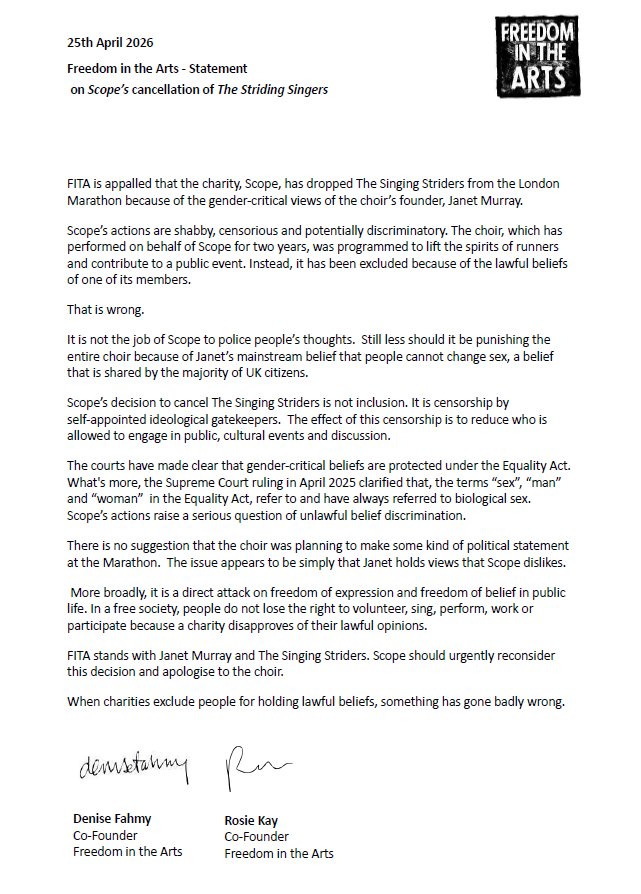
We stand with @jan_murray. @scope should reconsider their decision, which was based on 2 complaints, abide by UK equality law, and apologise to Jan
Freedom_In_The_Arts tweet media
English
34
395
1.6K
23.4K
Rochester Literature Festival retweetledi
Polly Clark
Polly Clark@MsPollyClark·
My novel OCEAN is published in paperback May 7th. I wrote it after crossing the Bay of Biscay as the worst crew member ever on a beautiful yacht, trying to understand what happens to a family under pressure. "A propulsive, visceral, gasp inducing page-turner" - Sunday Post
Polly Clark tweet media
English
0
8
23
1.2K
Rochester Literature Festival retweetledi
Polly Clark
Polly Clark@MsPollyClark·
Author copies of OCEAN paperback have arrived. Beautifully produced, and, after all this time, so happy to hold it in my hands. Out May 7. “Strange, wonderful and compelling” — Louis de Bernières
Polly Clark tweet media
English
2
6
31
2.7K
Rochester Literature Festival retweetledi
Anna Hamilton Art
Anna Hamilton Art@annahamiltonart·
Morning all. I’ve done lots of thinking this week & decided I don’t think I can carry on with my business anymore. It’s always been hard, but it’s so much harder to keep my head above water now which is not only bad for me mentally, it’s affecting my physical health too (1/4)
Anna Hamilton Art tweet media
English
151
534
2.8K
174.3K
Rochester Literature Festival retweetledi
#WOMENSART
#WOMENSART@womensart1·
English stained glass artist Ann Sotheran, 'Isa's hare' (2011) #WomensArt
#WOMENSART tweet media
English
20
495
2.3K
26.7K
Rochester Literature Festival retweetledi
J.K. Rowling
J.K. Rowling@jk_rowling·
If you're the mother who was reading Harry Potter and the Philosopher's Stone aloud to your child on the LNER train from London to Edinburgh yesterday, one of my grown up children was listening and says you did the voices brilliantly❤️🥹
English
3K
14.6K
316.5K
6.1M
Rochester Literature Festival retweetledi
Janet Murray
Janet Murray@jan_murray·
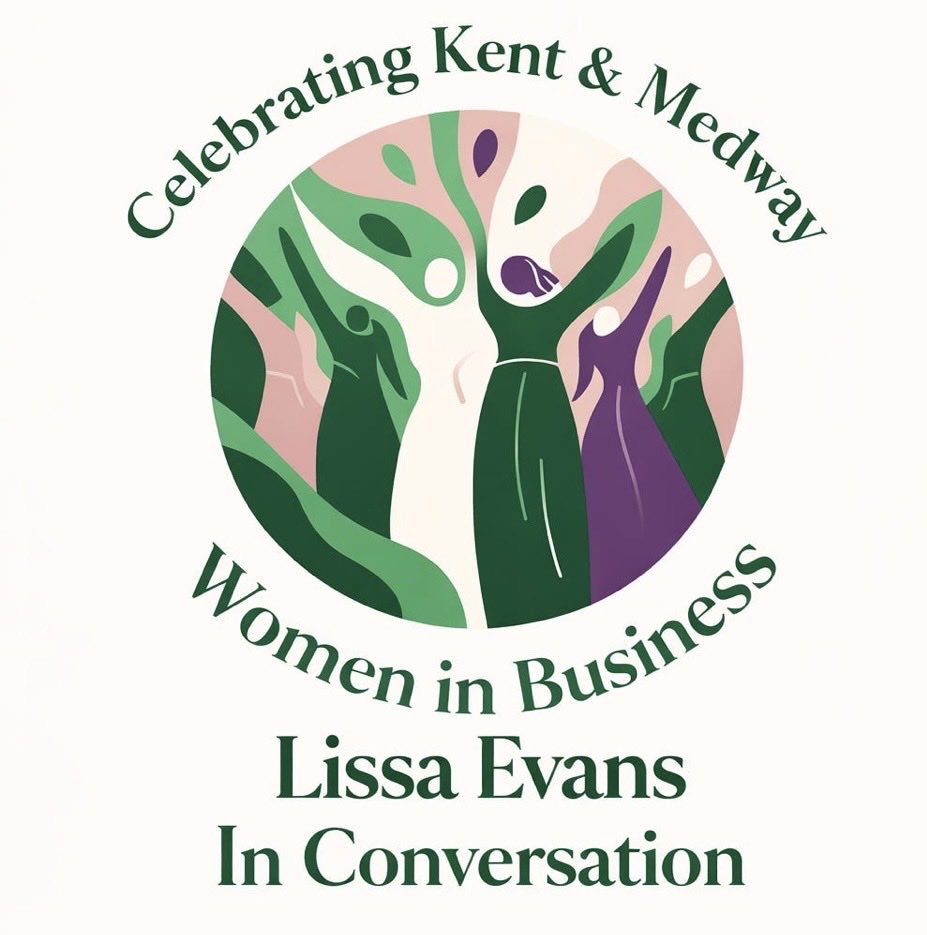
What a treat it was listening to @LissaKEvans speak at @RochLitFest this afternoon. Could have listened to her for hours. Had so many more questions to ask - but didn't want to be greedy! Thanks @Scattyjan for organising 🙏
Janet Murray tweet media
English
1
3
21
1.1K
Rochester Literature Festival retweetledi
Jenny Lindsay
Jenny Lindsay@msjlindsay·
I was supposed to be in Sydney this month (sobs), talking Hounded and also poetry! Lost out on some book sales due to the flights being cancelled, but if anyone (UK only, sorry!) fancies my last poetry collection, you nab one below! RT for guid karma x jennylindsay.bigcartel.com/product/this-s…
Jenny Lindsay tweet media
English
4
49
76
3.7K
Rochester Literature Festival retweetledi
Athenaeum Book Club
Athenaeum Book Club@athenaeumbc·
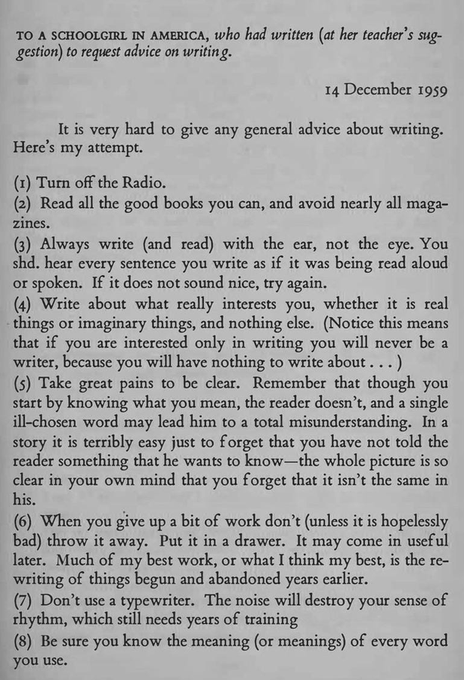
C. S. Lewis’s advice to a young schoolgirl on how to become a better writer:
Athenaeum Book Club tweet media
English
96
3.7K
19.1K
471.9K
Rochester Literature Festival
Rochester Literature Festival@RochLitFest·
Lily Craven@TheAttagirls

Woman of the Day feminist and author Caroline Norton born OTD in 1808 in London whose intense lobbying of Parliament and Queen Victoria was instrumental in the passing of three Acts of Parliament that gave married women long overdue legal rights for the first time. It was the beginning of the end of coverture, the common law principle imported by those robbing Normans in 1066: that a married woman was no more than a chattel of her husband. Property. And property cannot own property. Caroline married at 19. Her family, though well-connected, was penniless. It was a mistake. George Norton was happy to use his wife’s social connections to gain advancement but failed to earn money as a barrister. Hardly surprising. He was a nightmare: jealous, possessive, violent, abusive and a drunk. She left him when she 28, and managed to support herself and her children for a while by writing books and poems, but in those days, a woman’s earnings belonged to her husband. She was just a chattel, remember. He confiscated Caroline’s income, leaving her in poverty. She fought back: running up bills in his name, and when creditors came to collect, telling them to go after him. He retaliated by kidnapping their three sons, hiding them with relatives in Scotland, and refusing to tell her where they were. Children then were the legal property of their father and there was nothing Caroline could do to regain custody. A woman’s voice carried no weight. (You might think that’s still the case today but I couldn’t possibly comment). Norton accused her of an affair with the Prime Minister, Lord Melbourne, and tried to blackmail Melbourne for £10,000 (£1.3 million in today’s money) to avoid scandal. The PM refused to pay so Norton took him to court. At the end of a nine-day trial, the jury threw out Norton’s claim, siding with Melbourne, but the publicity almost brought down the government. The scandal eventually died, but Caroline’s reputation was ruined. He still refused to let her see her sons and blocked her from divorcing him. When one of their sons died in an avoidable accident, he relented and let Caroline see her other children, but still refused her custody. She had no redress. He had complete power over her. Parliament finally debated divorce reform in 1855 and Caroline submitted a detailed account of her own marriage to MPs, describing the obstacles faced by women as the result of existing laws. An English wife may not leave her husband's house. Not only can he sue her for restitution of "conjugal rights," but he has a right to enter the house of any friend or relation with whom she may take refuge...and carry her away by force...” “If her husband take proceedings for a divorce, she is not, in the first instance, allowed to defend herself...She is not represented by attorney, nor permitted to be considered a party to the suit between him and her supposed lover, for "damages." “If an English wife be guilty of infidelity, her husband can divorce her so as to marry again; but she cannot divorce the husband ‘a vinculo’, however profligate he may be.” Largely through Caroline’s intense campaigning, including writing to Queen Victoria, Parliament passed the Custody of Infants Act 1839, the Matrimonial Causes Act 1857, and the Married Women’s Property Act 1870. Although Caroline did not herself benefit, those Acts gave married women - for the first time ever - a right to their own children and a law allowing divorce. By virtue of the Married Women's Property Act 1870, married women finally had the right to inherit property and take court action on their own behalf. It also granted married women, for the first time, a separate legal identity from their husbands. Caroline was finally free of Norton when he died in 1875. She remarried in 1877 but died just three months later at the age of 69. I hope she found some peace and contentment in that too brief time. “Those dear children, the loss of whose pattering steps and sweet occasional voices made the silence of my new home intolerable as the anguish of death...what I suffered respecting those children. God knows…under the evil law which suffered any man, for vengeance or for interest, to take baby children from their mother.” Coverture, a Norman legacy, was finally knocked on the head in 1990 when married women were finally taxed independently on their own incomes and given their own personal allowances. 1990. It only took 924 years.

QHT
0
0
1
22
Rochester Literature Festival
Rochester Literature Festival@RochLitFest·
@JoEllisReally @ThatAussieWoman Religious minority women, sexual assault survivors, young girls starting their periods, mothers needing to leave a cubicle door open - they all want and need single sex spaces. If you don’t, go and use the gents.
English
0
1
10
53
Rochester Literature Festival
Rochester Literature Festival@RochLitFest·
@JoEllisReally @ThatAussieWoman It’s not about what you think though, is it? Most women (& most men) want single sex spaces. Good men especially, don’t want to share intimate spaces with women. There was an uptick in girls with UTIs due to having to share school toilets with boys so they refused to drink 1/2
English
1
1
24
229
Jo Ellis
Jo Ellis@JoEllisReally·
One thing I keep coming back to with bathroom bans is that removing trans women doesn’t remove risk. It only removes some perception of risk. Women can assault other women. Men can break the law regardless of signs on the door. Bad people don’t follow rules. In most areas of society, we accept that risk can’t be reduced to zero, so we punish wrongdoing instead of restricting everyone ahead of time. But in this debate, the standard sometimes becomes: if harm is possible, access should be restricted. That’s not how we handle risk anywhere else. Imagine driving privileges, guns, etc., all being handled that way?
English
295
15
81
41.9K
Rochester Literature Festival
Rochester Literature Festival@RochLitFest·
Lily Craven@TheAttagirls

Woman of the Day pioneering suffragist and abolitionist Matilda Joslyn Gage of Cicero, New York, died OTD 1898, aged 71. The Matilda Effect - the phenomenon in which the achievements of women scientists are claimed or stolen by their male colleagues - is named for her because she first identified it in her 1883 essay Woman as Inventor. Matilda worked with Susan B. Anthony and Elizabeth Cady Stanton to found the National Woman Suffrage Association in 1869, and collaborated with them in writing the History of Woman Suffrage (1881–1887) and the Declaration of the Rights of Women. She published and edited the National Citizen, a paper devoted to the cause of women. The fight against inequality was in her blood. Born into an abolitionist family, Matilda and her husband offered their home as a station on the Underground Railroad despite the risk of harsh penalties and imprisonment. She described herself as "born with a hatred of oppression” and was a staunch advocate for Native Americans, publicly criticising their treatment by the federal government. In 1870, Matilda wrote “Woman as Inventor” promoting the work of female inventors, including Sarah Mather who invented the deep-sea telescope and Margaret Knight who invented a machine that created flat-bottomed paper bags. She pointed out that society disapproved of women inventors, thus suppressing their talents, deterring them from learning about mechanics, and patenting their inventions under the names of their husbands to evade insults and ridicule. “In not a single State of the Union is a married woman held to possess a right to her earnings within the family; and in not one-half of them has she a right to their control in business entered upon outside of the household. Should such a woman be successful in obtaining a patent, what then! Would she be free to do as she pleased with it? Not at all. She would hold no right, title, or power over this work of her own brain.” Widely regarded as an excellent speaker and writer, Matilda also took direct action. In 1871, she organised several women in an attempt at voting in New York. In 1872, she tried and failed to vote in the presidential elections, but she actively supported Susan B. Anthony who was arrested and tried at court for successfully casting a ballot. When the Statue of Liberty was unveiled in 1886, she led a protest arguing that it was hypocritical to depict Liberty as a woman when real American women were denied political and social rights. Writing about laws which allowed a man to leave his children in his will to a guardian unrelated to their mother, she said, “It is sometimes better to be a dead man than a live woman.” Christianity especially drew her ire. “The most stupendous system of organised robbery known has been that of the Church towards woman, a robbery that has not only taken her self-respect but all rights of person; the fruits of her own industry; her opportunities of education; the exercise of her own judgment, her own conscience, her own will.” Matilda died in 1898 at the age of 71 but it was her contention in Woman, Church and State, published in 1893, that struck a chord with me. The parallel with today is striking. “The witch was in reality the profoundest thinker, the most advanced scientist of those ages. The persecution which for ages waged against witches, was in reality an attack upon science at the hands of the Church. As knowledge has ever been power, the Church feared its use in woman's hands, and levelled its deadliest blows at her.”

QHT
0
0
0
38