Ron Lehman 🇨🇦

4.7K posts

Ron Lehman 🇨🇦 banner
Ron Lehman 🇨🇦

Ron Lehman 🇨🇦

@Ron_Lehman

Husband, Father. Strat AD @Adobe | Former @Salesforce and @SAP | 🏂 🚵‍♂️ 🏄‍♂️ | Opinions are my own

North Vancouver Katılım Şubat 2009
3.1K Takip Edilen1K Takipçiler
Ron Lehman 🇨🇦 retweetledi
Andrew Yeung
Andrew Yeung@andruyeung·
Stripe just created a role that didn't exist 12 months ago (and they're paying multiple six figures for it) It's called the Forward Deployed AI Accelerator. They are hiring AI-native individuals to work directly with their marketing teams to fundamentally change how they work. Each person will be assigned to a cohort of 20 marketers. Their job is to build custom AI tools and agents and coach each marketer until they are self-sufficient. Basically, work with marketers until they automate their jobs. Stripe's marketing org is betting that AI should not be an occasional tool but the default mode for all work. But they also understand that most employees won't upskill themselves. They'll need someone who is embedded within their teams to build alongside them. If you are AI-pilled, this is probably the role for you. And this also gives a clear picture of where every organization within a company is heading.
Andrew Yeung tweet mediaAndrew Yeung tweet media
English
101
201
2.4K
795.9K
Ron Lehman 🇨🇦 retweetledi
Aaron Levie
Aaron Levie@levie·
Whether it’s existing consulting firms, new ones that emerge, FDEs from agent vendors, or new internal agent engineering roles, the amount of work that is going to be created to implement agents in enterprises will exceed anything we imagine today. The complexity of implementing agents in any existing organizations is very real. When I talk to large enterprises, as you move from a chat paradigm to agents that participate in meaningful workflows, there are a number of things they need to do. First, you have to get agents to be able to talk to your data securely across your systems. In many cases, enterprises have decades of legacy infrastructure that contain the valuable context for AI agents. That’s going to take a ton of work to go modernize and move to systems that work well with agents. Then, you need to ensure that you’ve implemented agents with the right access controls and entitlements, the right scopes to be safely used, and have ways of monitoring, logging, and securing the work that they do. Next, you need to actually document the processes in the organization in a way that agents can utilize for doing the work. You also need to figure out what the new workflow looks like when agents and people are working together on a process, and who steps in where. Just replicating the old workflow will mute the gains. Oh and you likely need to create evals for your top new end-state processes. Finally, you have to keep up with a rapidly changing set of best practices and architectural shifts happening in the agent space. While it’s fun for people to change their personal productivity tools on a dime, it’s 100X harder to do this in a business process. The speed of change is a blessing and a curse right now for anyone trying to keep a stable system design. All of this means that individuals and companies that develop expertise on the above set of components (and more) are going to be needed to help organizations actually implement agents at scale. This is also the rationale for vertical AI agents right now that can go in deep on a business domain and help bring automation to it. This is a huge opportunity right now whether you’re doing this internally or as an external business provider.
English
155
264
2K
554.9K
robyn
robyn@_robyn_smith·
The canada -> sf pipeline is just proof that having a strong public education system is the key to outsized success A lot of successful americans I meet in sf came from wealthy families that sent them to private school and they were set up to succeed Most canadians in sf went to public school and then a university that cost them $8k CAD/year Democratizing access to the “elite” by making waterloo the pinnacle of success in Canada means Canadians in sf are just as smart but generally significantly more grounded than their counterparts
English
68
70
1.3K
154.5K
Ron Lehman 🇨🇦 retweetledi
Konstantine Buhler
Konstantine Buhler@Konstantine·
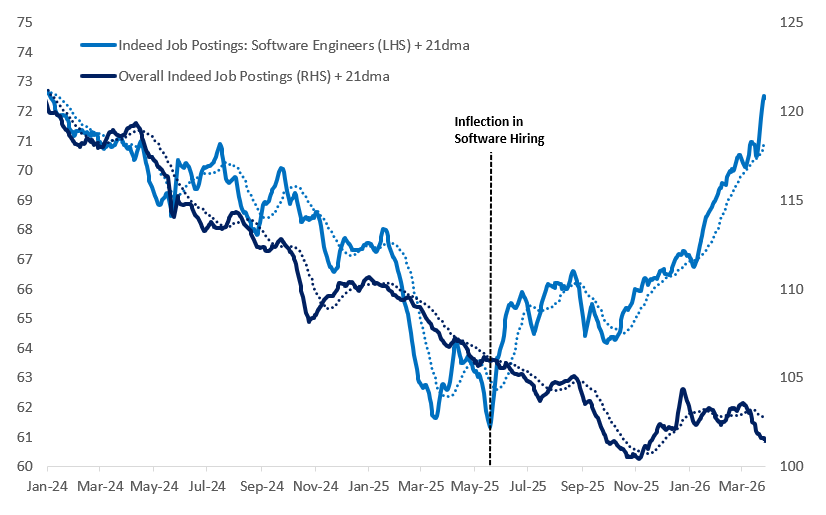
Narrative violation and great insight from the latest Citadel Securities banger by Frank Flight: "We illustrated back in February that demand for software engineers, the most AI exposed occupation was accelerating higher, which we argued violates the displacement narrative. Indeed the acceleration in software job postings has continued, now up 18% from the inflection point in May last year."
Konstantine Buhler tweet media
English
64
226
1.2K
665K
Ron Lehman 🇨🇦 retweetledi
Rob Fai
Rob Fai@RobFai·
This Las Vegas/Phoenix relocation chatter has one goal - to give the #Whitecaps one last bullet in the chamber to help get something done in Vancouver. No league likes relocation, but, if the Caps can't get this locked in over the next few months with Pavco, etc., they are completely right to ensure a road for relocation is available to ownership. The ball is in Vancouver's court now and it should have never come to this. Unreal this is the story we're talking about with the world arriving for #WorldCup
Rob Fai tweet media
English
46
31
401
45.5K
Ron Lehman 🇨🇦
Ron Lehman 🇨🇦@Ron_Lehman·
@KarmSumal The solution is Pavco needs to give the Whitecaps owners what they're asking for. Currently the owners receive just 12% of stadium revenues from the games. Pavco needs to give the owners 100% of the stadium revenues and stop nickel and diming them.
English
1
0
0
81
Karm Sumal
Karm Sumal@KarmSumal·
Losing the Whitecaps would mean a significant economic hit to Vancouver and British Columbia from matchday spending and jobs to tourism and global exposure. But beyond the dollars, it’s also about identity. Cities that grow don’t let major league teams walk away. We should be asking how to structure a solution, public-private, minority stake, new ownership, not why it’s too hard. #SaveTheCaps
English
38
24
274
21.7K
Ron Lehman 🇨🇦
Ron Lehman 🇨🇦@Ron_Lehman·
@KenSimCity Seems like they need a bridge deal to get better terms from Pavco for BC Place while they work out a deal for a new stadium.
English
0
0
0
49
Ron Lehman 🇨🇦
Ron Lehman 🇨🇦@Ron_Lehman·
@KenSimCity Based on what I’ve read the owners are pretty clear that they need either a) their own stadium or b) want better terms for BC Place What’s required to get the new stadium approved? Is that within the City’s ability to approve?
English
2
0
0
1.3K
Mayor Ken Sim
Mayor Ken Sim@KenSimCity·
STATEMENT FROM VANCOUVER MAYOR KEN SIM: The Whitecaps have been Vancouver’s club since 1974. Many things have changed throughout the years: the players, the logos, the kits, and the stadiums, just to name a few. The one thing that has never changed is Vancouver’s love of this team. The Whitecaps are one of the top teams in the MLS, they were the runners up in last year’s championship, and they sit in the top ten of league attendance at an average of 24,000+ per game. While we understand that professional sports is a complex business, it would be a mistake for any team to leave a market with such a longstanding history and ready-made fanbase. The City of Vancouver has done its part to create a path forward for the team’s future here by offering prime space at Hastings Park for the Whitecaps to construct a new stadium and entertainment district. Now, we face the difficult part. BC Place is owned and operated by the Provincial Government. In fact, it’s the only stadium owned and operated by a government found anywhere in the MLS. In order for the team to stay in Vancouver, the Whitecaps and Province must sign a bridge deal that will allow BC Place to become viable in the near term while a new stadium can be designed and built. That's why today, we are calling on the team’s ownership to publicly and clearly articulate what they need to stay here in Vancouver, and we are calling on the Provincial Government to come to the table and make that a reality. To all Vancouver Whitecaps fans, to the @Southsiders, and to all of the supporter groups, we need you to keep the fight going. We need you to stay strong, and we need you to stay loud. Losing the Whitecaps is not an option. #SAVETHECAPS
Mayor Ken Sim tweet media
English
150
496
2.6K
172.7K
Ron Lehman 🇨🇦 retweetledi
MLS Moves
MLS Moves@MLSMoves·
They CANNOT move the Vancouver Whitecaps. It’s a tragedy that American/Canadian sports teams are the only ones in the world who have to worry about their club moving. Could you imagine if Real Madrid moved to Mallorca? Manchester United moved to London? Inter Milan moved to Naples? It’s not fair to the fans that there’s a risk of losing their club. It’s absolutely sickening, and it shouldn’t be this way. SAVE THE CAPS
MLS Moves tweet media
English
236
390
3.3K
284.9K
Ron Lehman 🇨🇦 retweetledi
Aaron Levie
Aaron Levie@levie·
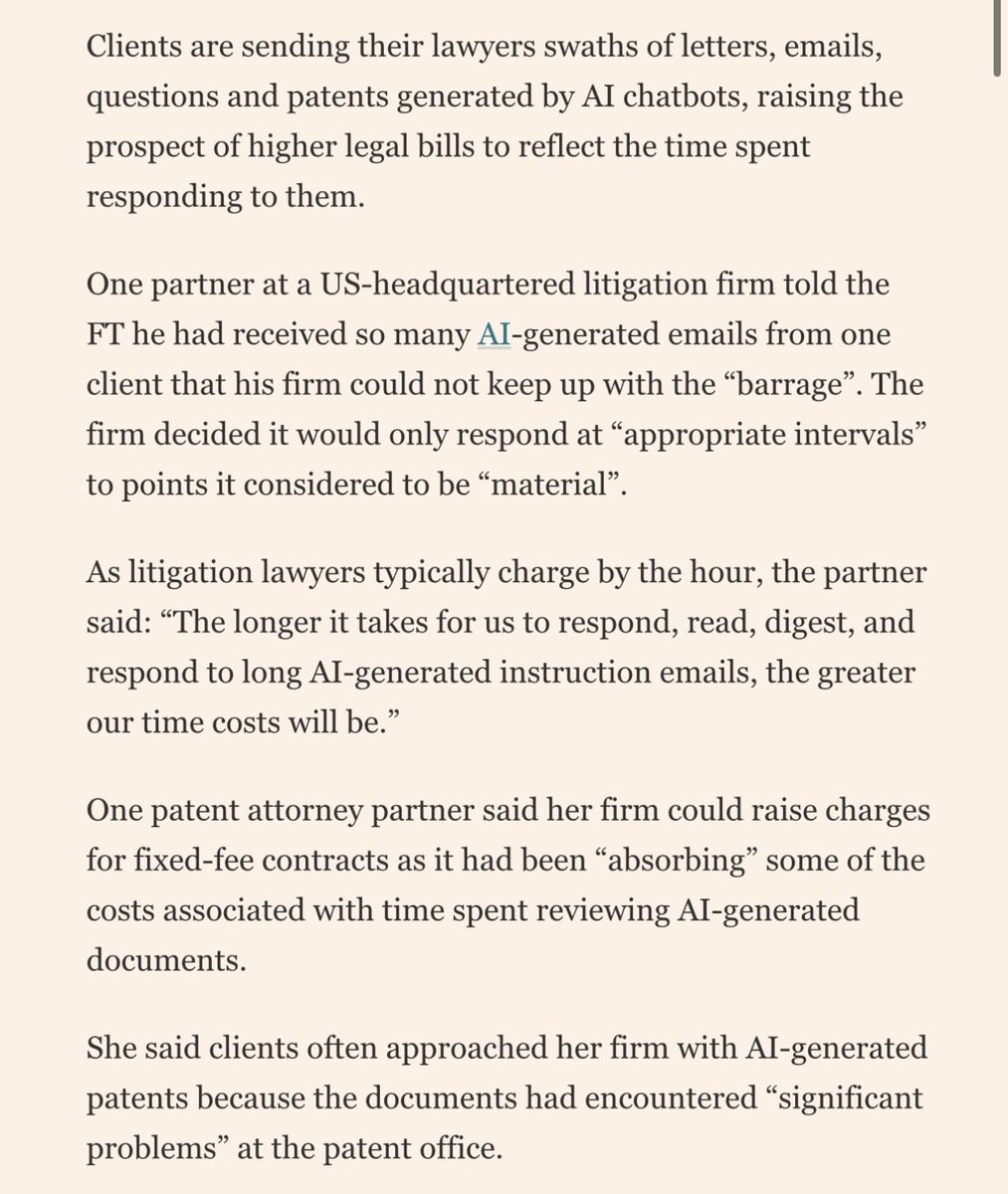
Why will AI create more jobs in plenty of industries? It’s because we’re going to use AI to accelerate output in one area, and then eventually you run into a new bottleneck somewhere else in the process that still requires humans. This example from the FT is an obvious one. More people asking legal questions from AI agents, which downstream eventually will mean there are more lawyers being pinged with questions. There are other drivers, too, like AI accelerating new business formation, more patent filings, new scientific research, and so on - all of which eventually land in the laps of lawyers and other regulatory functions. But the analogy holds for plenty of other work. More code will mean more security risks, which means more security researchers. Automating patient referrals in healthcare just leads to a bottleneck of not having enough doctors. More customer outreach via AI leads to more sales conversations. You can list thousands of categories like this. There’s a lot of areas where AI will lead to “efficiency” in the sense that we will automate something and then spend less in that area. But the value proposition taps out at some point because the world isn’t static. Your competitor will use AI to build a better product, go out and meet with even more customers, deliver a better service, run better ad campaigns, and you eventually have to match them or die.
Aaron Levie tweet media
English
75
64
438
91.2K
Ron Lehman 🇨🇦 retweetledi
Aakash Gupta
Aakash Gupta@aakashgupta·
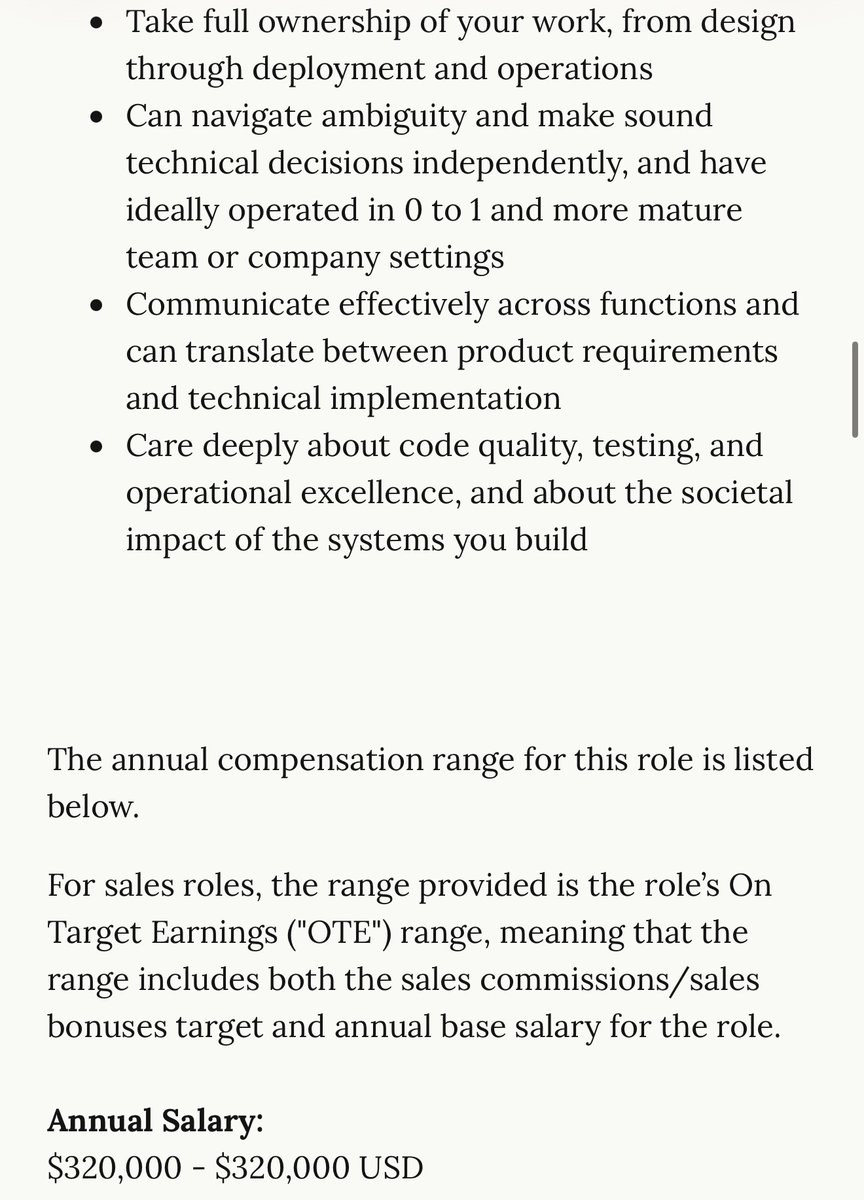
Anthropic has 454 open roles. The company is hiring software engineers at $320K-$405K. Their CEO, Dario, said three months ago that coding is "going away first, then all of software engineering." The paradox resolves instantly. Dario's engineers told him they don't write code anymore. They let Claude write it. They edit. They review. They architect. They didn't lose their jobs. They got faster. Anthropic grew from a small research lab to 1,500 employees in four years, adding engineers the entire time. This has played out five times in computing history. Compilers replaced assembly. Frameworks replaced boilerplate. Cloud replaced server management. Every prediction was the same: most programmers won't be needed. Every result was the same: the number of engineers grew. The global software engineer pool went from roughly 5 million in 2010 to 28.7 million today. BLS projects 17% growth in US software developer roles through 2033, adding 304,000 positions. The pool is projected to hit 45 million by 2030. When building software gets cheaper, more problems become worth solving with software. A startup that needed 10 engineers now needs 3. But 50 companies that couldn't afford to build at all now can. The denominator shrinks. The numerator explodes. Meta's engineering headcount is up 19% from January 2022. Google's is up 16%. Apple, 13%. These companies adopted AI coding tools years ago. They're using Copilot and Claude Code daily. They're hiring more engineers than before those tools existed. Every generation of "coding is dead" content creates two cohorts: engineers who freeze up, and engineers who build 10x more with the new tools. The second group has won every single time.
Aakash Gupta tweet mediaAakash Gupta tweet media
English
199
474
3.7K
1.8M
Ron Lehman 🇨🇦 retweetledi
Ihtesham Ali
Ihtesham Ali@ihtesham2005·
A MIT student figured out how to compress an entire semester of lecture content into one 90-minute study session. He calls it "context stacking," and it's the most unfair thing I've seen done with NotebookLM. I asked him to walk me through it. He did. I haven't studied the same way since. Here's exactly what he does. Two days before each lecture, he uploads everything into NotebookLM. The assigned readings, the previous week's slides, 3 or 4 related papers he finds himself, and any problem sets that are still open. Most students wait for the lecture to explain the material. He walks in having already built a mental model of it. That's step one. But it's not the move that makes it unfair. The first prompt he runs across all of it: "What are the 5 core concepts this week's content is built on, and how do they connect to what I studied last week?" Not summarize. Not define. Connect. NotebookLM pulls threads across everything he uploaded simultaneously. It surfaces relationships between ideas that would take a normal student weeks of review to notice. He gets that map before the lecture even starts. Then he runs the prompt that does most of the work. "What would I need to genuinely understand about this material to be able to teach it to someone with zero background in this subject?" That question is doing something most students never force themselves to do. It exposes exactly where his understanding is solid and exactly where it's hollow. The gaps show up immediately, and he spends the rest of the 90 minutes filling only those gaps. Not reviewing what he already knows. Only fixing what he doesn't. The final prompt is the one that separates context stacking from every other study method I've heard of. "What question could a professor ask about this material that would expose a student who understood the surface but missed the underlying logic?" He's not studying for the exam he expects. He's studying for the exam designed to catch people who only think they understood it. By the time he sits in the lecture hall, the professor is not teaching him anything new. The professor is confirming what he already mapped, filling in a few details, and occasionally surprising him with something he didn't anticipate. That surprise is the only thing he writes down. Most students leave a lecture hoping the material will eventually click. He walks in with it already clicked, and uses the lecture to find out what he missed. That's not a study hack. That's a completely different relationship with learning.
Ihtesham Ali tweet media
English
121
1K
6.1K
580.9K
Zephyr
Zephyr@Zephyr_hg·
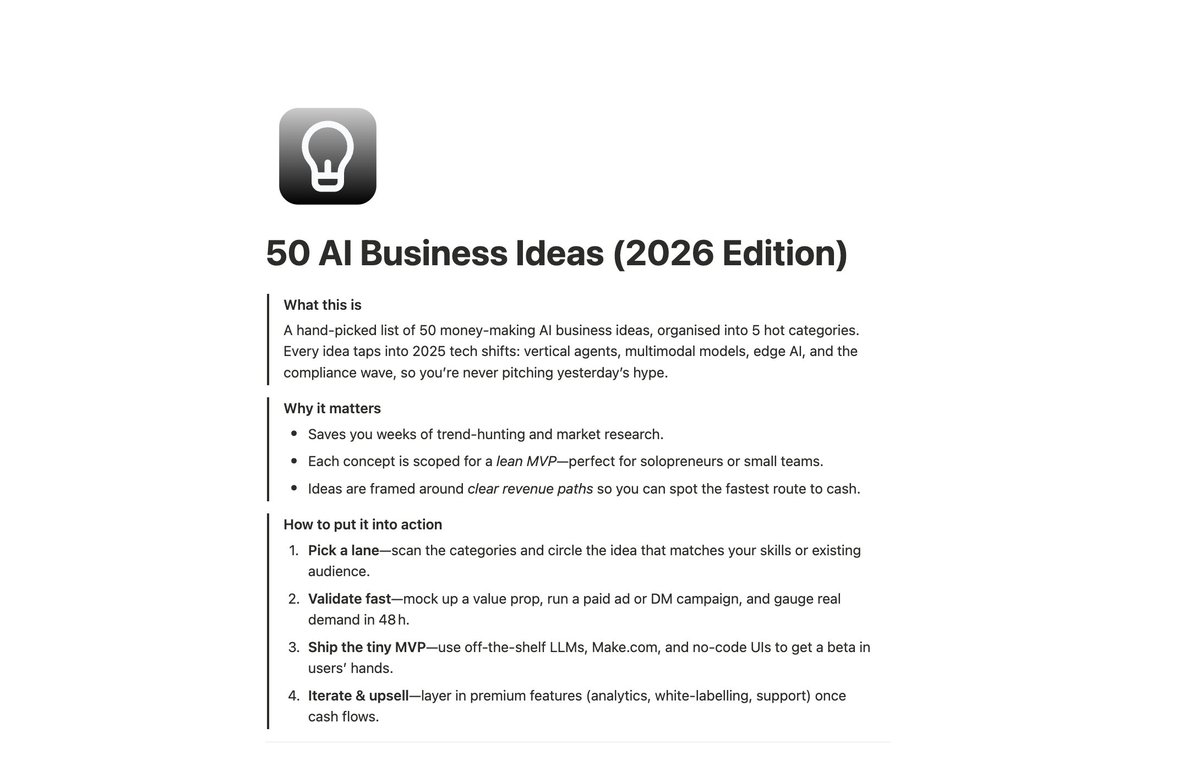
I mapped out 50 ways to make money with AI in 2026. Not theory. Not hype. Real business models with revenue paths and MVP scope. Organized into 5 categories: vertical agents, content tools, data infrastructure, edge AI, and services. Each idea shows exactly what to build and how to monetize it. Saved me 3 weeks of research when I was figuring out what to launch. Comment "IDEAS" and I'll DM it to you (must be following)
Zephyr tweet media
English
480
28
302
31.7K
ALEX SUZUKI
ALEX SUZUKI@X_FINALBOSS·
I was smoking hookah with a guy who did $65M+ selling AI to Fortune 500 companies in West Hollywood we did a little mastermind and he asked me how I did $3.5M+ selling ebooks organically. So I begin explaining and show him my 60 modules blueprints and videos explaining how it all works He looks at me, straight in the eye, and asks me why I'm not selling that for $10K at least??? I replied: "Oh I don't feel like it. I'm busy with other stuff" He said : BRO AS SOON AS YOU GO HOME SELL IT TO YOUR FOLLOWERS FOR $10K PER PERSON THAT IS THE MOST VALUABLE PRODUCT YOU HAVE YOU COULD MAKE $100K TONIGHT JUST FROM DOING THAT so now im giving it out to you guys. but for free. Comment "BLUEPRINT" and I'll send it to you via DM **must be following + retweet (this happened 2 weeks ago btw, a while ago)
ALEX SUZUKI tweet media
English
326
136
280
25.9K
Guillermo Flor
Guillermo Flor@guilleflorvs·
𝗧𝗵𝗲 𝗠𝗰𝗞𝗶𝗻𝘀𝗲𝘆 𝗦𝗹𝗶𝗱𝗲 𝗣𝗹𝗮𝘆𝗯𝗼𝗼𝗸 𝗳𝗼𝗿 𝗖𝗹𝗮𝘂𝗱𝗲 🔥 McKinsey charges $300k for a strategy engagement. A big part of what you're buying is the deck: the structure, the logic, the way the argument unfolds so that a senior partner can read it in four minutes and understand exactly what you're recommending. That framework has a name. Five rules. Most founders build decks that feel convincing while they're presenting and fall apart the moment someone reads them alone. The five rules fix that at the structural level, not the aesthetic one: → Pyramid Principle: the conclusion on slide one, proof after → SCQA: situation, complication, question, answer, in that order → Action titles: every heading is a thesis, readable top to bottom → MECE: no slide duplicates another, no logical step is missing → One message per slide, and one only I built a Claude Code project that runs all five automatically. Feed it your startup brief. Get back a McKinsey-style outline. Inside you'll find: 1. The Five McKinsey Rules That Make a Deck Impossible to Misread 2. How to Set Up the Claude Project 3. How to Make Claude Apply the Five Rules 4. How to Input Your Startup the Right Way Comment MCKINSEY and I'll send you the link.
Guillermo Flor tweet media
English
494
80
637
62K