

Rowan Trollope
13.7K posts
Rowan Trollope
@rowantrollope
CEO Redis 🇨🇦🇺🇸
San Francisco, CA Katılım Mart 2007
1.3K Takip Edilen27.9K Takipçiler
Rowan Trollope retweetledi

I am the best OpenAI Codex Advertising, even if I would not sponsor a single video in my YouTube channel. But I believe on saying everybody when I think something is outstanding. I do it with restaurants, wines, persons I like, and AI systems.
antirez@antirez
Gentle reminder on how, in the recent DS4 fiesta, not just me but every other contributor found GPT 5.5 able to help immensely and Opus completely useless.
English
Rowan Trollope retweetledi
Excited to be joining the @docusign board as they make the transition into Agentic Contract Workflows!
The future is entirely Agentic driven automated contract and agreement management - Docusign has an amazing vision and leadership position to drive this
English
Rowan Trollope retweetledi

OpenAI winding down fine tuning is an interesting development and one to watch.
On one hand, model maximalists will argue the largest models keep getting better at more things, so the need to adjust the weights of them is less necessary.
On the other hand, the big labs keep pushing their models to a handful of use cases while training their harness designs into the model, rendering them less generalized. There's an argument _this is fine_, because coding and reasoning abilities will solve most other problems.
But what we end up with are models build for their own harnesses. @badlogicgames was wrestling with Claude in the OSS Pi harness this week, trying to wrangle out specific in-harness behaviors, with Claude fighting him every step of the way.
If this continues, there's a world where 3rd party harnesses become less valuable when used with frontier lab models because the 1st party harness behavior is already _baked in_. And there's no longer a fine tuning escape hatch to generalize this behavior away.
Will then frontier models resemble appliances, not general platforms? With their harness trained in and no ability to adjust it? This might make application building easier for some enterprises, but the trade off is lock in.
English
Rowan Trollope retweetledi

Yet another banger from @JayaGup10. The shape of a company's talent identity does indeed become the long-term moat in many services-type industries (e.g., McKinsey, Goldman).
One thing this triggered for me is something I've been thinking about for a while - the concept of "status" (as Jaya mentions).
If we rewind, there was a lot of discussion about a retreat from status and the "elites" in ~2016-2024. "College is dead." "Legacies are dead." "Stop chasing brand names." The book "Excellent Sheep." etc.
As the child of Indian immigrants, I was raised 100% for status. I'm a status monster! My parents (I kid you not) had two posters above my bed from childhood:
1. Harvard
2. Einstein
I certainly never became the latter, but after my mom moved out of my childhood home, it turned out she had saved Albert's picture and gave it to me! I still have the big man above me.
My mom's concept of status was also always fixed in earlier times. To this day I hear "you could still become a doctor - it's not too late." Of course, I still believe doctors are so important. But along the way, after every job change, mom would say "maybe you can work at IBM now." [no disrespect to IBM - iconic company but def from a different era] The point is status is "sticky."
My New York friends always had status on the top of their minds. Goldman, Morgan Stanley, JPMC, Bain, BCG, McKinsey - duke it out for who is the best!
Over the years for me, in starting companies, status became more about the company's status, which waxed and waned during each year. I am quite happy to have the status of an exited unicorn though. 😂
In COVID, it felt like status got quieter again, with everyone working from home. You just didn't get that feeling of constant in-person comparison at bars or events.
Now, as I spend time with founders and am thinking about starting my own thing, I feel people checking their status HARDCORE. People are incredibly successful at 22. They all know each other. Because almost everyone in high growth tech is in SF, the comparison is constant at every house party or trivia night. The status rises and falls with each model release. OpenAI v Anthropic. Harvey v Legora. Sierra v Decagon. Which VC is the one to get status from? Thrive is the hottest new show in town, right?
In the world of 10 years ago, status felt durable - e.g., McKinsey and Goldman have mattered for most of last many decades.
But now, status is as ephemeral as benchmarks. What does it mean when young people hitch their self-worth to status that could turn on a dime?
I think this is an interesting question to ponder. What I've learned over many years is human psychology is much more fragile than technology.
Jaya Gupta@JayaGup10
English
Cool to see how OpenAI uses Redis to scale voice AI to 900M users:
openai.com/index/deliveri…
We're huge Codex fans here at Redis - I use Codex 5.5 extensively - amazing work by the team there. GPT 5.5 is the best model for most tasks IMO. It even fixed my wifi tonight (no joke)
English
Rowan Trollope retweetledi
I just submitted a PR for a new Redis Array type :)
github.com/redis/redis/pu…
English
Rowan Trollope retweetledi
[blog post] Redis array: short story of a long development process => antirez.com/news/164
English
@TheRohanVarma
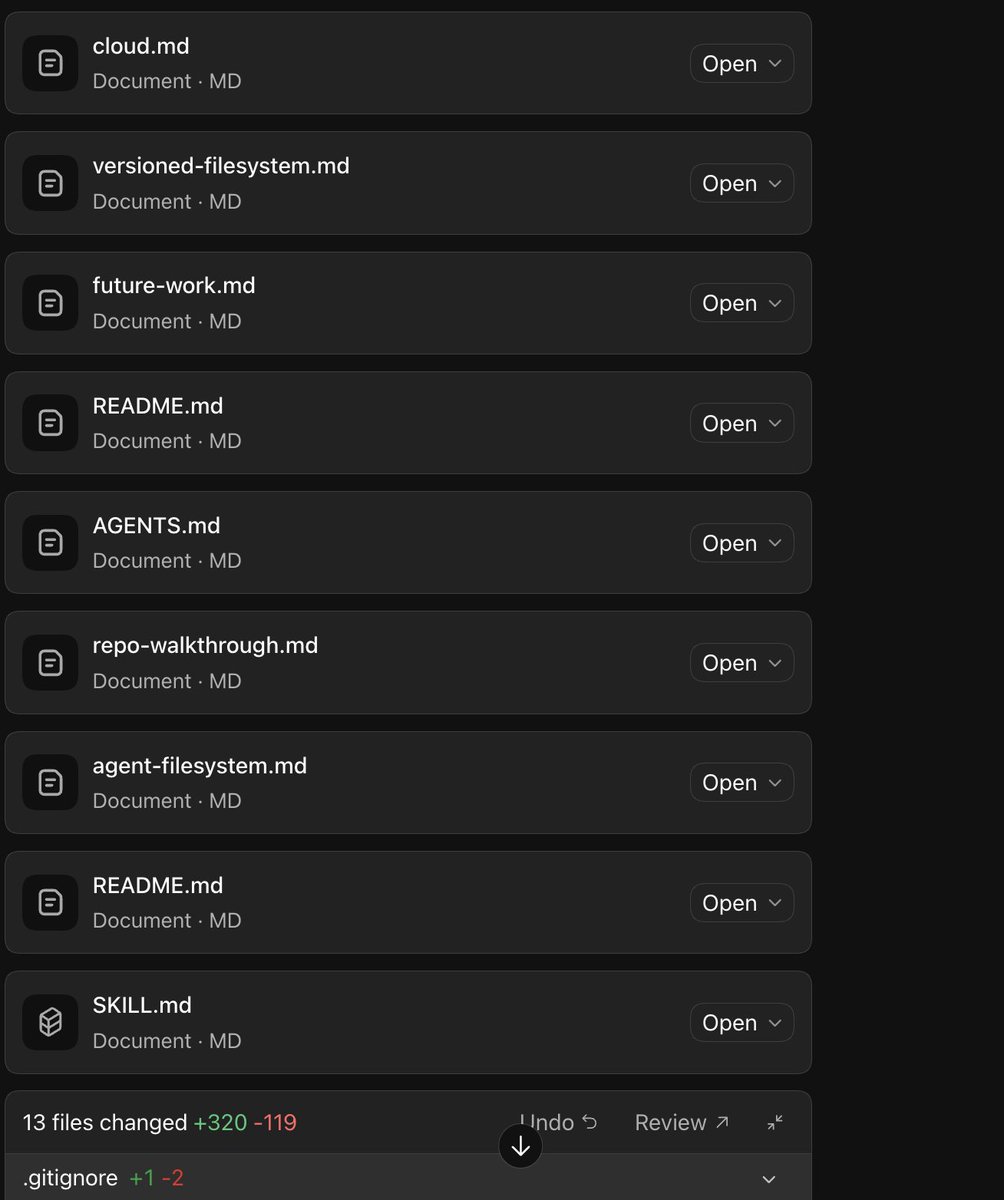
I'd love it if you'd let me remove these file cards you added. It's not clear why they are there and not just integrated into the git "changed files" card. They seemed to appear in a recent update. Regression in UX IMO. please let us turn this off. Thank you!
English
@TheRohanVarma latest codex desktop has a nasty UX bug. when the mouse is moved to the right margin of the window a pop-up menu appears showing branch details. when it opens buttons in the right margin are not clickable.
And the popup is annoying with no way to turn it off.
English
My favorite new AI app is;
EzSpot.ai
Make your parking a joy! LOVE IT!
English
Rowan Trollope retweetledi

For 50 years, software engineering ran on code rationing. Writing code was expensive, so we rationed it carefully through roadmaps, RFCs, prioritization meetings, and scope reviews.
This created a role: the No Engineer. No, that won't scale. No, we don't have bandwidth. No, that's out of scope. No, we need a design doc first. The No Engineer was valuable for 50 years. Every "no" saved real money. Their judgment was the rationing system.
LLMs will be the end of code rationing. Code is cheap now. And while the No Engineer is explaining why something can't be done, the Yes Engineer has already shipped three versions of it.
If you're a Yes Engineer, the next decade is yours.
English
@nrmehta It's so much more authentic. Karpathy is a great example.
We are experiencing:
The death of certainty
Truthfully it was never a thing. It just feels good to admit it.
English
I think the classic form of "thought leadership" is coming to an end. Because no one has a clue about the future anymore.
Business leaders and influencers historically spent time understanding a space or domain and then built confidence around its future. Then they would share this in social posts, blogs, videos, podcasts, speaking slots and the like. People paid attention because they wanted to know where things are going.
In my case at Gainsight, I helped write 4 books on Customer Success, wrote 100s of blog posts, joined a similar number of podcasts and presented at countless events.
But what's the reality today? A post is irrelevant the next day with a new model release. A talking point is disproven in a week. A podcast feels ancient within a month.
Remember when people said "scaling laws are dead?" How about the people that said, a few weeks ago, that OpenAI couldn't catch up? And the prognosticators that have strong opinions on the effect of AI on employment, yet have no idea how it's really going to play out?
I chuckle when I see people on panels about AI now. "Where will this be in 5 years?" What a ridiculous question. No one knows.
Now people do need direction. That's still true. But I think the approach needs to change to be more personal and ephemeral. "What am I doing today with AI?" "What is hard or easy?" "What am I planning tomorrow?" "What am I excited about?" "What am I scared about?" @karpathy does a great job of this.
This transitionary period will be awkward. But the future will feel more authentic. Or I think it well. Heck - I have no idea either!
English
Blip powers global messaging platform with Azure Managed Redis | Redis redis.io/customers/blip/
English
@DanielLurie is what this country needs more of: A great mayor and public servant. Non partisan. Bringing people together. Focusing on the basics.
True Leadership!
English