
Luis I. Gutiérrez-Rus

271 posts

Luis I. Gutiérrez-Rus banner
Luis I. Gutiérrez-Rus

Luis I. Gutiérrez-Rus

@RusLuis

Postdoctoral Research Associate | NNF Center for Protein Design @koebenhavns_uni | Protein & Enzyme Design • Evolution • Engineering

Copenhagen, Denmark Katılım Ocak 2012
750 Takip Edilen339 Takipçiler
Luis I. Gutiérrez-Rus retweetledi
Matthew Nemeth
Matthew Nemeth@mnemeth101·
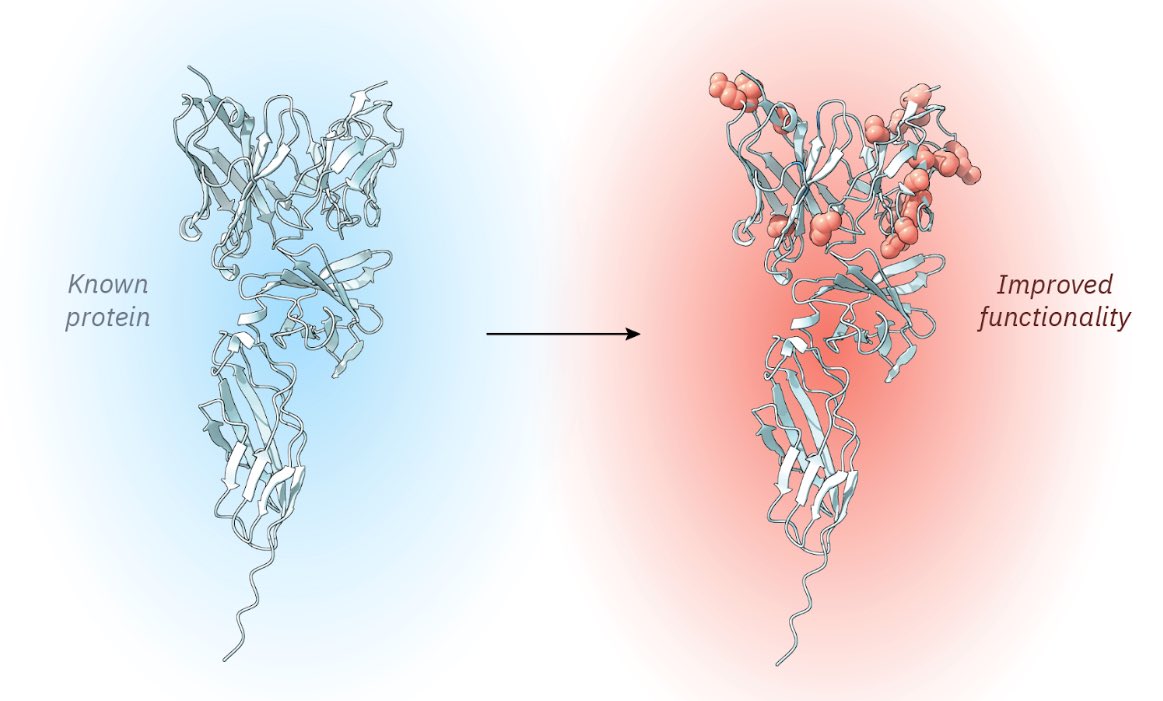
Directed evolution revolutionized protein engineering, but still requires lots of time, iteration, and cost. Today in @ScienceMagazine we share MULTI-evolve: our lab-in-the-loop approach with thoughtful integration of modern ML to make jumps across the fitness landscape.
Matthew Nemeth tweet media
English
5
33
194
10.7K
Luis I. Gutiérrez-Rus retweetledi
Jorge Bravo Abad
Jorge Bravo Abad@bravo_abad·
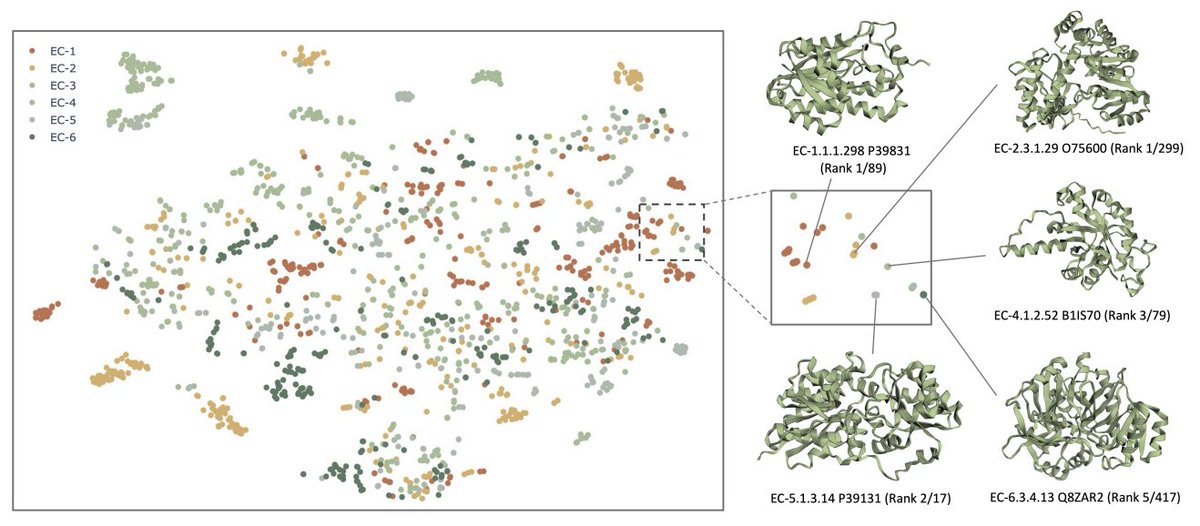
Given a reaction, which enzyme catalyses it? Given an enzyme, what can it perform? A geometric foundation model that answers both Of the ~250 million protein sequences in UniProt, fewer than 0.3% have been manually curated for function. Meanwhile, 40–50% of known enzymatic reactions lack any associated enzyme sequence—orphan reactions. Traditional approaches rely on EC number classification, which groups distinct reactions under the same code, or sequence homology tools like BLASTp, which fail when similarity is low. Neither directly models whether a specific enzyme structure can catalyse a specific reaction. Yong Liu and coauthors introduce EnzymeCAGE, a geometric foundation model trained on ~1.5 million structure-informed enzyme–reaction pairs across 3,273 species. The key architectural choice is to focus on the catalytic pocket rather than the full protein. A GNN encodes pocket geometry—backbone coordinates, dihedral angles, side-chain torsions—extracted via AlphaFill from AlphaFold structures, while ESM Cambrian embeddings capture global evolutionary context. On the reaction side, SchNet encodes 3D substrate and product conformations, with a reacting-area weight matrix that upweights atoms at the reaction centre. Geometry-enhanced cross-attention then models pocket–reaction interactions to output a catalytic compatibility score. On unseen enzymes, EnzymeCAGE achieves 58% top-10 success rate—a 45% improvement over baselines including CLIPZyme, ESP, and MMseqs2. For orphan reactions, enzyme retrieval improves by 41%. It works even when test enzymes share less than 30% sequence identity with training data, where homology methods break down. An emergent capability is catalytic site identification: attention weights consistently highlight experimentally validated active-site residues, despite this never being a training objective. In two case studies—withanolide biosynthesis and glutarate pathway reconstruction—EnzymeCAGE correctly retrieves catalytic enzymes where all baselines fail, ranking positive P450s within the top 6–13 among 107 candidates at only ~40% sequence similarity to training proteins. The design principle: by decomposing catalysis into pocket geometry, reaction centre chemistry, and their 3D interaction—rather than relying on sequence similarity or coarse EC labels—the model learns transferable representations of catalytic compatibility that generalize across enzyme families. Paper: nature.com/articles/s4192…
Jorge Bravo Abad tweet media
English
1
40
171
11.3K
Luis I. Gutiérrez-Rus
Luis I. Gutiérrez-Rus@RusLuis·
Call for postdoctoral researchers in protein design 🧬 The NNF Center for Protein Design (CPD) at the University of Copenhagen is seeking postdoctoral researchers to join our team and help build a world-leading centre. Please share! jobportal.ku.dk/videnskabelige…
Luis I. Gutiérrez-Rus tweet media
English
0
0
0
71
Luis I. Gutiérrez-Rus retweetledi
Albert Escobedo
Albert Escobedo@AlbertIltirda·
🎲 Our paper on the genetics, energetics, and allostery in proteins with randomized cores and surfaces is out today @ScienceMagazine! 🧬 By charting a protein’s sequence universe, we could rationalize which versions were kept through evolution – and why many stable ones were not.
English
6
56
239
30K
Luis I. Gutiérrez-Rus
Luis I. Gutiérrez-Rus@RusLuis·
It has been a pleasure to work alongside Dek and many brilliant colleagues in Bristol and Copenhagen over the last year, helping to shape and design the CPD – exciting times ahead! 🇩🇰
English
0
0
1
46
Luis I. Gutiérrez-Rus
Luis I. Gutiérrez-Rus@RusLuis·
Fantastic news for the protein community and a major boost for protein design in Europe. I'm glad to share that I'll be part of the new Novo Nordisk Foundation Center for Protein Design (CPD) as a postdoctoral researcher from August @UCPH_Research @novonordiskfond
Novo Nordisk Foundation@novonordiskfond

Designing proteins from scratch opens exciting new possibilities for solving global challenges in health and sustainability. That is why we are funding an ambitious new Center for Protein Design at @koebenhavns_uni. Led by Professor Dek Woolfson, world-renowned in this field, the centre aims to build on recent breakthroughs to establish a powerhouse for protein design in Europe. Read more: novonordiskfonden.dk/en/news/new-da…

English
2
2
7
558
Luis I. Gutiérrez-Rus retweetledi
Georg Hochberg
Georg Hochberg@KaHochberg·
New paper from the lab from @SriramGarg. We introduce a general substitution matrix for structural phylogenetics. I think this is a big deal, so read on below if you think deep history is important. academic.oup.com/mbe/advance-ar…
English
7
32
85
6.5K
Luis I. Gutiérrez-Rus retweetledi
Christopher W. Wood
Christopher W. Wood@ChrisWellsWood·
We're delighted to announce that our conference "Protein Evolution, Design and Informatics Edinburgh 2026" will be running from the 13th-15th of May. Register interest here and please retweet! biochemistry.org/events-and-tra…
English
2
16
48
4.2K
Luis I. Gutiérrez-Rus retweetledi
J. Am. Chem. Soc.
J. Am. Chem. Soc.@J_A_C_S·
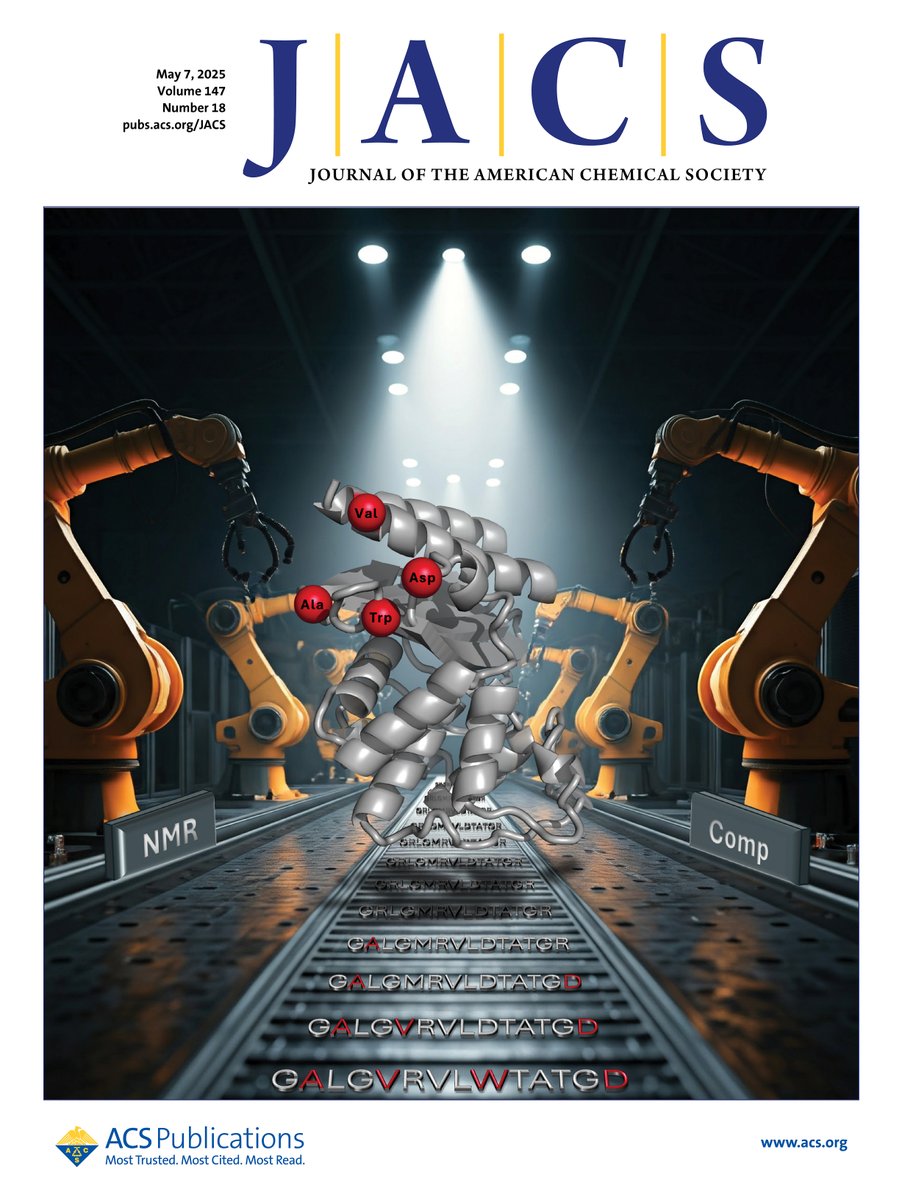
On the cover of this week's issue: "Enzyme Enhancement Through Computational Stability Design Targeting NMR-Determined Catalytic Hotspots" Read it here 🔗 go.acs.org/czz
J. Am. Chem. Soc. tweet media
English
1
5
28
4.5K
Luis I. Gutiérrez-Rus retweetledi
Eric Topol
Eric Topol@EricTopol·
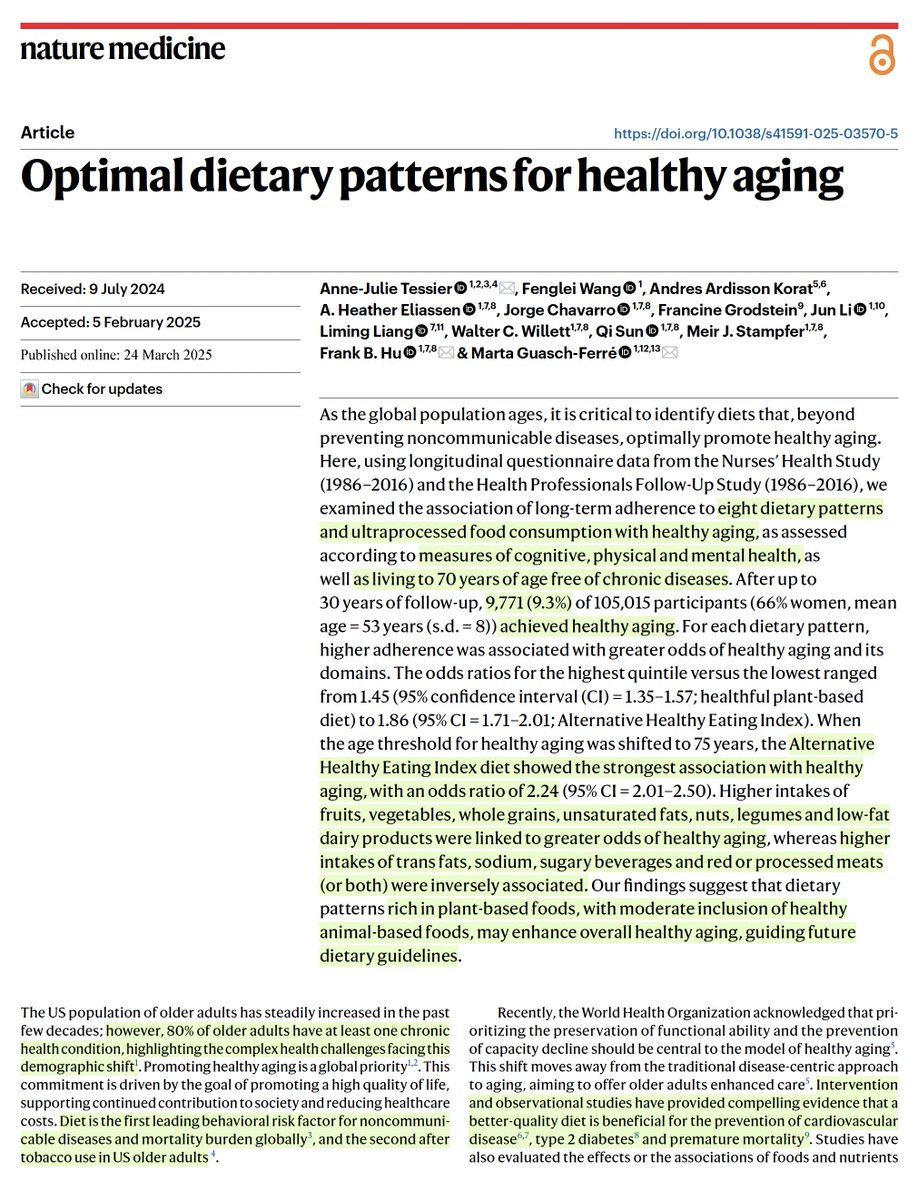
Of >105,000 participants with 30-year follow-up, only 9.3% achieved healthy aging (age 70, w/o any chronic diseases). Their diet was significantly associated with this outcome🧵 @NatureMedicine
Eric Topol tweet media
English
154
1.5K
6.5K
1.1M
Luis I. Gutiérrez-Rus retweetledi
Jorge Bravo Abad
Jorge Bravo Abad@bravo_abad·
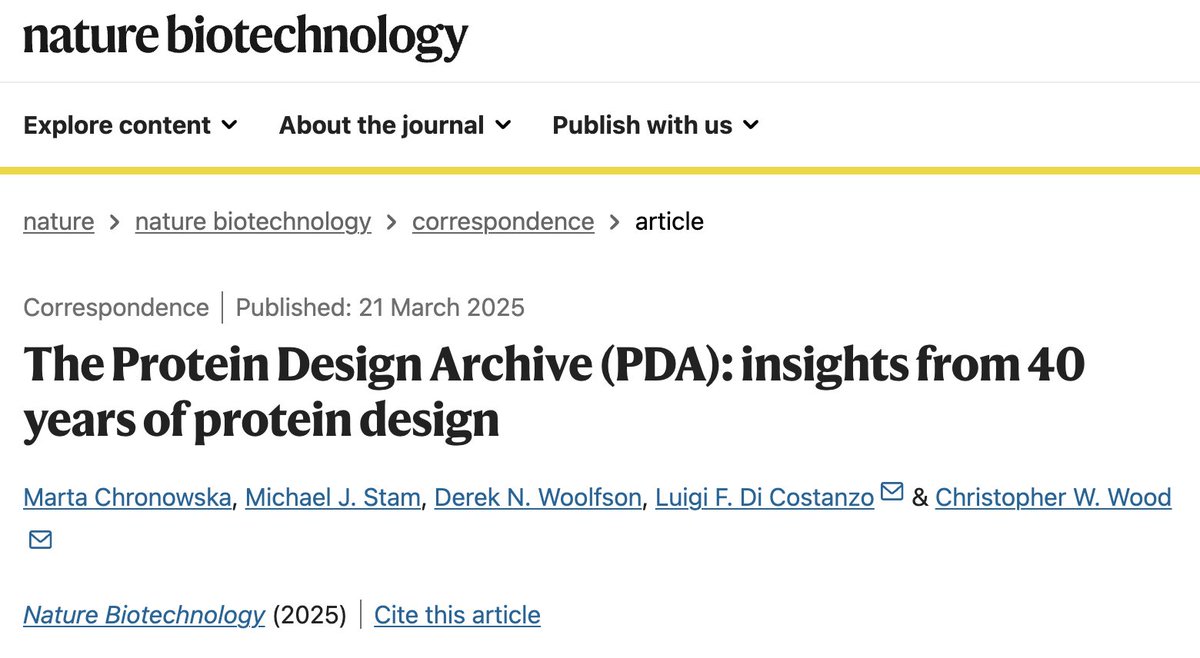
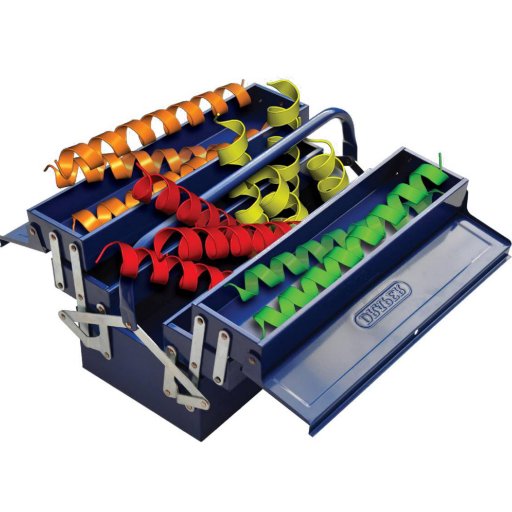
A new resource for protein design: the Protein Design Archive Protein designers have long aimed to explore the vast possibilities beyond nature’s existing structures, seeking to learn how amino acid sequences fold and function in ways that evolution never tested. Chronowska et al. unveil a new database and website known as the Protein Design Archive (PDA) that aggregates and curates experimentally validated protein designs from the past four decades. This resource highlights the astonishing progression from small, manually tweaked constructs to complex, computationally generated folds, providing a window into how de novo design can help address scientific and societal challenges. The authors created the PDA by systematically scanning the Protein Data Bank (PDB) for synthetic sequences (taxonomy identifier 32630) and curating results to remove entries that were merely natural proteins with minor mutations. The database holds over 1,500 structures, each annotated with sequence-based and structure-based similarity metrics to provide insight into how these designs deviate from both one another and from known natural proteins. A user-friendly interface enables filtering by date of release, search terms, and novelty scores, while monthly updates ensure its data remain current. Throughout, the authors have balanced inclusivity (capturing a broad range of designs, including historic but unpublished examples) with rigorous hand-checking to maintain quality. The researchers discovered that protein design efforts have accelerated dramatically, with a discernible shift around 2009–2010 when accessible computational tools like Rosetta further expanded de novo design’s reach. More recently, the advent of deep learning approaches has nearly tripled the annual output of new structures. The PDA not only showcases how designed proteins increasingly mirror the mass, complexity, and packing of their natural counterparts but also helps reveal persistent biases in secondary structure usage. By hosting a comprehensive, regularly updated collection, the archive empowers protein engineers to compare methods, pinpoint gaps, and pursue ambitious new directions that deepen our mastery of protein structure and function. Paper: nature.com/articles/s4158… Website: pragmaticproteindesign.bio.ed.ac.uk/pda/
Jorge Bravo Abad tweet media
English
1
58
224
12.5K
Luis I. Gutiérrez-Rus retweetledi
WoolfsonLab
WoolfsonLab@WoolfsonLab·
Exciting opportunity to join the University of Bristol as a BBSRC-funded Research Associate (4 years) working between us and @MarkDodding's lab. The post is on designing de novo peptides and proteins using both rational design and computational design and protein biochemistry.
WoolfsonLab tweet media
English
0
6
11
794
Luis I. Gutiérrez-Rus retweetledi
Rosetta Commons
Rosetta Commons@RosettaCommons·
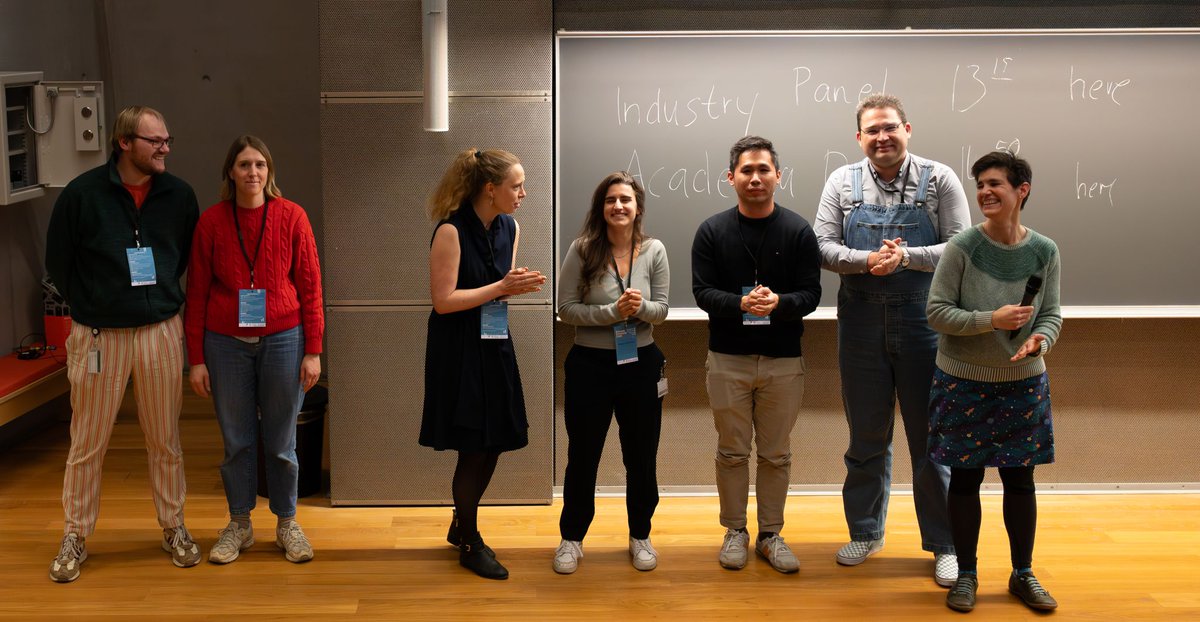
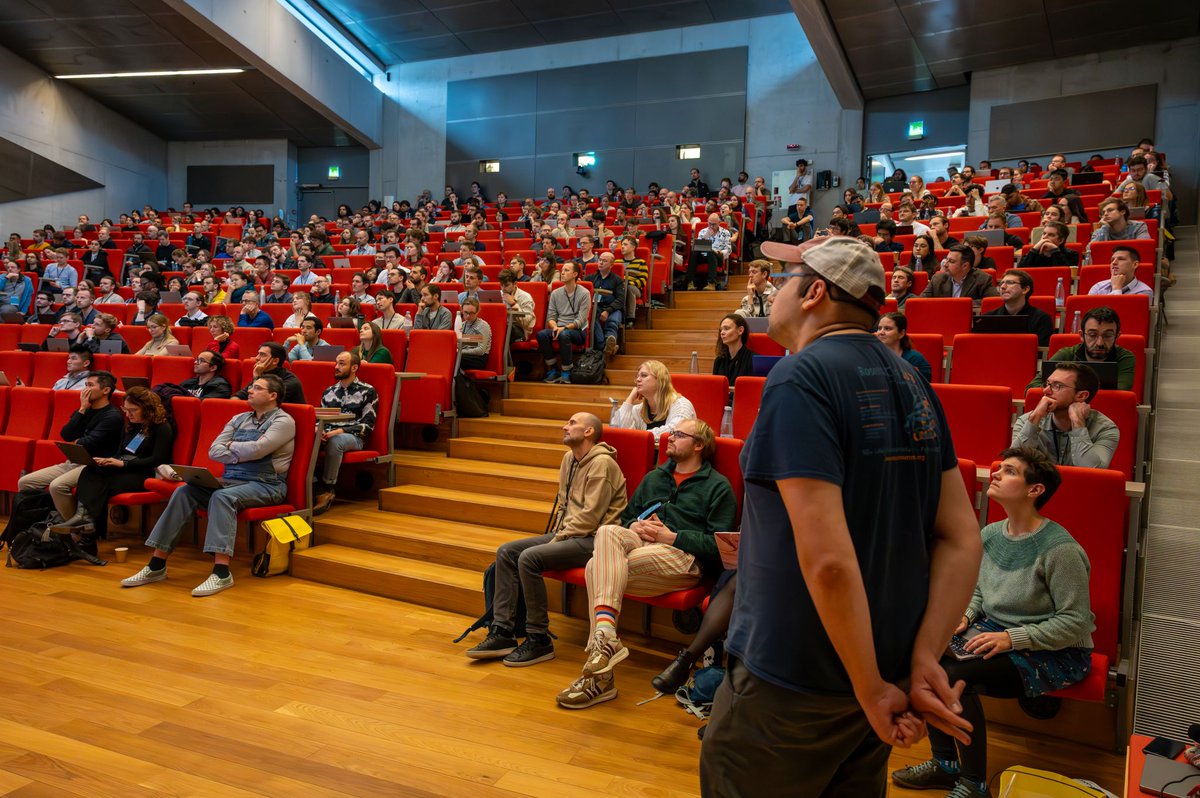
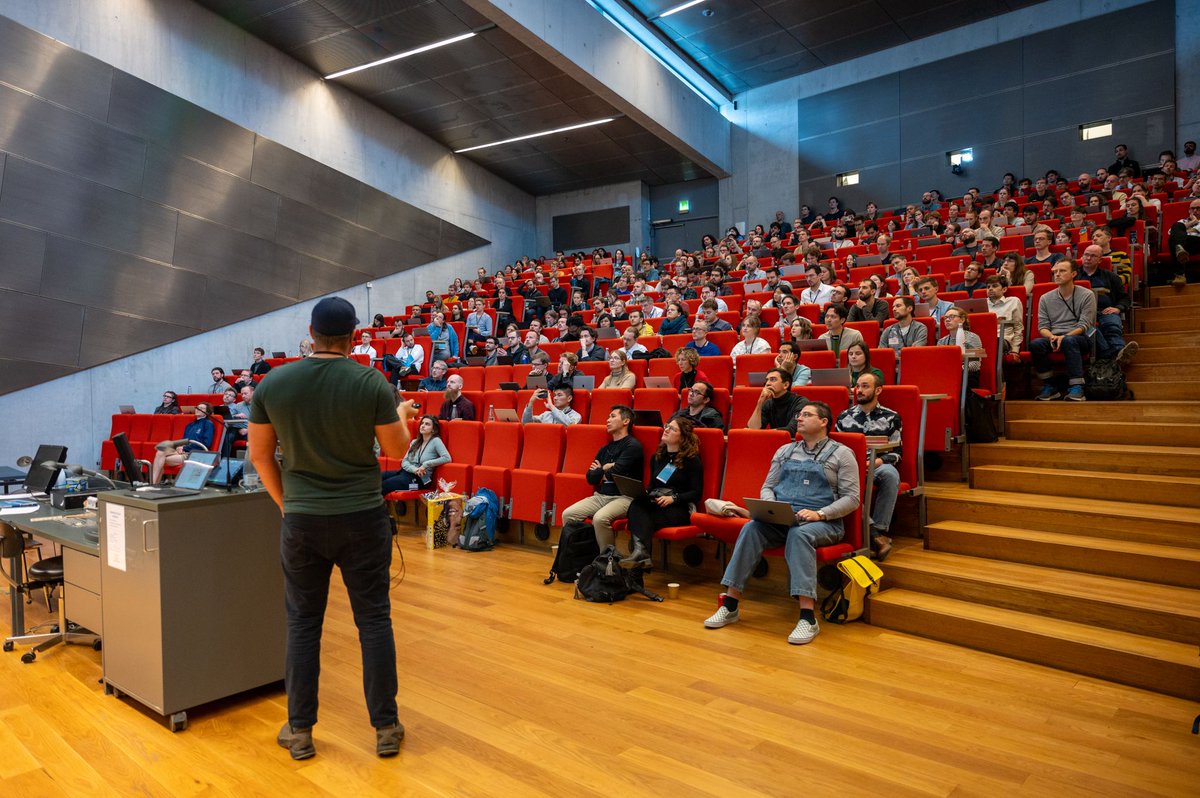
We had an incredible time connecting with the Rosetta Community from across Europe during the conference held from November 11-13, 2024. Here's a sneak peek of the memorable moments captured during the event. We want to thank our wonderful organizers, Amelie Stein, Roland A. Pache, Che Yang, Marion Silvestrini, Aleksandra Panfilova, Johanna K. S. Tiemann, and Ingemar André, for hosting the event. Stay tuned for more updates and details about the exciting talks about protein design and workshops at the conference! #RosettaCon2024 #EuropeanRosettaCon2024
Rosetta Commons tweet mediaRosetta Commons tweet mediaRosetta Commons tweet mediaRosetta Commons tweet media
English
0
10
40
4.4K
Luis I. Gutiérrez-Rus retweetledi
The Nobel Prize
The Nobel Prize@NobelPrize·
BREAKING NEWS The Royal Swedish Academy of Sciences has decided to award the 2024 #NobelPrize in Chemistry with one half to David Baker “for computational protein design” and the other half jointly to Demis Hassabis and John M. Jumper “for protein structure prediction.”
The Nobel Prize tweet media
English
509
8.4K
19.3K
9.1M