Ryan Featherston

1.2K posts

Ryan Featherston banner
Ryan Featherston

Ryan Featherston

@Ryanfeath

Associate Fellow at @CSISCBE Thoughts are my own

Washington, DC Katılım Temmuz 2013
694 Takip Edilen485 Takipçiler
Sabitlenmiş Tweet
Ryan Featherston
Ryan Featherston@Ryanfeath·
(1/10) Excited to share a new blog post on the wave of trade in programs in China and what they tell us about Beijing's efforts to boost consumption. csis.org/blogs/trustee-… Long thread for those interested!
English
1
4
13
1.9K
Ryan Featherston
Ryan Featherston@Ryanfeath·
Come work with me!
CSIS Chinese Business & Economics@CSISCBE

🚨 The CSIS Trustee Chair is offering research internship opportunities for Summer 2026! This is a fantastic opportunity to learn more about China's economic trajectory, industrial policy, and U.S.-China relations. We are #hiring part-time paid Research Interns to support our program's analysis. To apply, visit the link here: careers.csis.org/opportunities/… How to Apply: Submit your resume, cover letter, writing sample, academic transcript, and a list of 3 references in one PDF. Applications will be reviewed on a rolling basis.

English
0
0
4
218
Ryan Featherston retweetledi
Gerard DiPippo
Gerard DiPippo@gdp1985·
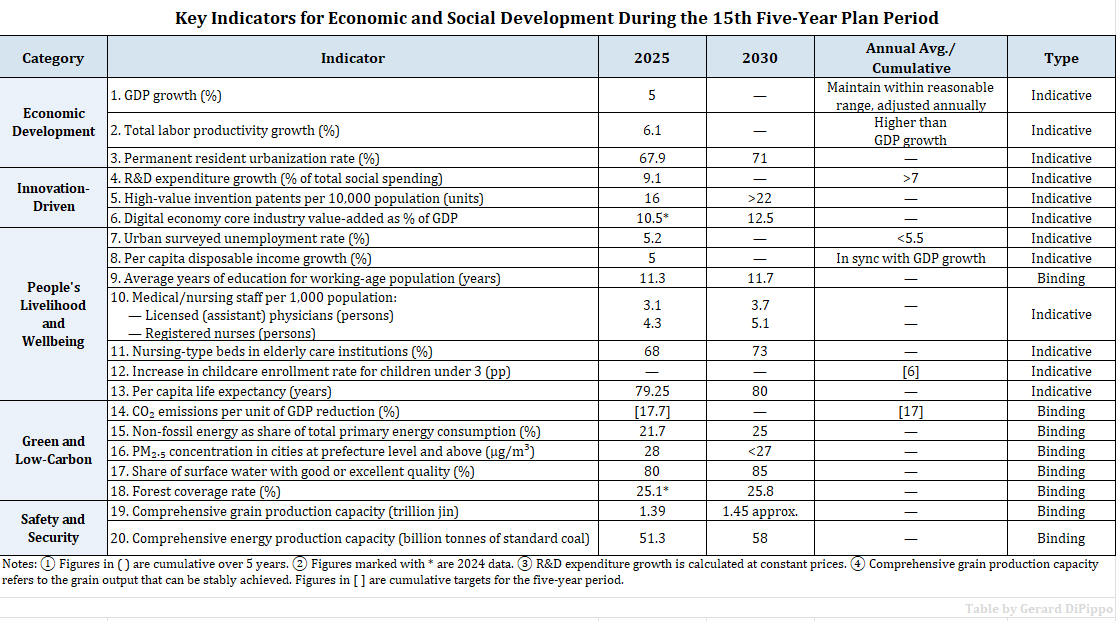
This is it, Comrades! The 15th FYP Outline is officially published. Here are your targets. You know what to do.
Gerard DiPippo tweet media
English
5
27
142
28.1K
Ryan Featherston retweetledi
Rhodium Group
Rhodium Group@rhodium_group·
Whatever new policies are announced at the Two Sessions, China will have to do less with less, due to the long, unaddressed decay of its financial and fiscal system: rhg.com/research/china…
English
0
2
7
720
Ryan Featherston
Ryan Featherston@Ryanfeath·
@HistorianZhang I think Japanese teas are nice for the office, things like sencha, bancha, genmaicha are pretty cheap and get the job done. But yeah, hard to beat the OG.
English
0
0
2
79
Ryan Featherston
Ryan Featherston@Ryanfeath·
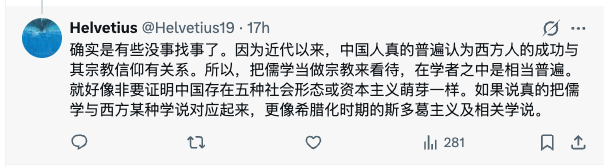
@ZeyiYang I agree with the poster's point that Confucianism is closer in substance to philosophical traditions in the Classical West which tended to approach problems in a similar way and were less dogmatic than Christianity.
English
0
0
1
184
Zeyi Yang 杨泽毅
Zeyi Yang 杨泽毅@ZeyiYang·
Kept thinking about this exchange. Decades ago, some Chinese scholars were indeed trying to argue that religious beliefs were the reason why the West became more advanced; now, online pro-China voices are saying secularism is the reason why China is getting more advanced. Two sides of the same coin.
Zeyi Yang 杨泽毅 tweet media
English
4
2
40
2.9K
Ryan Featherston retweetledi
Mike Bird
Mike Bird@Birdyword·
Just throwing the Penn World Tables to Claude and giving it a smidgen of context about my interests and desires and getting this back. It's never felt so good to be a wordcel
Mike Bird tweet media
English
22
79
698
85.1K
Ryan Featherston retweetledi
Bryan Cheong
Bryan Cheong@bryancsk·
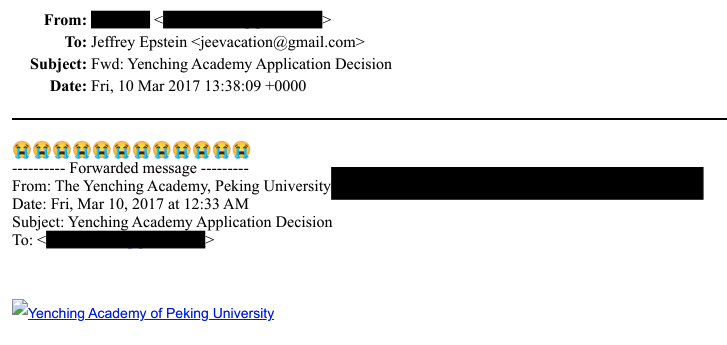
For all Jeffrey Epstein's influence among US elites and European royalty, somehow he couldn't rig a master's degree decision to Peking U for someone.
Bryan Cheong tweet media
English
18
162
2.4K
601.9K
Ryan Featherston
Ryan Featherston@Ryanfeath·
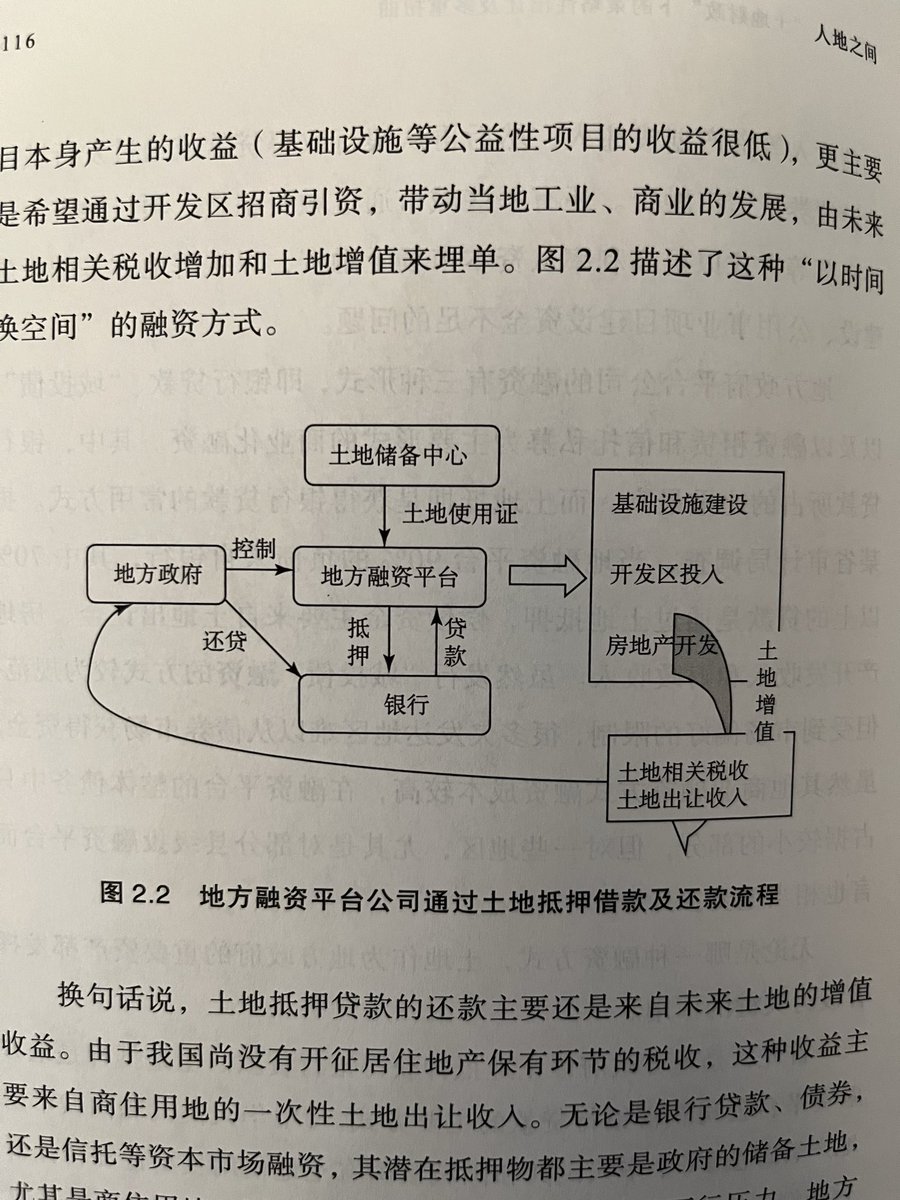
Nice diagram of land finance model from 人地之间 by 陶然
Ryan Featherston tweet media
中文
0
0
0
53
Ryan Featherston
Ryan Featherston@Ryanfeath·
@Milo03c Beautiful use of the show’s blue/yellow color motif to highlight Carol’s independence!
English
0
0
1
127
Ryan Featherston retweetledi
李其 Lizzi
李其 Lizzi@wstv_lizzi·
People’s Daily just published an explainer on why domestic demand is the No.1 policy priority for 2026. Some key highlights: Domestic demand is the fundamental driver of (基本动力) economic development, and a strong domestic market is the strategic foundation (战略依托) of Chinese-style modernization. The article argues that boosting consumption must be elevated to a more prominent position, explicitly tying demand expansion & social welfare improvements: Vigorously boosting consumption should be given greater prominence (摆在更加突出的位置), expanding consumption through better social protection and improvement of livelihoods. Consumption is final demand and the enduring engine of economic growth (经济增长的持久动力). On the relation between supply vs demand, the article lays out a roadmap: “In the near term, align consumption expansion with locally tailored development of new quality productive forces, expand high-quality goods and services, removing unreasonable or blanket market restrictions, and leverage new supply to meet new demand and generate new momentum.” Over the longer term, the emphasis shifts to raising household purchasing power + strengthening the social safety net: “Looking ahead, it is essential to genuinely enhance households’ consumption capacity and improve the social security system.” Investment is framed as both current demand and future supply (投资既是当期需求,也是未来供给). “The investment structure should be optimized, with greater emphasis on consumption-related sectors, to promote a virtuous cycle between investment and consumption.” The piece also calls out long-standing investment inefficiencies: “Address the problem of “heavy input, light returns,” ensuring that investment mobilizes greater economic and social value.” On market structure, the article underscores unified national market, local governments’ behaviors, involution, etc. “China must deepen the construction of a unified national market, break local protectionism and market fragmentation, regulate local governments’ behavior, unify market supervision and enforcement, and comprehensively address involutionary competition.” The conclusion reinforces confidence in the demand-led model: “China must adhere to domestic-demand-led development, build a strong domestic market, and transform its ultra-large-scale market advantage into competitive and developmental strength.”
李其 Lizzi tweet media
English
14
44
144
92.7K
Ryan Featherston
Ryan Featherston@Ryanfeath·
Also English for the rows: Regional GDP General Public Budget Revenue Government Fund Revenue Land Transfer Revenue Government Fund Expenditure Expenditures Associated with Land Transfer Revenue and Corresponding SRB Proceeds
English
0
0
1
41
Ryan Featherston
Ryan Featherston@Ryanfeath·
Was looking more at special purpose bond disclosures and this document from Jiangsu had some interesting information on declining land sales revenues (which make up most of the government fund budget's revenue). Take Wuxi, which is cutting back on expenditures.
Ryan Featherston tweet media
English
1
0
1
49
Ryan Featherston retweetledi
Jonathon P Sine
Jonathon P Sine@JonathonPSine·
The Rise and Fall of LGFVs: update Apparently, following a nationwide audit in 2023, the central government (NFRA? MOF? who knows) updated its list of LGFVs, and it ballooned to nearly 18,000. That’s according to Caixin; I haven’t seen any official confirmation, let alone the list itself (no version has never been made public afaik). caixinglobal.com/2025-10-08/in-… The number of LGFVs is roughly 50% greater than the estimates I was using last year, when most sources still put the total at 10–12k. But those were always crude guesses. cogitations.co/p/the-rise-and… In September this year, Pan Gongsheng claimed that 71% of all LGFVs—that would be roughly 13,000—have “transformed” and delisted. npc.gov.cn/npc/c2/c30834/… Lan Fo’an said in June that 7,000 were removed in just the past year, though they’re now being monitored for at least another year, probably a smart move (presumably on yet another list we’ll never see). bgt.mof.gov.cn/zhuantilanmu/r… What’s unfolding is a campaign. The so-called “delisting” drive rests on two linked ideas: 1) 转型 or transformation: repurposing financing platforms away from government-led funding roles toward nominally market-oriented operators (see eg 20th CC 3rd Plenum: 加快地方融资平台改革转型, fdi.mofcom.gov.cn/selfBuild/1729…; 2) And a pivot from “withdrawal” (退出) to a sharper more stringent “clear-out” (出清) process, the kind of harder-edged language befitting a campaign, see eg alleged July 30 Politburo wording: 有力有序有效推进地方融资平台出清, zzydjt.cn/article/detail… To be frank, though, it's hard to take the campaign's numbers at face value. Sure, land finance has been broken, making it harder to sustain LGFVs. But plenty of incentives remain for local govs to keep them kicking. Local governments still want a Swiss-army-knife vehicle to undertake projects that can attract investment. This, on top of the implausible scale of thousands of platforms all “transitioning” at once, is what leads many to suspect these “transformations” and “clear-outs” are mostly reclassification and renaming. Caixin cited several cynical industry experts calling these “transformations” cosmetic. caixinglobal.com/2025-10-08/in-… Most recently, Document No. 150 allegedly requires all LGFVs to be delisted, "transform," or otherwise exit by June 2027, after meeting the following criteria: 1) cleared all "hidden debt," 2) stripped their government-financing functions, and 3) gotten consent from two-thirds of creditors, with a one-year follow-up, for their "transformation" into a non-platform SOE. Or so we hear second hand. None of the documents regulating LGFV and local government debt reforms are being released. The critical ones from 2023, No. 35, No. 47, are still not public; and neither are the ones from 2024, No. 14, No. 134, No. 150. But most do appear to have leaked: finance.sina.com.cn/roll/2024-09-2… Early last year I wrote that a nascent campaign to “transform” LGFVs was taking shape. The figures from Pan and Li more or less confirm that this is indeed a full-scale campaign. That comes with all the requisite pros and cons. It means genuine central concern, attention, and willingness to confront costs, but it also means everyone at local levels is rushing around to create proof of action, resulting in activity with questionable impact, and almost certainly ample counter-reactions from below 上有政策,下有对策. Cat and mouse. cogitations.co/p/the-rise-and… Maybe there's an echo here of Zhu Rongji’s “grasp the large, let go of the small” (抓大放小) campaign: many weaker unsustainable LGFVs will be left to merge, flounder, or fail. Beijing should have more opportunity to improve its bankruptcy process (though very hard to do handle many of these types of assets)! The problem is that many of the LGFVs most prone to failure are likely to be the ones in places with the strongest incentive to keep them alive and operating under a different name. Overall I think the situation is likely moving toward genuine reform. The smashing of the land-finance model forces real change, and LGFVs will have to evolve. But the claim that 71% of 18,000 platforms have ceased to be LGFVs within two years beggars belief.
English
1
12
33
5.9K