Samir Amin

6.6K posts

Samir Amin banner
Samir Amin

Samir Amin

@SBAmin

Comparative Genomics #glioma; #aneuploidy #evolution 🧑‍💻 🧬 | ❤️ 😋 🥘🧑‍🍳 📷 | @YaleMed | Views = own | ❤️ 🔄 ≠ endorsement.
BDL | Prev. HOU, BOS, BDQ Katılım Ocak 2007
621 Takip Edilen882 Takipçiler
Samir Amin
Samir Amin@SBAmin·
@MohapatraHemant Don’t want to argue here but even in that hypothetical If scenario, one would need some form of RCT, so as to ascertain safety profile. Survivorship bias is real and mighty.
English
0
0
0
21
Samir Amin
Samir Amin@SBAmin·
👇 relevant and 🙏 for exercising rigor.
Martin Smith@martinalexsmith

@EganPeltan Canine checkpoint inhibitor + custom mRNA vaccine led to the drastic reduction of tumours. Not sure I can say more than neoantigens were validated by sequencing, for now. We are also performing additional cellular and molecular tests to check specificity of the immune response.
English
0
0
0
76
Samir Amin retweetledi
Palli Thordarson
Palli Thordarson@PalliThordarson·
Proud with @UNSWRNA to have been involved & making the mRNA-LNP for Rosie. There are nuances here that the thread below misses but nevertheless, the intersection of RNA technology, genomic & AI poses an opportunity to change the way do medicine and make access more equitable 1/8
Greg Brockman@gdb

How AI empowered Paul Conyngham to create a custom mRNA vaccine to cure his dog’s cancer when she had only months to live. The first personalized cancer vaccine designed for a dog:

English
48
247
1.6K
211.6K
Samir Amin
Samir Amin@SBAmin·
😱 RNA-based inheritance across generations. "We find that ingestion of double-stranded RNA induces sequence-specific silencing that persists for months and survives repeated cycles of whole-body regeneration. Even more strikingly, RNAi can be transferred between animals..."
Oded Rechavi@OdedRechavi

A new mechanism for “RNA memory”! 😱 Thrilled to share another crazy paper from the lab (can’t believe we posted 2 in 2 days!), summarizing >10 years of research: Work on transgenerational inheritance of small RNAs in the powerful model organism C. elegans changed how we think about what’s possible in inheritance and evolution, because it allows the most heretical thing: inheritance of parental responses to the environment! However, it’s still unclear whether RNAs are inherited across generations in other animals, largely because the RNA-dependent RNA polymerases that amplify heritable small RNAs and prevent their dilution in C. elegans are not conserved in mammals. In this new work, an amazing collaboration with the Rink and Wurtzel labs, we show that planarians establish long-lasting and heritable small RNA–based gene regulatory states despite lacking canonical RNA-dependent RNA polymerases and nuclear RNAi machinery (that are required in C. elegans). You might say “they are both worms…” BUT planarians are evolutionarily very distant from C. elegans (flatworms vs. roundworms, diverged more than 500 million years ago), making this particularly surprising. These are totally different animals. We find that ingestion of double-stranded RNA induces sequence-specific silencing that persists for months and survives repeated cycles of whole-body regeneration. Even more strikingly, RNAi can be transferred between animals, echoing James V. McConnell’s controversial “RNA memory” experiments from the 1970s (his lab was targeted by the Unabomber terrorist Ted Kaczynski, who sent McConnell a bomb. This and other controversies ended this line of experiments…) Mechanistically, we find that the response transitions from a transient systemic dsRNA-triggered phase to a stable, cell-autonomous post-transcriptional “memory phase” maintained by antisense small RNAs. Using a new luminescence reporter (transgenesis is currently impossible in planarians), we show that silencing spreads along the targeted gene and identify a weird type of planarian small RNAs with untemplated polyA tails. RNAi inheritance without canonical RdRPs establishes planarians as a powerful system for studying RNA-based regulatory inheritance beyond C. elegans and raises the possibility that RNA-mediated inheritance may be more broadly conserved in animals, potentially even in mammals. Here’s a video of a planarian that is treated by RNAi against β-catenin and develops multiple heads instead of just one. This is one of the phenotypes that is inherited. Another phenotype is “loss of eyes” (which we show is not only inherited across multiple regeneration cycles, but can also be transmitted between animals in transplantation experiments). Amazing work led by first authors Prakash Cherian and Idit Aviram (co-supervised by Omri and me). Please read the preprint, the link is in the next tweet, and share!

English
1
10
67
16.5K
Samir Amin retweetledi
Ming "Tommy" Tang
Ming "Tommy" Tang@tangming2005·
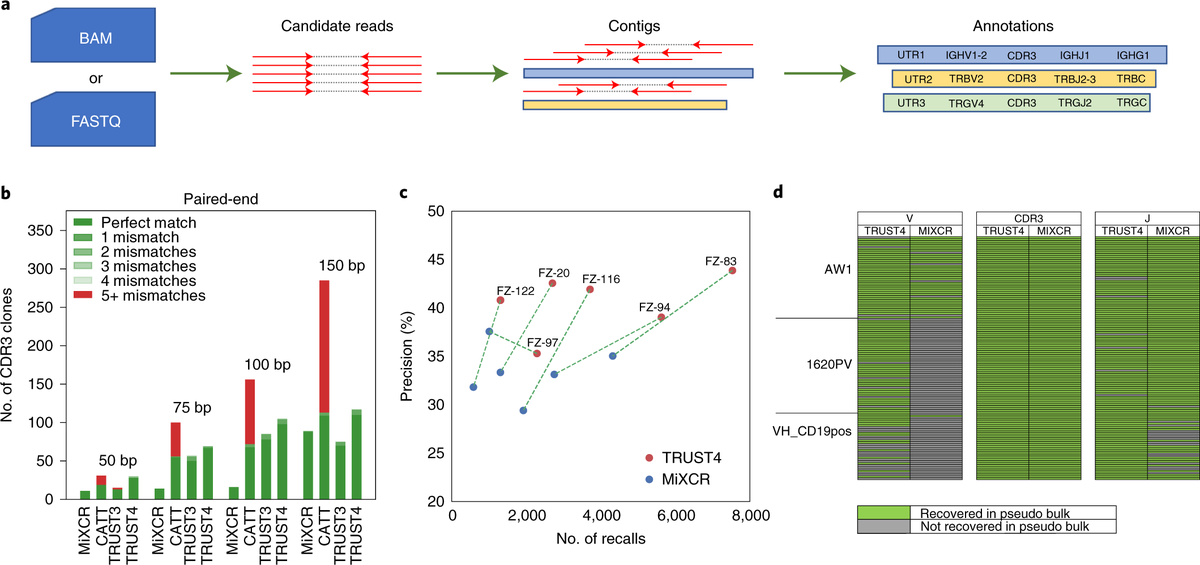
23 tools to work with (single-cell) TCR/BCR-seq immune repertoire data 🧵 👇
Ming "Tommy" Tang tweet media
English
3
22
121
9.5K
Samir Amin
Samir Amin@SBAmin·
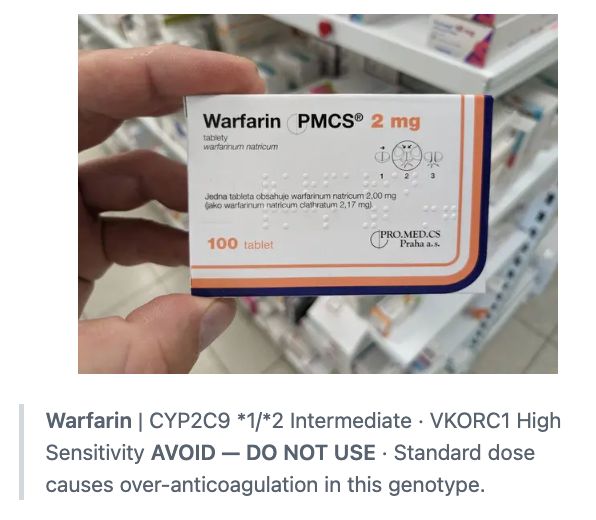
@strnr exactly and wish they had used a benign example than Warfarin. Wrong dosage, one or other way, and especially without a physician's watch (INR), this could turn into a sad story. @manuelcorpas 🙏
English
0
0
0
18
Stephen Turner 🦋 @stephenturner.us
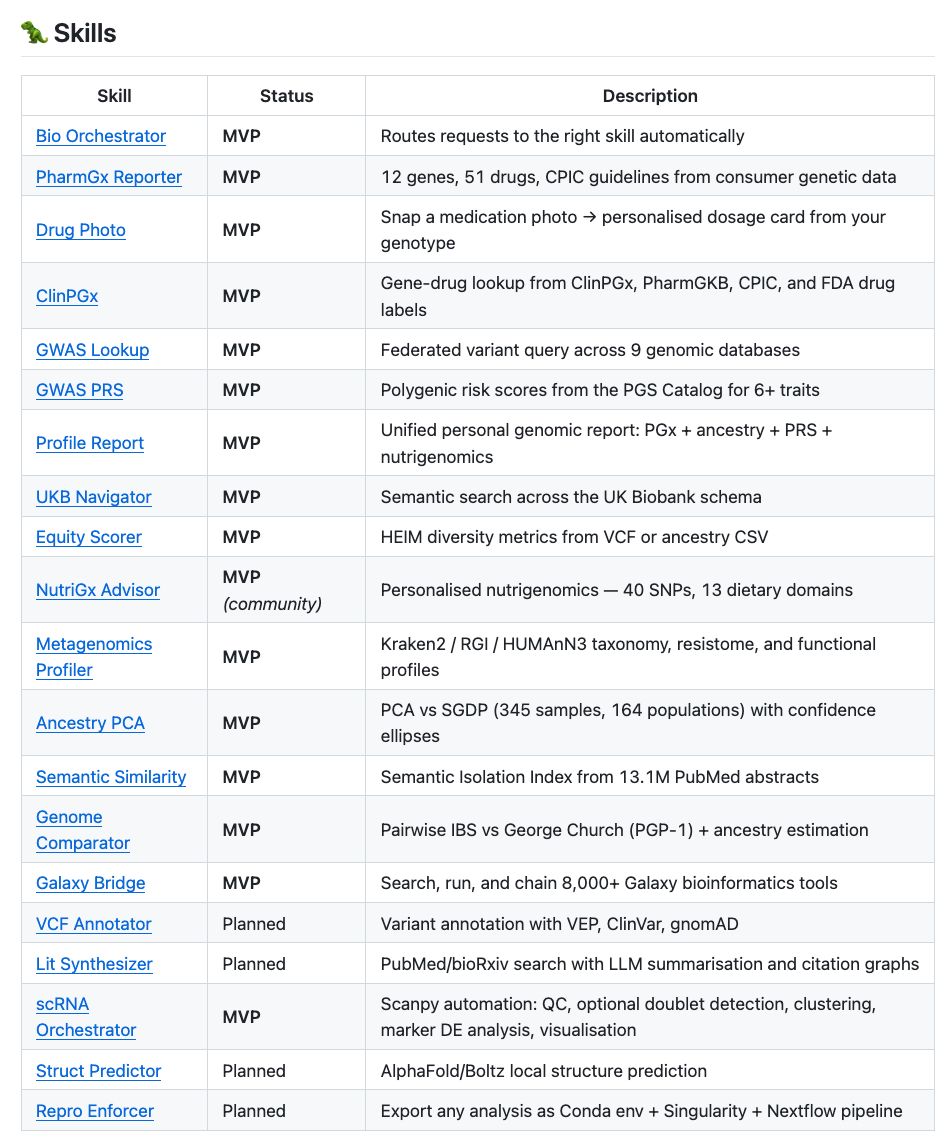
Eg: Snap a photo of a medication in Telegram. ClawBio identifies the drug from the packaging, queries your pharmacogenomic profile from your own genome, and returns a personalised dosage card. What could possibly go wrong?
Stephen Turner 🦋 @stephenturner.us tweet media
English
2
1
3
665
Samir Amin retweetledi
Andrew Carroll
Andrew Carroll@acarroll_ATG·
Release of DeepVariant v1.10 Phased VCF output for long-reads Accuracy improvements for multi-allelic variants Pangenome accuracy improvements (18% fewer errors) Most technologies ~10% faster RNA-seq is a full supported mode DeepSomatic is 12-40% faster github.com/google/deepvar…
English
1
19
91
5.1K
Samir Amin retweetledi
Kexin Huang
Kexin Huang@KexinHuang5·
Now any scientists can call AI models like Alphafold, execute large-scale bioinformatics pipelines with English — without dealing with infrastructure. Checkout how we approach AI agents to orchestrate HPC clusters with massive GPUs, TBs of data, and RAMs.
Kexin Huang tweet media
Phylo@phylo_bio

x.com/i/article/2029…

English
7
54
427
56.9K
Samir Amin
Samir Amin@SBAmin·
@doctorveera This is an excellent initiative and happy to see you as a lead. Best wishes.
English
1
0
3
164
Veera Rajagopal 
Veera Rajagopal @doctorveera·
After a decade abroad in research, I am happy to be home 🇮🇳. I am excited to share that I am joining the AI healthcare startup Wellytics as Chief Scientific Officer. I trained as a physician in India. I moved abroad to pursue human genetics and later focused on genetics-driven target discovery and drug development at Regeneron. Returning now to build in India feels deeply meaningful. At Wellytics, I will lead R&D and build our genomics division. - We will establish large-scale Indian genomic datasets to power drug discovery. - We will build a world-class human genetics and target discovery team. - We will collaborate closely with academic geneticists across India. - We will provide tools, training, and support to strengthen human genomics research in India. Wellytics is digitizing Indian healthcare and making it AI ready. We will combine AI, clinical data, and genomics to generate real-world evidence and build international-grade genetic association resources for India. Excited to help build a genetics-driven drug discovery engine in India!
English
98
80
1.2K
48.2K
Samir Amin retweetledi
NEJM
NEJM@NEJM·
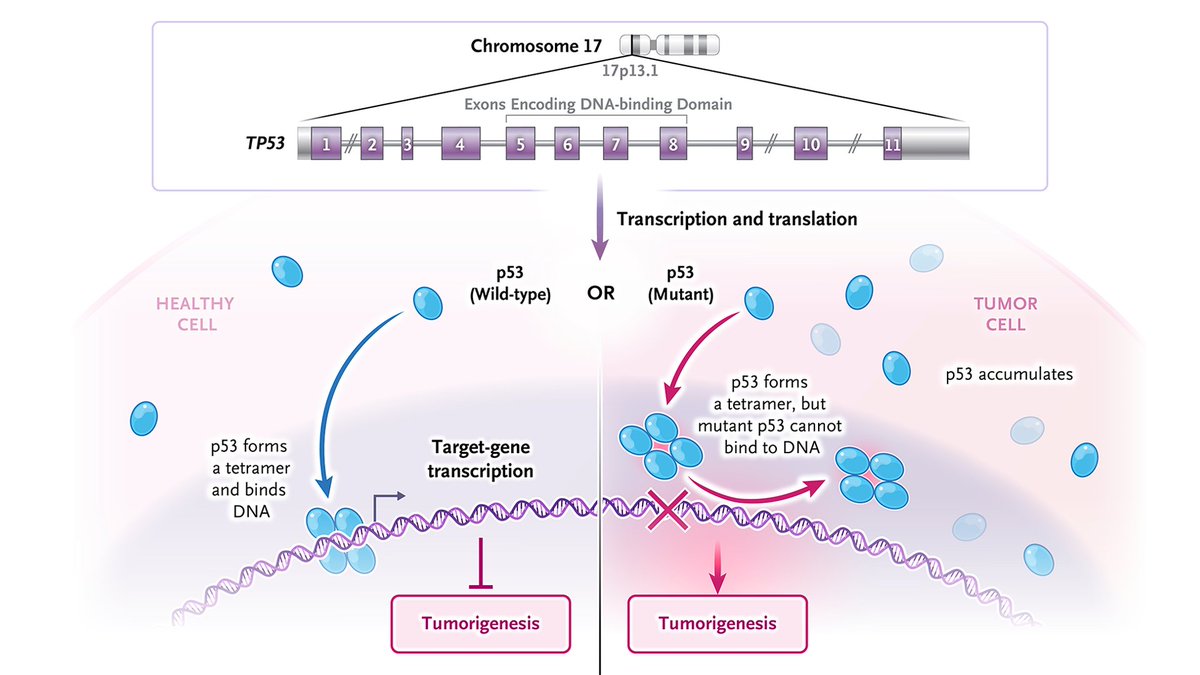
𝐓𝐏𝟓𝟑 is the gene that encodes the tumor-suppressor protein p53. It is commonly mutated in human cancers, and as with other tumor-suppressor genes, loss of function in both alleles (i.e., two "hits") is required for tumorigenesis. Wild-type p53 protein is short-lived and expressed at low levels. Mutant p53 often has an extended life span and accumulates in cancer cells. The p53 protein is a transcription factor that controls the expression of hundreds of target genes by binding and activating specific target genes that, once transcribed and translated, suppress tumorigenesis. Mutant p53 has limited or no tumor-suppressive function because it cannot bind and activate target genes. To learn more about this NEJM Illustrated Glossary term, read the editorial “Restoring Function to a Variant of p53 in Solid Tumors” by Xin Lu, PhD, from @Ludwig_Cancer: nej.md/3N0pQW8 Explore more terms: nej.md/glossary
NEJM tweet media
English
6
164
527
46.4K
Samir Amin retweetledi
Steven Salzberg 💙💛
Steven Salzberg 💙💛@StevenSalzberg1·
So sorry to hear this news of David Botstein's passing: online-tribute.com/DavidBotstein. He was one of the truly great scientists in genetics and genomics, inventing multiple field-changing technologies at MIT, Stanford, and Princton. Truly a once-in-a-generation scientist
English
3
33
120
19.7K
Samir Amin retweetledi
Kathleen Helen Burns
Kathleen Helen Burns@KathleenHBurns·
This is an interesting story! While rare, we found several cases of lung, esophageal, and gastric cancers where the MET oncogene is activated by exon skip events owed to somatically acquired LINE-1 or pseudogene insertions. Terrific teamwork with @FoundationATCG.
Jennifer Ann Karlow@JenniferAKarlow

So excited to share work from the @KathleenHBurns lab in partnership with @FoundationATGC, characterizing the first instances of sustained oncogene activity resulting from LINE-1-mediated insertions! biorxiv.org/content/10.648…

English
1
2
35
3.7K
Samir Amin retweetledi
AACR
AACR@AACR·
We congratulate Eunhee Yi, PhD, recipient of a 2025 Victoria’s Secret Global Fund for Women’s Cancers Career Development Award, in Partnership with @Pelotonia and AACR. We look forward to her findings on the role of extrachromosomal DNA in HER2+ breast cancer.
AACR tweet media
English
0
2
9
2.2K
Samir Amin retweetledi
Saganism
Saganism@Saganismm·
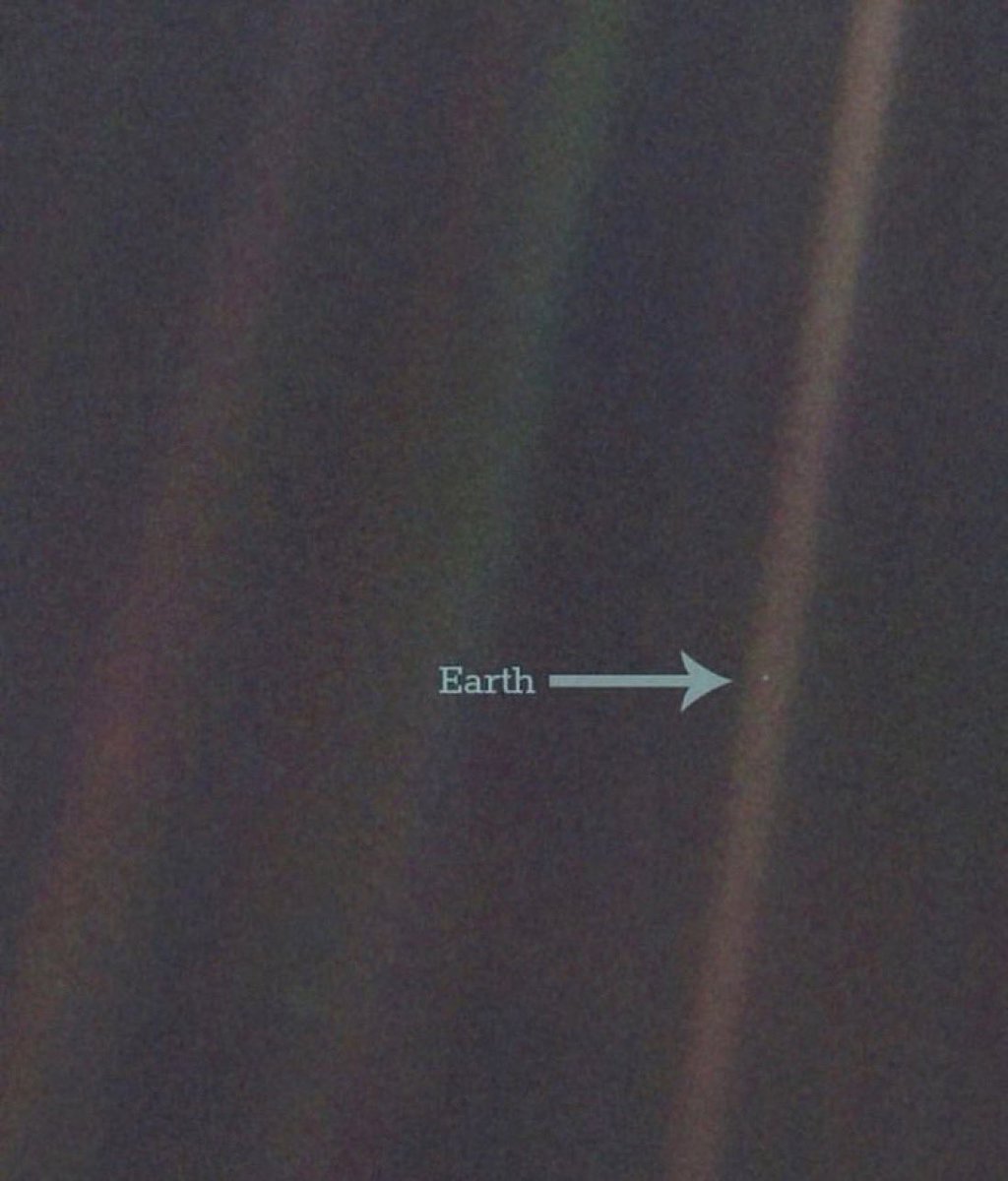
On Valentine’s Day 36 years ago, at the request of Carl Sagan, NASA turned Voyager 1's camera back toward home for one last look. From 3.7 billion miles away, it captured this: a mote of dust suspended in a sunbeam. Here is how Carl Sagan beautifully described it: “Look again at that dot. That's here. That's home. That's us. On it, everyone you love, everyone you know, everyone you ever heard of, every human being who ever was, lived out their lives. The aggregate of our joy and suffering, thousands of confident religions, ideologies, and economic doctrines, every hunter and forager, every hero and coward, every creator and destroyer of civilization, every king and peasant, every young couple in love, every mother and father, hopeful child, inventor, and explorer, every teacher of morals, every corrupt politician, every 'superstar,' every 'supreme leader,' every saint and sinner in the history of our species lived there — on a mote of dust suspended in a sunbeam. The Earth is the only world known so far to harbor life. There is nowhere else, at least in the near future, to which our species could migrate. Visit, yes. Settle, not yet. Like it or not, for the moment the Earth is where we make our stand. It has been said that astronomy is a humbling and character-building experience. There is perhaps no better demonstration of the folly of human conceits than this distant image of our tiny world. To me, it underscores our responsibility to deal more kindly with one another, and to preserve and cherish the pale blue dot, the only home we've ever known.”
Saganism tweet media
English
154
4.9K
16.2K
546.8K
Samir Amin retweetledi
Jason Sheltzer
Jason Sheltzer@JSheltzer·
AI is cool and all... but a new paper in @ScienceMagazine kind of figured out the origin of life? The paper reports the discovery of a simple 45-nucleotide RNA molecule that can perfectly copy itself.
Jason Sheltzer tweet media
English
182
1.1K
6.3K
859.7K