Sabitlenmiş Tweet

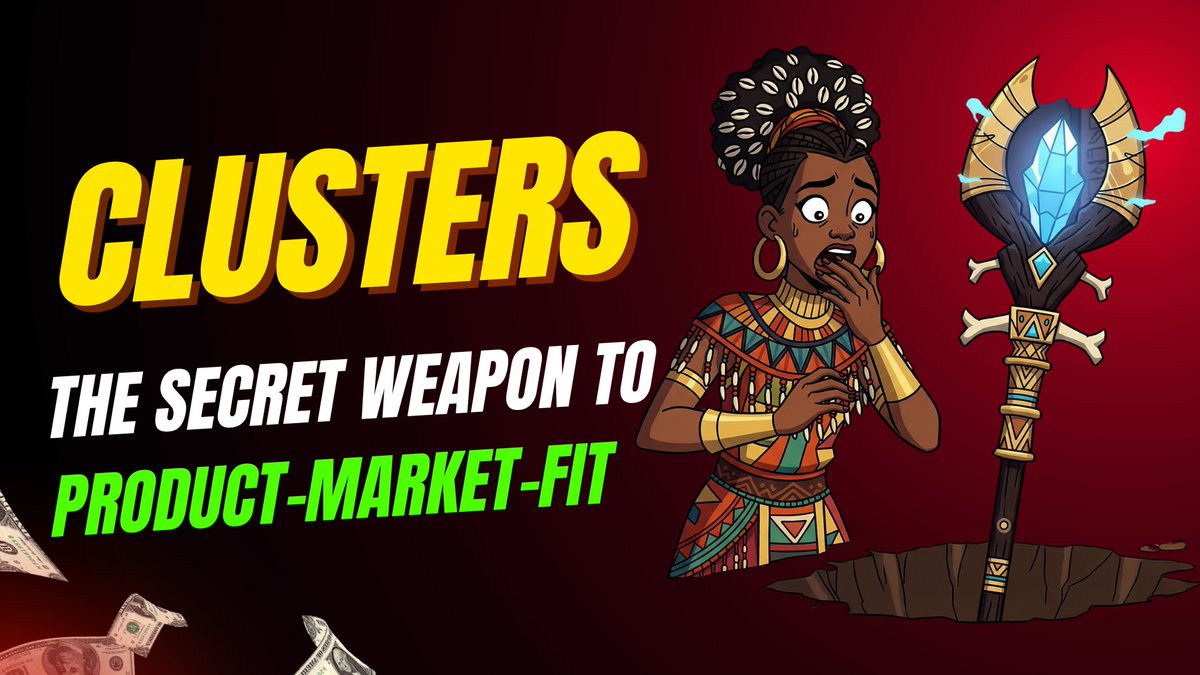
𝐂𝐥𝐮𝐬𝐭𝐞𝐫𝐬: 𝐓𝐡𝐞 𝐒𝐡𝐨𝐫𝐭𝐜𝐮𝐭 𝐭𝐨 𝐏𝐫𝐨𝐝𝐮𝐜𝐭-𝐌𝐚𝐫𝐤𝐞𝐭 𝐅𝐢𝐭
1. Why Clusters Matter
Products don’t win because they’re clever. They win because they embed themselves into pre-existing human networks that already share language, pain, and trust.
The shortcut to product-market fit isn’t “disruption.” It’s infiltration. Find a cluster, speak their language, co-design with their insiders and your product spreads like gospel.
2. Anatomy of a Cluster
Every cluster has a structure. If you know how to map it, you can predict what they’ll adopt:
•Slogans & Codes → the words they use to define themselves.
•Meeting Points → physical stages, garages, digital groups, SACCO halls.
•Communication Channels → WhatsApp, Zello, community radio.
•Buying Power → daily liquidity, how money actually circulates.
•Age & Working Hours → when the hustle peaks, when it slows.
•Device of Choice → boda = Android + WhatsApp, campus = TikTok, church elder = radio + WhatsApp.
And within every cluster sits the Key Person of Influence (KPI): the SACCO chair, Zello moderator, or chama treasurer, Once they co-sign you, you inherit the trust of thousands.
3. Designing With the Cluster
This is where most products fail. They’re invented in labs and then pushed onto the streets. Real products are co-designed inside the cluster:
•Sit with the KPI.
•Map their pains, dreams, fears, and purchase cycles.
•Understand their business model (how they actually make and lose money).
•Build with them, not for them.
That’s how you get PMF by default, not luck.
4. The Case of Bundle ya Deree
Yesterday, Safaricom launched Bundle ya Deree. And it’s one of the clearest examples of cluster-native thinking we’ve seen. I’ve been tracking them for months. Their world revolves around Zello groups digital walkie-talkie channels with thousands of drivers online at any given moment.
The driver cluster is not just a segment. It’s a dense ecosystem with Uber and Bolt drivers, matatu crews, boda riders. Their world runs on Zello groups where 5,000+ drivers stay online round the clock, warning about police checks, sharing referrals for mechanics, and venting about insurance that doesn’t cover accidents under 30,000 Ksh.
Their pain points are consistent:
•Data for Zello and WhatsApp.
•Airtime for calling passengers.
•Fuel discounts to manage margins.
•Insurance gaps that bleed them dry on daily bumps and scratches.
Bundle ya Deree goes straight for the jugular solving the data and airtime choke points with precision. Not as an outsider, but using the drivers’ own code. “Deree” is language from inside the cluster, not corporate branding. That detail matters. It signals respect. It makes the product feel native.
This is why the offer will work. It wasn’t designed in a vacuum. It was engineered to embed into the daily operating system of Nairobi’s mobility class.
English