Prof Sam El-Osta

2.3K posts

Prof Sam El-Osta banner
Prof Sam El-Osta

Prof Sam El-Osta

@SamElOsta1

Sam is an epigeneticist dedicated to understanding health and disease. Clinical importance over statistical significance. Baker Heart and Diabetes Institute.

Melbourne, Vic Katılım Nisan 2020
1.9K Takip Edilen796 Takipçiler
Sabitlenmiş Tweet
Prof Sam El-Osta
Prof Sam El-Osta@SamElOsta1·
Grateful for all the recent interest by clinicians and scientists in our Diabetes (ADA) paper: DNA methylation biomarkers in cord blood predict future metabolic risk with 79% greater accuracy than traditional factors. A window into lifelong health. Read: doi.org/10.2337/db25-0…
English
0
0
3
148
Prof Sam El-Osta retweetledi
UCSC Genome Browser
UCSC Genome Browser@GenomeBrowser·
We are excited to announce the release of the Human Methylation Atlas Summary and Signals tracks for hg38 and hg19. The tracks display genome-wide DNA methylation profiles across 39 primary human cell types from 205 healthy tissue samples. Learn more at bit.ly/humanMethylati…
UCSC Genome Browser tweet media
English
2
90
349
22.1K
Prof Sam El-Osta
Prof Sam El-Osta@SamElOsta1·
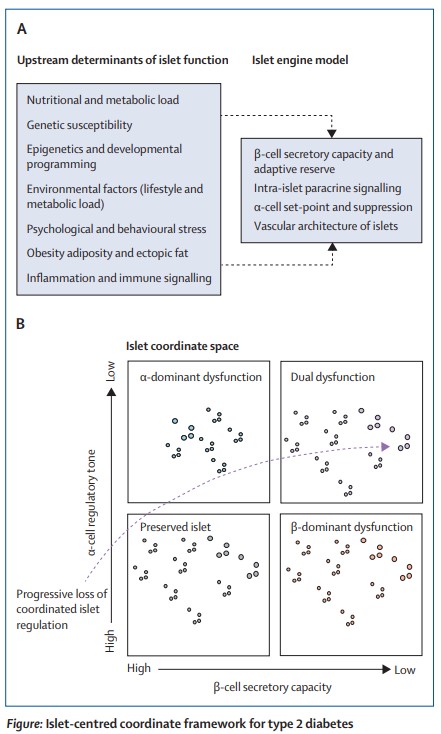
Genome architecture provides an essential framework for understanding how noncoding variants influence transcriptional programs. This invited Research Highlight discusses how nuclear context links regulatory variation to gene control and disease biology. doi.org/10.1038/s41392…
English
0
1
1
66
Prof Sam El-Osta retweetledi
Diabetologia
Diabetologia@DiabetologiaJnl·
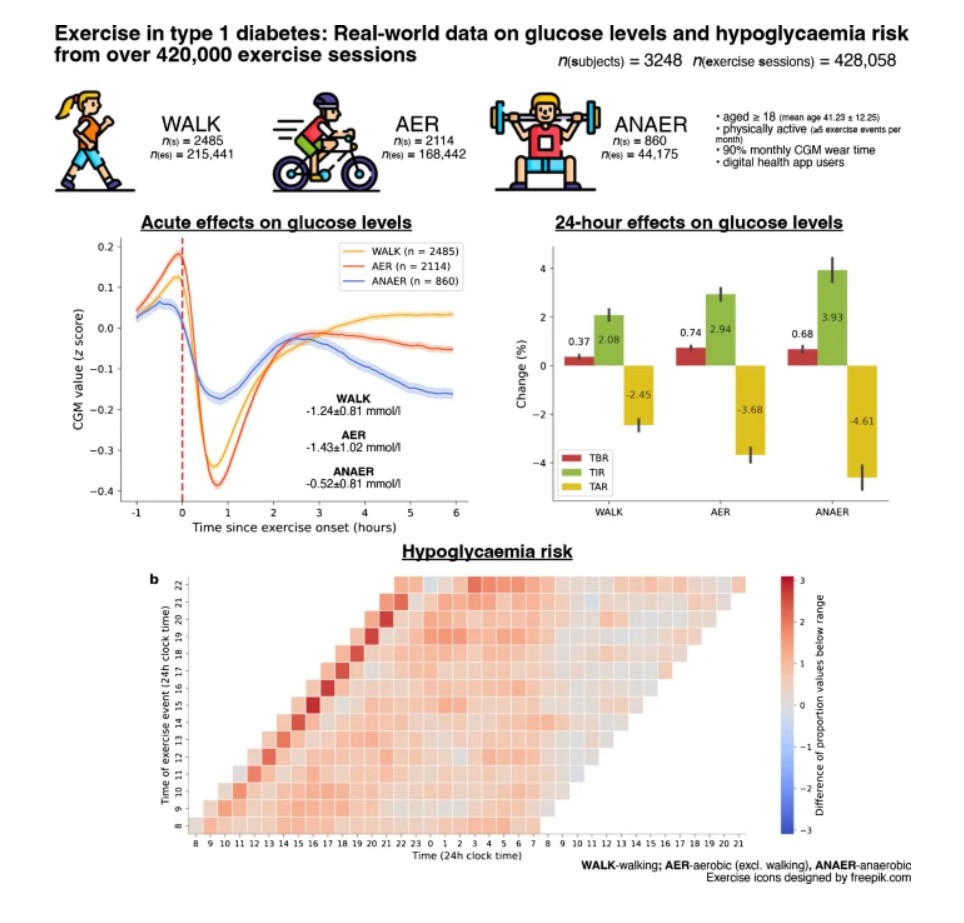
How does exercise impact glucose levels in T1D? Analysis of 428,058 exercise sessions shows aerobic exercise lowers glucose more than anaerobic, with greater 24 h glycaemic benefits but higher acute hypoglycaemia risk. #T1D #Diabetes #Exercise link.springer.com/article/10.100… 🔓
Diabetologia tweet media
English
1
14
42
2.2K
Prof Sam El-Osta retweetledi
JAMA
JAMA@JAMA_current·
#Type1Diabetes affects approximately 2 million people in the US and 8.4 million people worldwide. 🔗 Learn more about the diagnosis and treatment of type 1 diabetes in this JAMA Review: ja.ma/4rWYHCk
JAMA tweet media
English
0
40
125
8.6K
Prof Sam El-Osta retweetledi
Ming "Tommy" Tang
Ming "Tommy" Tang@tangming2005·
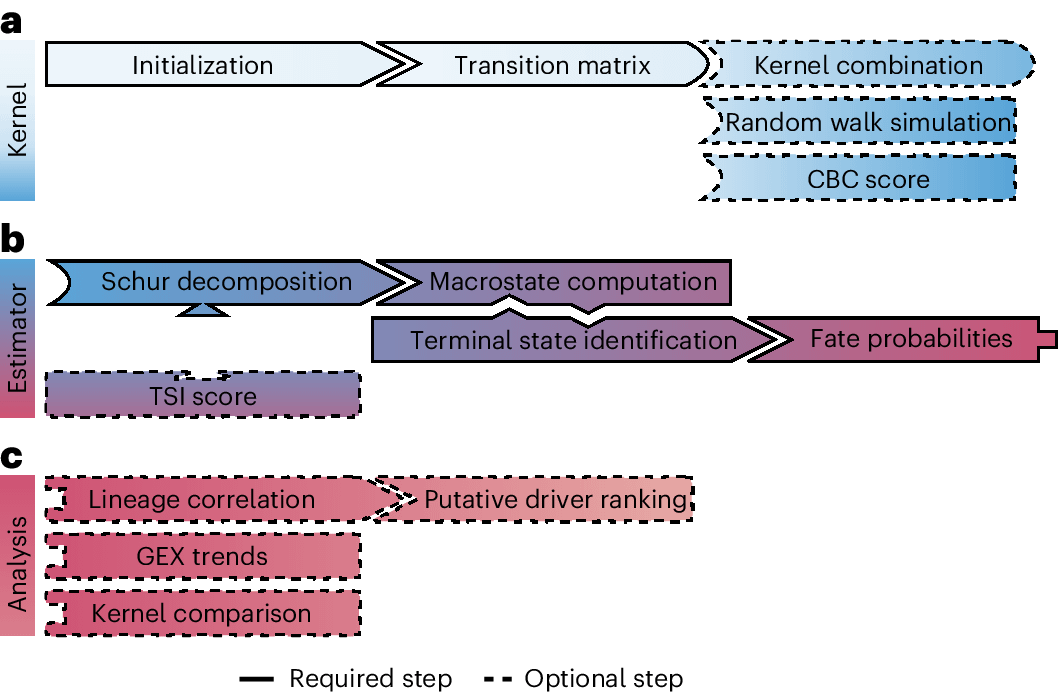
🧵 Single-cell RNA-seq is destructive. You sequence the cells, they're gone. So how do you reconstruct cellular trajectories? Like tracking stem cells as they differentiate? Enter CellRank.
Ming "Tommy" Tang tweet media
English
3
25
94
5.8K
Prof Sam El-Osta retweetledi
Nature Biotechnology
Nature Biotechnology@NatureBiotech·
First-in-human studies provide hope that islet replacement therapies derived from stem cells will prove safe and effective in people with type 1 diabetes, but hurdles remain nature.com/articles/s4158… rdcu.be/e1x9M
Nature Biotechnology tweet media
English
0
22
70
5.2K
Prof Sam El-Osta retweetledi
Nature Medicine
Nature Medicine@NatureMedicine·
Researchers studied blood-based metabolome of over 23,000 individuals from 10 ethnically diverse cohorts. They identified 235 metabolites associated with future risk of T2D. By integrating genetic and modifiable lifestyle factors, their findings provide insights into T2D mechanisms and could improve risk prediction and inform precision prevention. nature.com/articles/s4159…
English
5
64
235
21.1K
Prof Sam El-Osta retweetledi
Georgia Channing
Georgia Channing@cgeorgiaw·
This breakthrough model from @GoogleDeepMind can evaluate DNA sequences of up to 1 million base pairs + predict at single base-pair resolution for: 🧬 gene expression 🧬 splicing patterns 🧬 chromatin features 🧬 contact maps All on @huggingface! Future of science is open 🤗
Google DeepMind@GoogleDeepMind

Our breakthrough AI model AlphaGenome is helping scientists understand our DNA, predict the molecular impact of genetic changes, and drive new biological discoveries. 🧬 Find out more in @Naturegoo.gle/4bXlV6y

English
1
14
110
20.3K
Prof Sam El-Osta retweetledi
Shinichi Namba
Shinichi Namba@NambaShinichi·
Just out in @Nature🚀 GWAS treats genetic effects as fixed —but they’re not always. Using large biobanks, we map gene–environment interactions and show how dynamic genetic effects enable environment-aware polygenic prediction and drug discovery. nature.com/articles/s4158…
English
7
68
257
18.3K
Prof Sam El-Osta
Prof Sam El-Osta@SamElOsta1·
Double-strand-break-free epigenetic programming for T-cell therapies. CRISPRoff/CRISPRon lets us dial durable, reversible gene expression without nuclease cuts. Proud to co-author with outstanding PhD (CSC) scholars, Lanxin Deng and Yujia Yang. nature.com/articles/s4139…
Prof Sam El-Osta tweet media
English
0
1
1
167
Prof Sam El-Osta retweetledi
OlvTools | RNA-Seq Data Analysis Software
[RNA-Seq Data Analysis Software] We have released RNA-Seq Data Analysis Software. With our software, you won't need to outsource or rely on collaborators. You can start analyzing data yourself right away, without the need for high-spec computers or knowledge of Linux commands.
English
17
158
968
1.1M
Prof Sam El-Osta retweetledi
Niko McCarty.
Niko McCarty.@NikoMcCarty·
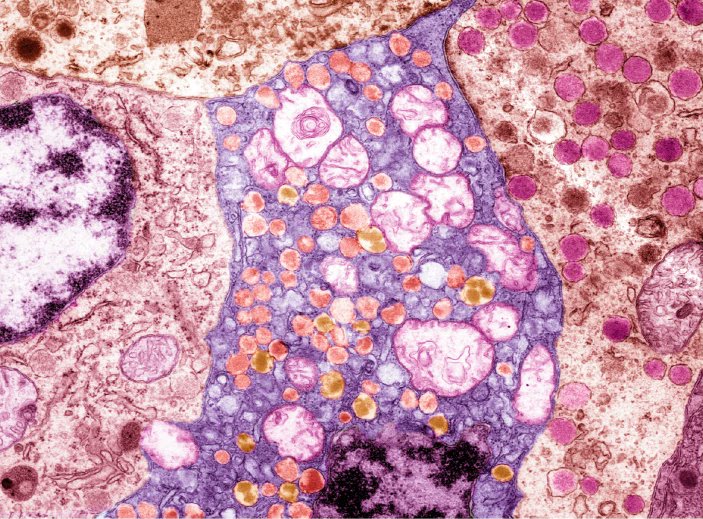
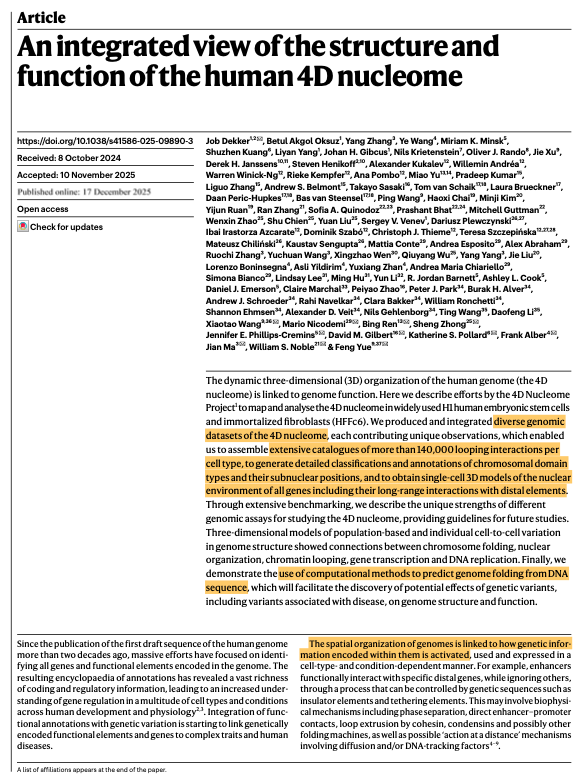
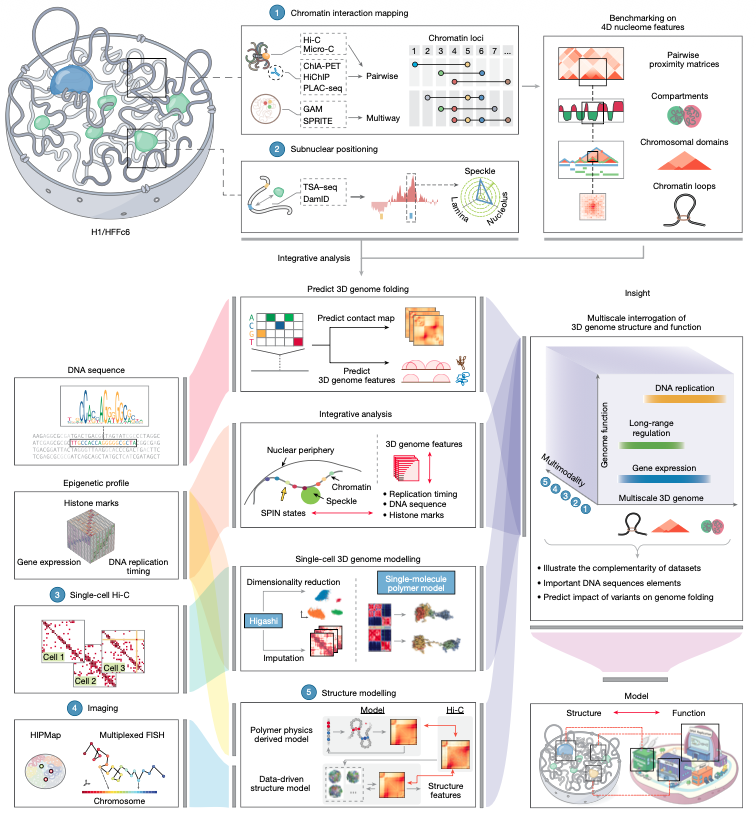
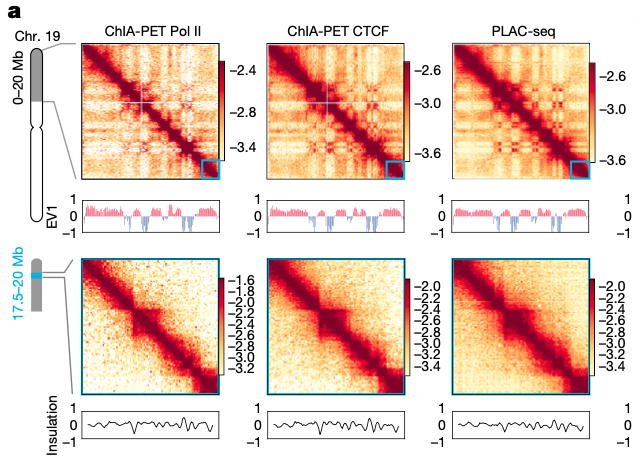
Many people think of the genome as a string of "letters." The human genome, say, has 3.2 billion base pairs of DNA organized across 23 pairs of chromosomes. But the genome is a 3D object. Genes located on entirely different chromosomes might be clustered together. Mutations in these "distant" genes can lead to disease in surprising ways. For a new paper in @Nature, researchers released several "maps" of human genomes from two types of cells: embryonic stem cells and fibroblasts. They compared methods to see which ones are least biased, and found many long-range interactions between genes. The article does a good job explaining how “the genome is organized at different scales”: > On a single chromosome, histones control which parts of the DNA sequence are accessible and expressed. > At the scale of hundreds of thousands of bases, “chromatin loops in a dynamic manner,” the authors write, bringing distant genes closer together. > Across chromosomes, sequences "cluster together in space to form subnuclear compartments." Examples abound. Enhancers, for example, are short DNA sequences that regulate the expression of far away genes. They do this by *physically* touching the genes they control; a protein called cohesin grabs the DNA and tugs it into big loops. Even promoters, which are thought of as being associated with one gene or operon, can cluster together across many genes! A protein, Ronin, grabs promoters and pulls them together. This is apparently done mostly for genes that tend to be "on," as it helps enzymes find genes faster/not have to diffuse far away to find targets. (This also happens with genes that tend to be "off;" so-called polycomb proteins grab onto promoters, cluster them up, and silence all of them at once. It's a way for the cell to conserve energy.) One consequence of this spooky "action-at-a-distance" is that diseases might arise from mutations in unexpected locations. Editing these regulatory sequences, in other words, might in turn affect a gene located on an entirely different chromosome that *is* associated with that disease. Genetic mutations linked to autism, for example, are known to disrupt the 3D organization of the genome. A single deletion at a gene, TAL1, also affects its ability to form long-range chromatin interactions with other genes, leading to leukemia. There are probably many other, as-yet-undiscovered, instances of this.
Niko McCarty. tweet mediaNiko McCarty. tweet mediaNiko McCarty. tweet media
English
23
205
936
108.3K
Prof Sam El-Osta retweetledi
Niko McCarty.
Niko McCarty.@NikoMcCarty·
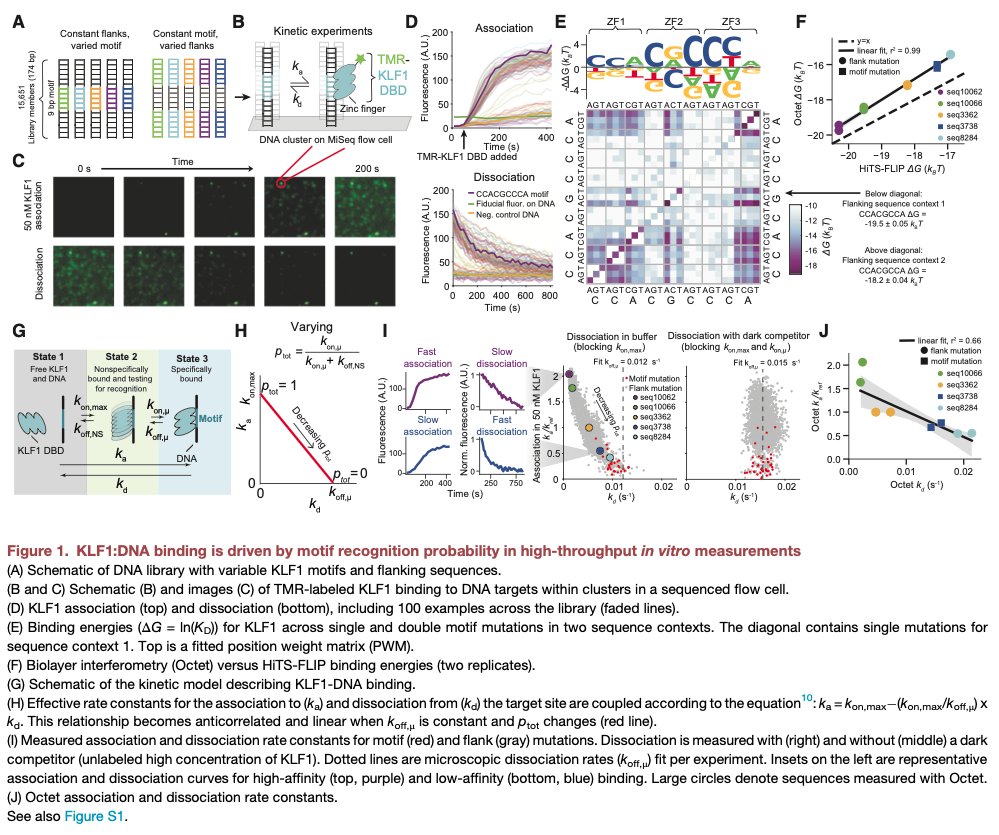
The model of gene expression taught in school is highly misleading! Transcription factors are proteins that bind to DNA and then help repress, or activate, the expression of genes. Cells have hundreds of different types of transcription factors, each tuned to regulate different genes based on short snippets of DNA located near those genes. The basic model, taught in school, says that these transcription factor proteins float around the cell and, when they bump into a DNA sequence, either latch onto it strongly (CORRECT SITE!) or fall off quickly (WRONG SITE) and keep searching. All the other DNA in a cell is basically abstracted away as unimportant or irrelevant; mere background noise. But again, this model is naive! And a new paper, published in Cell, beautifully shows how the sequences SURROUNDING a transcription factor's binding site also matter a great deal. This won't be surprising to many biologists, as "cracks" in the standard two-state model began emerging decades(?) ago. Biologists have tagged transcription factors with fluorescent tags and then watched them move around living cells. And they have noticed that when transcription factors land in a "wrong" location in the genome, they skip or hop to a nearby location and repeat this until finally connecting with the "correct" sequence. So in other words, there are actually three states that a transcription factor can exist in: free-floating, "searching", or "bound." (More technically, transcription factors first do a 3D search, then latch onto DNA and do a 1D search to find the correct location.) For this new paper, though, scientists exhaustively quantified *how* the sequences flanking a transcription factor binding site influence the search of the protein. They did a huge in vitro experiment, wherein they placed a specific transcription factor with a known binding site, called KLF1, in a huge library of 11,812 different DNA sequences. These sequences had mutated "core" binding sites and variations in the flanking sequences. They also prepared negative controls. Then, these researchers measured the binding kinetics of KLF1 with each sequence to understand which bases in the flanking sites impact the 1D search. What they found is that KLF1 has a basically flat disocciation rate from its core sequence, but that the PROBABILITY that it finds this sequence depends a lot on the surrounding context. Even mutations located dozens of bases away from the core site matter a lot, either pushing KLF1 to "hop" faster to find the site, or "trapping" KLF1 and slowing down its search. These flanking sequences can cause up to a 40-fold variation in the affinity of a transcription factor for its target site! This is just one small part of the paper, though, so I encourage anyone interested to read the whole thing. It is challenging throughout.
Niko McCarty. tweet mediaNiko McCarty. tweet media
English
19
241
1.2K
126.5K