The Sharing Scientist

14.9K posts

The Sharing Scientist banner
The Sharing Scientist

The Sharing Scientist

@ScienceShared

Bringing you the most interesting & important science news that you need, summarised & sourced directly to your feed. Also will call out stuff others don't.

Katılım Aralık 2010
3.4K Takip Edilen11.9K Takipçiler
The Sharing Scientist retweetledi
Kenneth Loi
Kenneth Loi@kenjmloi·
Excited to share our discovery of a new programmable RNA-guided DNA-targeting system hiding inside bacteriophages that predates CRISPR. We call it VIPR (Viral Interference Programmable Repeat), and it uses an entirely new logic to find its targets. Thread + link below.
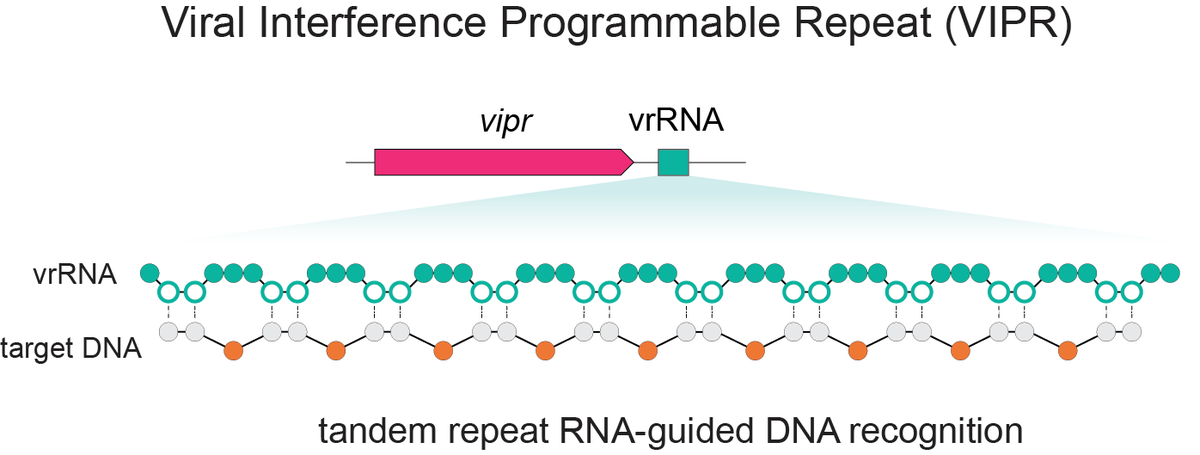
Kenneth Loi tweet media
English
26
353
1.3K
239.3K
The Sharing Scientist retweetledi
Kotaro Fujii
Kotaro Fujii@KotaroFujii1·
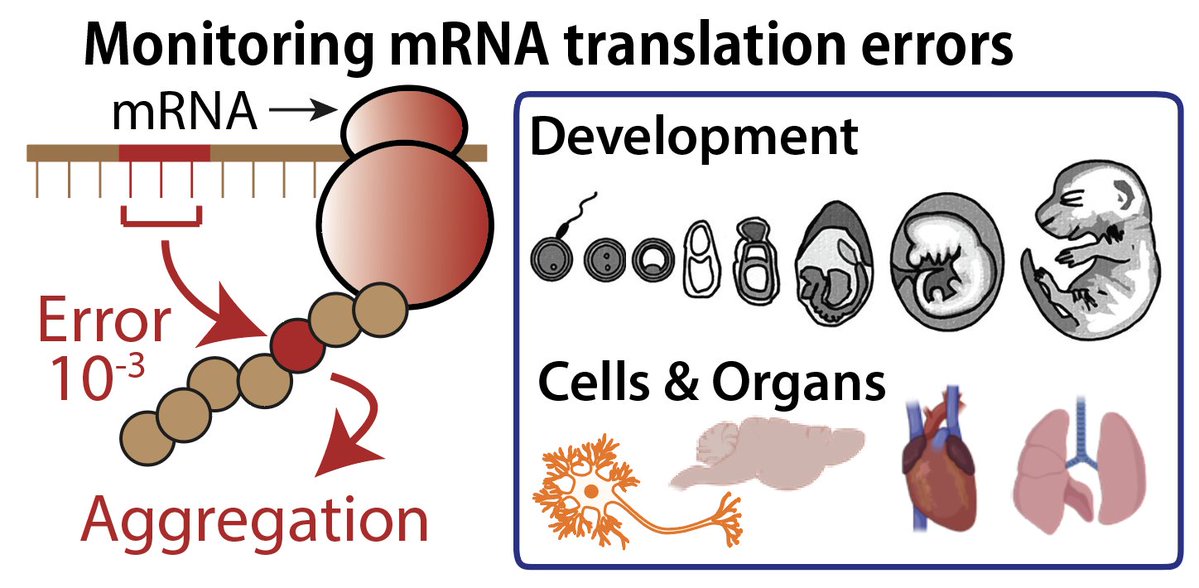
Protein synthesis is not equally accurate across organs. Excited to share our new preprint: biorxiv.org/content/10.648… We developed a new mouse model to quantitatively monitor translation errors and uncovered the spatiotemporal dynamics of the “quality” of protein synthesis.
Kotaro Fujii tweet media
English
5
82
343
26K
The Sharing Scientist retweetledi
EMBL
EMBL@embl·
(1/2) EMBL researchers have developed a microscopy technique that enables them to observe individual RNA molecules being produced and folding into different shapes. Learn more: science.org/doi/10.1126/sc…
EMBL tweet media
English
2
34
121
26.7K
The Sharing Scientist retweetledi
Prof. Nikolai Slavov
Prof. Nikolai Slavov@slavov_n·
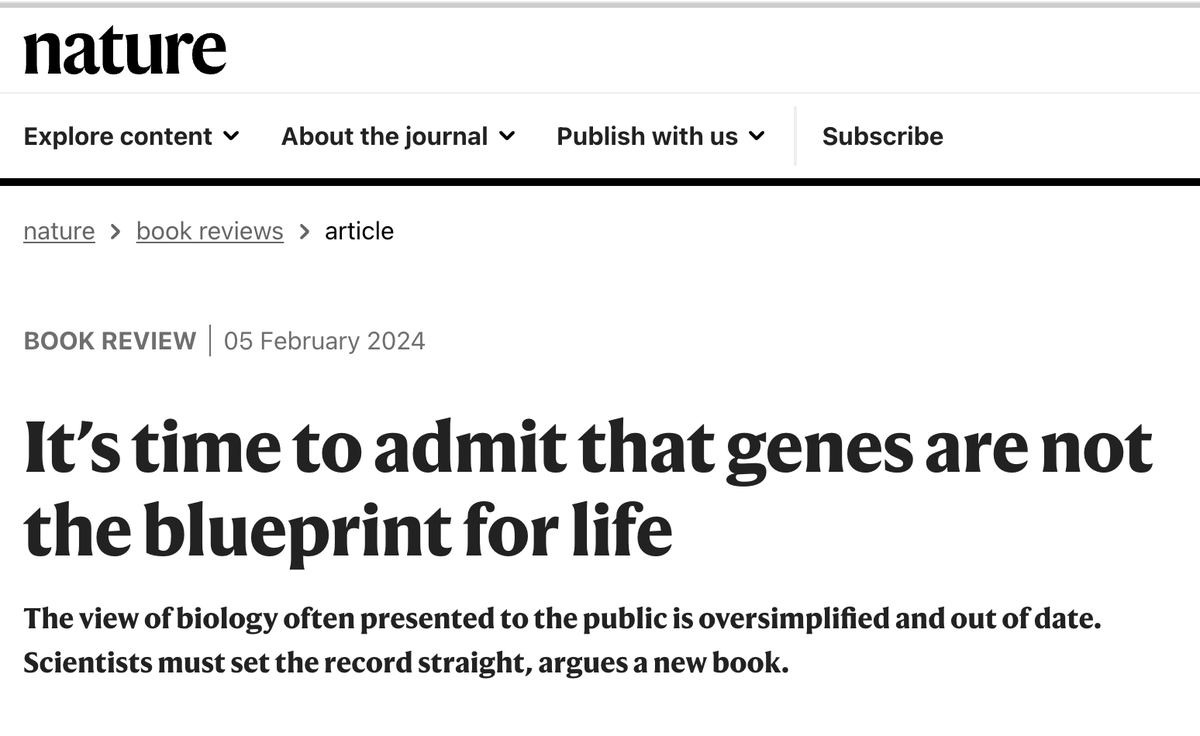
A periodic reminder to leave behind simplistic & naive notions.
Prof. Nikolai Slavov tweet media
English
20
81
576
49.9K
The Sharing Scientist retweetledi
Pall Melsted
Pall Melsted@pmelsted·
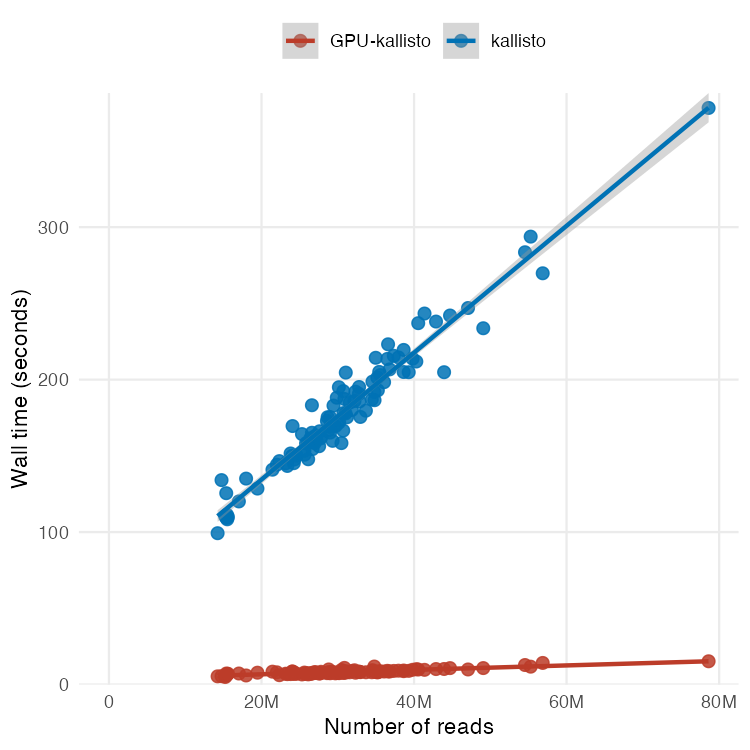
Excited to share this preprint that describes my latest work on using GPUs to accelerate processing of RNA-seq data. The title says it all: "RNA-seq analysis in seconds using GPUs" now on biorxiv biorxiv.org/content/10.648… Figure 1 shows they key result
Pall Melsted tweet media
English
15
119
483
90.7K
The Sharing Scientist retweetledi
Aakash Gupta
Aakash Gupta@aakashgupta·
The math on this project should mass-humble every AI lab on the planet. 1 cubic millimeter. One-millionth of a human brain. Harvard and Google spent 10 years mapping it. The imaging alone took 326 days. They sliced the tissue into 5,000 wafers each 30 nanometers thick, ran them through a $6 million electron microscope, then needed Google’s ML models to stitch the 3D reconstruction because no human team could process the output. The result: 57,000 cells, 150 million synapses, 230 millimeters of blood vessels, compressed into 1.4 petabytes of raw data. For context, 1.4 petabytes is roughly 1.4 million gigabytes. From a speck smaller than a grain of rice. Now scale that. The full human brain is one million times larger. Mapping the whole thing at this resolution would produce approximately 1.4 zettabytes of data. That’s roughly equal to all the data generated on Earth in a single year. The storage alone would cost an estimated $50 billion and require a 140-acre data center, which would make it the largest on the planet. And they found things textbooks don’t contain. One neuron had over 5,000 connection points. Some axons had coiled themselves into tight whorls for completely unknown reasons. Pairs of cell clusters grew in mirror images of each other. Jeff Lichtman, the Harvard lead, said there’s “a chasm between what we already know and what we need to know.” This is why the next step isn’t a human brain. It’s a mouse hippocampus, 10 cubic millimeters, over the next five years. Because even a mouse brain is 1,000x larger than what they just mapped, and the full mouse connectome is the proof of concept before anyone attempts the human one. We’re building AI systems that loosely mimic neural networks while still unable to fully read the wiring diagram of a single cubic millimeter of the thing we’re trying to imitate. The original is 1.4 petabytes per millionth of its volume. Every AI model on Earth fits in a fraction of that. The brain runs on 20 watts and fits in your skull. The data center required to merely describe one-millionth of it would span 140 acres.
All day Astronomy@forallcurious

🚨: Scientists mapped 1 mm³ of a human brain ─ less than a grain of rice ─ and a microscopic cosmos appeared.

English
1.2K
12K
63.9K
4.6M
The Sharing Scientist
The Sharing Scientist@ScienceShared·
@TKLSubscribers @parkhouse184 A note that in the newsletter you had "Therefore, we are now bullish of natural gas with a $3.70 target and $3.10 stop-loss." while in the summary you had $3.00 SL
English
1
0
0
23
The Sharing Scientist retweetledi
Itai Yanai
Itai Yanai@ItaiYanai·
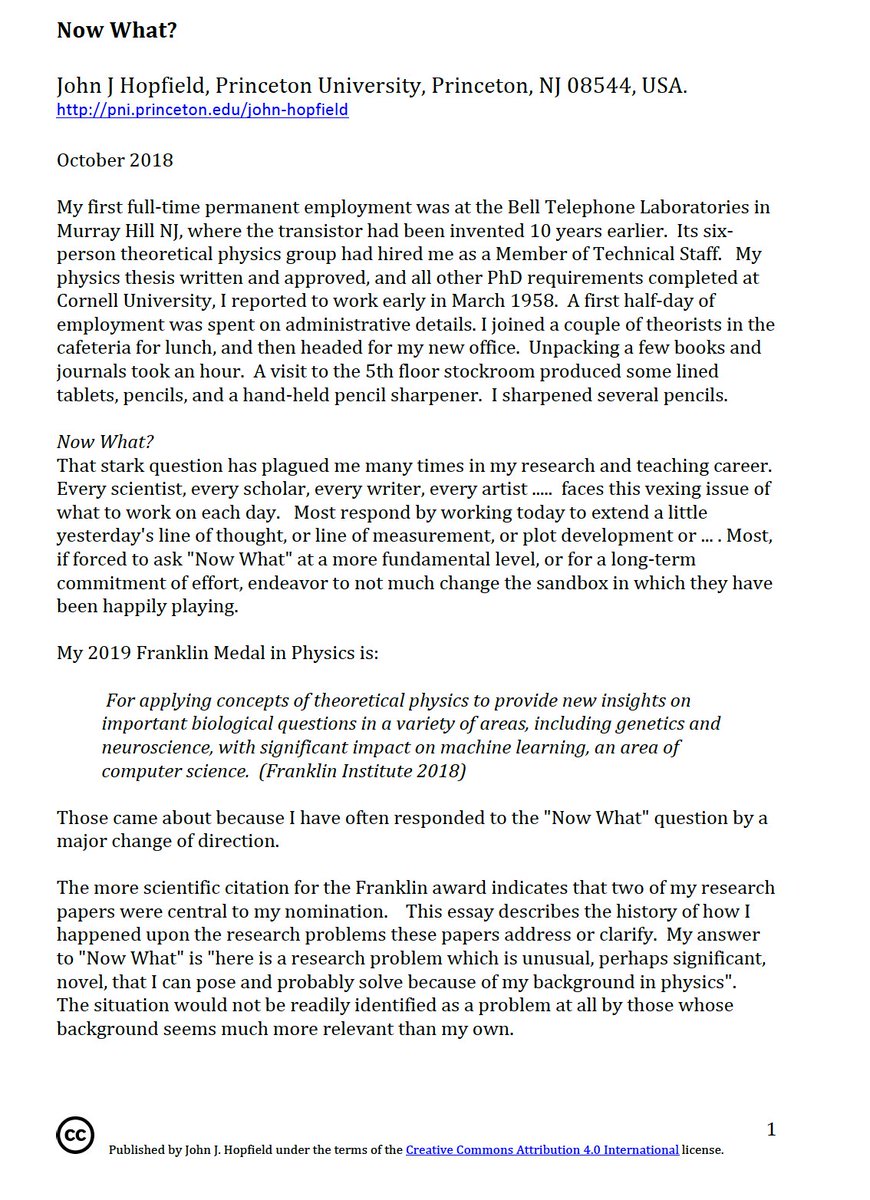
"Choosing problems is the primary determinant of what one accomplishes in science." 'Now What?' by Nobel Laureate John Hopfield should be required reading for aspiring scientists. pni.princeton.edu/document/1136
Itai Yanai tweet media
English
14
129
724
59K
The Sharing Scientist retweetledi
Jason Locasale
Jason Locasale@LocasaleLab·
This is an key example of where life-science PhD training has gone badly wrong. From the very start, students are pushed into nonstop lab work, with almost no time spent on the history of the field, philosophy of science, or the logic of scientific inquiry - how knowledge is generated, validated, revised, and preserved. They are trained not to be scholars, but operators. PhDs are trained to execute experiments rather than to understand why those experiments matter or where the ideas came from. That’s not an accident - it’s how you turn doctoral education into a cheap-labor pipeline rather than an intellectual one. Biology pays the price. Without historical and theoretical grounding, failed ideas get recycled, entire areas are neglected, and foundational contributors are forgotten or dismissed. Progress becomes shallow and trend-driven instead of cumulative. The path forward is restoring real scholarship. Fewer PhDs, deeper training, and explicit emphasis on history, theory, and reasoning would produce scientists who think as well as operate.
Xavier Andres Figueroa, Ph.D.@DrXFig0708

@lifebiomedguru @LocasaleLab And a healthy dollop of actual analysis on the historical foundation of the field one is trained in, along with critical philosophy and classic logic. Knowing where you information comes from, along with the foundational assumptions, will lead to far fewer dead ends.

English
18
30
204
19.6K
The Sharing Scientist retweetledi
Nick Desnoyer
Nick Desnoyer@NickDesnoyer·
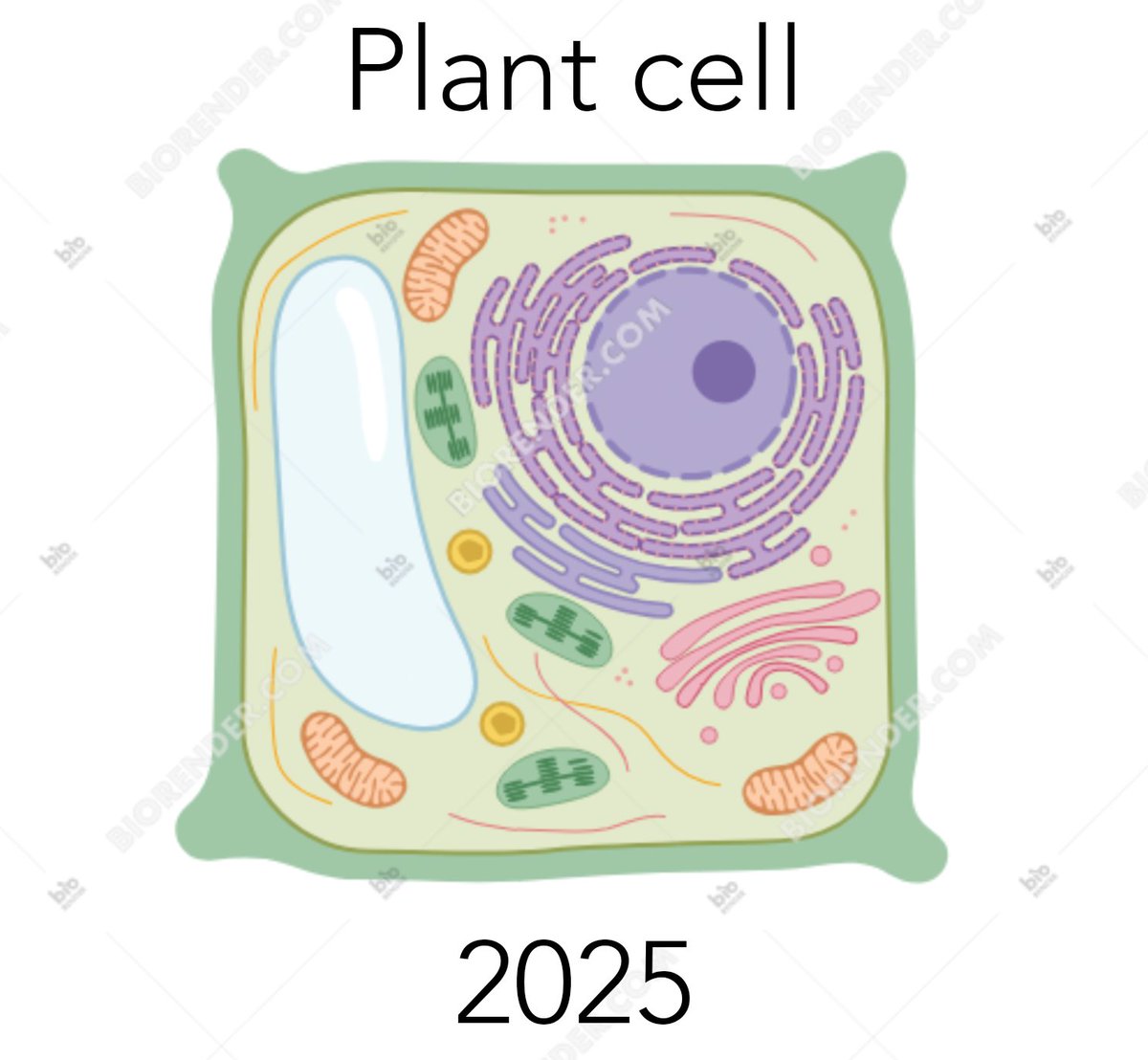
The hidden danger of Biorender (& the death of scientific illustration) A short thread 🧵
Nick Desnoyer tweet mediaNick Desnoyer tweet media
English
46
320
3.2K
265.6K
The Sharing Scientist retweetledi
Prof. Nikolai Slavov
Prof. Nikolai Slavov@slavov_n·
Would you expect that determining the sequences of all human genes will keep attention focussed on a few ? The 8 most studied genes are: TP53 TNF EGFR IL6 VEGFA АРОЕ TGFB1 MTHFR 1/3
Prof. Nikolai Slavov tweet media
English
11
29
184
21.7K
The Sharing Scientist retweetledi
Niko McCarty.
Niko McCarty.@NikoMcCarty·
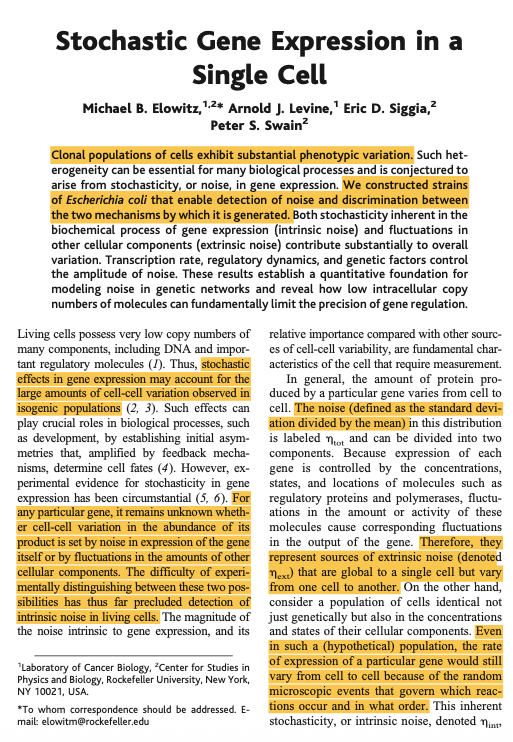
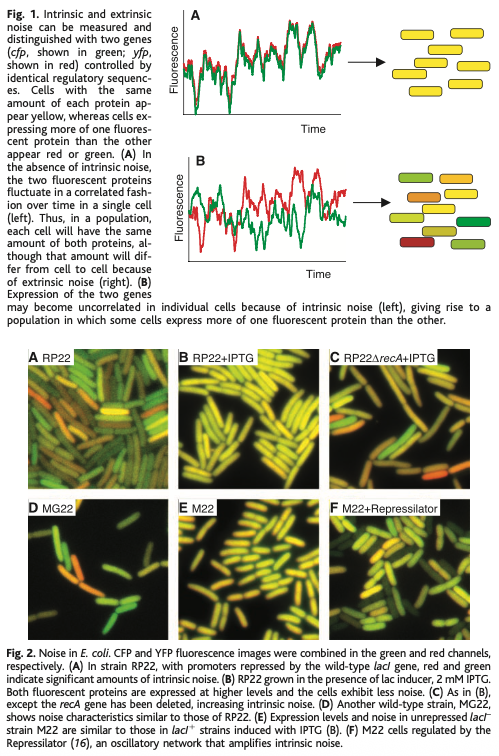
Take two cells and place them side by side. Both cells have the same genome. And yet, oddly enough, they behave in different ways. They divide at different times and their RNA levels are distinct. Now let’s go one step further. Take those same two cells. But this time, imagine that they have not only the same genome, but completely identical molecules at identical concentrations. Will these two cells behave in the same way? The answer is no. This is because there are two types of "noise" inside of living cells; intrinsic and extrinsic. In the first example, the two cells act differently because of subtle differences in their gene levels. Not all genes are expressed at the same time or in the same amount, and this leads to slight differences. This is extrinsic noise, because it is “global to a single cell” but varies “from one cell to another.” In the second example, which is so statistically unlikely as to be basically impossible, the two cells would still have different gene expression patterns “because of the random microscopic events that govern which reactions occur and in what order.” This is intrinsic noise or stochasticity; it is an inalienable part of biology. I’m pulling these quotes from one of my all-time favorite papers, called “Stochastic Gene Expression in a Single Cell.” The first author is @ElowitzLab (of synthetic biology fame) and it was published in August 2022. It’s worth reading. For this paper, Elowitz & co. designed a simple experiment to separate intrinsic and extrinsic noise in a cell. Their goal was measure each source of noise to figure out which one dominates in different scenarios, like exposure to IPTG or the addition of a plasmid. So here’s what they did: First, they took E. coli cells and inserted two genes into the genome; one encoding a fluorescent cyan protein, and another encoding a fluorescent yellow protein. Each gene had the same promoter, and was placed equidistant from the genome’s origin of replication (but on opposite sides.) Next, they grew these cells in LB broth and photographed them using a microscope with color filters. The brightness of each color, in each cell, was quantified. If the variability between different E. coli cells stems from shared cellular conditions (like ribosome levels or extrinsic noise), then both colors in a single cell would fluctuate together. If the variability instead arises from random molecular events (intrinsic noise), then even within the same cell, the cyan and yellow levels would differ. If you plot these changes out on a scatterplot, then you can literally decode which “signals” or “triggers” are dominated by intrinsic or extrinsic noise, and by how much. This is a “beautiful experiment” because the experiment is so simple, yet it retrieves a huge amount of information. All they did was put two genes into an E. coli cell at symmetrical locations in the genome! And from that alone, they deconvoluted noise and its origins.
Niko McCarty. tweet mediaNiko McCarty. tweet media
English
9
100
698
76.4K
The Sharing Scientist retweetledi
Kotaro Nakanishi
Kotaro Nakanishi@ktr_nakanishi·
Dysregulation of AGO2-miRNA dynamics underlies the AGO2-associated Lessel–Kreienkamp syndrome | Nucleic Acids Research | Oxford Academic academic.oup.com/nar/article/53…
English
0
1
1
614
The Sharing Scientist retweetledi
Joshua Mendell
Joshua Mendell@Mendell_lab·
Colliding ribosomes are potent signals of cellular stress. But do cells use ‘programmed’ ribosome collisions to regulate gene expression? I’m excited to present a new story led by Frederick Rehfeld revealing that the answer is YES! Read on to find out how. biorxiv.org/content/10.110…
English
2
27
111
14.3K
The Sharing Scientist retweetledi
Ana Fiszbein
Ana Fiszbein@anafiszbein·
Thrilled to share our work on transcription initiation and termination being spatially coordinated out today in Science! science.org/doi/10.1126/sc…
English
7
51
279
22.8K