Scott Atkison

170 posts

Scott Atkison banner
Scott Atkison

Scott Atkison

@ScottAtkison

"Growth for the sake of growth is the ideology of the cancer cell." -Edward Abbey. Not a fan of Abbey, but in these words he drops some wisdom.

Spokane, WA Katılım Aralık 2016
752 Takip Edilen126 Takipçiler
Scott Atkison
Scott Atkison@ScottAtkison·
There are currently 3 categories of Companies who exist today: (1): Companies which are, and will continue to, implementing AI tools to drive costs out of their businesses and improve products/services, (2): Companies who sell to those Companies in category (1) and (3): Companies who don't implement AI well, lose market share, see profit margins fall and ultimately fail.
English
0
0
0
22
Scott Atkison
Scott Atkison@ScottAtkison·
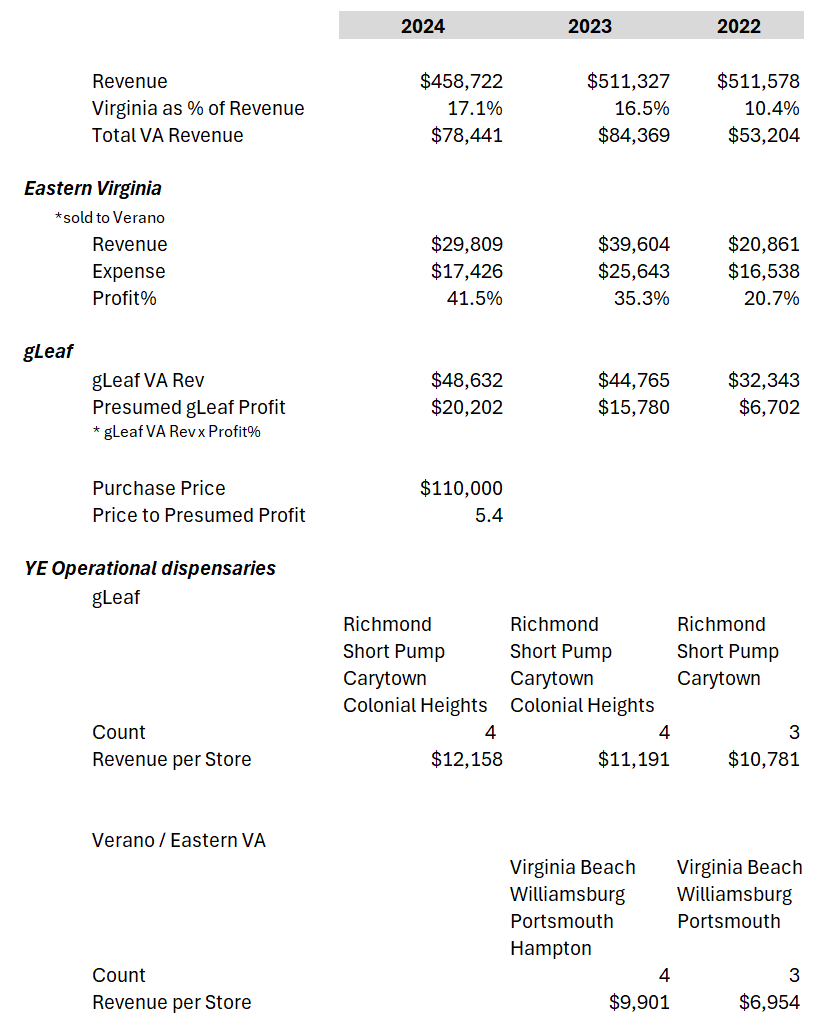
@curated_value @JDerevyanny If VA does follow through with adult use in Nov 2026, this will likely turn out very well for curaleaf. A little surprised this asset did not command more. Begs the question on what other assets are worth using this transaction a valuation guideline.
English
1
0
1
73
Mike Meade
Mike Meade@curated_value·
@JDerevyanny Cannabist 10k, they break out VA as a % of rev and the rev and expenses of the eastern va divesture
English
1
0
2
166
Mike Meade
Mike Meade@curated_value·
Initial glance at the $CURLF acquisition
Mike Meade tweet media
English
2
0
10
1.7K
Scott Atkison
Scott Atkison@ScottAtkison·
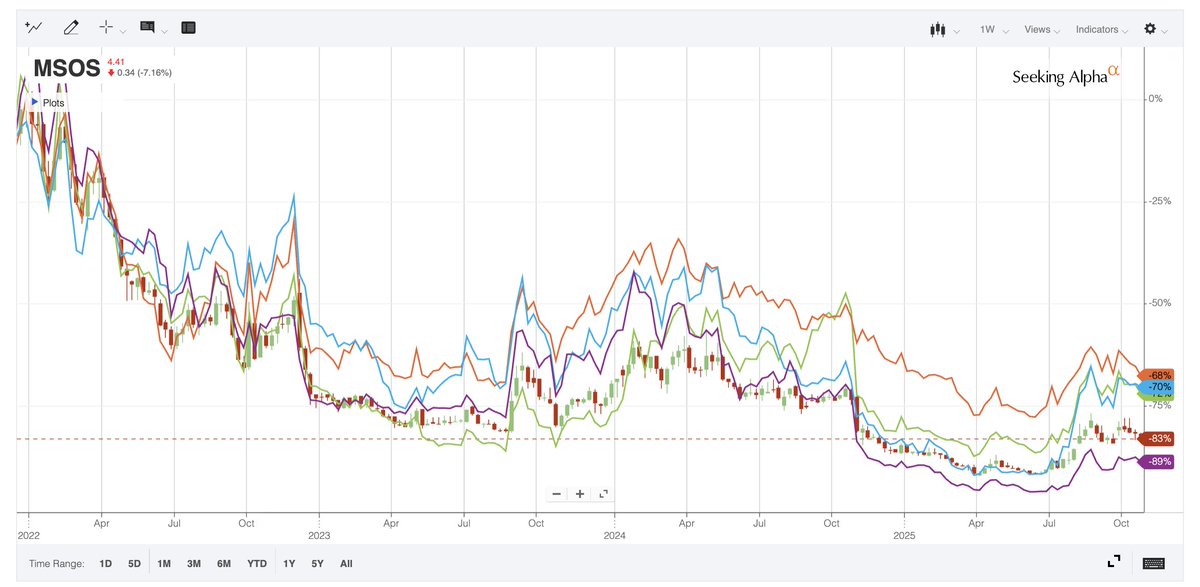
@TheDankInformer A 4 year chart of $MSOS (down 83%) against Verano (down 89%), Trulieve (down 73%), Curaleaf (down 70%), and Green Thumb (down 68%).
Scott Atkison tweet media
English
0
0
1
143
The Dank Informer
The Dank Informer@TheDankInformer·
DAILY CHANGES: $GTBIF (72,063) $VRNOF +400,000 $CXXIF +100,000 $VREOF +100,000 $AAWH +50,000
English
11
1
12
9.1K
Jerry Derevyanny
Jerry Derevyanny@JDerevyanny·
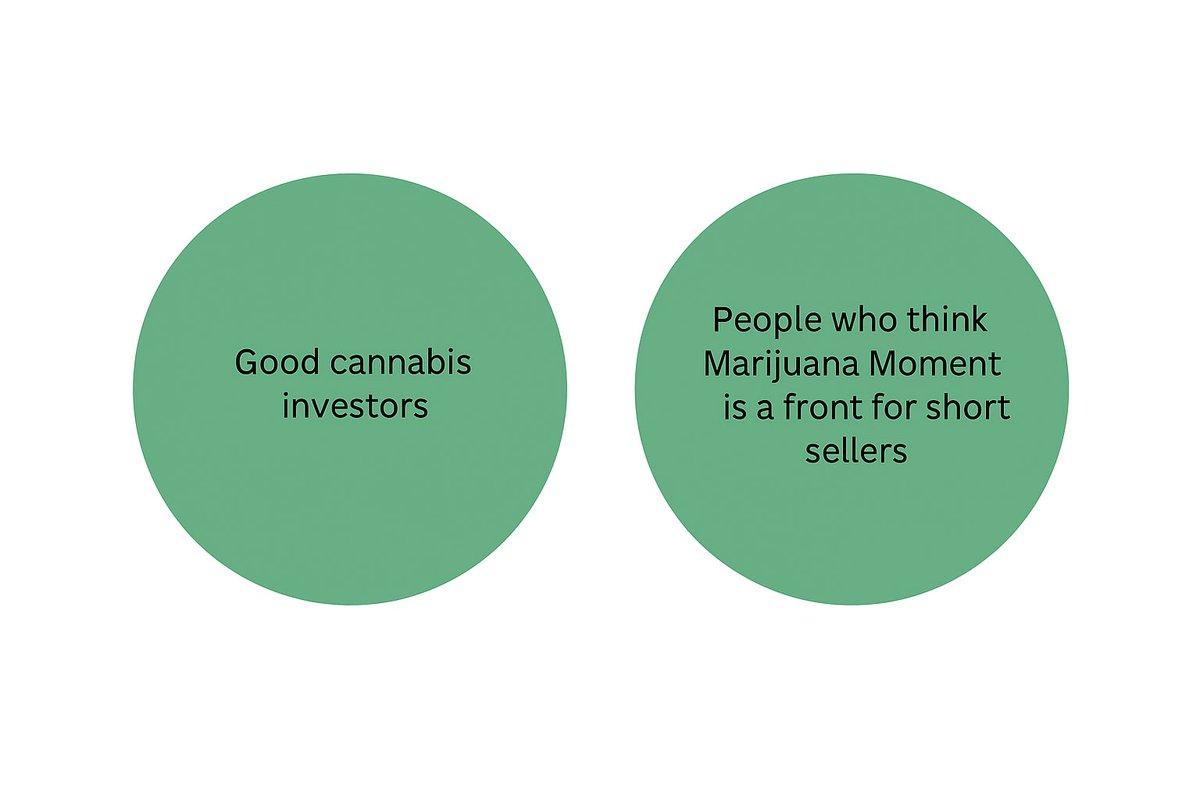
There are few hard and fast rules on cannabis investing. This is one of them.
Jerry Derevyanny tweet media
English
3
1
17
1.4K
Scott Atkison
Scott Atkison@ScottAtkison·
How low can prices go? Is a better bet to think prices go back up to $40 per 1/8th (and were, after all "compressed") or is a better bet to think prices can drop another 50% with better growing techniques, higher yields, more time on the experience curve and that current prices are, after all, not "compressed" but systemically declining from experience, technology, industrial scale competitive pressures, etc., leading to lower costs?
English
1
0
0
130
Jerry Derevyanny
Jerry Derevyanny@JDerevyanny·
Price normalization is real, exhibit #865 Pretty sure these prices are ex tax, but they give people an idea of how quickly these things happen States that have pricing hold up for significant lengths of time like IL are the exception, not the rule.
Jerry Derevyanny tweet media
English
15
1
18
4.2K
Scott Atkison
Scott Atkison@ScottAtkison·
@Bkov9 Along those lines, if you could buy GTI shares at a lower price then what you had to pay buying from the MSOS ETF, wouldn’t this be the most Henry Singleton way to allocate GTI’s capital on a share buyback? And maybe that would be the open market? Other than getting the lowest possible price for GTI, why would you care about the source of where you bought shares? I’m genuinely curious about this.
English
0
0
0
93
Ben Kovler
Ben Kovler@Bkov9·
@bmacd36 If we can offer him a better price, why wouldn't he do it?
English
4
0
36
3.2K
Bruce Macdonald
Bruce Macdonald@bmacd36·
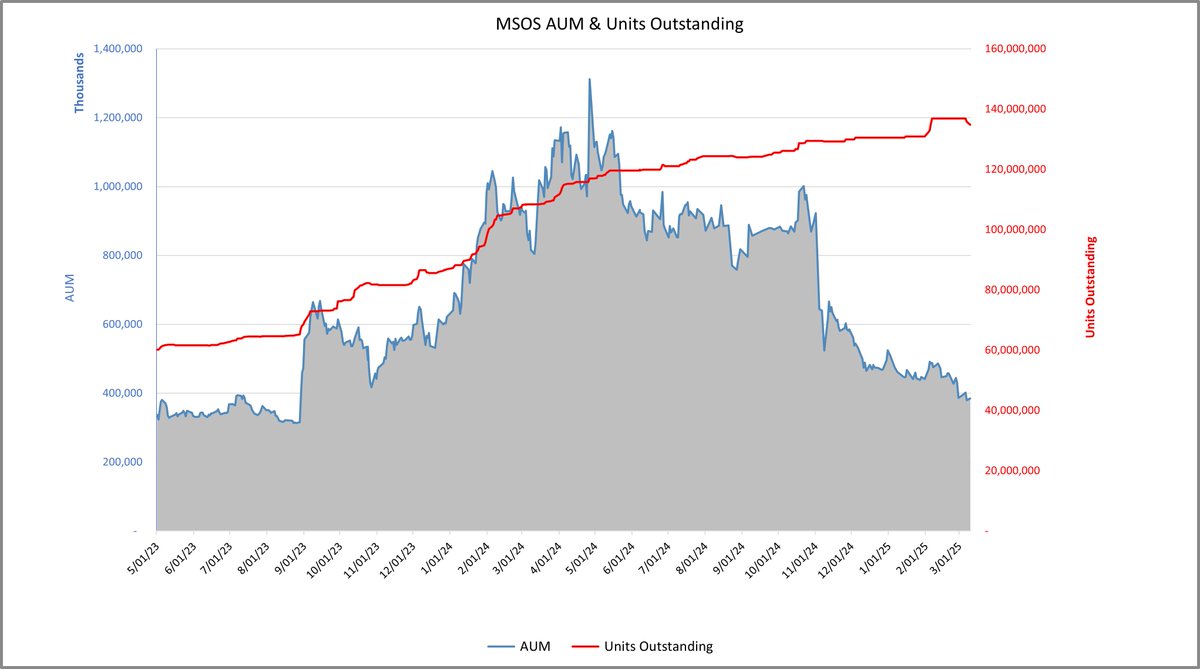
There is a different dynamic in $MSOS trading these days. It is a pattern we haven’t seen since SAFE failed to be included in the NDAA in Dec of 2022. We are seeing what appears to be a controlled liquidation of a significant position in MSOS by one of their shareholders. The result is that for about the last three weeks we have been in a constant sell arbitrage environment (sometimes referred to as sell programs). Said another way, MSOS is consistently trading at a 2-3 cent discount to the value of its component parts. Like in all ETFs, Authorized Participants (or AP’s) are the market makers that capture this small spread by buying MSOS and selling its underlying constituents proportionately to the holdings in the ETF. To answer how often this and other patterns have occurred in MSOS, I can tell you anecdotally that about 75% of the time, MSOS has traded at a premium, causing buy programs as the AP’s sold MSOS and bot the underlying names held in the fund. Notwithstanding prices going down, this has acted as a significant sponge for supply (i.e. fundamental sellers or vendor paper) in the ETF’s underlying portfolio and for many names it has been the only systemic buying in their stock. As to the other 25% of the time, I would say 20% is neutral and 5% is as sell arb such as we are experiencing now. You will also note recently that MSOS volume is significantly lower relatively with MSOS dollar volume trading more closely in line with the dollar volume of its underlyings whereas during sustained buy programs, we have often seen MSOS volumes of 5-7x that of the underlyings. This basically means that the current liquidation of someone’s MSOS position is being absorbed by fundamental buyers in the underlying stocks – not just finding another buyer of MSOS. Not the end of the world if you have fundamentals to lean on, but it comes at a time when good ones are rare. It would be easy to call this unfair and undeserving pressure on your favorite cannabis name or even think of it as some sort of conspiracy. The reality is that MSOS has directed significantly more buying than selling into its underlying names over time and in fact MSOS still sits just under record open interest levels in ETF units issued and as a result, maintains near record levels of shareholdings in most of its underlying portfolio. As a live example, take MSOS’s largest holding. In May of 2023, MSOS held 11.7 million shares of GTBIF. Now they hold 20.0 million having held a high of 22.1 million in Dec 2024. MSOS is the proxy holder for many investors and as such, the largest shareholder aside from some insiders in most US cannabis names. You can’t begrudge indirect shareholders from buying and selling any more than you can a direct shareholder. The length of sustained pressure from this dynamic will be a function of the size of the seller. Last time it was quite significant starting around $9 and finally letting up closer to $6 and selling lasted about a month. We then went through the doldrums for 6 months until Aug 2023 when the recommendation by Biden’s HHS to reschedule cannabis from Schedule I to Schedule III under the Controlled Substances Act was leaked and we have had predominantly buy programs since that date. MSOS selling will ultimately dry up and it will remain the main price driver of names when news breaks – maybe even the same news under this new administration.
Bruce Macdonald tweet media
English
20
19
109
22.7K
Scott Atkison
Scott Atkison@ScottAtkison·
@RevelationsLP Does "alleviate" mean when prices stop going down, is when they stabilize and remain flattish, or when they go back up? Experience curves, competitive factors, productivity gains all argue for unit pricing to decline far into the future.
English
1
0
2
109
Revelations Partners, LP
Revelations Partners, LP@RevelationsLP·
As $CRLBF management highlighted on the call (along with other #cannabis firms this earnings season), until price compression alleviates, growth is going to be very difficult to come by for established operators. Unfortunately, it remains unclear when that will happen. $MSOS
English
6
0
4
1.2K
Scott Atkison
Scott Atkison@ScottAtkison·
This was a good listen, and when I heard this comment my body twitched a bit. I don't agree it's hard to value - not particularly harder than a lot of industries. I agree what is hard is setting aside the biases for up and to the right future outlooks and coming to grips with real factors such as much more intense future competition, melting ice cube revenue and cash flow dynamics, and ultimately applying an appropriate discount rate in a DCF model. These (cannabis markets/assets) are no longer mysterious creatures which largely unknown future prospects. I think the analogs are out there for most every emerging or mature market and carefully considering most all of the competitive factors and risk factors should give an analyst a framework to build a reasonable model of the future and discount future projected cash flows. The answer from this analysis may not be supportive of former biases for valuation multiples. The math ultimately will be undefeated.
English
0
0
0
35
Mark E. Merritt
Mark E. Merritt@markemerritt·
.@analyst_exec brilliantly illustrates the MSO dilemma w/a single store example to my former RETAIL analyst ears, I only hear 'years of negative SAME STORE SALES,' which I know to be a Sisyphean effort / next to impossible to pull off / manage for months, let alone YEARS
English
1
0
0
227
Jerry Derevyanny
Jerry Derevyanny@JDerevyanny·
*cough* *cough* $CURLF $GTBIF $TCNNF $VRNOF
Jerry Derevyanny tweet media
English
6
4
41
7.9K
Mike Regan
Mike Regan@MikeReganInvest·
@ScottAtkison @aaronvalue @kylekazanceo @GlassHouseBR 10.7% implied rate on $40m '30= excellent for cannabis which has almost no access to capital. Actually 89bps lower than ML CCC HY index=11.6%; $GLASF better than CCC credit but risk = Federally illegal. Like all HY, equity is levered to growth; $GLASF +150% prod. w +GH2+3+4 /Long
Mike Regan tweet media
English
2
0
5
278
Kyle Kazan
Kyle Kazan@kylekazanceo·
Great day for the cannabis industry and for @GlassHouseBR!
Glass House Brands Inc.@GlassHouseBR

Glass House Brands Announces New $50 Million Senior Secured Loan “I’m excited to share the great news that Glass House has secured a new senior secured credit facility,” @kylekazanceo , Co-Founder, Chairman and Chief Executive Officer of Glass House, commented. “Refinancing the credit facility strengthens our balance sheet, significantly improves our cashflow and pushes out the maturity of our senior secured debt into 2030. By negotiating this facility directly with the lender, Glass House has continued its tradition of cutting costs by arranging our own financing. The lender’s approval of the credit facility and the favorable terms of the loan are a testament to the strength of our long-standing relationship with the bank and to our shared vision of enabling this Company to continue its rapid growth. I’m particularly excited that our company has finally received debt with a rate and terms which are comparable to non-cannabis businesses.” “The new loan will result in a net cash inflow of $8.1 million after paying $41.0 million for the balance of the previous loan plus fees and after paying legal and loan fees for the new loan. The interest rate will be fixed at 8.58% for the term of the loan." glasshousebrands.com/press-release/…

English
5
5
66
5.2K
Scott Atkison
Scott Atkison@ScottAtkison·
In all industries? Not true. I'm not putting down Glass House here, merely pointing out the terms of borrowing for a cannabis company are expensive relative to other industries (you could say "duh" to this) and when we get numb to this and consider these terms "great" it is all relative.
English
0
0
0
55
Scott Atkison
Scott Atkison@ScottAtkison·
If thesis for upside is these handcuffs are removed, what removes them? An act of congress? That is a very tenuous bet. Congress has many priorities and cannabis, although important to those with a stake, just is not at the top, middle, or maybe even bottom. For a few in Congress, a talking point, but as a body, it’s not an industry that is garnering their serious attention.
English
1
0
0
57
Jerry Derevyanny
Jerry Derevyanny@JDerevyanny·
Bengal's 2024 Fund letter is out (link in next post). We are still skeptical that that most large and medium MSOs will deliver good results for shareholders over the medium/long term, including Trulieve $TCNNF, Verano $VRNOF, Cresco $CRLBF, Terrascend $TSND, and Curaleaf $CURLF, and we go in-depth into why in the letter. I'll set up a spaces next week sometime for people who want to discuss/debate.
Jerry Derevyanny tweet media
English
6
1
44
22.6K
Scott Atkison
Scott Atkison@ScottAtkison·
But wait, the extra tax cost associated with 280e is not a surprise and is known - just like rent is a known cost. So why not price this cost into the business? Or, perhaps it is priced in and if this cost goes away, prices will go lower to the consumer and the companies will not benefit? It is really, in my opinion, a terrible take to think companies will pocket 100% of the benefits of this cost going away in such a competitive industry. I believe there is a real fallacy here in subscribing to a recast financial scenario on “with 280e” and “without 280e” with the only difference being the amount of incremental taxes 280e levies on the business. Other competitive factors will come into play in a post 280e environment and there is really no strong argument to suggest margins would actually improve. Or; maybe I am just missing how competitive forces actually play out?
English
0
0
1
62
Sammy J
Sammy J@sammyj_19·
$GTBIF generated $195M in Cash Flow from Operations AFTER paying $131M in taxes/280E. Had they been treated like a normal biz instead of S1, they would have had a $42M tax bill (21% of NIBT) instead of their $126M tax provision (21% of GP). $84M difference => their '24 CapEx.
Sammy J@sammyj_19

$GTBIF down 49% past 12mos. Checks notes: FY23 EPS $0.15 FY24 EPS $0.31 So, Earnings has doubled while the stock has been cut in half. Makes sense. 🤦‍♂️

English
6
6
68
4.9K
Scott Atkison
Scott Atkison@ScottAtkison·
@sammyj_19 @sammyj_19 I beg you, stop highlighting EBITDA. It is a misleading metric in this industry. Time to raise the bar and focus on Net Income. Will not have a healthy and valuable industry until Net Income is a positive situation for most and EBITDA is a remnant of the past.
English
1
0
6
143
Sammy J
Sammy J@sammyj_19·
Just cleared $3M at the close. Quite possibly the lowest combined notional traded in the 20+ $MSOS underlyings for a non-holiday. 🤦‍♂️ Then $GTBIF comes out with another beat and once again proves that this sector has a pulse🙏 Q4 Revs $294M - Est. $288M Q4 EBITDA $98M - Est. $87M
Sammy J tweet mediaSammy J tweet media
Sammy J@sammyj_19

Whisper-thin, holiday-like volume continues across the space, just a few hrs before kickoff to FYE results w $GTBIF. Only $2M notional traded in $MSOS underlyings today. We know nobody's home but could also be a sign that all the sellers have left the building alongside Elvis:

English
8
5
51
14.9K
Scott Atkison
Scott Atkison@ScottAtkison·
@curated_value Where I operate we have weekly shipments from cultivators or even multiple times a week. Flower inventory turns in 15 days or so and stays fresh. I don't think a intermediate hub would add anything but inefficiency as the product would need handled again and turning inventory on a FIFO basis would always be a challenge for the operator of that distribution hub. Running delivery trucks from cultivation facilities to retail stores on a frequent basis just seems to work. Third party transporters can bring value as they can pick up from multiple cultivators and over time develop consistent routes.
English
0
0
1
44
Mike Meade
Mike Meade@curated_value·
I also think operators selling to the dispensaries need to rethink how they are selling product to the dispensaries. Yes, you can sell a dispo 30 eighths and recognize all the revenue up front, but that dispo may need to end up discounting the product to move it before it expires or the end customer could end up with dated product. Once a dispo gets burned by expired product or a consumer gets an old batch, they are going to think twice before buying that brand again. Rather, brands should set up regional distribution locations within a state that run weekly or semiweekly shipments to dispos allowing for lower MOQs. This makes you more appealing to the dispo, and also helps ensure that your end customer is getting the freshest product available. No different than delivering meat or produce to a grocery store. Autozone also uses a similar model given the high amount of SKU's all their stores require. I would make a sizeable bet that the end result of this model would be higher throughput of finished good inventory.
English
3
0
2
438
Mike Meade
Mike Meade@curated_value·
I really struggle to see how an MSO gains a real competitive advantage in the industry outside of branding and genetics. Both of which tie back to growing consistent, quality weed, but overtime even that will become easier for operators.
English
1
1
5
844
Scott Atkison
Scott Atkison@ScottAtkison·
Agree this is a super interesting development. I know firsthand (buy a lot of wholesale product for dispensaries I partially own) of this team's cultivation product and their flower and over the last year has made massive improvements in quality in the market where I operate. Not sure if this will be the case in Illinois - only that they have internal abilities to grow great product at competitive pricing. I'm not a 4front shareholder, so no skin in the game in that regard. I can see this facility having some market disruption potential if the largest. The market does not seem to be growing and another leg of incremental quality supply without demand curve shift has economic consequences if I correctly recall my Econ 101/102 classes.
English
0
0
1
30
Mike Meade
Mike Meade@curated_value·
@markemerritt One thing to watch is 4Fronts new cultivation facility in IL. Just opened last year and is largest in state. They will likely be throwing a lot of budget priced product into the market to make sure they can move all of it. Could be a threat to high supply, good green, savvy
English
1
1
4
299
Mark E. Merritt
Mark E. Merritt@markemerritt·
the way people seem to analyze the public cannabis space has struck me as quite odd in MANY ways in 🇺🇸, eg (aside from $GRUSF, $GLASF + a few others) there is very little fundamental analysis I'm very busy these days up in 🇨🇦, but if I were looking at $MSOS, et al I would...
English
1
0
5
1.1K
Scott Atkison
Scott Atkison@ScottAtkison·
@GreenFuture24 @JDerevyanny Presuming sustained growth is, I don't think, a worse case scenario. Quite the opposite seems to be playing out in mature markets as although volume grows, costs come down, margins come down, and prices come down and along with that, aggregate revenues and cash flow come down.
English
0
0
1
31
Jerry Derevyanny
Jerry Derevyanny@JDerevyanny·
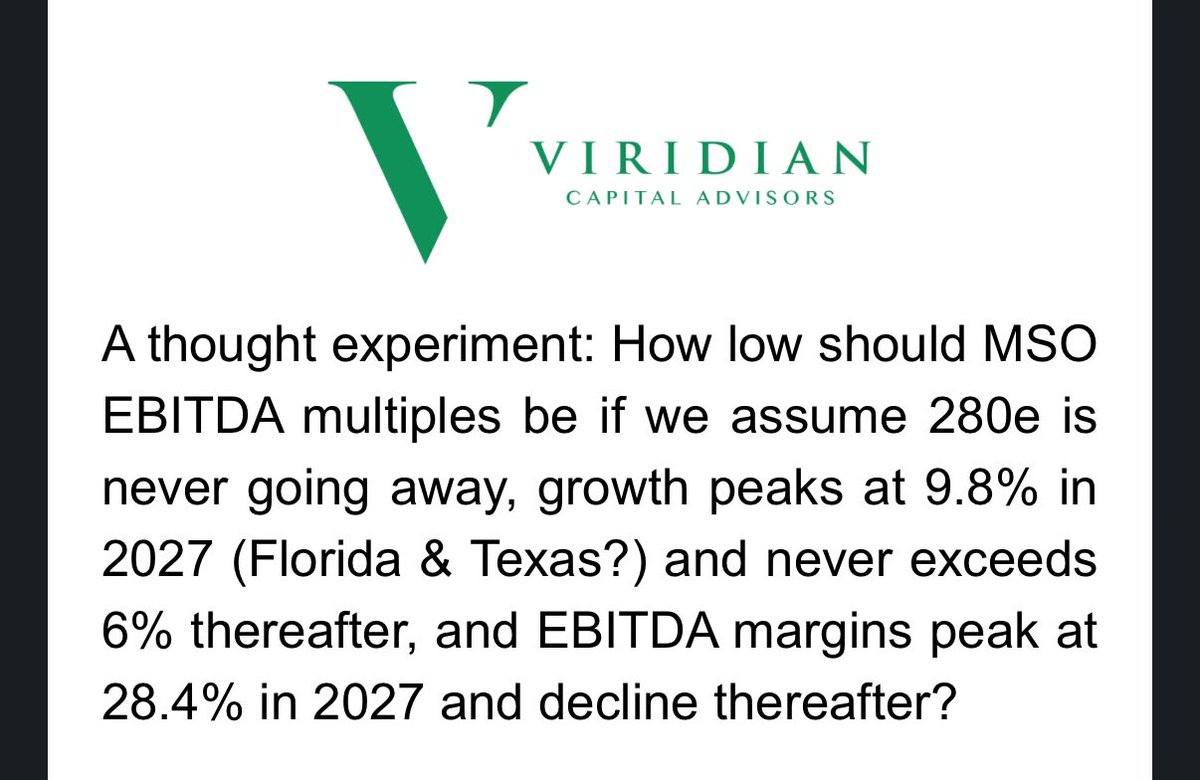
A play in two parts. Under what I’d call moderately stressed numbers, MSOS are still a turn or more over valued.
Jerry Derevyanny tweet mediaJerry Derevyanny tweet media
English
4
0
1
980