Scott Morgan

2.4K posts

Scott Morgan

Scott Morgan

@ScottMorgan

Builder · Storyteller · Fellow Human @SingularRun · AI & creative tools & projects Also Storytelling in novels, games, films +Grok work @ SPACEXAI former @xAI

Texas Katılım Kasım 2023
776 Takip Edilen460 Takipçiler
Scott Morgan retweetledi
Dave Wilson
Dave Wilson@HRDESIGNS·
@elonmusk I made this with Grok Imagine to see if Grok could replicate the cinematography.
English
9
15
133
15.3K
FoundMyFitness Clips
FoundMyFitness Clips@fmfclips·
Hanging from a bar for three minutes a day, total, may be one of the highest-ROI inputs for upper body mobility People who regularly hang tend to report less shoulder pain, less neck pain, and better-functioning backs Spread it across the day in 30–60 second bouts from a doorway pull-up bar or playground rig If a bar isn't accessible, downward dog is the functional equivalent
English
43
193
2.4K
341K
Scott Morgan retweetledi
tetsuo
tetsuo@tetsuoai·
Grok Imagine agent mode (beta) is the best AI image and video editing tool i've ever used. nothing else is close get Grok heavy. you won't regret it
English
270
297
2.5K
16.2M
Scott Morgan
Scott Morgan@ScottMorgan·
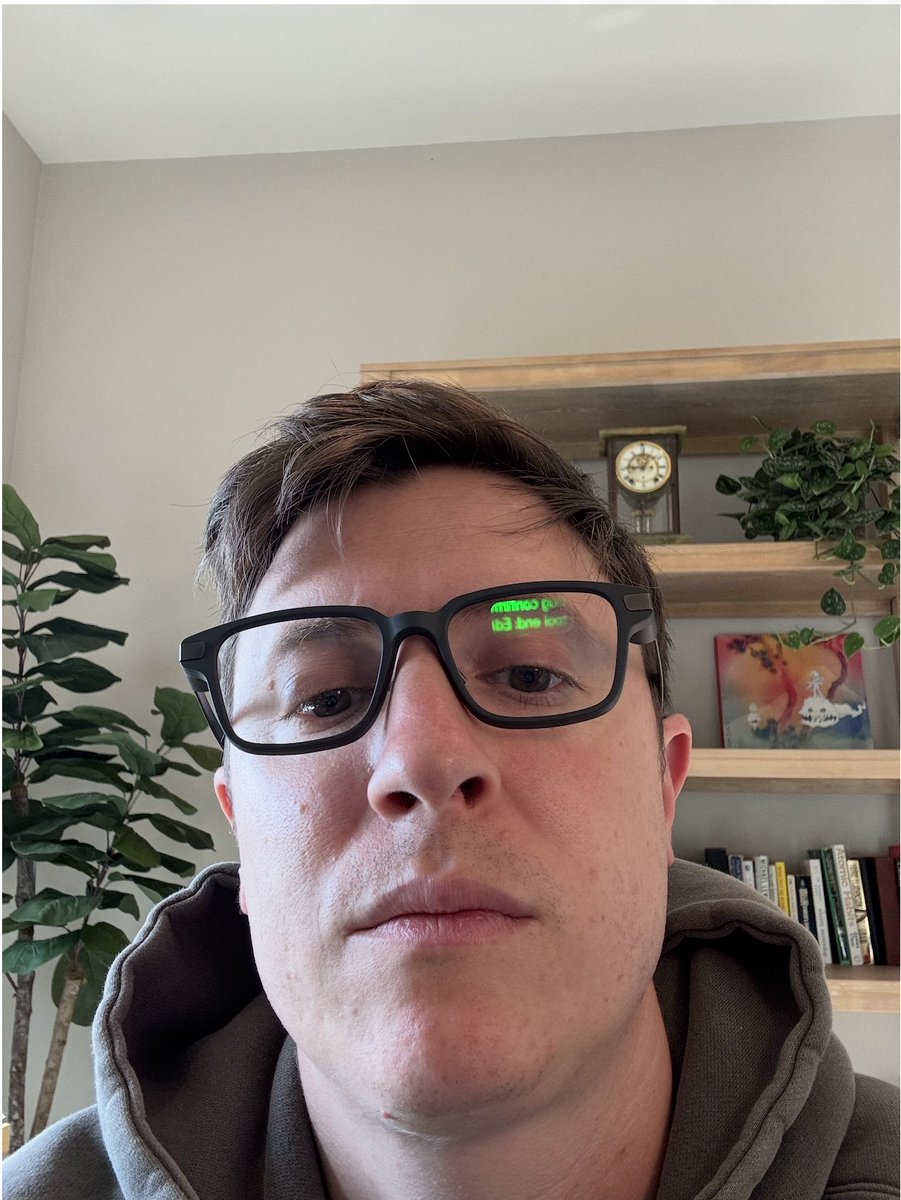
@AlexFinn Thanks for this. I don't think you're joking, apart from the lakes, maybe. But I got a good chuckle at your deadpan delivery. Kudos. I cheer you on! Doing a bit of coding myself, sans the glasses for now.
English
0
0
0
353
Alex Finn
Alex Finn@AlexFinn·
I have Claude Code fully integrated into my smart glasses Everywhere I go I am now vibe coding When you are talking to me in real life, I am not paying attention to you. I am nodding, but I have no idea what you are saying. That's because I am silently shipping. I am watching the green lines of the terminal scroll by at all times. I am silently giving commands to my glasses on what to build next. I am reaching record levels of LOC shipped. There are multiple lakes in Michigan that no longer have water in it because of me I am using up my Claude plan faster than anyone else on earth. Nobody can match my velocity. If you are building a competing product, it is over. Give up. Unless you have Claude Code being projected into your cornea at all hours of the day, you simply have no shot. GGs.
Alex Finn tweet media
English
312
44
1K
124.4K
Scott Morgan retweetledi
Aakash Gupta
Aakash Gupta@aakashgupta·
Your brain has a circuit that doesn't know you live in a city. Its only job is to monitor whether birds are still singing. Right now, in this room, it is on. The circuit predates primates. Mammals have been using ambient soundscape continuity as a predator-detection system for roughly 200 million years. Birds stop singing when something larger moves through their territory. For most of mammalian history, a forest full of song meant no large predator was nearby, and the cessation of sound was the warning. Your nervous system never updated this software. The Max Planck Institute tested the inverse in 2022 with 295 participants. Six minutes of birdsong dropped anxiety with a medium effect size. Six minutes of traffic noise raised depression with the same. The effect worked on subjects who lived in dense urban environments and had no regular contact with nature. The brain still ran the check. Birdsong sits in the 1,000 to 8,000 Hz range. Your brainstem reads continuous patterns in that band as a signal that nothing dangerous is currently moving through the environment. EEG data shows birdsong at 45 to 50 decibels boosts alpha wave activity by 14.1% relative to silence. Alpha is the brainwave signature of relaxed alertness. Push the same birdsong above 60 decibels and the response flips. Stress markers rise 29%. The circuit only trusts the signal at the volume of quiet conversation, which is exactly the volume birds sing at from a typical distance. Three things happen simultaneously when the brain registers ambient safety. The amygdala downregulates. The parasympathetic nervous system takes over from the sympathetic. Heart rate variability rises, cortisol drops. The posterior cingulate cortex, which sits at the center of the rumination circuit, quiets down. King's College London tracked this through a smartphone study with over 1,200 participants and found the mood lift lasted hours after the sound stopped. People diagnosed with depression got the same response as healthy controls. Most of what gets labeled mental fatigue is hypervigilance running in the background. Birdsong tells the circuit it can stand down, and the brain reallocates the freed compute everywhere else. A quiet park feels different from a quiet office because the parks have sentinels.
Aakash Gupta tweet media
English
591
4.3K
28K
3.1M
Scott Morgan retweetledi
Matt Couch
Matt Couch@RealMattCouch·
Amen!
Matt Couch tweet media
English
18
564
4.8K
76.1K
Scott Morgan retweetledi
The Driven Man
The Driven Man@Thedrivenman·
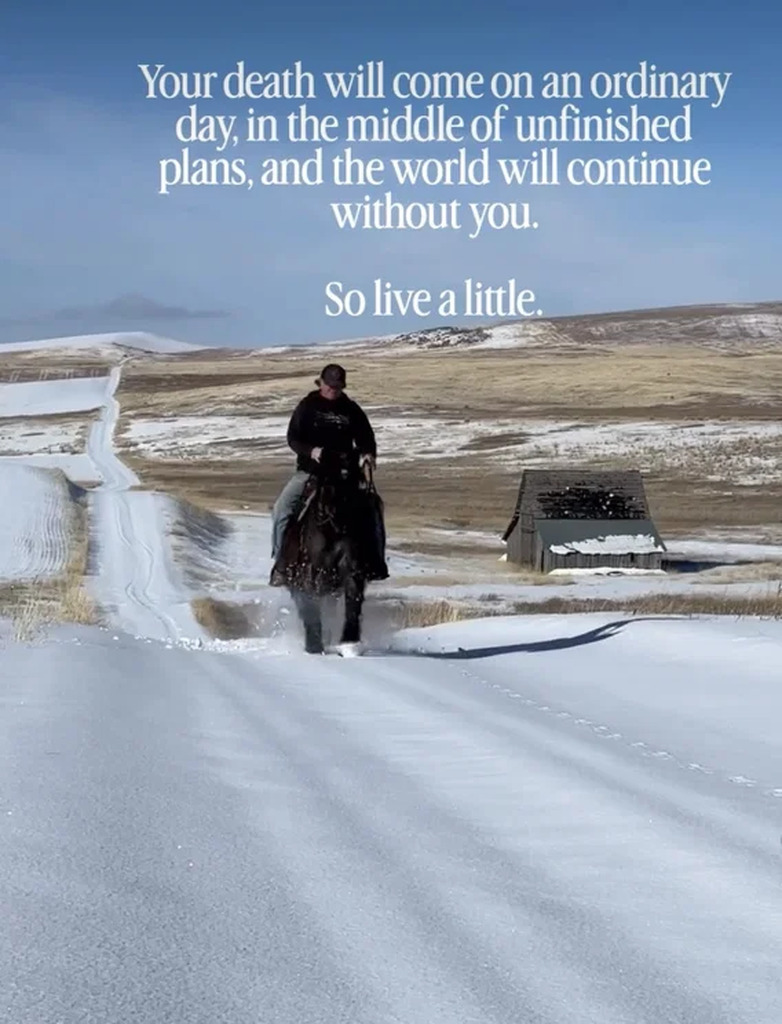
This might be one of the realest lines ever spoken. 💯
English
19
639
3.9K
120.3K
Scott Morgan retweetledi
Grok Imagine
Grok Imagine@imagine·
Grok Imagine now has dramatically improved lip sync and sharper audio quality on all image-to-video generations. Dialogue tracks the mouth. Sound matches the scene. Your videos look and sound the way you imagined them.
English
1.9K
3.2K
30.6K
213.7M
Camus
Camus@newstart_2024·
Dave Asprey just made me want to rip out every light bulb in my house. He revealed that the US basically made traditional incandescent bulbs illegal to sell last year (with fines up to $440 per bulb for companies that break the rule), forcing everyone toward harsh, bright white LEDs and fluorescent lights that quietly mess with your brain, cause brain fog, and accelerate aging. Studio lighting in particular is brutal. Asprey wears special glasses on set that block the toxic part of blue light, and he swears the difference in how his brain feels at the end of the day is massive. His simple fix? Ditch the harsh blue light. Use warm 2700K bulbs, add dimmer switches, and get as close as possible to the old incandescent glow your body actually likes. He stocked up on thousands of incandescent bulbs right before they became illegal to sell. (Note: While selling incandescent bulbs is now banned in the US and similar phase-outs have happened in the EU, Canada, and other countries, owning and using the ones you already have is still perfectly legal.) Have you switched to warmer lighting at home yet, or are you still living under harsh cool-white LEDs? Noticed any difference in energy or mental clarity?
English
157
460
2.2K
443.3K
Scott Morgan retweetledi
Interstellar
Interstellar@InterstellarUAP·
Amy Eskridge's Anti-Gravity Presentation, one of her last before she tragically passed away. “Even if you do it in the public, it still don't mean that the inventor won't disappear.” In one of her final presentations on antigravity, the brilliant scientist delivered a compelling historical survey of gravity modification research from the Biefeld-Brown effect and early experiments to modern superconducting approaches and propulsion breakthroughs. With inspiring confidence she noted, “I can learn any new field in just 3 months,” while observing how “Promising results always seem to disappear.” Amy’s dedication to advancing these ideas openly through the Institute for Exotic Science was truly visionary. Recently, Congressman Eric Burlison referenced allegations by ex-UK intelligence Operative Franc Milburn that Amy was targeted by a directed energy weapon and could have been murdered by an aerospace contractor. Her passion for unlocking these frontiers leaves an inspiring legacy.
English
43
548
2.1K
85.3K
Scott Morgan
Scott Morgan@ScottMorgan·
Some much greatness in this. Thanks for sharing, Orson. (Mr. Card, if you prefer, respectfully)
Orson Scott Card@orsonscottcard

You don't need advice from editors on rejected manuscripts.  My short story “Ender's Game” was rejected by Ben Bova at Analog back when that was the top market for a sci-fi story. Ben gave me feedback. He thought the title should be “Professional Soldier” and he said to “cut it in half.” But I knew he was wrong on both points and submitted it to Jim Baen at Galaxy. He sat on it for a year, and responded to my query with a rejection. There was some kind of explanation, but I don't remember what it was. I concluded at the time that Baen's comments showed that he had barely glanced at the story. So … I got feedback both times, but it was not helpful. I looked at Ben's rejection again. What was it about the story that made him think it should, let alone COULD, be cut in half? Apparently it FELT long. What made it feel long? Now, post-Harry Potter, I would call it the quidditch problem. I had too many battles in which the details became tedious. So I cut two battles entirely, merely reporting the outcomes, and shortened another. In retyping the whole manuscript (pre-word-processor, that was the only way to get a clean manuscript), I added new point-of-view material to the point that I had cut only one page in length. So much for “in half.” But I already knew that my manuscripts did not need cutting — if it wasn't needed, it wouldn't be there in the first place. Even the battles were still there, but instead of showing them, I merely told what happened (so much for the usually asinine advice “show don't tell”), which kept the pace going. Those changes made, I sent it to Ben again. I did not remind him of what he had advised me to do. I merely told him I liked my title, and said, “I have addressed your other concerns,” which was true. I figured he wouldn't remember what his exact words had been. My answer was a check. That revised story was the basis for my winning the Campbell Award for best new writer. Did Ben's feedback help? Yes — but his specific advice was not right, and I knew it. On my next two submissions, Ben hated my endings, and I revised as suggested. The fourth submission he rejected outright, and the fifth, and I thought, Am I a one-story writer? I went back to Ender's Game and tried to analyze why it worked. Then, deliberately imitating myself, I wrote “Mikal's Songbird.” Ben bought it, and it received favorable mentions. I was afraid then that I had consigned myself to writing stories about children in jeopardy. But in fact I was writing character stories rather than idea stories. And THAT was how I built a career, not by self-imitation, and not by following editorial suggestions. I did get wise counsel from David Hartwell on my novel Wyrms, but that was on a book that was already under contract, and it was story feedback, not style. I got wise counsel from Beth Meacham, too, on various books over the years — but again, only on books that were under contract. I also received appallingly stupid advice from the editor of my novel Saints, which temporarily destroyed the book's marketability; after that, I was allowed to go back to my original structure and save the book — now it's one of my best. Editors don't know more than you about your story. They especially don't know why they decide to accept or reject stories. YOU have to know what your story needs to be, and take only advice that you believe in. Your best counselor on a story nobody bought is TIME. Let some time pass and then reread the story. Don't even think about why it Didn't Work. Instead, think about what DOES work, and then write it again, a complete rewrite, keeping nothing from the previous draft. Find the right protagonist and begin at the beginning — the point where the protagonist first gets involved with the events of the story. Be inventive — the failed first draft no longer exists, so you're not bound by any of your earlier decisions. THAT is how you resurrect a good idea you did not succeed with on your first try.

English
0
0
0
26
Scott Morgan
Scott Morgan@ScottMorgan·
@rubengarciajr Been using it all morning to finish an app I've been building. Working great!
English
0
0
1
8
Ruben Garcia Jr
Ruben Garcia Jr@rubengarciajr·
Claude Opus 4.7 is powerful
GIF
English
2
0
3
100