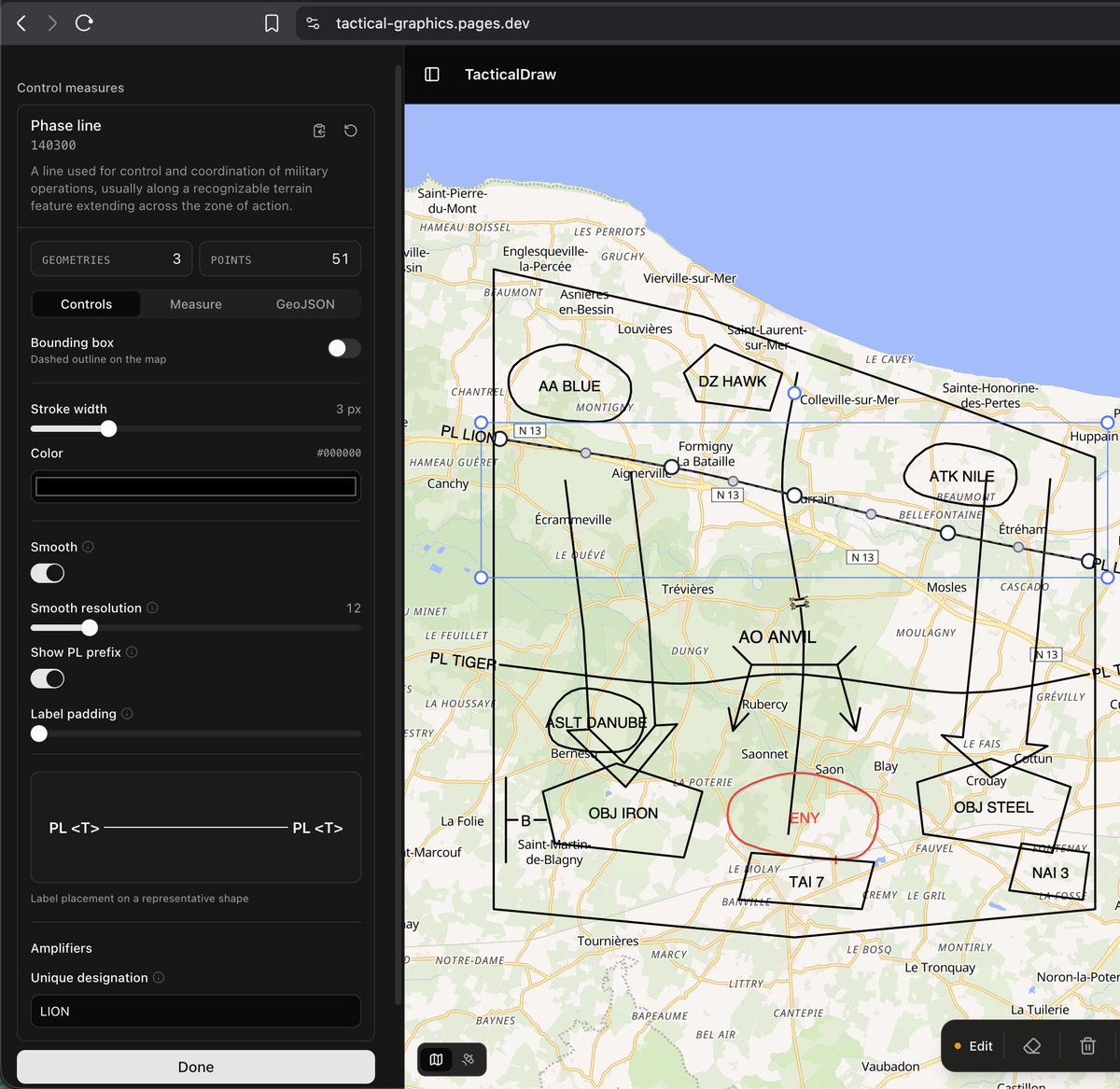
@orbatmapper The interface is really nice and snappy. Very intuitive. I personally would prefer the unit name and size near the top of the parameters, since that’s what I would change very often.
English
Sean Lambert
206 posts
@SeanBLambert
https://t.co/J2kw1Fgiil




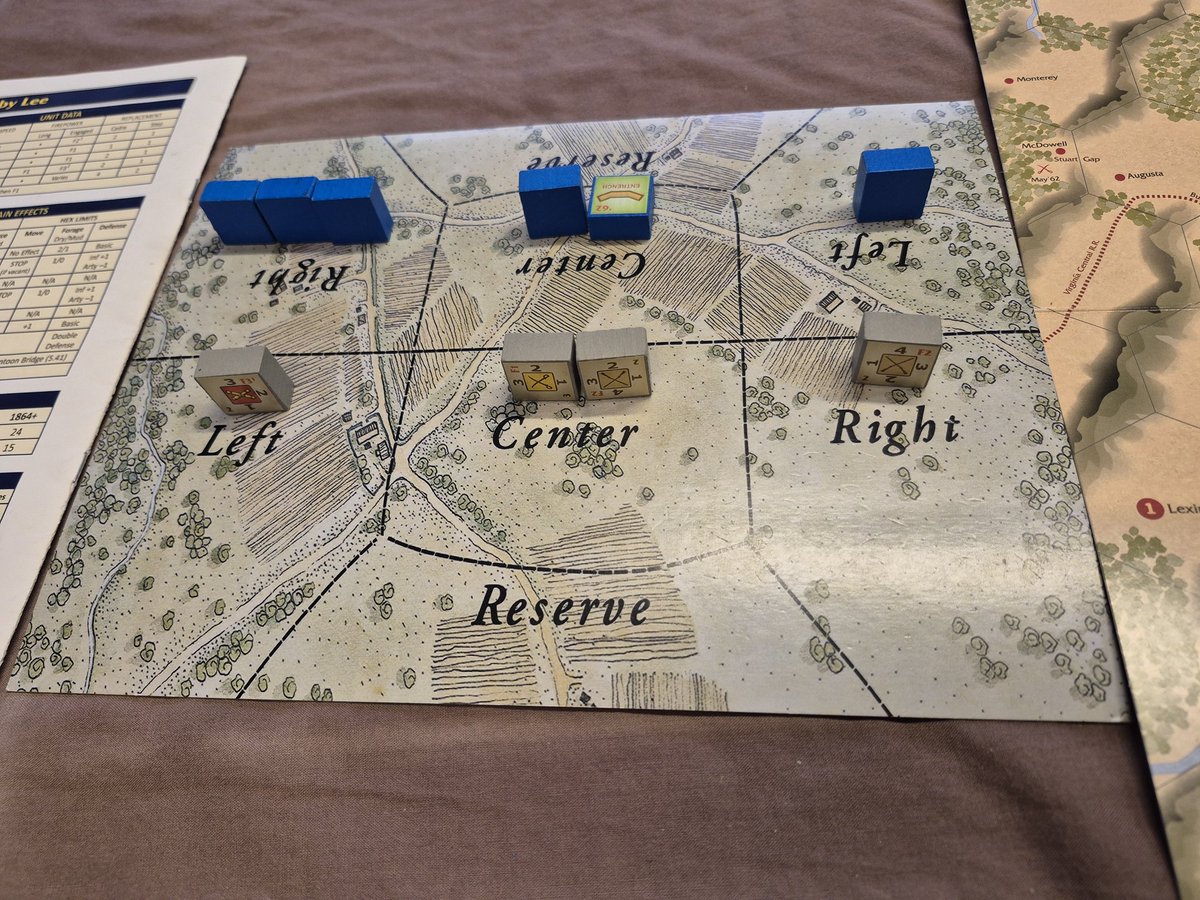









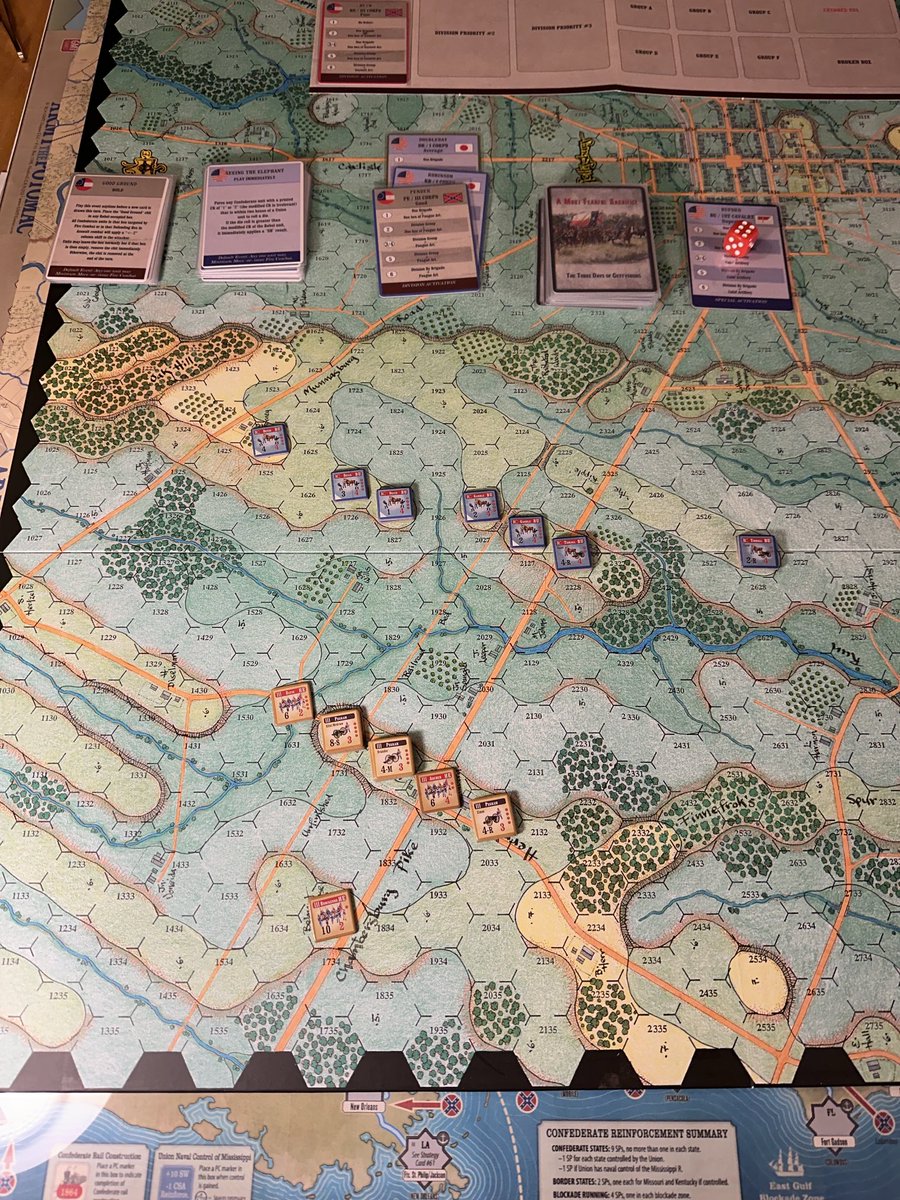
I've often wondered why Combat Results Tables (CRT's) are so common in wargames. They've been around for a long time and are still the standard method used for resolving battles in hex-and-counter games. The one I've posted below is from Normandy '44 - a good example of the system. Here's how they work: You would usually have a wide range of unit types in the game, with combat values ranging from 1 to 10. With a CRT, you would add up the total value of all units on both sides, and figure out the ratio between them. 3 to 1, 2 to 1, etc. Then you would look at the column for the ratio, roll a dice and see the result. Something like "A1" means a hit on the attacker, "D1" is a hit on the defender. "DR" means the defender retreats, "EX" means both sides take a hit. Bonuses like air, artillery or elite troops might give you a "column shift" where you use a column one space to the left or right. In other words, having something like artillery support can turn a battle that is 1:1 odds into 2:1 odds in your favour. Now, there are some issues with this system: -If I have a total strength of 199 and you have a total strength of 100, it is still 1:1 odds. A huge amount of granularity is lost and there are extreme cases on the margins. It is common for a very strong unit to functionally add nothing to your odds, or for a single weak unit to tip you over to the next column. -It forces the players to add up two numbers, divide one by the other and understand how to round up or down in favour of the defender (depends on the particular table). This is easy if you've been doing it for a while, but for players who are entirely new to wargaming it can be a bit jarring to do calculations like this multiple times every turn. BUT there are some advantages: -A lot of the work is done "under the hood". The combat values of units and the CRT itself are often a result of the designer doing a lot of mathematical and historical research. It doesn't require the player to go through a checklist of many different factors or roll a series of dice with multiple modifiers. It condenses everything down to an odds calculation and a single dice roll. -The losses for both sides are restricted to what's on the table, so you don't get crazy outcomes like a single platoon wiping out a battalion due to someone rolling too many 1's. -Column shifts are a nice and simple way to represent the effectiveness of combined arms. It always feels good to get a column shift. To the designers out there - what makes you choose to use a CRT or not?