
Sabitlenmiş Tweet
TIPS🐕💹🧲
7.9K posts


TIPS🐕💹🧲
@Secretary0fTips
Invest. Do your own research. Not a financial advisor.
Katılım Temmuz 2020
234 Takip Edilen499 Takipçiler



TIPS🐕💹🧲 retweetledi

CHILL GUY®
We have a fully REGISTERED IP/Trademark with the United States Patent and Trademark Office. Very Chill right! Lots of projects will be in a Pending state, how many do you think will actually end up fully REGISTERED. We are so undervalued.
Have you ever seen an ® symbol on CoinMarketCap before? Well, you have now:
coinmarketcap.com/currencies/jus…
I think we are the first!
Please find out more on our website: chillguyoneth.com

English


QME

Why is everyone so mad at Chamath? All he did was lose billions in retail investors’ money by promoting one-pager SPACs. It’s not like he then told them to enjoy their capital losses or anything. Give the man a break.
English


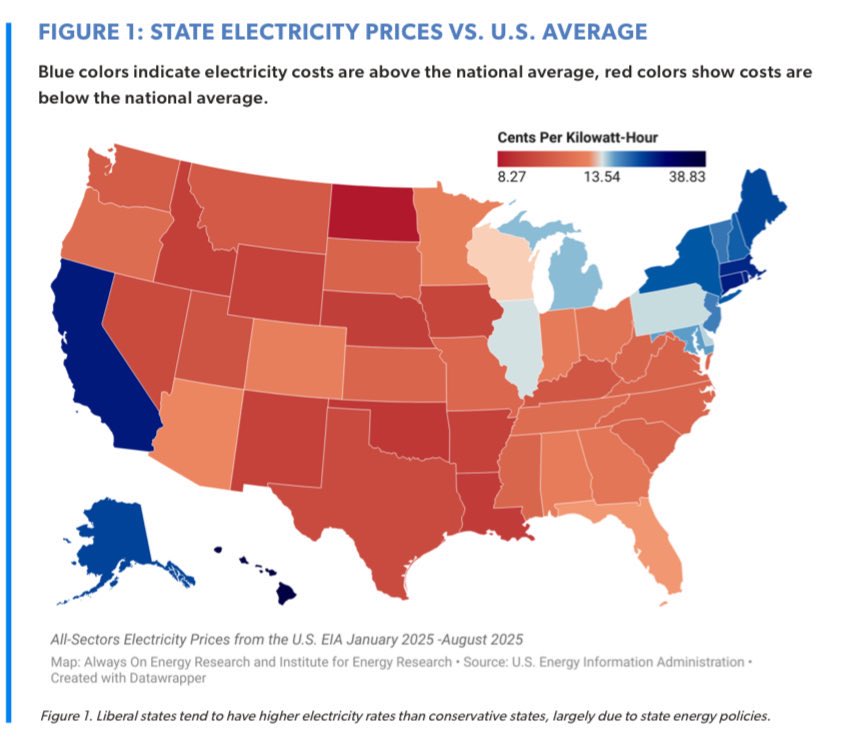
The blue states in the image below have electricity prices that are as much as 4x the electricity rates of the red states.
This is not due to any technological inferiority in those blue states but specific policy decisions that have driven competition out and prices up.
English


@sagrawal It's possible that we can get inclusion guarantees faster than post-states; we have explored such designs and know a few!
Though one challenge is that it seems like a lot of users specifically want the post-state.
English

Vitalik is right on the constraints but I think Ethereum can still get >30× lower latency (<500 ms) without sacrificing decentralisation.
one major, under-explored tradeoff is relaxing total ordering of transactions, strong consistency vs eventual consistency.
BFT consensus protocols have well-known lower bounds on network round trips. once we fix decentralization, this creates a hard ceiling on finality latency. one way to bypass this ceiling is to drop the requirement for total ordering of txs at the base layer.
there’s already solid work in the literature on BFT payment protocols with only local ordering, achieving one round-trip latency (optimal) - essentially bringing us to web2-class responsiveness:
arxiv.org/abs/2003.11506
arxiv.org/abs/1909.10926
pod.network/paper
crucially, L2s don’t actually rely on Ethereum’s ordering guarantees. they use Ethereum for DA + finality (non-equivocation, censorship resistance), not for sequencing. that means today they’re paying the full cost and latency of global ordering without using it.
i agree with Vitalik: Ethereum shouldn’t be the world’s game server. but base-layer finality time matters enormously, for L2 finality, censorship resistance, and interop latency.
sometimes the next 10× doesn’t come from better constructions - it comes from questioning the most fundamental assumptions.
vitalik.eth@VitalikButerin
Increasing bandwidth is safer than reducing latency With PeerDAS and ZKPs, we know how to scale, and potentially we can scale thousands of times compared to the status quo. The numbers become far more favorable than before (eg. see analysis here, pre and post-sharding vitalik.eth.limo/general/2021/0… ). There is no law of physics that prevents combining extreme scale with decentralization. Reducing latency is not like this. We are fundamentally constrained by speed of light, and on top of that we are also constrained by: * Need to support nodes (especially attesters) in rural environments, worldwide, and in home or commercial environments outside of data centers. * Need to support censorship-resistance and anonymity for nodes (especially proposers and attesters). * The fact that running a node in a non-super-concentrated location must be not only possible, but also economically viable. If staking outside NYC drops your revenues by 10%, over time more and more people will stake in NYC. Ethereum itself must pass the walkaway test, and so we cannot build a blockchain that depends on constant social re-juggling to ensure decentralization. Economics cannot handle the entire load, but it must handle most. Now, we can decrease latency quite a bit from the present-day situation without making tradeoffs. In particular: * P2P improvements (esp erasure coding) can decrease message propagation times without requiring individual nodes to have lower bandwidth * An available chain with a smaller node count per slot (eg. 512 instead of 30,000) can remove the need for an aggregation step, allowing the entire hot path to happen in one subnet This plausibly buys us 3-6x. Hence, I think moderate latency decreases, to a 2-4s level, are very much in the realm of possibility. But Ethereum is NOT the world video game server, it is the world heartbeat. If you need to build applications that are faster than the heartbeat, they will need to have offchain components. This is a big part of why L2s will continue to have a role even in a greatly scaled Ethereum (there are other reasons too, around VM customization, and around applications that need _even more scale_). Ultimately, AI will necessitate applications that go faster than the heartbeat no matter what we do. If an AI can think 1000x faster than humans, then to the AI, the "subjective speed of light" is only 300 km/s. Hence, it can talk near-instantly within the scope of a city, but not further. As a result, there will inevitably be AI-focused applications that will need "city chains", potentially even chains localized to a single building. These will have to be L2s. And on the flipside, it would be too much of a cost to make it viable to run a staking node on Mars. Even Bitcoin does not strive for this. Ultimately, Ethereum belongs to Terra, and its L2s will serve both hyper-localized needs in its cities, and hyper-scaled needs planet-wide, and users on other worlds. Milady.
English

TIPS🐕💹🧲 retweetledi


TIPS🐕💹🧲 retweetledi

In 2025, Ethereum solidified itself as the secure foundation for our growing digital civilization. From industry-leading adoption to new technology that reinforces protocol resilience, here are 12 themes that defined the past year:
1/ DeFi reinforced Ethereum's role as the financial base layer of the internet.
Transaction costs on Layer 1 (L1) reached 5-year lows and dropped below $0.01 on Layer 2 networks (L2s), making payments, remittances, and savings products an everyday reality. Maturing paymaster infrastructure allowed major apps to abstract (or remove) transaction fees entirely.
These developments paved the way for global adoption:
→ Ethereum’s $99B+ DeFi TVL is over 9x the next-largest L1 ecosystem (per @DefiLlama), the strongest platform for global liquidity.
→ A new wave of neobanks were accelerated by growing regulatory clarity, launching cards, reward programs, and reaching millions in daily spend volume.
→ @RobinhoodApp_EU, @Gemini, and @krakenfx all rolled out stock tokens on Ethereum rails this year (L1 + L2s), bringing extended-hours access to U.S. equities. Robinhood also announced it’s building its own L2 network on @arbitrum's Orbit tech stack.
→ Over $18.8 trillion in stablecoin volume settled on Ethereum in 2025 (per @RWA_xyz), solidifying the role of stablecoins as global digital dollars.
Smart wallets moved into production after the Pectra upgrade in May, improving security and making money programmable all the way to the account-based level. Prediction markets became a mainstream source of truth for macro events, moving $20B volume on L1 + L2s this year (per @tokenterminal).
From per-API-call micropayments to stablecoins improving remittances around the globe, Ethereum is the base layer for a new generation of digital financial infrastructure.
2/ Institutional adoption of Ethereum accelerated, driven by projects with clear utility.
The rise of ETH digital asset treasuries (DATs) brought an explosion of public companies actively managing balance sheets onchain, with $35B+ of ETH held by ETFs and strategic reserves (per @SERdotxyz). Leading institutions began using smart contracts to program their capital, diversifying yield strategies via DeFi allocation and distributing over $12B of real-world assets on Ethereum (per @RWA_xyz). The world’s largest banks, asset issuers, and payment processors are now using Ethereum L2s for verifiable settlement, composable scale, and programmable, 24/7 products.
3/ Ethereum’s rollup-centric roadmap was validated in 2025 by a rapidly-scaling L2 landscape and significant technical unlocks.
→ The ecosystem expanded as @Celo transitioned to become an Ethereum L2, while others like @Ronin_Network & @nillion announced plans to begin the process.
→ Transactions per second on all Ethereum rollups reached a combined 5600 TPS average for the first time.
→ December’s Fusaka upgrade introduced PeerDAS, driving L2 costs down by ramping up to 8x blob capacity.
→ L1 gas limit raised to 60M, expanding L1 settlement capacity by ~33% and setting the stage for further L2 expansion in 2026.
L2s have become leading execution layers for high-frequency economic activity, while upgrades to enhance their throughput have preserved L1 security and decentralization.
4/ Interoperability between Ethereum L1 and L2s also advanced in 2025, moving closer to a seamless, unified Ethereum.
Standards like ERC-7683 standardized order and settlement interfaces, enabling seamless cross-chain execution. The Open Intents Framework (OIF), announced by 30+ teams in February, delivered more secure, cheaper, and faster settlement of user interactions across chains. The Ethereum Interop Layer (EIL) launched on testnet in November, paving the way for unified rollups via trustless single-signature cross-chain transactions.
Seamless, secure, and permissionless experiences across the Ethereum ecosystem empowered individuals and institutions alike.
5/ Privacy became a core focus for the Ethereum ecosystem, driven by project growth and L2 development.
Privacy pools continued to build traction, with privacy protocols on Ethereum reaching new all-time highs for value locked, growing by over 60% in 2025 (per @DefiLlama). The privacy-preserving rollup landscape matured, bringing private execution to Ethereum-based settlement. At the end of 2025, there are 750+ projects in the web3 privacy ecosystem as mapped by @web3privacy, with initiatives impacting DeFi, wallets, apps, storage, and more.
From fully onchain identity solutions to a global ecosystem of privacy advocates, Ethereum continues to advance sovereignty and trustlessness across the tech stack.
6/ 2025 was the year AI agents became economic actors.
Agents don't have bank accounts or passports: they have Ethereum wallets and cryptographic proofs.
The x402 internet-native payment standard + attestation flows on Ethereum now allow agent-to-agent commerce for services, compute, and data, without human intervention. New smart account permissions enforced spending limits and permissions for agents at the wallet level, adding guardrails for trustless agents to manage real capital. And ERC-8004, which is now being finalized and deployed in production, emerged as a standard for trustless agent discovery, reputation, and validation, with 7,500+ agents already registered on testnets (per 8004scan.io).
Ethereum is becoming the settlement layer powering the machine economy.
7/ Ethereum became a critical platform for global coordination, powered by sovereign digital identity.
Onchain finance fueled real-world action, from crypto donations supporting the Myanmar/Thailand earthquake relief to the World Food Program US launching support for ETH donations. Pop-up cities like ETH Enugu in Nigeria were funded, governed, and operated using Ethereum infrastructure, demonstrating real-world, decentralized coordination.
The Kingdom of Bhutan migrated its National Digital Identity system to Ethereum, anchoring 200K+ citizen IDs on a public blockchain for enhanced security and self-sovereignty. Proof-of-personhood tools matured, pushing forward the feasibility of sybil-resistant voting and funding at scale.
8/ Consumer apps, onchain social, and gaming on Ethereum attracted millions of users in 2025.
Decentralized applications on L1 reached a total of over 244M unique active wallets this year (per @DappRadar). Ethereum L1 led in NFT volume and royalties across 2025 (per nftpulse.org), while millions of unique collections launched across Ethereum and L2 networks. "White Rabbit," the anime crowdfunded via Ethereum-based NFTs, won the 2025 Emmy for Outstanding Innovation in Emerging Media Programming—a first for community-driven Hollywood production.
Ethereum provided the coordination layer for hundreds of thousands of participants across decentralized organizations (DAOs) spanning stablecoins, lending, staking, decentralized exchanges, art, infrastructure, social impact, and more. Increasingly sophisticated governance tooling and tokenomics structures helped DAOs manage billions in treasury assets and evolve ownership, while growing adoption of new DAO-friendly regulatory structures helped them scale impact.
Ethereum continues weaving into everyday culture, showing up in mainstream moments and enabling coordination across creators, communities, and builders.
9/ zkVMs saw significant advancements in 2025, changing how the network can continue to expand throughput and strengthen decentralization.
A boom in ZK-coprocessors allowed apps to offload complex compute offchain. The @eth_proofs community achieved live, real-time ZK proving of Ethereum blocks, demonstrating the potential for full ZK light clients to run on low-powered devices like smartphones.
Across the ecosystem, teams are advancing research into how verifiable, real-time proving can supercharge scaling and solidify Ethereum as global trust infrastructure.
10/ Ethereum shipped two major upgrades in 7 months, boosting transaction throughput, creating higher data availability for L2s, and ensuring resilient growth.
The Pectra and Fusaka upgrades made wallets smarter and more accessible for retail and institutional users, expanding account abstraction and making mobile-native app experiences possible without complex middleware. As we move into 2026, Fusaka’s improvements set the stage for Ethereum’s consumer apps to become phone-native, human-friendly, and ready for mass adoption.
Ethereum can improve at a rapid pace while preserving decentralization and resilience.
11/ 2025 showcased Ethereum’s vibrant global ecosystem.
@ETHGlobal hosted 7+ hackathons and 140+ events, from New Delhi to New York, Prague to Taipei. Hundreds of community-led Ethereum events and hackathons like @EthCC, @EthereumDenver, @ETHIndiaco, @EthSafari, @ethlatam, @Ethereum_JP, and many more happened across the world.
14k+ people from 130+ countries attended @EFDevcon in Buenos Aires, collaborating at over 500 community-led events and the first Ethereum World’s Fair. Beginning in April, Destino Devconnect supported over 100 events across 14 LATAM countries. @EFetheverywhere launched permanent Ethereum community hubs in Lagos, London, Berlin, and Dubai, creating space for coworking, meetups, workshops, and more.
Ethereum is more than a global network: it’s a global ecosystem of people from across backgrounds, disciplines, and communities.
12/ Ethereum celebrated 10 years live in July.
The anniversary prompted celebrations across the globe and ushered in a renewed focus on growth and resilience.
After 10 years, Ethereum:
→ Has over 88M total smart contracts deployed
→ Saw daily transactions onchain reach a new all-time high of 1.74M
→ Has the largest developer community of any blockchain, with 32K active developers fueling innovation in the ecosystem, and over 16K new developers welcomed between January and September alone
—
With 10 years of uninterrupted liveness, Ethereum represents trust that is earned over time. Ethereum is infrastructure that has persisted through market cycles and global stress to set the standard for resilience.
Ethereum is no longer just emerging technology. It is becoming the scaffolding of our digital civilization.
Here’s to welcoming in a new year for the Ethereum ecosystem.
English
TIPS🐕💹🧲 retweetledi

TIPS🐕💹🧲 retweetledi

TIPS🐕💹🧲 retweetledi