
Seth DeGroot
7.1K posts

Seth DeGroot
@SethDeGroot
Midwest Catholic. Husband to @MamaDeGroot. 4x father. Recovering founder. Partner @Gravityfund. NFA DYOR.


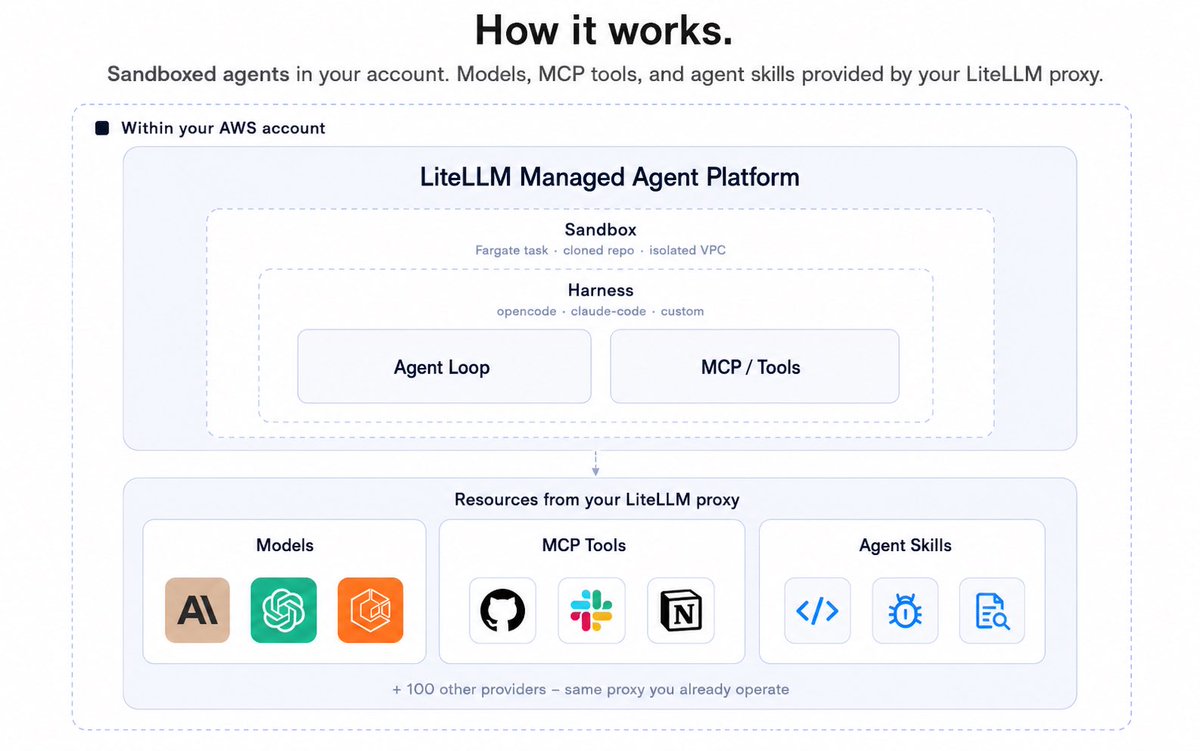
Earlier today the @LiteLLM team was made aware of a supply chain attack impacting PyPI packages litellm==1.82.7 and litellm==1.82.8. The packages have been removed from PyPI. We confirmed that the compromise came from a Trivy dependency in our CI/CD docs.litellm.ai/blog/security-…

🚨 Major Mid-March Blizzard! ❄️💨 Widespread impacts from the High Plains to Great Lakes through Mon. 1-2+ft snow, Rates 1-3"/hr, Winds 30-50 mph; Whiteouts likely. Travel will be dangerous/impossible. Power outages possible. Stay safe! Updates at weather.gov

NIST Launches AI Agent Standards Initiative: Paving the Way for Secure and Interoperable AI Agents Very proud to have been advisor! Today the National Institute of Standards and Technology (NIST) has unveiled the AI Agent Standards Initiative (CAISI). This collaborative effort aims to establish a trusted foundation for AI agents autonomous systems capable of performing actions on behalf of users. By promoting industry-led standards, open protocols, and cutting-edge research, CAISI seeks to ensure that these advanced AI technologies are secure, interoperable, and widely adopted, while bolstering U.S. leadership in the global AI landscape. The Vision Behind CAISI AI agents represent the next frontier in technology, evolving from passive tools like chatbots to proactive entities that can manage tasks, interact with other systems, and make decisions independently. However, this evolution brings challenges, including security risks, interoperability issues, and the need for robust identity management. NIST’s initiative addresses these head-on, fostering an ecosystem where AI agents can operate seamlessly across digital platforms while prioritizing user trust and safety. The initiative is built on three strategic pillars: 1. Facilitating Industry-Led Standards: NIST will host technical convenings, perform gap analyses, and develop voluntary guidelines to guide standardization efforts. In partnership with the interagency, including the National Science Foundation (NSF), NIST will enhance stakeholder engagement and maintain U.S. influence in international standards bodies. 2. Fostering Community-Led Protocols: By engaging with the broader AI ecosystem, NIST aims to identify and eliminate barriers to interoperable agent protocols. The NSF will support open-source development through its Pathways to Enable Open Source Ecosystems program, encouraging collaborative innovation. 3. Investing in Research: NIST is committing to foundational research on agent authentication and identity infrastructure to enable secure interactions between humans, agents, and multi-agent systems. This includes developing advanced security evaluations to guide protocol creation and help consumers make informed comparisons. Ongoing activities; Request for Information (RFI) on AI Agent Security to gather ecosystem insights on threats, mitigations, and metrics; a Draft Concept Paper on Accelerating the Adoption of Software and AI Agent Identity and Authorization, focusing on enterprise use cases; and upcoming Listening Sessions to identify barriers to AI adoption in key sectors like healthcare, finance, and education. The initiative has already drawn input from leading experts in the field. I was one of the outside advisors as an AI pioneer and founder of The Zero-Human Company: a visionary framework for fully autonomous enterprises. Drawing on my decades of experience in AI systems, I provided insights into the practical challenges and opportunities of agentic AI, emphasizing the need for standards that balance innovation with ethical safeguards. I view CAISI as a promising foundation for the agentic era. It’s a good start and it’s crucial to have early guidance on these systems to prevent fragmentation and ensure they evolve responsibly. Standards like these will accelerate adoption while mitigating risks, allowing AI agents to truly transform industries without compromising security or interoperability. NIST is actively inviting participation from the public, industry, and academia to refine the initiative.The deadline: March 9, 2026. Join Listening Sessions. Register interest in virtual workshops focused on barriers to AI adoption in healthcare, finance, and education. These opportunities underscore NIST’s commitment to a collaborative approach, ensuring that the standards reflect diverse viewpoints and real-world needs. For more details, visit the official NIST page: nist.gov/caisi/ai-agent….


The infamous METR graph is going vertical. Current trends suggested ~8h-9h time horizons but instead we're seeing ~14.5h time horizons! Based on this, I would project ~2-3.5 workweek time horizons by end of year (!!). That could have significant implications for the economy.

I am not an AI expert. But seriously, what’s going on? Top Chinese AI models now have a combined 47% market share. Isn’t this the biggest nightmare for the American AI firms that have spent 10X more than their Chinese counterparts?

Chrome 146 includes an early preview of WebMCP, accessible via a flag, that lets AI agents query and execute services without browsing the web app like a user. Services can be declared through an imperative navigator.modelContext API or declaratively through a form.

I never understood the NFT era, was everyone just under mass psychosis or what?


Still can’t believe that Zuck was so bullish on the metaverse that the company is now called meta

The same people who thought #bitcoin was dead at $6,000 are going to pile in when it hits $20,000 again. Quite the strategy.

Truflation's US headline inflation today holding below 1% since February, according to real price data: US CPI: 0.93% Y/Y US CPI core (excl energy and food): 1.29% Goods inflation: 0.72% Services inflation: 1.05% BLS CPI for December: 2.7% Y/Y (the official government headline inflation) The category breakdown shows that some product groups have now moved into deflation. We aggregate millions of price points from multiple service providers to calculate the daily US consumer price index, which has been shown to precede the official data trends and can be used in prediction models.

THE ULTIMATE CLAWDBOT REPORT Every single important post here on X about @openclaw. Report and analysis by @blevlabs with the X API. docs.google.com/document/d/1Mz… It read 38,000 people in AI community here to learn about Clawdbot and its founder @steipete. This would not be possible if I hadn't built my lists of the entire AI community: x.com/scobleizer/lis… DOZENS of use cases, fun posts, tutorials, and more.