Seth Gordon

471 posts

Seth Gordon banner
Seth Gordon

Seth Gordon

@SethWGordon

Director of Social Studies. Dad/Husband. Coach. Hockey/ Lax Fan

East Northport Katılım Ocak 2015
307 Takip Edilen165 Takipçiler
Goosey
Goosey@Goosey1994·
@Dylan__Potemri @Steven202696 On a declining vancouver team that had a bad locker room with jt miller. EP is fine and needs a fresh start
English
3
0
0
62
Goosey
Goosey@Goosey1994·
Next season if we can somehow get this to happen I think the Bruins are that much better. (Offseason coping) Zacha-E. Petterson-Pasta Hagens-Lindholm-Geekie Khutsy-Minten-Arvidsson Jeannot-Kurl-Kast Lindholm-Mcavoy Zaddy-Andersson Aspirot-Jokiharju Sway DiPietro #NHLbruins
English
88
3
169
82.3K
Seth Gordon
Seth Gordon@SethWGordon·
@HackswithHaggs @J_Swish24 No problem starting in Providence but he doesn’t need to pay his dues. It’s more about NHL readiness and playing with men. He has to prove that. I assume that’s the logic.
English
0
0
0
62
Joe Haggerty
Joe Haggerty@HackswithHaggs·
@J_Swish24 Sometimes in this life, you've got to pay your dues and earn it. That's always the way it should be in hockey & that's definitely the way it is with the Bruins. If the A was good enough for Bergeron, Pastrnak and McAvoy, it should be good enough for Hagens too. That's baseball.
English
20
0
90
8.4K
Jordan Schmaltz
Jordan Schmaltz@J_Swish24·
Donald Sweeney might as well send Jimmy Hagens to the Cheese Toast. Send his ass to the Maine Mariners. Make him really earn it Donny. You only took him 7th overall. #NHLBruins -People’s
English
20
13
623
48.4K
Seth Gordon
Seth Gordon@SethWGordon·
@_MikeSullivan I’d pass on both. If you told me 1-year for Arvidsson at a reasonable dollar amount I’d be ok with it. Anything more than 2 years for $8 million would be a wasted
English
0
0
0
42
Seth Gordon
Seth Gordon@SethWGordon·
@_TyAnderson Feels like they had their chance to make their case for buying but fell short this week. I’m more excited to see Hagans than Faulk. Bruins fan base wants to see us grow and develop. Just making the playoffs is more a Buffalo, Detroit must. We can continue rebuild.
English
0
0
0
90
Seth Gordon
Seth Gordon@SethWGordon·
@ClankoMedia Goalie is a bit different though. Development isn’t linear.
English
0
0
4
845
CLANKO MEDIA
CLANKO MEDIA@ClankoMedia·
Connor Hellebuyck: Never played Tier 1. Never played in The Brick. Never played Quebec PW. Never made a Development Camp. Did play HS hockey. Did play NAHL. Did play NCAA D1. Did win a Vezina. Did win Olympic gold. And yet we’ve got parents stressing over which 8U team 🤯
English
65
598
6.5K
293.8K
Seth Gordon
Seth Gordon@SethWGordon·
@kelseydennehytv I do think this gets overblown. Great athletes playing or being good at multiple sports isn’t exactly an earth shattering insight. It’s logical. The message many are trying to communicate is that early specialization has limits, pitfalls and superior athletes may overtake you.
English
0
0
0
103
Kelsey Dennehy
Kelsey Dennehy@kelseydennehytv·
A sports specialization study at UCLA found that 88% of NCAA Division I athletes played an average of two to three sports growing up. I spoke with a Sioux Falls athlete and trainer who have seen the direct impacts of the multi-sport experience.
English
33
548
1.9K
286.8K
Seth Gordon
Seth Gordon@SethWGordon·
@RobertSpenser20 @educator4ever36 I certainly can’t speak to all schools. Are you speaking from experience keeping a poor teacher because they coach or is this more acedotal? In the districts I’ve worked and know well for 20 years , this is not a consideration.
English
0
0
0
30
Robert Spenser
Robert Spenser@RobertSpenser20·
@SethWGordon @educator4ever36 I can tell you that is not the case in many systems. Yes there are lots of coaches who are great teachers. But if you can coach and aren’t a good teachers, you can stick around longer because of your coaching ability.
English
1
0
0
116
Seth Gordon
Seth Gordon@SethWGordon·
@RobertSpenser20 @educator4ever36 As someone who has hired teachers for 10 years, not one decision is made because of coaching. Hiring committees focus on hiring teachers of that discipline. I’ve never had a ELA, SS, or business teacher say “well, this guy could coach our wrestling team.”
English
1
0
0
68
Robert Spenser
Robert Spenser@RobertSpenser20·
@educator4ever36 In middle and high, hiring decisions are often made base on coaching. At the very least, we need to end teachers being athletic coaches.
English
2
0
0
7.8K
Seth Gordon
Seth Gordon@SethWGordon·
@TweetsbyCoachP It feels logical as what would the other top reasons be. I’d have to see the data. Also, kids start to have more of a say at this age. Parents enroll in many sports and clubs and kids may lose interest or want more free time. But I’d agree burnout is a real issue.
English
0
0
0
10
William Payne
William Payne@TweetsbyCoachP·
If burnout is one of the leading reasons athletes quit by age 13–14, who is youth sports actually serving?
English
238
19
243
38.1K
Seth Gordon
Seth Gordon@SethWGordon·
@darcyhenry22 @TracyJSmith13 That’s the concern for parents which fuels the youth sports business ecosystem. It doesn’t help that college is becoming so expensive that youth sports becomes a lottery ticket.
English
0
0
1
23
Darcy Henry
Darcy Henry@darcyhenry22·
@TracyJSmith13 If you play multiple sports, you will sit the bench in multiple sports at higher levels.
English
2
0
2
168
Seth Gordon
Seth Gordon@SethWGordon·
@JeffBarnes52 @mschmidt74 Biggest challenge I have with implementing a speed or lifting program would be the issue of top HS players also doing multiple club and travel teams in addition to HS sports. They don’t have the time or energy. Club/travel trumps HS sports.
English
0
0
1
4K
Coach Jeff Barnes
Coach Jeff Barnes@JeffBarnes52·
@mschmidt74 We do these as part of the afternoon practice. We do not do them in the morning because we value the sleep the student athletes are getting. It’s all about managing the load.
English
2
0
2
536
Coach Jeff Barnes
Coach Jeff Barnes@JeffBarnes52·
As an AD, I implemented a strength program where every athlete lifts in season with their current team. I challenged coaches to scientifically prove it was not beneficial. No one could. It eliminated the tug of war over athletes and reinforced what we believe.
English
33
180
1.2K
172.7K
Sam Smith
Sam Smith@SamSmithOnYT·
@BNGProductions According to Peter Baugh, the #NHLBruins have emerged as potential landing spot for Rangers forward Vincent Trocheck. Thoughts? Let us know down below!
Sam Smith tweet media
English
15
5
24
2.8K
🔮
🔮@6Merican·
@SethWGordon @stevemagness “Has one of the highest among developed nations” Uh, no. Our poverty cutoff is much higher than theirs. You’re retarded. We’re richer judging by the aggregate of wealth and income metrics. I know you’re weirdly jealous of that on their behalf
English
1
0
0
24
Steve Magness
Steve Magness@stevemagness·
Norway is once again dominating the winter Olympics. And this is their youth sports program: Participation trophies for all kids. No keeping score until 13. No national travel competitions in youth sports. No posting youth results online. Motto: “Joy of Sport for All.” They let kids be kids. And it works. But…it’s the winter Olympics,right? Recently, they have had tremendous success in summer sports. Karsten Warholm demolished the 400 meter hurdles world record. Kristian Blummenfelt broke the Ironman triathlon record and won Olympic gold. His training partner, Gustav Ivan, won the 2022 Ironman World Championship. Casper Ruud reached world number two in tennis. Viktor Hovland is a top ten golfer in the world. Erling Haaland set the record for the most goals in a season in the Premier League. Beach volleyball champs, a surge of elite runners. By any metric, Norway’s elite athletes are achieving on a global stage. Yet, if we turn to their youth sports, their programs are the opposite of the US. Norway doesn’t allow for official scorekeeping until the age of thirteen. They dissuade early national travel teams in favor of local leagues. You can’t even post the results of youth games online without being fined. And almost sacrilegious in certain American circles, Norway doesn’t allow trophies unless everyone gets one. As Tore Ovrebo, Norway’s director of elite sport, told USA Today writer Dan Wolken, “We think the biggest motivation for the kids to do sports is that they do it with their friends and they have fun while they’re doing it and we want to keep that feeling throughout their whole career.” Their youth sporting model can be summed up with their chosen slogan, “Joy of Sport for All.” But not keeping score, giving out trophies, not being “win at all costs”...that’s anti-American! How can they be competitive? Research backs their approach up. 1. The fire has to come from within If you look at ​research​ on prodigies who eventually become standout adult performers, a deep intrinsic drive is paramount. Researchers found that intrinsically motivated football players were 3.5x more likely to make it to the next level, and athletes in general 2x more likely. The problem is that early success often pulls young people away from this inner drive. Kids start playing soccer (or violin or chess—this isn’t just about sports) because it is exciting and fun. As they improve, they gain accolades and praise from their parents, coaches, and teachers. They start winning trophies or seeing their names in online commentary. Without even realizing it, their intrinsic drive gets replaced by external validation and a need to please and impress others. The quickest way to kill that internal motivation? Hype achievements and be a crazy controlling parent or coach. The best way to create and maintain intrinsic motivation is to let kids dabble, explore, and find something with which their interests and talents align. Then, let them enjoy it without an undue emphasis on success. Praise effort, character, and teamwork, not results. This is easy to talk about but hard to do. Find ways to reward and incentivize the values you want to instill. That means not taking the easy road and talking about who set a new mile best or scored the most points, but instead highlighting who hustled during the fourth quarter, rallied after it seemed like the match was over, or displayed exemplary sportsmanship. 2. Go Broad over Specialization Even if the entire point of youth sports was to create future champions (which it’s not), we’d still adopt something similar to the Norwegian model. An ​analysis​ of over 6,000 athletes explored what separates athletes who reached world class and those who came up short. Those who reached world-class had during their youth: -More multi-sport than specialized practice -Started their primary sport later -Accumulated less overall formal practice -Initially progressed slower than national class peers Those who performed well when young, but didn’t progress: -Started their primary sport earlier -Specialized, engaging in more practice in one sport -Made quicker initial progress Norway doesn’t have 300 plus million people and an NCAA system to funnel talent. They have to develop theirs. And they realize the best way to do that is keep as many people in the system as possible. Why? Because you can’t predict talent development very well! Just go look at the age group record books. It’s easy to fool yourself into thinking early performance equals talent and potential. The kid running a 6-minute mile at 10 looks way better than the one running 6:45. But if the faster one is at track practice 5 days a week and the slower one rolls out of gym class in jeans and runs it off “fitness” from just playing, well I’m betting on the slower one! When we assess performance early on, we’re not measuring talent, we’re looking at training age and opportunity. And we’re crowning winners based on who started grinding first. America gets away with the insane achievement model because we can burn out 9 kids to get 1 survivor. Norway can’t afford to do that. They take the longer, more sustainable model. Rethinking Youth Sports: The whole point of youth sports should be for kids to learn, develop, have fun, and want to come back and play again next season! The best chance of developing a D1 scholarship athlete is essentially to do the exact opposite of what our current youth sports fiasco promotes. Even the poster child for early specialization, Tiger Woods, ​acknowledged​ it’s not a good thing for parents to push their kids too hard: “Don’t force your kids into sports,” he says. “I never was. To this day, my dad has never asked me to go play golf. I ask him. It’s the child’s desire to play that matters, not the parent’s desire to have the child play. Keep it fun.” While youth sports in America aren’t going to adopt the Norwegian model anytime soon, we can rebalance the equation. As I outlined in my book, it’s not getting rid of competitiveness, it’s rebalancing the equation to make sure that crazy mom, dad, or coach don’t extinguish the fire that makes great competitors (and sport fun!). In research on performance orientation and grades in school, a teaching environment that supported and emphasized mastery[PA1] , where students focused on the process of learning and comprehension instead of a comparison to others, was also linked to better grades. But it wasn’t the direct relationship that an outcome orientation had. Instead, in one study on college students, a mastery approach was linked to challenge-seeking, which in turn predicted end-of-the-year grades. In another study, mastery goals predicted higher levels of interest and enjoyment. Mastery works on our approach system without activating avoidance. It frees us up to take on a challenge and pursue our interests without getting bogged down by the pressure or judgment that often comes with an obsession with outcomes. The same findings hold true when looking at sport or the workplace. In a large meta-analysis that analyzed the impact of goal setting in sports, process-orientated goals had a large effect on performance. Outcome goals had little to no effect. These two paths represent a fast versus slow road to success. Both a mastery or outcome focus can lead to better performance, but the latter is akin to taking a shortcut. Obsession over outcomes is the most direct path to improvement, but it comes with some downsides that shift us toward avoidance. The slow path takes a longer, indirect route. It helps improve our performance not by focusing on the results themselves but by supporting the foundation that ultimately leads to better performance. It stokes the fire of enjoyment and interest to sustain our curiosity and work ethic over the long haul. It pushes us toward challenge-seeking so that when we inevitably hit a roadblock, we’ll take it on instead of trying to protect our ego. Both approaches work. One is more sustainable, providing success with less angst. Society has thrown us so far out of balance that we can’t even see the slow route right in front of us. We can either instill a love of sport in our youth, or we can turn sport into a burden where kids are exhausted, stressed, and scared. We’ve seen this go both ways, and the results couldn’t be more different. One leads to happy, healthy, and better young athletes. The other leads to burnout, family tension, mental health challenges, and quitting. As parents, volunteers, coaches, and community members, let’s all do what we can to minimize the latter and champion the former. -Steve
English
211
407
2.6K
743.9K
Seth Gordon
Seth Gordon@SethWGordon·
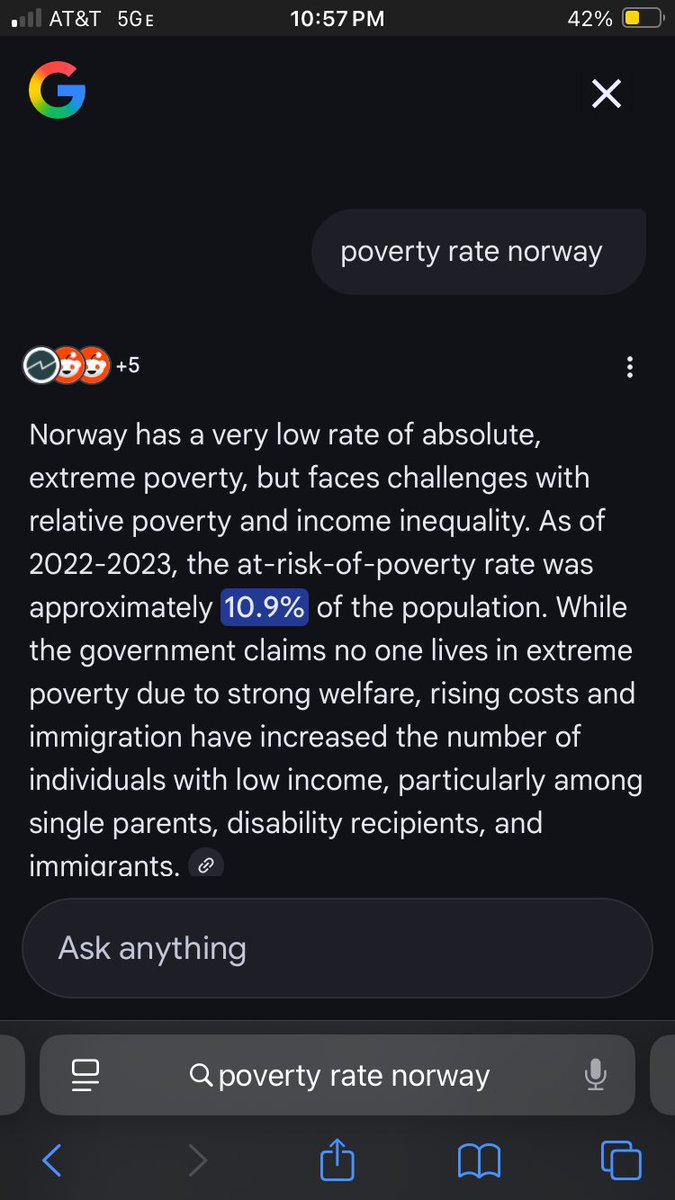
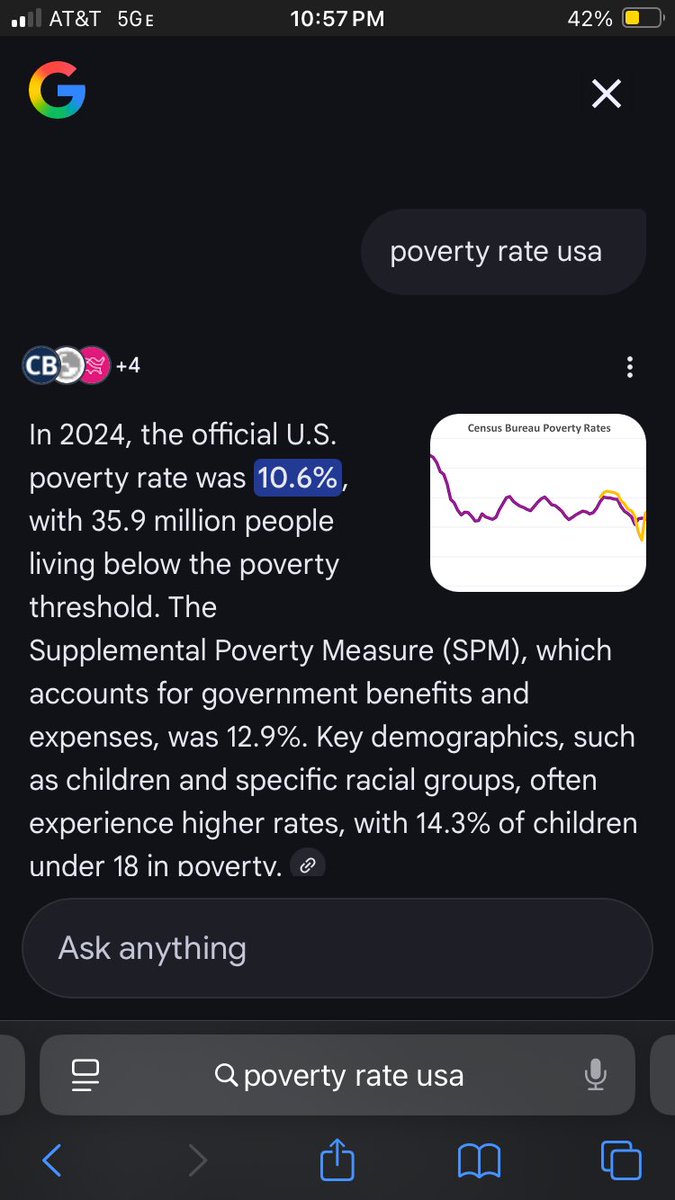
@6Merican @stevemagness Apparently, we are counting at risk of entering poverty as the poverty rate. While your debating various poverty rates the argument I’m criticizing is medal count having anything to do with youth sport philosophy which I don’t see as a compelling argument.
English
0
0
0
11
Seth Gordon
Seth Gordon@SethWGordon·
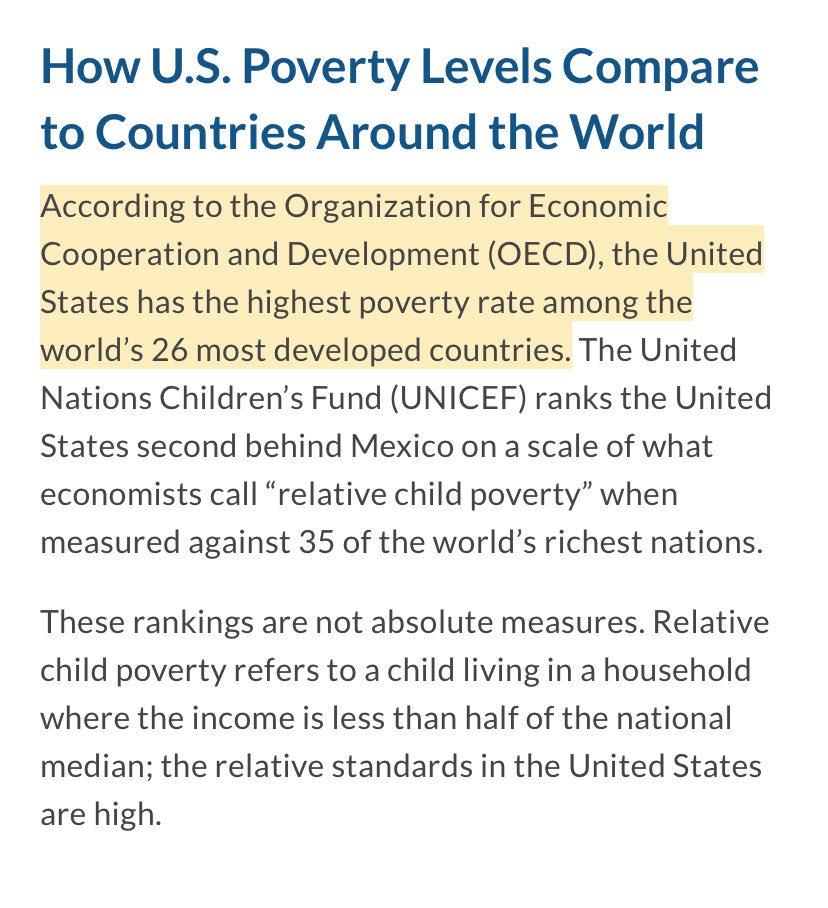
@6Merican @stevemagness Umm. Norway's poverty rate is consistently among the lowest in the world, often cited between 0.2% and 0.7%, while the US has one of the highest among developed nations, near 18%.
English
4
0
0
58
Seth Gordon
Seth Gordon@SethWGordon·
@stevemagness Norway is small, wealthy, and culturally cohesive with low poverty. The U.S. is massive, unequal, and built around a pay-to-play, scholarship-driven system. That’s not apples to apples. Youth sports in America have issues — but medal counts aren’t the evidence.
English
1
0
0
203
Seth Gordon
Seth Gordon@SethWGordon·
@stevemagness I’ve seen a lot of people cite Norway’s Olympic success as proof the U.S. youth sports model is “all wrong.” But the U.S. isn’t getting destroyed — winter medal counts are often close, and the U.S. regularly leads the Summer Games. Olympic results alone don’t prove youth philoso.
English
2
0
3
2.7K
Harrison Glaser
Harrison Glaser@NYJetsTFMedia·
Sunday afternoon #Jets mock draft ✈ Thoughts❓
Harrison Glaser tweet media
English
90
5
253
17.6K
Seth Gordon
Seth Gordon@SethWGordon·
@PaulSpacey @boldpath Epstein discusses this in his book Range. The argument would be whether soccer falling in the category of sports where the time in soccer training is more similar to golf or chess training where you need to start early and focus just on that to be elite.
English
1
0
1
134
Seth Gordon
Seth Gordon@SethWGordon·
@PaulSpacey @boldpath Compared to the general population (40x) that makes sense. It’s more about compared to other elite athletes that started later and whether the advanced soccer specific training made more of a difference than elite athletics in a variety of sports.
English
1
0
0
144
Paul Spacey ⚽️
Paul Spacey ⚽️@PaulSpacey·
“Research and studies say it’s better to play lots of different sports. It doesn’t matter if you’re not advanced as a kid.” It matters. Ask the best players in the world.
English
15
7
196
86.8K