@INCIndia My father was Prime minister so I must be Prime minister
My father was Chief minister so I must be Chief minister
Any other qualifications these two having
English
Shankarkrishnan
356 posts

Rupee: ₹95 → ₹100 Stocks: Crashing Economy: Collapsed Jobs: Gone Income: Falling Savings: Wiped out Cylinders: Unavailable Why? PM = Compromised He is desperate to protect himself and his financial structure. But 140 crore Indians know - PM Modi has surrendered India’s future.




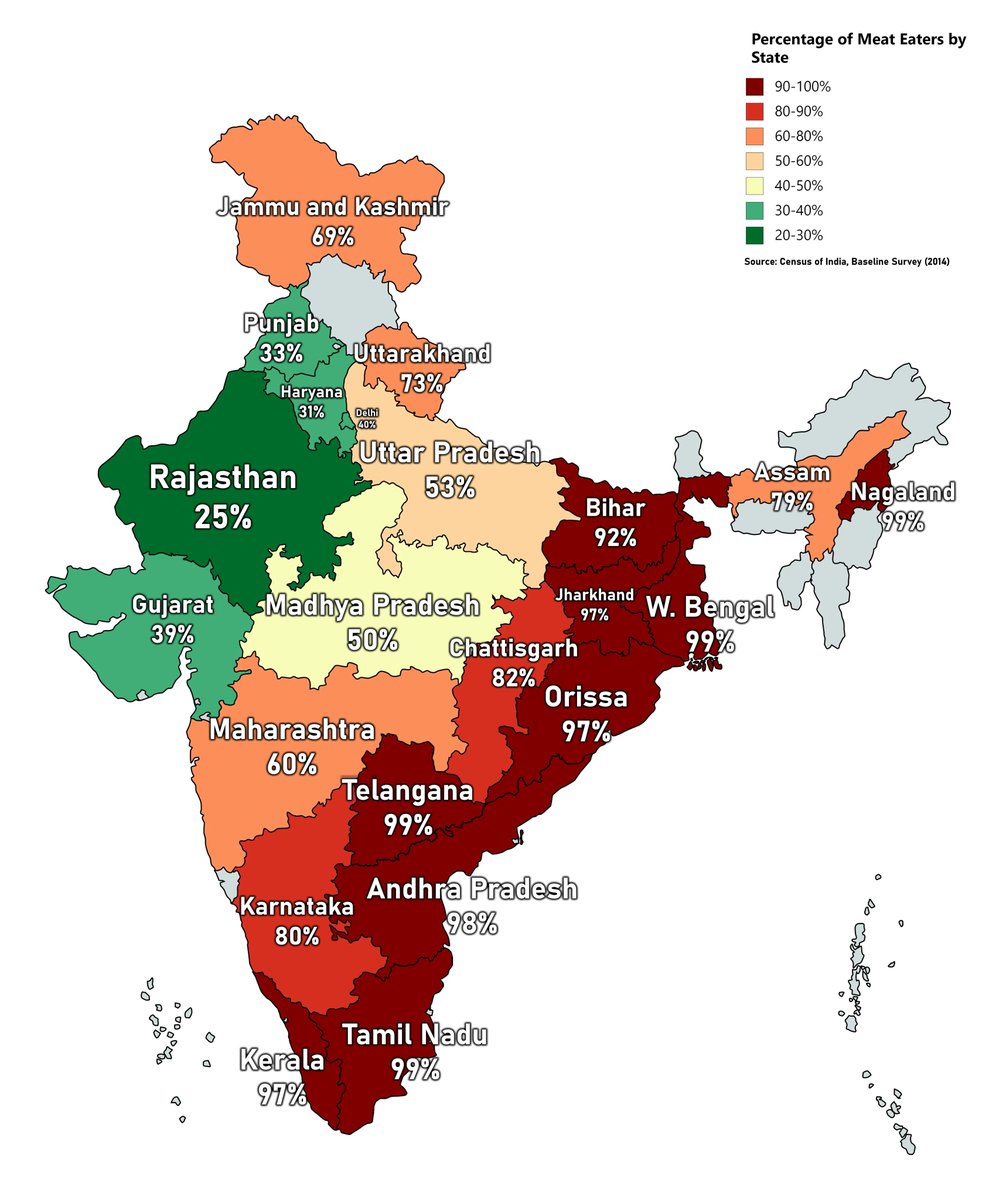
"The Indian states with the most vegetarians produce the tallest and healthiest people. Plant-based diets work." Punjab is the third-most vegetarian state in India. It also has the highest dairy consumption in the country: milk, ghee, yoghurt, paneer. "That's still plant-based." It's dairy. Daily. In significant quantities. "Dairy is plant-based adjacent." Dairy is an animal product. It contains animal protein. It drives IGF-1. It is categorically not plant-based. "OK but they don't eat meat." They don't eat meat AND they consume very high amounts of dairy. Their height and health outcomes are consistent with high animal protein intake. If you remove the dairy from these populations and replace it with lentils, I promise you the height outcomes change. The dairy is doing the work. The absence of meat is irrelevant.

Dear PM @narendramodi , NavIC was conceived, approved, and begun under the UPA as India’s own regional alternative to dependence on GPS and other foreign navigation systems. The full constellation was completed and made operational in 2016. Now, roughly 10 years later, it has effectively fallen below operational navigation strength because ageing satellites were not replaced in time and recent replacement efforts have been delayed or unsuccessful. Hope you realize the seriousness of this lapse as we enter an era of geopolitical uncertainties.
𝐒𝐭𝐚𝐛𝐥𝐞 𝐟𝐮𝐞𝐥, 𝐬𝐭𝐚𝐛𝐥𝐞 𝐈𝐧𝐝𝐢𝐚. While the world watches petrol prices skyrocket across G20 nations, some facing brutal 20%+ surges, India stands tall and steady. Thanks to the Modi government's far-sighted energy strategy — massive diversification of crude sources, record strategic reserves covering 7-8 weeks, smart diplomacy, and a rock-solid commitment to shield citizens — petrol and diesel prices remain unchanged even as global crude crosses $100/barrel and the Strait of Hormuz chokes. This is Viksit Bharat planning years ahead, protecting every Indian from geopolitical chaos. 𝐖𝐡𝐞𝐧 𝐭𝐡𝐞 𝐬𝐭𝐨𝐫𝐦 𝐡𝐢𝐭𝐬 𝐡𝐚𝐫𝐝𝐞𝐬𝐭, 𝐬𝐭𝐫𝐨𝐧𝐠 𝐥𝐞𝐚𝐝𝐞𝐫𝐬𝐡𝐢𝐩 𝐤𝐞𝐞𝐩𝐬 𝐭𝐡𝐞 𝐞𝐧𝐠𝐢𝐧𝐞 𝐫𝐮𝐧𝐧𝐢𝐧𝐠.

“The vessel waited for 11 hours about 40 nautical miles off Galle port for permission from the Sri Lankan government to berth at Galle port, as it had difficulties returning to Iran due to the conflict situation. Why didn’t the government allow permission for such a long time?” SJB MP Mujeebur Rahman questioned in Parliament regarding the IRIS Dena, which was attacked by a US submarine on Wednesday.
* The commentary circulating on the Mumbai–Ahmedabad High Speed Rail Project relies largely on conjecture and selective interpretation rather than verified facts. Several of the claims made are factually wrong. * Updated project cost estimates are comparable to global benchmarks. The initial estimate was prepared at a preliminary stage nearly a decade ago. As is standard practice in major infrastructure projects worldwide, costs are refined once detailed design, engineering, land acquisition and construction contracts are finalised. * India has undertaken projects of similar scale in highways, metro rail and airports where revised estimates followed detailed project reports and tendering. * The agreement between India and Japan for funding the project is comprehensive and the speculations made have no base. * The project continues to be backed by one of the most concessional sovereign loans ever extended for infrastructure, with extremely low interest and long repayment periods. * Such financing terms are precisely why the project was structured as a bilateral partnership. Assertions to the contrary appear speculative rather than factual. * It is also incorrect to state that the burden is being placed on Indian Railways. The project is implemented through the dedicated entity National High Speed Rail Corporation Limited (NHSRCL), which has its own financing structure involving the Government of India and the participating state governments. * Treating it as an operating liability of Indian Railways reflects a misunderstanding of the institutional framework. * National transport infrastructure is evaluated world over by looking at economic benefits. High-speed rail corridors generate value through time savings and productivity gains, reduction in aviation and highway congestion, regional economic development along the corridor technology transfer and domestic manufacturing capability. These wider economic multipliers are the basis on which such projects are evaluated internationally. * Ticket pricing will be affordable. The speculative numbers have no basis and are meant to mislead people. * The Mumbai–Ahmedabad High Speed Rail Project is India’s first high-speed rail corridor. Its purpose extends beyond a single route: it establishes the technological, engineering and industrial base required for future high-speed rail development in the country. * Every country that now operates high-speed rail networks began with a similar foundational investment. The socio economic benefit of high speed outweighs financial returns and this project lays the foundation of construction of High speed in the country will revolutionise transportation required for Viksit Bharat.

WHITE ELEPHANT MODI | As we exposed nearly two years ago, Modi’s vanity project, the Mumbai–Ahmedabad Bullet Train, has seen its cost escalate from the original ₹1.1 lakh crore to ₹1.98 lakh crore. This is when the project is half complete. The final cost could be more than 2.5 lakh Cr. The additional ₹90,000 crore burden will now be borne by Indian Railways, which is already struggling for funds. The Japanese agency JICA is not going to fund this escalation. The main attraction of JICA funding was the ultra-low 0.25% interest rate. But this extra ₹90,000 crore will now be raised as debt by the Government of India at 7–8% interest. It will take more than a century to recover the cost. The original projected ticket price between Mumbai and Ahmedabad was around ₹3,000. With costs nearly doubling while the project is only half complete, ticket prices could well touch ₹6,000–₹7,000. How many of you would actually pay that much for this ride? Bhakts, please answer and go.