
Shreyas Doshi

24.6K posts

Shreyas Doshi banner
Shreyas Doshi

Shreyas Doshi

@shreyas

Led a couple of Stripe's most successful products from early days. Prev Twitter, Google, Yahoo. Now advising & teaching. Tweets useful for some—not for everyone

Oakland, CA Katılım Mart 2007
1.2K Takip Edilen332.9K Takipçiler
Sabitlenmiş Tweet
Shreyas Doshi
Shreyas Doshi@shreyas·
Consider this: if “talk to customers” is the biggest secret to product success, then why aren’t more products successful? Why are so many founders unsuccessful? What explains PMs who’ve been talking to customers 5 times a week for years, without ever making products that win?
English
277
61
888
256.8K
Shreyas Doshi retweetledi
Satyajeet Salgar
Satyajeet Salgar@salgar·
Catching up on my newsletters between waiting for a kid to complete a class and an I/O celebration dinner. This one from @shreyas from a couple of months ago is a banger. :-)
Satyajeet Salgar tweet media
English
1
0
3
848
Shreyas Doshi
Shreyas Doshi@shreyas·
The most harmful misconception among product people is believing they have to choose between moving fast and making good product decisions. Good product decisions don’t actually take more time, they take more skill. Like how Magnus Carlsen sees the best chess move in a few seconds, a move we wouldn’t find even if we had a whole week.
English
24
17
248
24.7K
Shreyas Doshi
Shreyas Doshi@shreyas·
@lucianoabreun @bchesky @patrick_oshag There are a few more for sure, but I do believe every founder/CEO, no matter how “successful” they already are, can learn tremendously from this episode. I think every product person should listen to this episode at least once a year as it will reveal more depth each time.
English
0
0
1
61
Shreyas Doshi
Shreyas Doshi@shreyas·
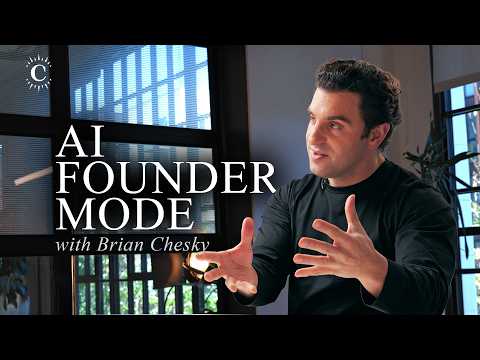
This recent @bchesky podcast with @patrick_oshag belongs to the hall of fame of tech podcast episodes. Very likely the deepest founder conversation after the Steve Jobs lost interview in the 90s. Currently it has 90k views; it deserves 100X more views. youtube.com/watch?v=eURcW5…
YouTube video
YouTube
English
14
41
451
75.8K
Shreyas Doshi retweetledi
Haroon Choudery
Haroon Choudery@haroonc·
One of the highlights I've had over the past few months is taking @shreyas' course on Product Sense. Without exaggeration, it's completely changed the way that I think about building products (and even the way that I think about learning in general). Easily the best course I have ever taken in my life.
English
2
1
17
20.2K
Shreyas Doshi retweetledi
Shiva Chandrashekher
Shiva Chandrashekher@cshivaram·
Strongly recommend product sense course for product executives from @shreyas. It systematically decomposes product sense into Cognitive Empathy, Customer Motivation, and Creativity and goes deep on how to deliberately improve across each dimension.
English
0
2
9
5.3K
Shreyas Doshi
Shreyas Doshi@shreyas·
@edanilov Thanks for sharing. Indeed, that is the most important sentence in the article!
English
1
0
4
823
Shreyas Doshi retweetledi
Egor Danilov
Egor Danilov@edanilov·
“do you actually know what your customers need, can you conceive real differentiation in the face of stiff competition, and can you build that differentiation creatively (and quickly)?” Brilliant. Every word in this sentence worth a billion $.
Shreyas Doshi@shreyas

x.com/i/article/2055…

English
2
3
29
11.7K
Shreyas Doshi
Shreyas Doshi@shreyas·
While everyone chases the latest AI tools, here’s an underrated, high leverage, practical application of AI: Give AI deep ongoing context on your product. Then actually use it during product discussions to keep you honest and call out your BS. AI is extremely good at this today.
Shreyas Doshi@shreyas

x.com/i/article/2055…

English
15
20
239
43K
Shreyas Doshi
Shreyas Doshi@shreyas·
A pretty meaningful part of day-to-day ‘strategic thinking’ is simply pausing to simulate how the other party will react to what you’re saying or doing. A) Some do this instinctively, all the time B) Others almost never do it A finds B frustrating to work with, and vice versa.
English
21
11
186
15.6K
Shreyas Doshi retweetledi
Ava
Ava@noampomsky·
Some context: my friend raved about this book a couple of years ago but I just skimmed it since I've never identified as codependent and a lot of the stories in the book are about the spouses of alcoholics, which isn't personally relevant. But I read it again recently and realized that the book is actually about letting go of the need for control. Many of us try to help our friends and family, without realizing that the frame of "they need my care/support" is actually a form of establishing control. We believe that people need us, that they'll go down the wrong path without us and make the wrong choices in work/relationships/life, but what happens is that while you're trying to control the other person through supporting them you become controlled by their behavior. If you've ever had the experience of being extremely frustrated at a friend, partner or family member because they asked for your advice and you gave it, only for them to ignore it, this book is relevant to you. (From what I can tell, that's a pretty universal experience.) In it, Melody Beattie writes, "The surest way to make ourselves crazy is to get involved in other people’s business, and the quickest way to become sane and happy is to tend to our own affairs." Despite our best efforts, we have extremely limited ability to influence other people's choices. People are free to neglect their bodies, engage in destructive behavior, get in or stay in toxic relationships, abuse substances, etc. This might feel unbearable if you love them, but if you get overly attached to the idea that *they need you in order to stop,* you've trapped yourself in a situation where you have no real leverage. As in: no matter what you try, how hard you try, how pragmatic, useful, wise, supportive you are, *it's not ultimately your life.* Most of us are better served by, well, actually living our lives, instead of trying to solve someone else's. Through extreme effort we may able to be able to temporarily modify someone's behavior, but the change will not last because real change only comes when someone grapples with the consequences of their situation and makes the decision to live differently. You cannot force someone to have a revelation, not matter how badly you might want to. Though people might tell us they want or need our advice or support, this generally just gets us trapped in the drama triangle. There is a difference between *actually helping someone*, and *assuming the role of the rescuer because we believe it's what's required of us." Caretaking is often just a form of enabling. Another great quote from the book: "At the time we rescue or caretake, we may experience one or more of the following feelings: discomfort and awkwardness about the other person’s dilemma; urgency to do something; pity; guilt; saintliness; anxiety; extreme responsibility for that person or problem; fear; a sense of being forced or compelled to do something; mild or severe reluctance to do anything; more competency than the person we are “helping”; or occasional resentment at being put in this position. We also think the person we are taking care of is helpless and unable to do what we are doing for them. We feel needed temporarily. I am not referring to acts of love, kindness, compassion, and true helping—situations where our assistance is legitimately wanted and needed and we want to give that assistance. These acts are the good stuff of life. Rescuing and caretaking aren’t." The tl;dr of it all is that in order to actually change, people generally need to reckon with their sense of autonomy and responsibility. When we shield people from consequences, they never learn how to make better choices.
Ava@noampomsky

everyone should read codependent no more

English
13
70
919
133.9K