
SikhMilitaryFoundation retweetledi
SikhMilitaryFoundation
191 posts

SikhMilitaryFoundation
@SikhMilitaryFdn
To preserve, strengthen and advancing the Sikh military identity. Degh Tegh Fateh - Charity Arms Victory🥣⚔️✌️
England, United Kingdom Katılım Ocak 2022
242 Takip Edilen681 Takipçiler

SikhMilitaryFoundation retweetledi

Today marks 15 years since the end of Operation TELIC in Iraq.
We honour the UK Armed Forces personnel who served between 2003 and 2011, and we remember the 179 who lost their lives.
Today, veterans and their families gather at the @Nat_Mem_Arb to pay tribute.

English
If you or your family hold any items, documents, or stories connected to Sikh military history, we would be honoured to help preserve them.
English

SikhMilitaryFoundation retweetledi

Most of us believe that the modern style turbans were introduced by the British for Sikh Soldiers in the British Indian Army.
It is not the case.
When Maharaja Ranjit Singh onboarded Jean-François Allard (French) and Jean-Baptiste Ventura (Italian) as his Generals to modernise his army, he created Fauj-i-Khas (Special Brigade) under the two generals (around 1820s).
The training of Sikh army in European tactics required the change in attire and the new uniform with a change in style of turban was introduced.
So, the modern-style pagg dates back to 1820s and not early 1900s and is 200 years old.

English
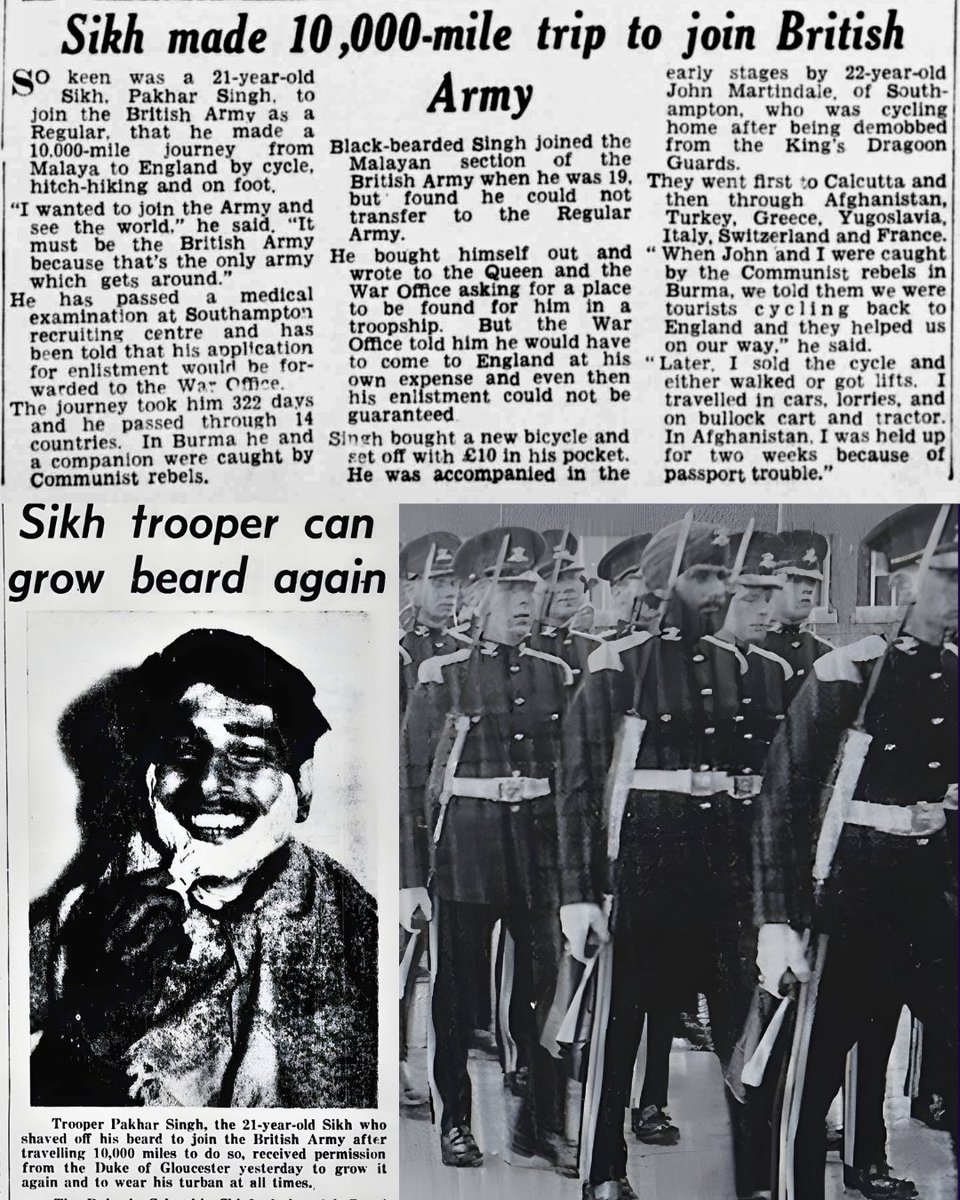
In 1958, Sgt Pakhar Singh cycled 322 days from Malaya to England to join the Royal Hussar’s. Sikhs continued to serve in the @BritishArmy after 1947 to the present day- help us tell their story. #IdentityAndService #Sikh #britishArmy

English
SikhMilitaryFoundation retweetledi

Colour, courage, and combat spirit
Sandhurst marked Holla Mohalla with coloured powder and military fitness — blending tradition with soldier readiness🔗forcesnews.com/services/army/…
English
SikhMilitaryFoundation retweetledi
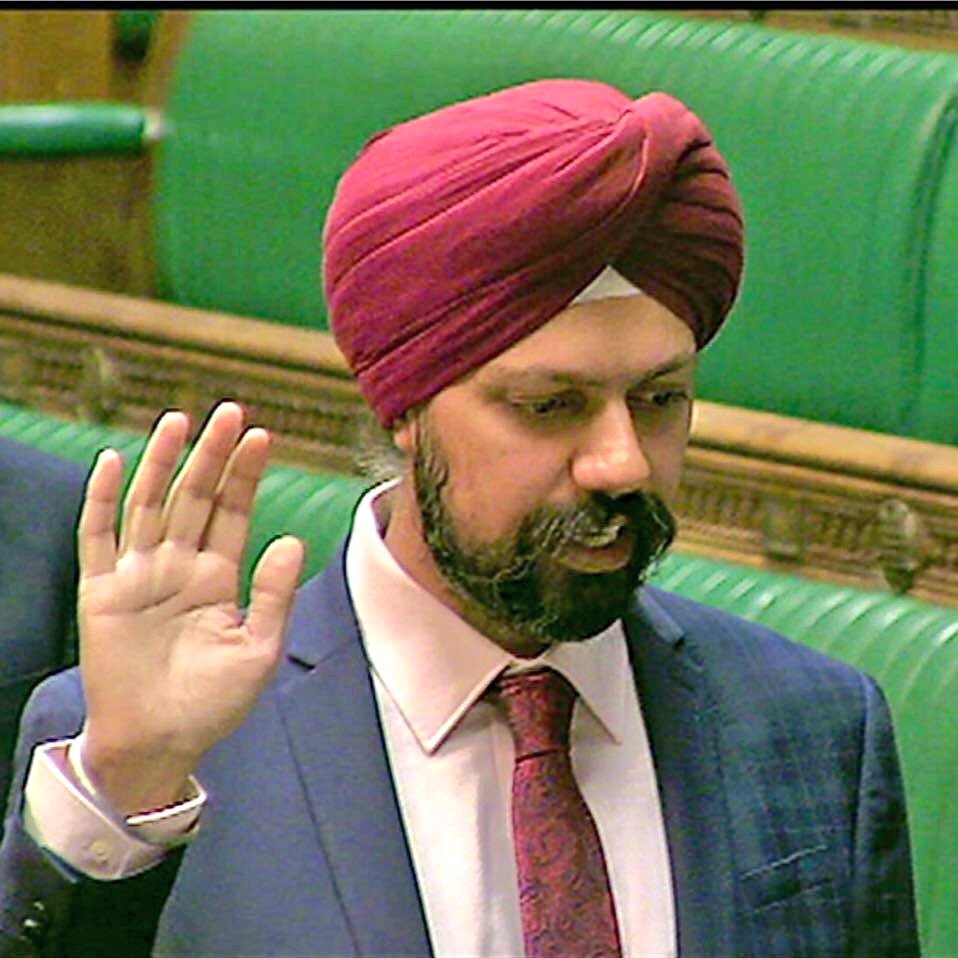
So many brave #Punjabi soldiers made incredible #sacrifices fighting in the First World War.
Grateful to @UKPHA, @CWGC, University of Greenwich and @PoppyLegion for going through The #Punjab Registers to connect people like me with the extraordinary #courage of their ancestors.


English
SikhMilitaryFoundation retweetledi
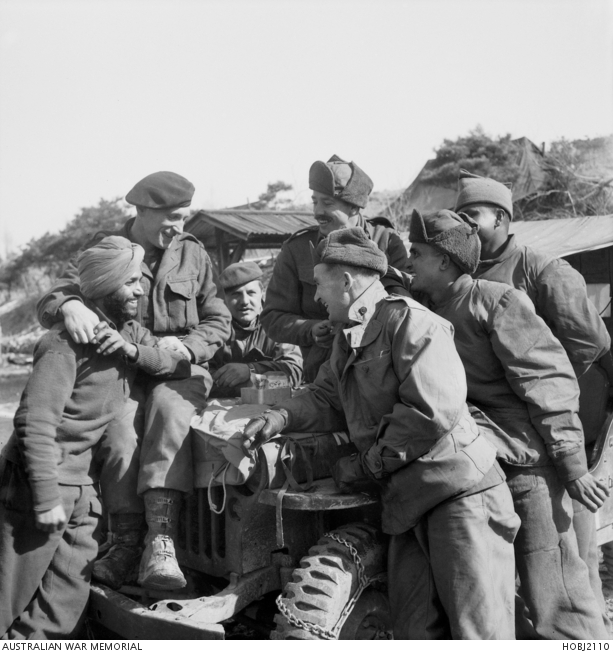
Side by side, across continents and generations.
Personnel from across the Commonwealth have served together in conflicts from the World Wars to the present day.
This #CommonwealthDay, we recognise that shared and enduring legacy of service.
English
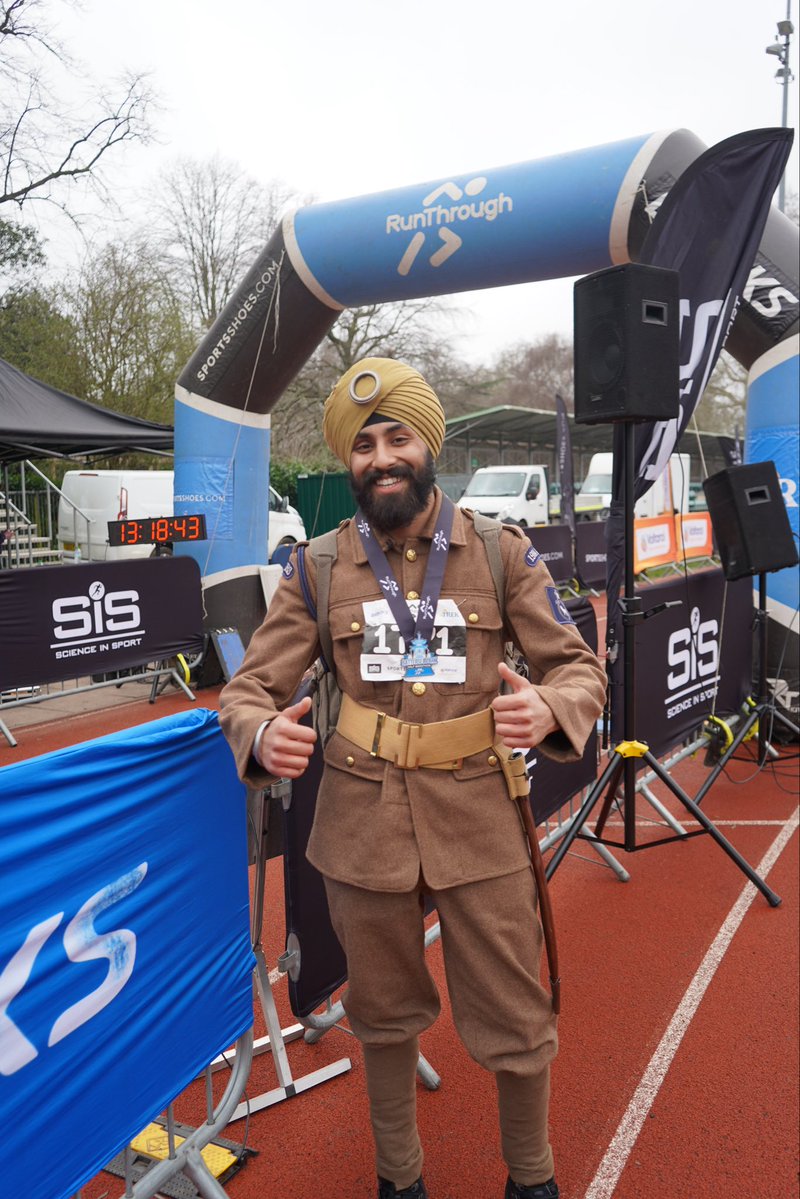
Well done Sig Singh Hira for completing the Battersea Half Marathon today in full @1914_Sikhs Uniform carrying 10kg in honour of Sikh Soldiers who fought in WW1 #BritishArmy #Sikh #WW1 #Marathon
English
SikhMilitaryFoundation retweetledi
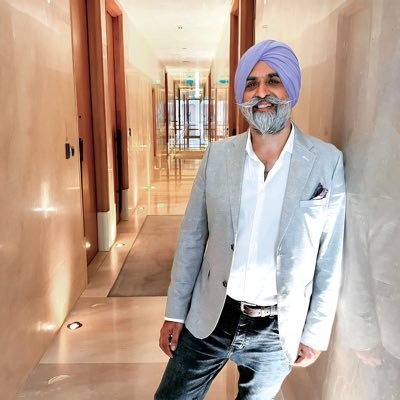
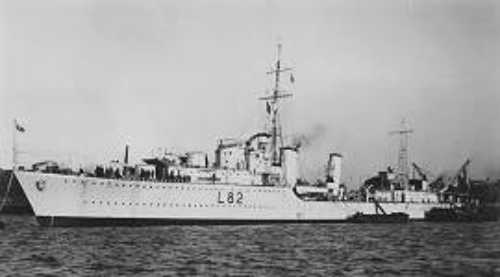
HMS Sikh started her naval life with the 1st Destroyer Flotilla (1st D.F.). Her builders trials commenced in August 1938 and after being fitted with a gyro-compass and other equipment at Chatham, England she was completed on 2 November 1938 even though she had been commissioned a month earlier. After bringing King Carol and Crown Prince Michael of Romania from Boulogne, France to Dover England, Sikh returned to Portsmouth while the royal party went on a state visit to Buckingham Palace. The Tribal returned the East European royals to Boulogne on 18th November. After more workups, Sikh sailed for the Mediterranean, arriving at Malta on 2 December.
In February 1939, HMS Afridi led Sikh and the rest of the flotilla to Gibraltar for exercises followed by individual cruises. On 21 March 1939, Sikh sailed to Cartagena, Spain to embark refugees from the Spanish Civil War.
HMS Sikh, HMS Gurkha, HMS Afridi and HMS Mohawkwere patrolling in the Red Sea when war broke out. The ships quickly returned back to the Mediterranean for convoy escort duty and blockades. After a short operational period, Sikh was ordered back to home waters but a broken turbine interrupted her departure from Malta. Eventually, HMS Sikh made it home by 26 December 1939 and after a quick refit, she joined the 4th D.F. in 1940.
Anti-submarine patrols, fleet sweeps and convoy escorts occupied SIKH for the next few months. By April, the Tribal found herself involved with the Norwegian campaign. At Nasmos Norway, Sikh and her sister Tribals were attacked from the air almost continuously and usually at meal times. As soon as she returned to Scapa Flow, Scotland, Sikh was detailed for the evacuation of Allied trops from Central Norway at the beginning of May. She then accompanied the 6th D.F. when they embarked troops in the Andalsnes area of Norway. More turbine trouble developed, so it was off to Alexander Stephen's Yard at Govan for repairs and refit.
Routine screening, North Sea patrols and anti-invasion exercises followed and continued through the autumn and winter months. Sikh escorted convoys in the Western Approaches and protected the capital ships of the Home Fleet in northern waters. It was mostly monotonous work in filthy weather but there were some notable incidents. Sikh escorted one East Coast convoy from the Forth River to the Thames River during the Battle of Britain and without any air or sea attacks. The night of 16/17th October was also eventful when Sikh narrowly avoided following HMS Fame and HMS Ashantionto the beach at Whitburn, England.
On 21 May 1941, HMS Sikh, HMS Cossack, HMS Maoriand HMS Zulu left the Clyde River to escort another troop convoy through the Western Approaches. Enroute, these ships were detached to screen Home Fleet capital ships which were attacking the German battleship Bismarck. The 4th D.F. witnessed the destruction of Bismarck at dawn on 27 May 1941.
After undergoing two more refits, Sikh helped to escort HMS Nelson back to the U.K. The battleship had been temporarily repaired following a torpedo hit during a Malta convoy. Sikh rejoined Force H at Gibraltar taking part in various sweeps and exercises. Ordered to reinforce the 14th D.F., HMS Sikh, HMS Maori, HMS Legion, and HrMs Isaac Sweers proceeded eastward and off Cape Bon, Tunisia they sank the Italian cruisers Alberico di Barbiano and Alberto di Giussano. After calling at Malta, HMS Sikh and HMS Maori took part in the First Battle of Sirte, then arrived at Alexandria, Egypt on 18/19th December. It was then decided that HMS Sikh and HMS Maori should return to Malta, to join HMS Zulu and form the 22nd D.F. This would act as a strike force against Axis supply convoys between Italy and North Africa.
On 12/13th September, HMS Sikh (Capt. St John AldrichMicklethwait, DSO and 2 Bars, RN) and HMS Zulu were supporting an assault off the coast of Africa. While picking up troops in boats at 0505hours, a searchlight on shore suddenly lit up HMS Sikh. Quickly, HMS Zulumoved away, then came in bow first into the searchlight. Shore batteries opened fire. One 88mm shell exploded in Sikh's Gear Room, damaging the lubrication feed system and the steering gear. A second hit forward, blew up the ready-use ammunition locker for 'A' gun and started a fierce fire that killed, burned, or disabled all of the Royal Marines who had just been picked up. It also trapped more Royal Marines who had been waiting in the messdecks. Emergency damage control and first aid parties rescued the wounded, flooded 'A' and 'B' magazines, and dealt with the blaze. Sikh was steaming in circles at 10 knots and getting slower. A third shell struck her range finder director and from then on, all her guns had to fire under local control. As Sikh came to a stop, Captain Micklethwait, Sikh's Commanding Officer, ordered all Royal Navy Forces to leave the area while HMS Zulu towed Sikh away from danger. While under tow, a forth shell hit the unlucky destroyer setting off the charges around Sikh's 'Y' mounting. This started another bad fire aft while a fifth shell struck 'B' mounting killing the gun crew. Others took up their places and the guns continued firing. During the shelling, the towline broke and Zulu made attempts to get a heaving line to Sikh. Captain Micklethwait, went forward to supervise the towing preparations on the fo'c'sle when a sixth shell smashed the bridge. It was now broad daylight and the two ships were getting underway when another 88mm shell hit the towline and severed it. There was no hope of saving Sikh. HMS Zulu laid a smokescreen around Sikh and tried to come in to take Sikh's crew. It was too dangerous. HMS Zulu was ordered away. Shells continued to hit Sikh but her 'X' gun kept firing until the ammunition in the ready use locker was exhausted. Captain Micklethwait fired the scuttling charges which flooded the engine and boiler rooms. He made a final tour of his ship and left. Sikh took a long time to die, heeling over to starboard as she sank in position 32º05'N, 24º00'E while shells continued to hit. All the survivors were taken as prisoner of war.
English
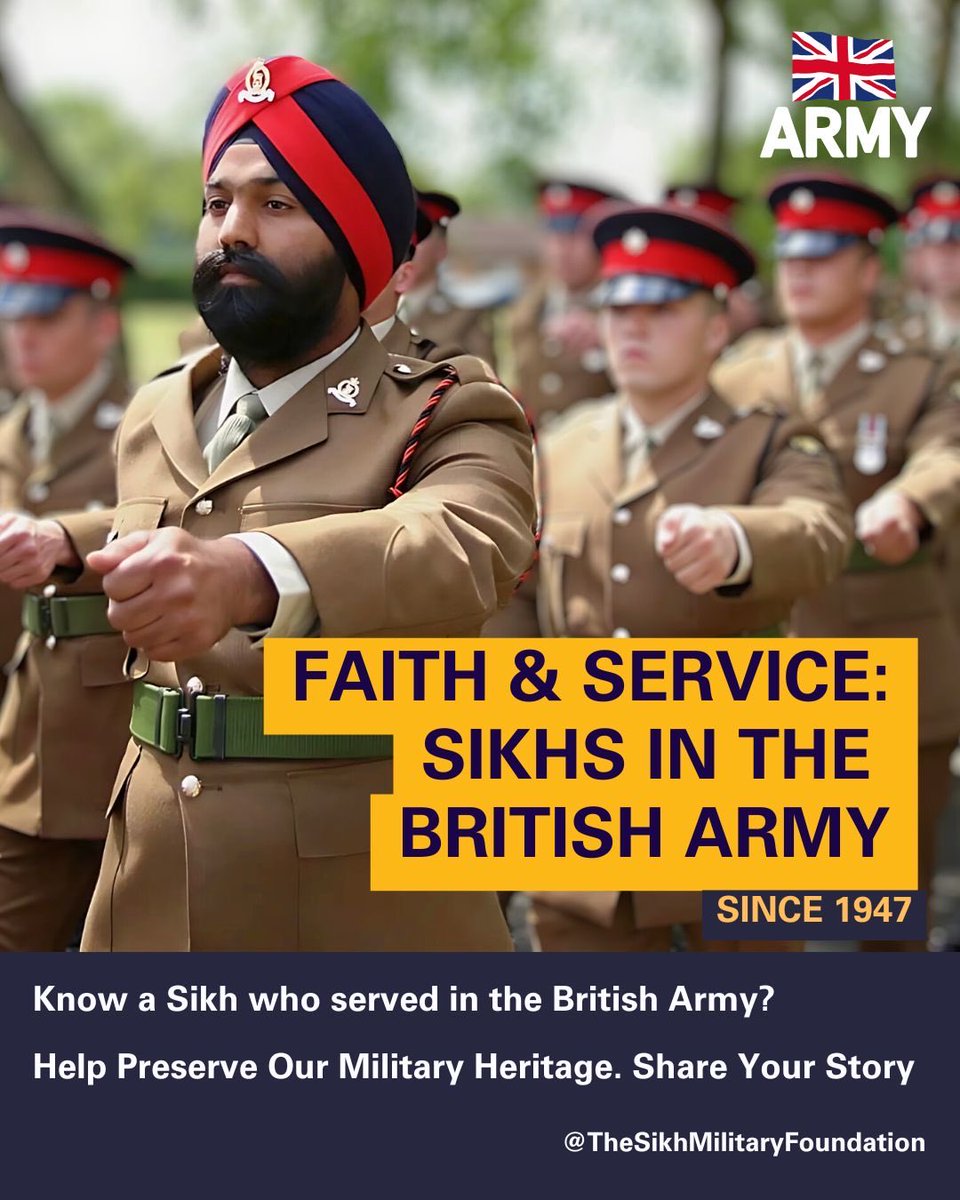
Know a Sikh who served in the British Army?
We want to hear from you.
📩 Link in bio to get involved
📢 Help preserve our history. Share your story DM us.
English
From the Falklands to Afghanistan, this project documents service, sacrifice, and lived experience.
This is more than history. It’s identity, resilience, and duty.
Know a Sikh who served in the British Army?
We want to hear from you.
English
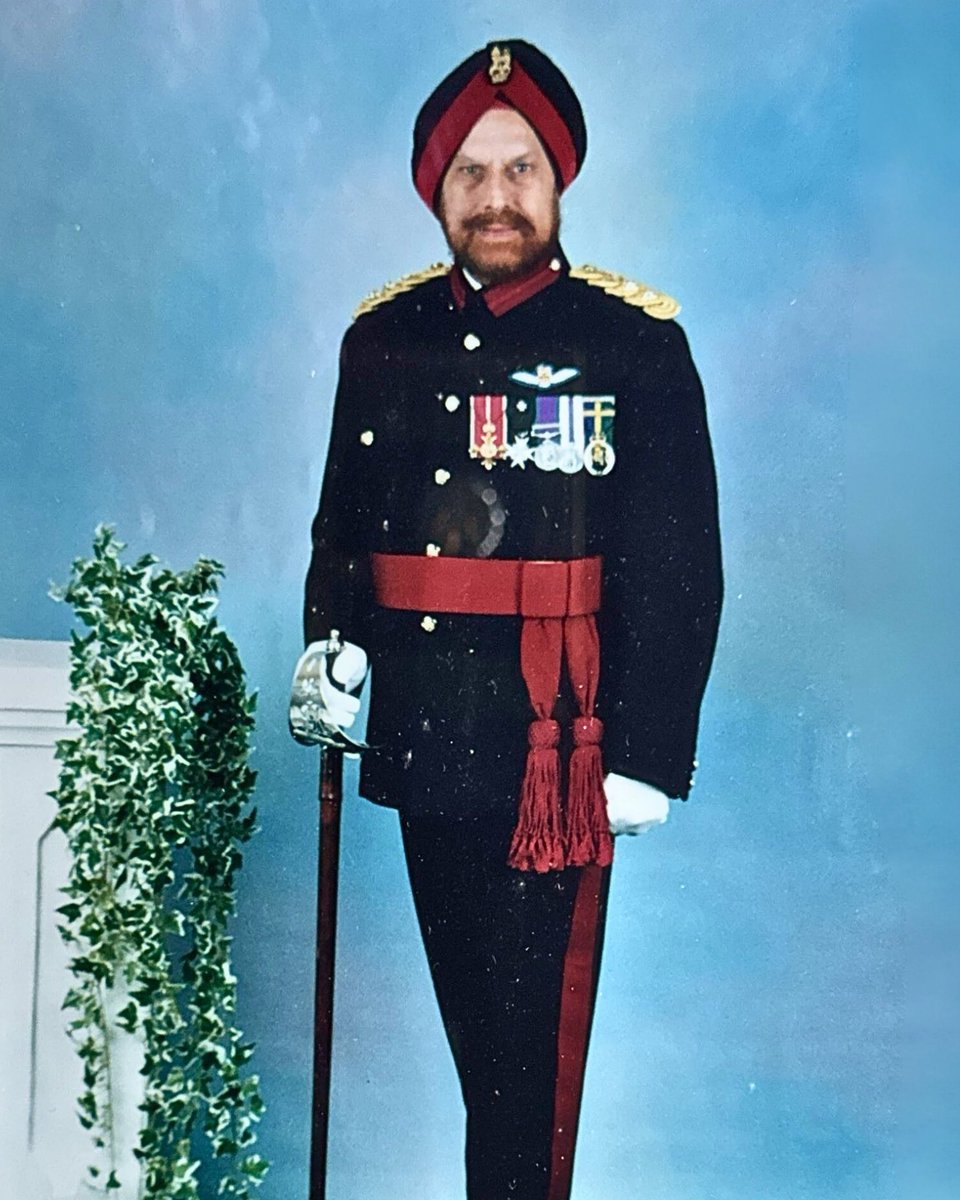
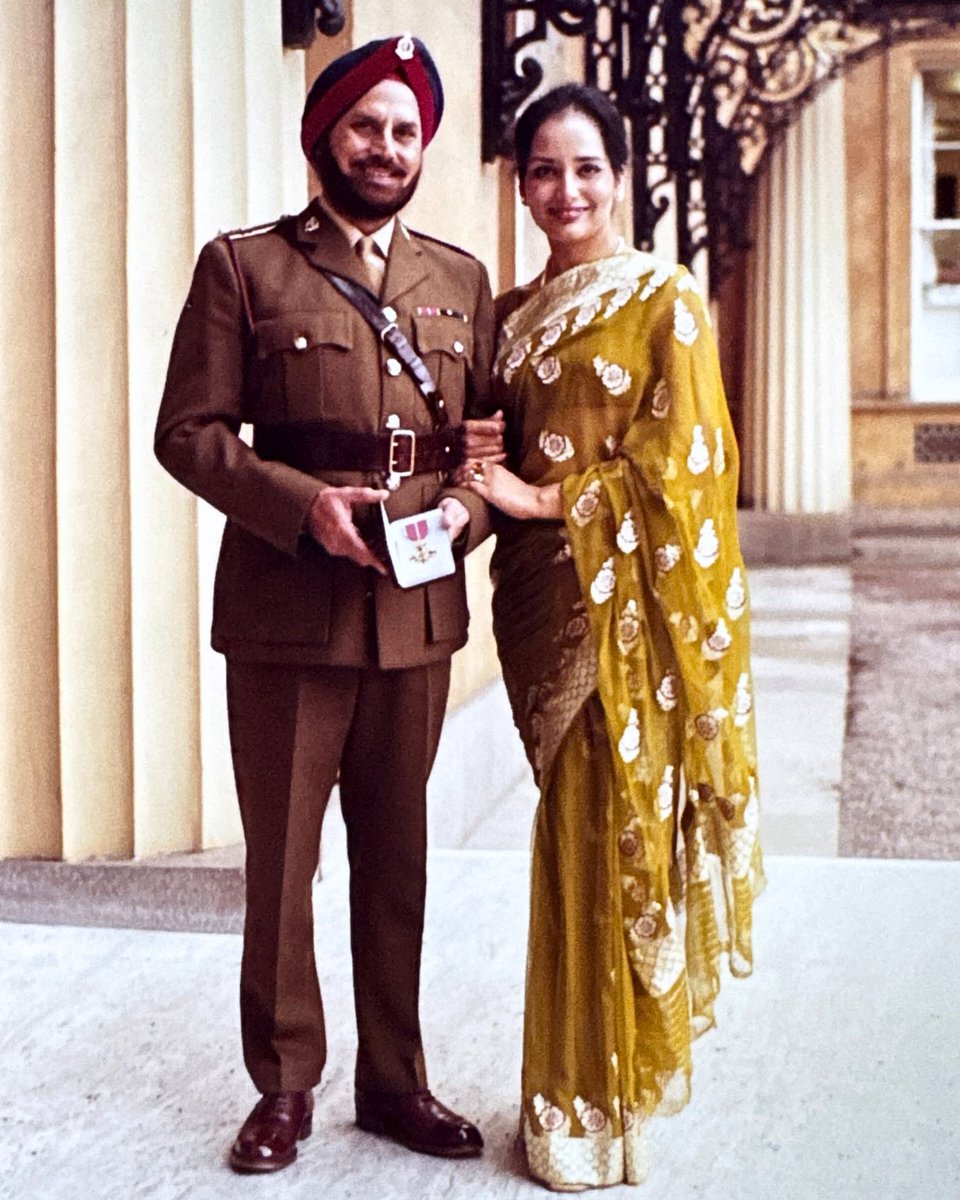
Col. Kulwant Bir Singh Sethi OBE OStJ TD DL
The highest ranking Sikh Officer in the @britisharmy to date - as part of our heritage initiative, Faith and Service, capturing the stories of Sikh veterans who have served in the British Army since 1947.
#Sikh #BritishArmy
English
SikhMilitaryFoundation retweetledi


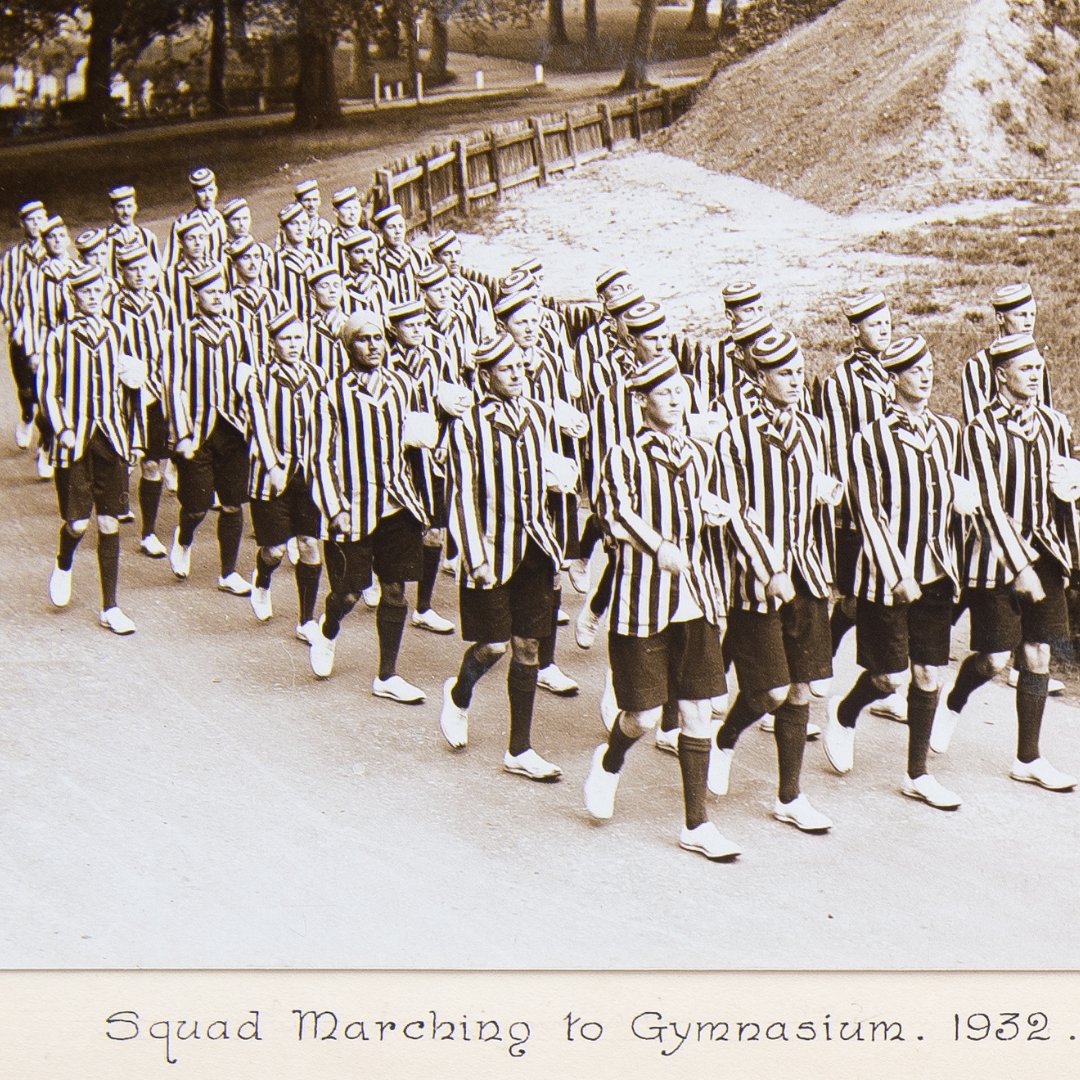
@RMASTrust @RMASTrust Who was the Sikh OCdt? Likely an international OCdt 1932 please tell us more!
English

This photograph shows a squad marching to the gymnasium at Sandhurst in 1932. Nearly a century later, Officer Cadets still march the same grounds to the gym, though in a very different uniform!
What do you think should the Academy bring these kits back? #servetolead #RMAS
English
Spot the Sikh OCdt. A legacy since 1887—Prince Victor Duleep Singh entered @RMASandhurst by royal dispensation and commissioned into the 1st Royal Dragoons in 1888. #BritishArmy #Sikh #Sandhurst
Sandhurst Trust@RMASTrust
This photograph shows a squad marching to the gymnasium at Sandhurst in 1932. Nearly a century later, Officer Cadets still march the same grounds to the gym, though in a very different uniform! What do you think should the Academy bring these kits back? #servetolead #RMAS
English