Rand Simberg

106K posts

Rand Simberg

Rand Simberg

@Simberg_Space

Space policy, technology and business analyst and consultant

Jackson, WY Katılım Mart 2012
2K Takip Edilen3.3K Takipçiler
Rand Simberg
Rand Simberg@Simberg_Space·
@mmealling Then there are people who barely plan more than an hour or two ahead. They become things like bad bank robbers.
English
0
0
0
5
Rand Simberg retweetledi
Michael Mealling -- e/acc
One of the more fundamental differentiators of people is how far ahead they think and plan: next week, next year, next decade, next generation, next millennium, or next galactic year...
English
1
1
1
73
Rand Simberg retweetledi
Jarl Finland
Jarl Finland@jalle51·
The ultimate geopolitical choke point: Russia's Yamal gas intersection. Sitting 1,700 km from Ukraine, this vital hub is well within range of Kyiv's newly proven 2,000 km long-range strike drones. If Ukrainian drone commander Robert "Madyar" Brovdi turns his attention northward, the result wouldn't just be a gas freeze—it would trigger a total collapse of the Russian power grid. Russia relies heavily on gas-fired generators to balance the massive output from its nuclear power plants. Knocking out the Yamal hub would cause a catastrophic black-start failure across the country. With no power, no heating, and no industrial capacity, the Kremlin would face an existential domestic crisis. Is this the threat that finally forces Moscow to abandon its "SVO" and pull back? The clock is ticking on Russia's energy heartland. #YamalHub #EnergySecurity #DroneWarfare #Madyar #UkraineWar #RussiaEnergy #Geopolitics
Jarl Finland tweet media
English
32
176
634
16.1K
Rand Simberg retweetledi
Danielle Fong 🔆
Danielle Fong 🔆@DanielleFong·
every year this happens i must point out that yeetable long range mothership drones, sat on a lake (max 30km from any lake!, and usually under 2 km) and yeeting eg @Seneca_Systems @nhfoley's drones, is like the ultimate answer here. deploy anywhere in canada. someone should drop a fat stack on @Seneca_Systems and me to solve this problem. few $͂ 100mm should do it technically and the health effects are in tens of billions per year so should be a slam dunk, plus you get a domestic drone industry.
Danielle Fong 🔆 tweet mediaDanielle Fong 🔆 tweet mediaDanielle Fong 🔆 tweet media
peepeepoopoo@DeepDishEnjoyer

fucccccckkkk canadian wildfires causing brown skies again

English
5
1
18
1.8K
Rand Simberg
Rand Simberg@Simberg_Space·
@peterrhague That was just a guesstimate based on having seen them to scale in other contexts.
English
0
0
1
17
Rand Simberg retweetledi
J.K. Lundblad
J.K. Lundblad@JK_Lundblad·
The bills from our latest child are beginning to roll in now. Oh boy… In total (thus far), we owe over $8,500 out of pocket for bringing a new life into the world—a lot for what was a straightforward, uneventful, and uncomplicated birth. The absurdity of the American healthcare system is on full display. Let’s look at some of the things the hospital/physicians charged for: Right off the bat, I noticed that we were charged $64 for a few pills of Ibuprofen. Great start! I can go to Costco right now and buy 1,000 Ibuprofen pills for $13.99, less than what the hospital charged for a single pill. Next, I can see we were charged over $3,000 for “semi-private” room and board, plus another $3000 for “women's health.” Can anyone tell me why there is a separate charge for “women’s health” and for the “labor and delivery” room? Also, why are we being charged a premium for a ‘semi-private ‘ room when we had no choice? We were assigned a room; we were never given an option. We were also billed separately for a “Phase II Recovery Room” for 2 hours, but we didn’t actually go to another room? It appears we are getting billed for the recovery assistance from the epidural as if we visited another room. Maybe? I am not sure. Then we were charged another $4,790.00 for what is called “Room Charge Nursery Level 1.” My child never went to a nursery! He stayed in the same room with us. I researched this; it’s perfectly normal to charge for a nursery “room” even if no separate room is actually provided. We were charged for anesthesia twice: nearly $2,600 in total. About half for the use of the machines, and the other half to pay the person who monitored them. But remember, we already paid $6k for the Labor and Delivery room, so I guess the room doesn’t include the equipment? We were also charged $350 for a lactation consult, but the person did nothing. This wasn’t our first child. We were not asked if we wanted a consult, nor could we have known we would be charged separately and that it was not covered by insurance. That’s a lot of money to pay out of pocket after spending hundreds of dollars a month on insurance premiums already. But this is American healthcare for you. It’s the worst of both worlds: Heavy government intervention combined with private for-profit actors. Prices are purposely complex, hidden, and completely unknowable in advance, while the supply of facilities and equipment is restricted by heavy regulation and intervention. The worst part: If we didn’t work, this would all be free or substantially lower. People like me, who pay our taxes, work our arses off, and pay our premiums, always pay twice. Once for ourselves and again for the people who don’t. The system is broken; we all know it. I will publish a write-up on how to fix it soon. Subscribe to Risk & Progress for updates.
J.K. Lundblad tweet media
English
3
5
7
442
Rand Simberg retweetledi
Race 🕊️
Race 🕊️@multiplanet1·
Elon Musk was asked at a private dinner what he thinks about when he can't sleep at night. The table expected him to say Mars. Or AI. Or some engineering problem he was working through. His actual answer made the room go quiet. He said he thinks about whether he's a good person. Not whether his companies are successful. Not whether the rockets will fly. Whether he, as a human being, is good. He said the question terrifies him because he doesn't know the answer. He said by most conventional measures he's failed at the things that make someone good. He wasn't there for his kids. He hurt the women who loved him. He drove employees past their limits. He made decisions that prioritized the mission over individual human beings every single time. He said the defense he tells himself is that the mission is bigger than any individual. That the suffering he caused is justified by the future he's building for eight billion people. But he admitted at that dinner that some nights the defense doesn't hold. Some nights the math doesn't work. And he lies there knowing that "I'm building a better future" might just be the story a workaholic tells himself to avoid confronting the damage. The richest and arguably most impactful man alive isn't sure he's a good person. And the honesty of that doubt tells you more about his character than any rocket launch ever could. The people who are certain they're good rarely question it. The ones who question it at 3am might be the ones actually trying.
English
34
43
251
6.6K
Rand Simberg retweetledi
Rock Chartrand
Rock Chartrand@RockChartrand·
Mr. Sanders appears to believe that if enough people desire another man's property, the desire itself ripens into a right. This is a curious doctrine, for it would imply that theft ceases to be theft once it becomes sufficiently popular. The founders, being old-fashioned men, held the opposite view. They supposed that rights existed specifically to protect the minority from the appetites of the majority. If 69% support taking a 50% ownership stake in AI companies, would 69% also be justified in taking 50% of farms, newspapers, bookstores, or Bernie Sanders' own royalties? If not, then popularity is not the principle. Envy is.
Bernie Sanders@BernieSanders

69% of Americans support my bill to give the public a 50% ownership stake in AI companies. The American people understand that AI must work for ALL of us, and not just make a handful of Big Tech billionaires even richer.
English
47
378
2K
31.8K
Koichi Wakata 若田光一
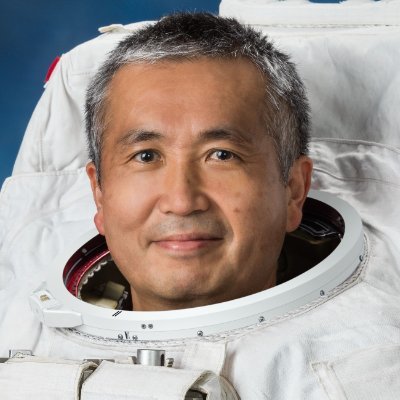
When you throw a paper airplane on Earth the wings create a lift that pulls it up, but gravity pulls it down; this mix makes it glide forward and down. In microgravity, the wings still create lift, but with nothing to pull the nose down, the lift force causes the plane to turn. If there were enough room, the airplane would fly in loops until it ran out of speed and drifted.
English
58
262
2.8K
846.6K
Rand Simberg retweetledi
Dr. Dr. Rainer Zitelmann
Space Isn't the Next Tulip Mania. It's the Next Internet. Space investing has become one of Wall Street's hottest trades. SpaceX's IPO in June was the largest in history. The stock initially surged after its debut before giving back much of those gains within days. Rocket Lab, after an extraordinary rally over the past two years, has suffered sharp pullbacks of more than 30%. Planet Labs tells a similar story: spectacular gains followed by painful corrections. To many investors, the conclusion seems obvious: another bubble. But the real question is not whether commercial space contains speculative excess. Almost every transformative technology has. The more important question is what kind of bubble we are witnessing. Financial history suggests there are two fundamentally different types. 1. The first is a bubble without lasting economic substance. The classic example is the Dutch Tulip Mania of 1636 and 1637. Prices of rare tulip bulbs reached absurd levels before collapsing. Once the frenzy ended, nothing fundamental had changed. Tulips remained flowers. No new industry had emerged. No technological revolution followed. Investors lost money, and history moved on. 2. The second type of bubble looks very different. Here, investors become wildly overenthusiastic about a technology whose long-term importance they correctly recognize—but whose short-term value they dramatically overestimate. The internet boom of the late 1990s perfectly illustrates this distinction. Between 1995 and early 2000, the Nasdaq rose more than 400%. Companies with little revenue and no profits achieved multibillion-dollar valuations. When reality finally intervened, the Nasdaq lost almost 80% of its value, and thousands of internet companies disappeared. At the time, many observers concluded that the internet itself had been little more than another tulip mania. But history could hardly have delivered a more devastating verdict on that prediction. The bubble burst. The revolution didn't. Amazon lost more than 90% of its market value during the dot-com crash. Today it generates well over half a trillion dollars in annual revenue and has fundamentally reshaped global commerce. Google, founded only two years before the bubble peaked, became the world's dominant search engine and built perhaps the most profitable advertising business ever created. Meta did not even exist during the dot-com boom. Founded in 2004, it became one of the most valuable companies in the world because the internet infrastructure financed during the bubble years made its business model possible. The investors who bought many internet stocks in 1999 often lost fortunes. The investors who concluded that the internet itself had been a fad made an even bigger mistake. Commercial space belongs to the second category, not to the first. Elon Musk has reduced launch costs by approximately 95 percent compared with the Space Shuttle. Throughout history, dramatic reductions in transportation costs have often marked the beginning of major economic transformations. The advent of railroads in the nineteenth century slashed the cost of moving goods and people, creating national markets and fueling industrialization. Likewise, the sharp decline in ocean shipping costs through containerization revolutionized global trade and accelerated decades of economic growth. The Space Economy is no longer a vision of the future. It is already an essential part of the global economy. Modern life depends on space infrastructure in ways that most people never notice. Satellite networks make GPS navigation possible, enable global communications, support financial transactions through precise timing signals, provide weather forecasting, connect remote regions to the internet, and supply the Earth observation data that modern agriculture, disaster management, and environmental monitoring rely on every day. Space capitalism is equally real. In 2025, there were 324 orbital launch attempts worldwide, and SpaceX alone accounted for 165 of them—more than half of all launches. Commercial companies are already generating substantial revenues through satellite communications, Earth observation, navigation services and launch operations. The era in which governments dominated space has given way to the era of Space Capitalism in which entrepreneurs and private investors drive innovation and investment. Another promising opportunity is space-based data centers. Data centers in orbit could benefit from abundant solar energy and may offer advantages for certain satellite networks. As artificial intelligence dramatically increases global demand for computing power, advances in thermal management could make orbital data centers an important complement to terrestrial infrastructure. Even more ambitious opportunities lie ahead. Asteroids are believed to contain enormous quantities of platinum group metals (PGMs), including platinum, palladium, rhodium, iridium, ruthenium, and osmium, potentially creating entirely new sources of supply. Space tourism, meanwhile, remains affordable only for the very wealthy today—but the same was true in the early days of aviation, before technological progress and competition made air travel accessible to millions. The greatest obstacle to the next phase of space development is not technology but economics and law. The decisive breakthrough will come only when entrepreneurs and investors can obtain secure property rights over extraterrestrial assets. While the Outer Space Treaty prohibits national sovereignty over celestial bodies, it does not explicitly address private ownership. That legal ambiguity could eventually give rise to "space squatters," much like the pioneers who claimed land in the American West before formal property rights were established. If private individuals and companies could own land on the Moon or Mars, or claim and develop asteroids, these assets could be financed, traded, and even packaged into publicly listed real estate investment trusts (REITs). Throughout history, secure property rights have transformed frontiers into prosperous economies. Space will be no exception. The barriers are primarily legal and economic—not technological. This op-ed has been published in     THE WASHINGTON TIMES, 7/14/26 @robert_zubrin @GregWAutry @Simberg_Space @jamesncantrell @elonmusk @SpaceX @SpaceNews_Inc
English
0
2
3
1.4K
Rand Simberg
Rand Simberg@Simberg_Space·
@Robotbeat @yFactr You will become enlightened when you realize that there is no real difference. :-)
English
1
0
1
26
Robotbeat🗽 ➐
Robotbeat🗽 ➐@Robotbeat·
@yFactr Yup. I'd put it this way: Grim-dark is slop due to writer skill issue.
English
2
1
8
168
Mo Islam
Mo Islam@itsmoislam·
EVENT ANNOUNCEMENT: Off World (formerly the Lunar & Mars Economy Summit). Houston. Sept. 23-24. @payloadspace's Off World returns Sept. 23-24 to NASA Space Center Houston, bigger than ever. The Moon is NASA's number one exploration priority and the entire industry is mobilizing around it. Returning to the lunar surface (and staying) is the anchor of America's civil space agenda, and the commercial and policy decisions being made right now will define who builds the off-world economy for the next decade. We'll spend two days on the technology, policy, and capital behind building on the Moon: – Lunar landers, infrastructure, and habitats on the surface – CLDs and the transition from the ISS to commercial platforms – Cislunar mining and the first real off-world supply chains – The technology, policy, and capital making it all possible Falling six months after NASA announced a major shakeup of its exploration plans at Ignition, Off World is the checkpoint for how those priorities are reshaping industry and most importantly, what's coming next. SPEAKERS COMING SOON! 📍 NASA Space Center Houston 🗓️ September 23-24, 2026 EARLY BIRD TIX now on sale 👇
Mo Islam tweet media
English
4
7
22
3K
Rand Simberg
Rand Simberg@Simberg_Space·
@peterrhague Those have to be really dark interiors. Which require electricity to light them. They're like little medieval castles.
English
1
0
25
3.9K
Rand Simberg
Rand Simberg@Simberg_Space·
@jmh2phd @SciGuySpace @is_OwenLewis Either way, the US government is not going to open the space frontier, and people who wanted to see it opened should have stopped trying to get it to do so decades ago, other than by funding space technology, and ending the Apollo Cargo Cult.
English
0
0
2
18
Rand Simberg
Rand Simberg@Simberg_Space·
@StephenFleming If you want to publish it, let me know. I started my company to publish my book...
English
0
0
1
14