

James Simms
1.8K posts

James Simms
@SimmsTokuha
Tokyo-based Forbes Contributor, Journalist and Commentator. Former Wall Street Journal Columnist and Dow Jones Newswires Correspondent.
Katılım Ekim 2018
680 Takip Edilen270 Takipçiler

JR代々木駅前で高宮学園(代々木ゼミナール)が大成建設と計画しているマンション建設がストップしています。理由は建設資材費の高騰でしょう。代々木駅の前の一等地が放置状態です。もったいない。これまでのスクラップ&ビルドの経済モデルが行き詰まっていることに、そろそろ気づきましょう。
日本語

It's a 3D printer, and 3D assembly station! 🖨️
The Functgraph developed at Meiji University starts as a regular 3D printer but upgrades itself into a mini factory. It can print parts for its own tools, pick them up, clean them, and put them together, all by itself.
Think of it like a robot that can 3D print a spatula, assemble it, and then use it to flip pancakes. 🥞
Instead of just printing objects, the Functgraph can actually perform physical tasks, like folding laundry or slicing vegetables, by using printed and assembled tools.
It’s a step toward the idea of a robot that can download "apps" as physical skills, much like your phone downloads software! 👀
~~
♻️ Join the weekly robotics newsletter, and never miss any news → ziegler.substack.com
English
@Colin_P_A_Jones @Handre @elonmusk Thanks for this, as your last sentence points out this good-bad narrative was the point of post. One other aspect was Nakasone wanted to crush the JNR unions.
English

I worked on one stage of the JR privatization and this is greatly oversimplifies what actually happened and ignores some important realities.
First, three of the seven JR companies (Hokkaido, Shikoku, Cargo) are still 100% government owned, and were probably never expected to be viable as public enterprises. I was surprised that JR Kyushu was successfully privatized completely - and got Shinkansen - because at the time I was involved (in another company) the conventional wisdom was that only the Honshu companies could succeed as private enterprises.
Second, the privatization also involved parking a large chunk of liabilities in a special entity that was NOT privatized. In fact the part of the privatization I worked on was delayed because the government unilaterally decided the new JR companies had not taken enough of the JNR pension liabilities on their books and added some more. Probably one of the most significant aspects of the privatization was the public service workforce reduction it entailed but that was a problem for the government, not the JR companies.
Third, the JR companies became private (but first government-owned) companies with valuable assets (the commuter and HSR rail networks) build with public funds as well as a portfolio of highly desirable real estate (high traffic train stations) in choice locations.
Fourth, as far as I know any new HSR train lines built since the privatization were publicly funded, since new JR company could afford to build them on a commercially viable basis otherwise.
Fifth, train fares are still regulated, and JR East only recently increased fares for the first time in decades…
Thus, rather than a simplistic public > private transformation, the whole exercise involved a rebalancing of assets, liabilities and risks between the public and private sector, but both remain important to the whole construct. In any case there was serious planning and government decisions around what was necessary to have at least three commercially-viable JR companies (East, West and Tokai) as a result.
So probably more an example of a successfully executed privatization with continuing government involvement, rather than a “private enterprise good, government bad” story.
English

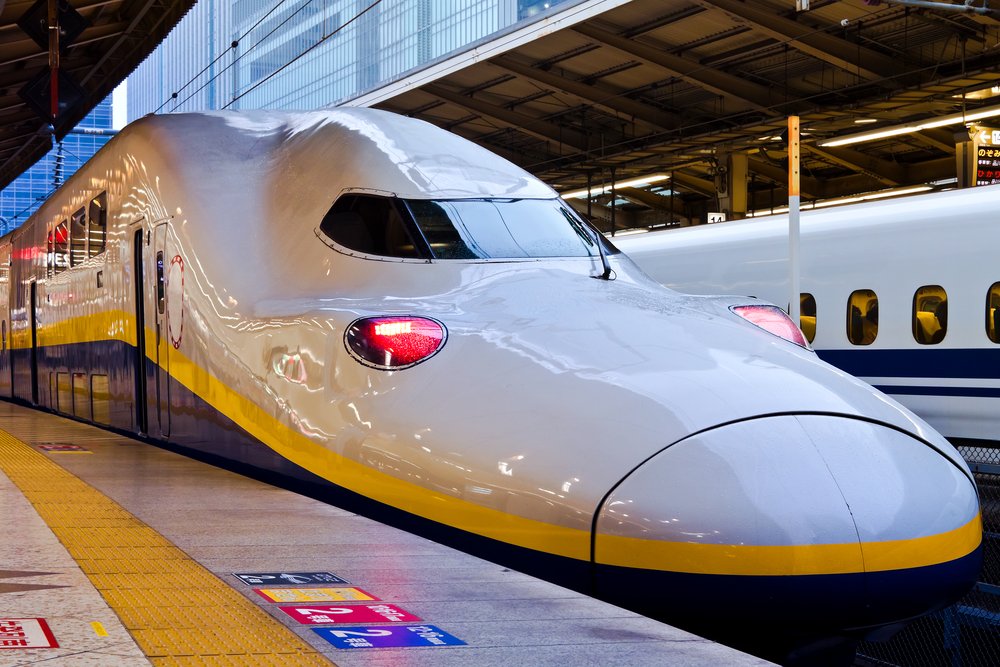
The Japanese railway privatization of 1987 stands as one of the most devastating defeats ever dealt to statist transportation mythology. The government split the bloated Japan National Railways into seven regional companies, sold them off, and watched private ownership transform a bankruptcy-bound disaster into the world's most efficient rail system.
JNR hemorrhaged money for decades before privatization. By 1987, the state railway carried debt equivalent to $200 billion in today's money while delivering mediocre service plagued by strikes and inefficiency. Politicians treated it as a jobs program rather than a transportation service. The predictable result: chronic losses, deteriorating infrastructure, and customer service that reflected government monopoly arrogance.
Private ownership changed everything overnight. The new JR companies slashed operating costs by 40% within five years while dramatically improving service quality. JR East alone now generates annual profits exceeding $3 billion. These companies invest billions in cutting-edge technology, maintain punctuality rates above 99%, and operate the world's most advanced high-speed rail networks. They achieved this without a single yen of operational subsidies.
The transformation reveals a core dynamic of transportation infrastructure: private companies must satisfy customers to survive, while government monopolies need only satisfy politicians. JR companies diversified into real estate, retail, and hospitality around their stations, creating integrated profit centers that cross-subsidize rail operations. Government railways never innovate this way because bureaucrats face no market pressure to generate returns.
Meanwhile, Amtrak burns through $2 billion in annual subsidies while delivering third-world service across most routes, and European state railways require massive taxpayer bailouts every few years to stay solvent.
English
@matthewstoller @ZeeshanAleem Not trust fund kids, but extreme credentialism. Before journalists could start out of high school, now you have people coming in with top school MAs for entry-entry level jobs covering daily moves in forex, stock market. Plus what Matt says about G&M.
English

@ZeeshanAleem It’s not ‘the internet’ it’s Google and Meta.
English

There are of course many, many journalists from affluent family backgrounds (I would not say “trust fund kids” is commonplace). But it’s not even in the top 10 reasons the institution is struggling. The explanation for the decline of professional journalism is very clearly and causally tied to the Internet breaking media economics. And in order for this the below thesis to have explanatory power, someone would need to demonstrate that most mainstream journalism reflected broad working class interests at some point, and then it didn’t. But that’s not what happened.
Tulika Bose@TulikaBose_
My hot take: there are too many trust fund kids in journalism these days — and that’s why it’s failing as an institution
English
@matthewstoller Good thing got it back, otherwise there'd be whataboutism claims about Matt Stoller's laptop from the GOP and corporate Dems.
English
I had an excellent experience with United Airlines. I left my laptop on the plane and they immediately called and kept calling until I picked up. So I could run back to the gate and grab it.
English

TUR: It appears the president is more desperate in this moment. Do you not agree?
MIKE LAWLER: Well, let's look back. Barack Obama engaged in a 7-month conflict in Libya--
TUR: We don't need to go back to Obama. Let's stick with President Trump
LAWLER: Excuse me, excuse me. Yes we do.
TUR: How does that make this war okay?
English
@Colin_P_A_Jones More cookie-cutter projects & buildings. Japan has great architects, developers need to hire them. Ain't talking about shite, supposedly designed by Tadao Ando, Omotesando Hills. (Suspect he phoned it in or an intern did that.) Ando has done great work, for example, in Naoshima.
English

@HuntClancy Looking at all the gravity-related deaths in Russia, gravity must be stronger there...
English

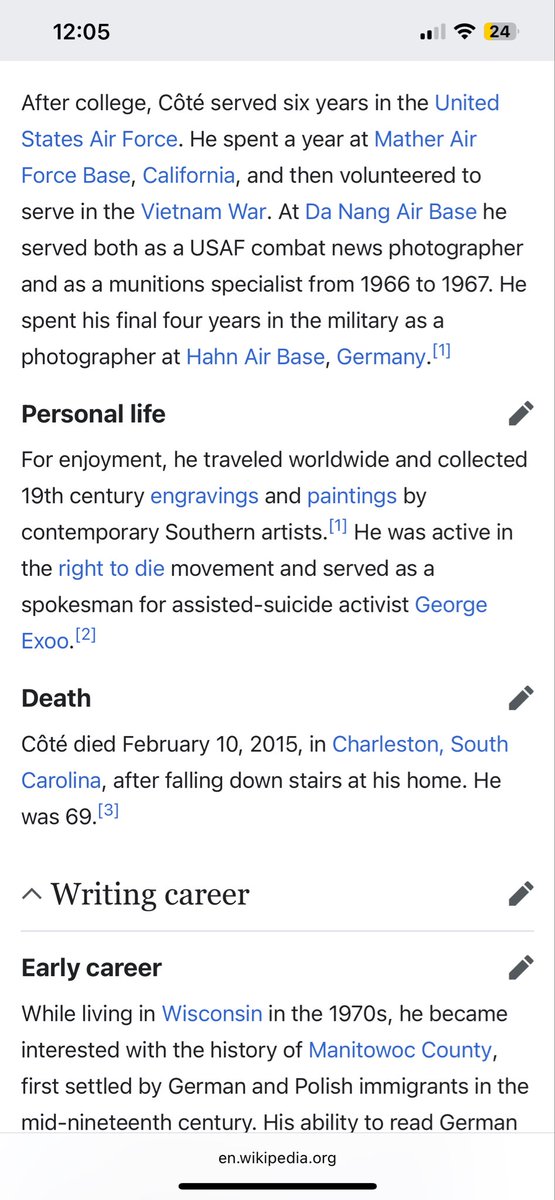
how odd that Edward Lee Howard and his ghostwriter both were reported to have died from falling down the stairs



TheHuntForTomClancy@HuntClancy
[Defector] Edward Lee Howard died at his dacha in Russia in 2002 at age 50, following a broken neck from a fall down the stairs. Some fellow Returned Peace Corps volunteers (Howard was first in the PC, USAID, then CIA, then NM Gov) found that suspicious thehuntfortomclancy.substack.com/p/the-cardinal…
English
@OnDisasters Last time researched this, Airbus made its initial major sales to struggling carriers with good deals. That was part of the trans-Atlantic trade war over civilian aircraft state subsidies.
English

And the answer to this one is... It's an Airbus A300. Actually, an Eastern Airlines A300 - this popped up at a group dedicated to this long-gone airline.
Eastern (EAL) took a big gamble in buying this new product from Europe, and, with marketing, it tried to "disguise" its origins 😅 (how much things have changed!)
"In a phone interview with the New York Times, Frank Borman casually stated that the aircraft “were largely American products with engines and other initial components amounting to one-third of the basic price.”
📹Aviation Commercials
ℹ️ Portail Interfas
Francisco Cunha@OnDisasters
And a bit of a quiz for a change: who can identify what aircraft is this one?
English
@Chris_arnade Still sceptical of self-driving except in limited cases. Point about vandalism is true, as when I travel in East Asia or regularly ride the subways in Japan, ticket machines aren't hardened to the point that user interface becomes clunky. Looking at you Chicagoland CTA.
English

No way a driver-less public bus will work in the US, except a few very limited routes, given safety issues from the riders.
Will be trashed/vandalized, and far too dangerous for most people to want to ride.
What the technology will do, is push more people into private self driving options, like cabs, etc, where riders don't have to mix with the public.
Joakim 🌹🇳🇴🇪🇺@joakial_
For the first time in Norwegian history, a bus will carry passengers in regular traffic without any human behind the wheel. The first pilot without a safety driver was tested Friday, and if all goes as planned, anyone can ride driverless buses starting in May.
English
@dieworkwear I've seen those grey things washed up on the beach.
English

This food looks like the raw material that the menswear brand toward(s) uses for their artisanal buttons
IG towards.ig

Clash Report@clashreport
📸 U.S. sailors on the USS Abraham Lincoln aircraf carrier are reporting poor-quality food and small portions during a long deployment near Iran. Because of extended operations and strained supply lines, crews are relying on limited resupply at sea, leading to rationing and lower morale. Families say sailors are often hungry, and mail disruptions mean they can’t send extra food or supplies. Source: USA Today
English
@HuntClancy Each type has its role. Prefer hardbacks, and books more than a couple years old can be bought used. (Though space and binding quality can be an issue.)
English
no one who writes dislikes hardbacks, because you get paid tied to the release dates for them. Then you get paid for the softcover book, too.
Few who read often make blanket generalizations within an unnecessary comma paired clause offset by an adverb, a dreadful sentence here
p.c.m. christ@plzcallmechrist
No one, who actually reads often, prefers hardbacks.
English
@Mylovanov Sure they can be overwhelmed. Kerch bridge and this. Just need to figure out the right timing...
English

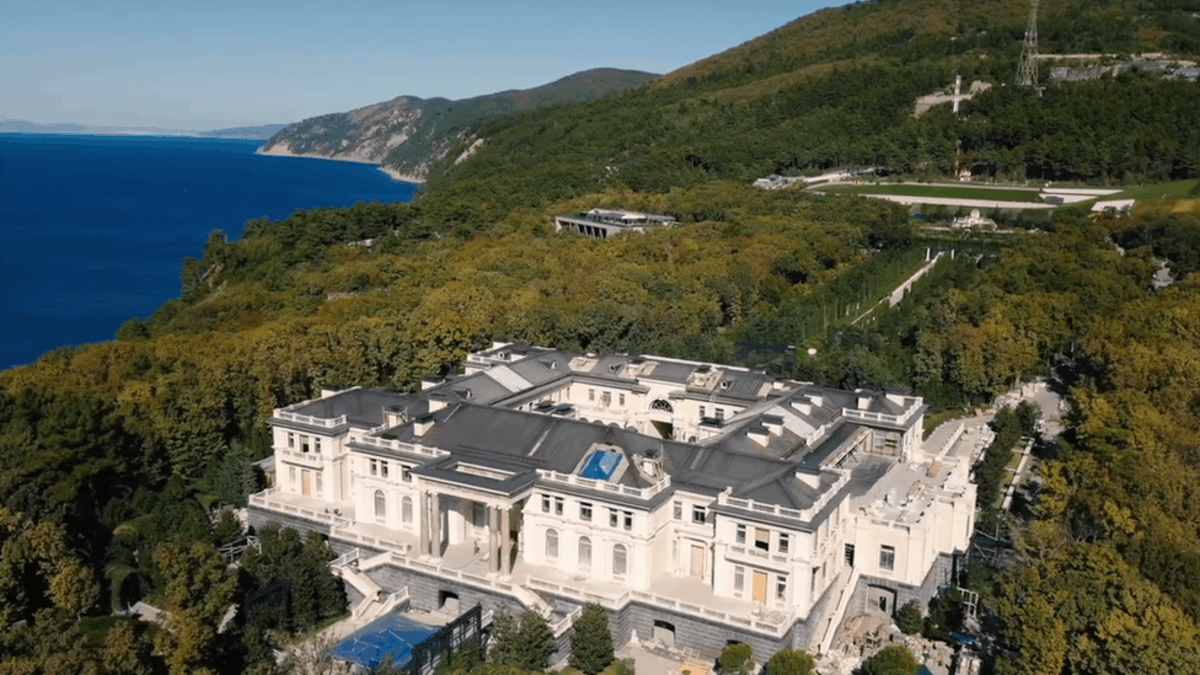
7 air defense systems now protect Putin's Valdai compound. They went up in a single day. 27 positions total — one of the densest defense perimeters outside Moscow.
The layout mirrors Moscow's own two-ring pattern — United24. 1/
English
@meathead Pretty cool videos though. I did follow you for cue tho!
English
So I liked a couple of Asian cooking videos and now that’s all I see. I don’t even get Barbecue videos anymore. This is goofy.
English
@LeverNews The outlets need to take the problematic actions of ripping off media for AI training with the AI firms.
English

Let me restate: while Nolan’s "Dunkirk" wasn't for everyone, it remains a masterpiece. Moments like these define the beauty of cinema.
English
@HuntClancy Maybe he plays a character on TV...though when I was younger, I could be a jerk.
English





They also wanted lower taxes on productive industries and business!
Chris Arnade 🐢🐱🚌@Chris_arnade
Since I'm in Omaha, reading about the formation of the People's Party, the largest progressive movement of the 1890s, which had it's first convention here, and most of it tracks with today's left progressives, except one big exception... Wall Street bad, big corporations bad, better conditions for workers, more open elections, and then, immigration bad, very bad.
English
@SH77ZHEN @Defence_Index Was thinking RU but what do activists have against the super eco-friendly and convenient TGV? Eminent domain issues?
English

@SimmsTokuha @Defence_Index For sabotage, mostly far-left French activists.
English

🔵🇫🇷 France has deployed 200 surveillance drones to monitor its 28,000 km rail network after sabotage and theft caused 800,000+ minutes of delays and 40,000 disrupted trains in 2024.
The drones use infrared night vision and help police detect and stop intrusions in real time as part of a €100M security program.
Source: SNCF / Delair
English