
Sixstring982
358 posts


not the best, I had a 55s restart yesterday, but consistently getting <1m now

English
@theo Wait until you `RUSTFLAGS="-C target-cpu=native" build --release`
English

@t4styycs Describe in detail what you think adding a “useMemo” here would do, I’m curious
English
I will never forget the life of me understand why people write code like this
Aiden Bai@aidenybai
the reason your React code sucks is useEffect + setState don't sync local state inside of useEffects - this will make your code overly complex to reason about
English
@AndersonAndrue Hey awesome, I find this syntax much more manageable than trying to cram everything into the first argument of `fc.property` -- especially stuff that depends on each other. I guess I shouldn't be surprised, since FC is monadic; but still!
English
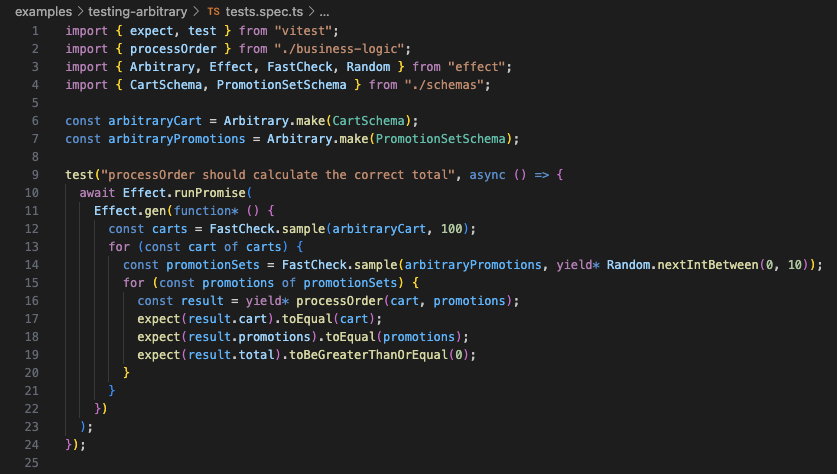

Why @EffectTS_ ?
Testing!
Effect's built-in capabilities for property-based testing make it simple to generate test data and test edge cases you'd never think about.
Use Effect.
How? 👇🧵
English
@dillon_mulroy If you aren't jinja-templating your nginx configs, are you really chilling?
English


Sixstring982 retweetledi


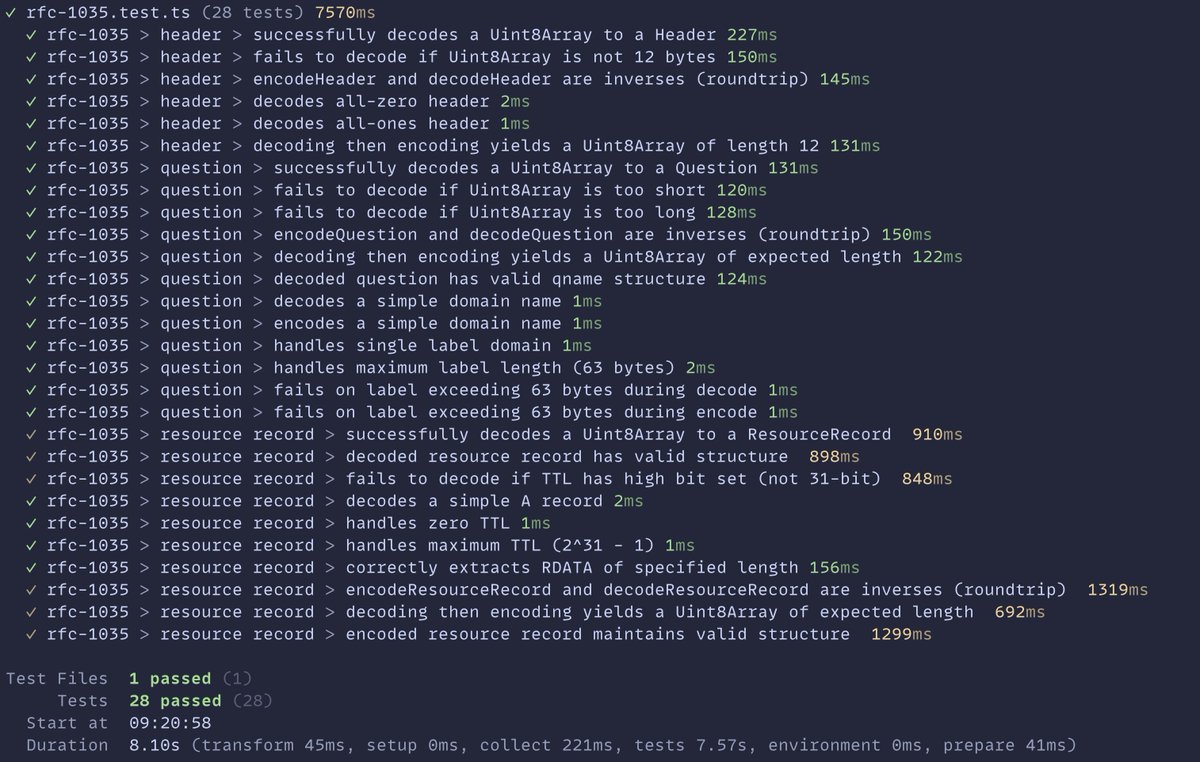
@janbhwilhelm @dillon_mulroy My guess is that this is a property test, though the thing being deserialized could also just be really big
English

@dillon_mulroy just curious, why would tests that e.g. decode Uint8Arrays take 910ms?
English
dns packet decoding and encoding is done with the exception of name (de)/compression
English

Sixstring982 retweetledi

Four months ago we took down our highly-praised website and replaced it with simple monospace text-heavy markdown files. Since then, people have reached out almost weekly asking what impact this had.
Did our conversions tank? Have we just completely given up?
Let's dig in.

English
Sixstring982 retweetledi
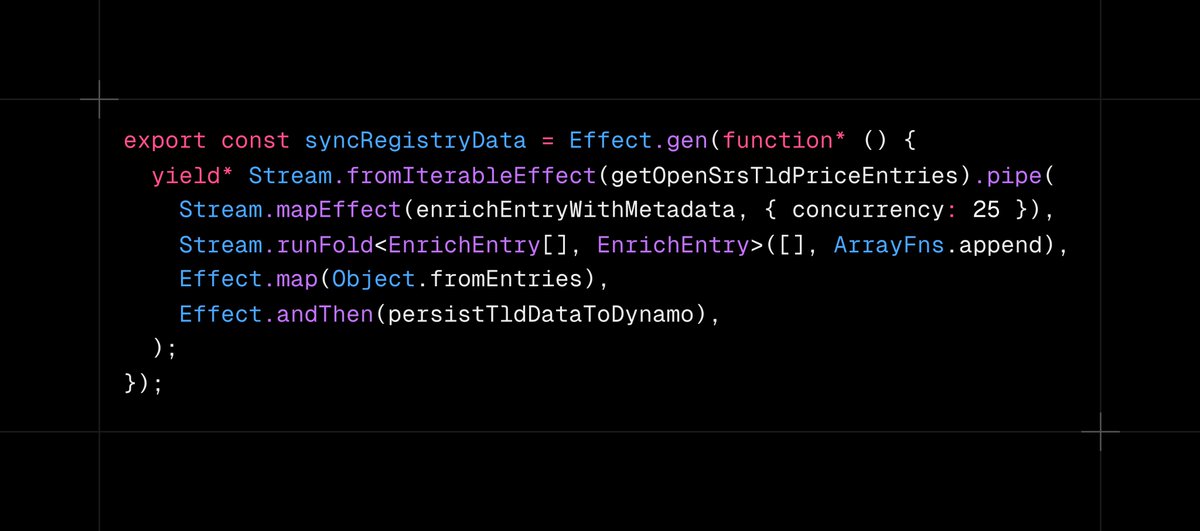
@dillon_mulroy @EffectTS_ That `concurrency: 25` threw me off a bit -- I suppose `enrichEntityWithMetadata` is something that returns a `Promise` under the hood?
Good stuff here, I need to try out EffectTS!
English
@welltypedwitch Awesome article, I found it today in Haskell Weekly! TIL about Linearity -- I'm excited to see that in Haskell. Its' a pretty cool feature!
English
@dillon_mulroy @MiTypeScript Hey cool, that seems like a useful trick! I'm gonna need to look for places to use it lol
English
This is such a good explainer of distributive conditional types in TS and worth your time to watch - kudos @MiTypeScript 🔥
youtube.com/watch?v=DNTipH…
YouTube
English


@devagrawal09 Indeed! Monads are really useful for encoding DSLs. You could totally make a builder monad, which could be useful in certain situations!
English

I'm seeing some parallels between the builder pattern in OOP and monads in FP
Might be a stretch, but both patterns are designed to give the programmer the ability to create an intermediate structure that represents an operation, compose additional behaviors on top, and delegate the actual operation to a runtime
The primary difference being builder objects being mutable, but if every method on a builder just returns a new builder with the new behavior, you basically just have a monad
English
@sabine_s_ @ocaml_org @techsavvytravvy @typescript Oh cool, OCaml has dynamic arrays now? I guess I never really checked if it did lol
But yeah those are usually more performant than linked lists due to better cache locality and whatnot
English

@Sixstring982 @ocaml_org @techsavvytravvy @typescript if u use a linked list in JavaScript it will be slow 🤷 so why not compare to the new Dynarray?
English

ok so i'm still implementing parts of @ocaml_org standard library, and obviously the source has a lot of recursive functions which is fine in ocaml bc they're optimized but not so great in js/ts..
should i change the implementations to be imperative, or should i do a system of trampolines and thunks?
...or should i yolo recursive calls and hope js engines figure it out

English
@ocaml_org @techsavvytravvy @typescript Lol well OCaml would use a linked list and take advantage of tail call optimization, so the recursive function here is a great way to do it!
English

English

@VicVijayakumar @DanielW_Kiwi @Shreyassanthu77 +1, a mat is critical for a standing desk. I've been using a standing desk for nearly 8 years now, and I haven't owned a desk chair during that time. You need a good mat, otherwise it doesn't work.
English