Stan Hewitt

8.1K posts

Stan Hewitt banner
Stan Hewitt

Stan Hewitt

@Stan_Hewitt

Husband. Dad. Petrophysicist. Investor. Always learning. #SMTTT

Slidell, La Katılım Mart 2009
898 Takip Edilen1K Takipçiler
clinton williams
clinton williams@williams_ct·
@Stan_Hewitt The sky is falling the sky is falling…don’t you know that the disparity in revenue has ALWAYS existed!
English
1
0
0
22
Jesse Cohen
Jesse Cohen@JesseCohenInv·
What do you call this chart pattern?
Jesse Cohen tweet media
English
1.8K
299
2.6K
719.4K
Stan Hewitt
Stan Hewitt@Stan_Hewitt·
@appsteve @BrettFavre Not wanting media exposure is one thing. He had nothing to do with signing the contract. The whole thing was a political stunt to use his name for more media exposure for the state auditor. The folks who worked on the contract are the only ones who could explain their actions.
English
0
0
0
11
Steve
Steve@appsteve·
@Stan_Hewitt @BrettFavre @BrettFavre literally texted, "If you were to pay me is there anyway the media can find out where it came from and how much?" Doesn’t seem to innocent to me.
English
1
0
0
16
Stan Hewitt
Stan Hewitt@Stan_Hewitt·
@appsteve @BrettFavre Stop lying. That contract was for an on campus multi-use & community facility & was executed by public & school officials. Brett Favre was paid for a series of ongoing speaking engagements and while he had already done some of them, he gave all of the money back.
English
2
0
0
27
Stan Hewitt retweetledi
Elon Musk
Elon Musk@elonmusk·
This is how an economy actually works
Brivael Le Pogam@brivael

Elon Musk avait dit un truc qui m'avait marqué sur l'allocation de ressources. En substance : passé un certain niveau de richesse, l'argent n'est plus de la consommation, c'est de l'allocation de capital. Cette phrase change tout. L'économie, dans le fond, c'est juste un problème d'allocation. Tu as des ressources finies et des usages infinis. Qui décide où va quoi ? Imagine une cour de récré. 100 enfants, des paquets de cartes Pokémon distribués au hasard. Tu laisses faire. Très vite, un ordre émerge. Les bons joueurs accumulent les cartes rares, les collectionneurs trient, les négociateurs trouvent des deals. Personne n'a planifié. Et pourtant chaque carte finit dans les mains de celui qui en tire le plus de valeur. Le système maximise le bonheur total de la cour. C'est ça, la main invisible. Maintenant fais entrer la maîtresse. Elle trouve ça injuste. Léo a 50 cartes, Tom en a 3. Elle confisque, redistribue, impose l'égalité. Trois effets immédiats. Les bons joueurs arrêtent de jouer, à quoi bon. Les mauvais n'ont plus de raison de progresser, ils auront leur part. Les échanges s'effondrent. La cour est égale, et morte. Elle a maximisé l'égalité, elle a détruit le bonheur. Le problème de la maîtresse, c'est qu'elle ne peut pas avoir l'information que la cour avait collectivement. C'est le problème du calcul économique de Mises, formulé en 1920. L'URSS a essayé de le résoudre pendant 70 ans avec le Gosplan. Résultat : pénuries, queues, effondrement. Pas parce que les Soviétiques étaient bêtes, parce que le problème est mathématiquement insoluble en mode centralisé. Quand Musk a 200 milliards, il ne les consomme pas, il les alloue. SpaceX, Starlink, Neuralink, xAI. Chaque dollar est un pari sur le futur. Et lui a un track record. PayPal, Tesla, SpaceX. Il a démontré qu'il sait identifier des problèmes immenses et y allouer des ressources avec un rendement spectaculaire. L'État aussi a un track record. Hôpitaux qui s'effondrent, éducation qui décline, dette qui explose, services publics qui se dégradent malgré des budgets en hausse constante. Le marché identifie les bons allocateurs, la politique identifie les bons communicants. Le profit n'est pas une finalité, c'est un signal. Il dit : tu as alloué des ressources rares vers un usage que les gens valorisent suffisamment pour payer. Plus le profit est gros, plus la création de valeur est grande. Quand Starlink est rentable, ça veut dire que des millions de gens dans des zones rurales ont enfin internet. Quand un ministère est en déficit, ça veut dire qu'il consomme plus qu'il ne produit. L'un crée, l'autre détruit, et on appelle ça redistribution. Dans nos sociétés il y a deux catégories d'acteurs. Les entrepreneurs et les bureaucrates. L'entrepreneur prend un risque personnel pour identifier un problème, mobiliser des ressources, créer une solution. S'il se trompe il perd. S'il a raison, ses clients gagnent, ses employés gagnent, ses fournisseurs gagnent, l'État collecte des impôts. Il est la cellule de base du progrès humain. Le bureaucrate ne prend aucun risque personnel. Son salaire est garanti. Au mieux il maintient une rente existante. Au pire il la détruit par excès de réglementation, mauvaise allocation forcée, incitations perverses qui découragent ceux qui produisent. Mais dans aucun cas il ne crée. Regarde les 50 dernières années. iPhone, internet civil, SpaceX, Tesla, Google, Amazon, Stripe, mRNA, ChatGPT. Toutes des inventions privées, portées par des entrepreneurs, financées par du capital risque. Pas un seul ministère n'a inventé quoi que ce soit qui ait changé ta vie au quotidien. La France est devenue le laboratoire mondial de la dérive bureaucratique. 57% du PIB en dépenses publiques, record absolu. Une administration tentaculaire, une fiscalité qui pénalise la création de richesse. Résultat : décrochage face aux États-Unis, à l'Allemagne, à la Suisse. Fuite des cerveaux. Désindustrialisation. Dette qui explose. Et le pire c'est que la mauvaise allocation s'auto-renforce. Plus l'État prélève, moins les entrepreneurs créent. Moins ils créent, moins il y a de base fiscale. Plus l'État s'endette et taxe. Boucle de rétroaction négative parfaite. La maîtresse pense qu'elle aide, et chaque année la cour produit moins. Dans nos sociétés, ce sont les entrepreneurs, toujours, qui font avancer la civilisation. Les bureaucrates au mieux maintiennent une rente, au pire la détruisent. Aucune société n'a jamais progressé en taxant ses créateurs pour subventionner ses gestionnaires. La question n'est jamais qui a combien. C'est qui alloue le mieux la prochaine unité de ressource pour maximiser le futur de l'humanité. La réponse depuis 200 ans n'a jamais changé. Ce ne sont pas les fonctionnaires.


English
5.6K
18.8K
131.4K
79.4M
Stan Hewitt
Stan Hewitt@Stan_Hewitt·
@patrick_oshag @dylan522p If highly trained & experienced people help to build a better process with AI, & the need for employees is reduced, who will be the experienced people to help guide us in the future? How do you know if optimum Now is the same in the future?
English
0
0
0
15
Patrick OShaughnessy
Patrick OShaughnessy@patrick_oshag·
Every conversation I have with @dylan522p, I'm really just trying to understand the supply and demand of tokens. This is a unique episode in that it's entirely dedicated to talking about both sides of that equation. We discuss: - The infinite demand for the newest models - @SemiAnalysis_ going from $10K on AI spend to $7M - Mythos and Anthropic's compute problem - Why TSMC spending $100B on CapEx could cause a shortage - Robotics as next demand wave - Why memory prices will double again This is my second conversation with Dylan and find myself needing to speak with him more and more often to make sense of it all. Enjoy! Timestamps: 0:00 Intro 1:00 Surging AI Spend 10:27 Token Demand 16:21 When Ideas Are Cheap and Execution is Easy 20:46 Model Hoarding 22:34 Robotics 27:03 The Compute Bottleneck 30:26 The AI Permanent Underclass 31:39 Supply Chain Reality 37:47 CPUs 42:54 Predictions: Public Backlash
English
37
120
1.2K
883.7K
Phil Trubey
Phil Trubey@PTrubey·
I keep seeing this interview being recommended in my timeline, but I had already seen Dylan being interviewed recently so didn’t think this would add much. I was wrong. This is a banger 40 minute interview chock full of interesting insights. This clip is about robotics, but there is tons of other insights about the entire AI industry.
English
5
9
92
23.9K
Stan Hewitt
Stan Hewitt@Stan_Hewitt·
@PTrubey Scary that Altman is in charge. Any AI models should be grounded in integrity and should be designed to work with and for humans and doing goodwill for mankind. I can see Altman giving robots more control than they should have. This is about ethics, morals, teaching & leadership.
English
0
0
0
9
Phil Trubey
Phil Trubey@PTrubey·
Today’s podcast with Sam Altman & Greg Brockman, OpenAI/ChatGPT founders is wonderful. They answer real questions we all have about AI. This segment explains why AI can’t write well. First, they haven’t tried to make them great writers, but more importantly, great writers each have their unique style, so it’s hard for one model to write like you want them to write. Brockman, the engineer, doesn’t really get into the meat of problem, but Altman instantly understands the problem is that LLMs still aren’t tailored enough to each individual for it to write like they how they would want the LLM to write. This is a core direction OpenAI is going in.
English
9
3
56
8.6K
Stan Hewitt
Stan Hewitt@Stan_Hewitt·
@StockMKTNewz Economy bad and it’s all Trump’s fault. We’re all doomed. Can’t wait until his lying a$$ is gone.
English
1
0
1
444
Evan
Evan@StockMKTNewz·
Predict what Jerome Powell says tomorrow using just 1 word
English
250
10
199
122.1K
Stan Hewitt retweetledi
Stan Hewitt
Stan Hewitt@Stan_Hewitt·
@robertstjohn @edsburgerjoint We need Ed’s in the Orange Beach area. There’s just not any good burger places in the whole area. Lots of places along the coast and the bay sides.
English
0
0
1
36
Robert St. John
Robert St. John@robertstjohn·
Nine years in, and we’re just getting started. Ed’s Burger Joint is heading to the coast. Our first expansion stop and my 27th restaurant opening. We’re not saying where just yet, but I’ll tell you this. It’s going to be the most unique, most exciting one we’ve ever done. See y’all soon. #expansion #restaurant #burgers
English
3
0
15
1.9K
Stan Hewitt retweetledi
Brian Feroldi
Brian Feroldi@BrianFeroldi·
Your salary won’t make you wealthy. 48% of $100k+ earners live paycheck to paycheck Wealth comes from owning assets like stocks, businesses, and real estate.
English
40
35
268
26.4K
Stan Hewitt retweetledi
USMVoice
USMVoice@USMVoice·
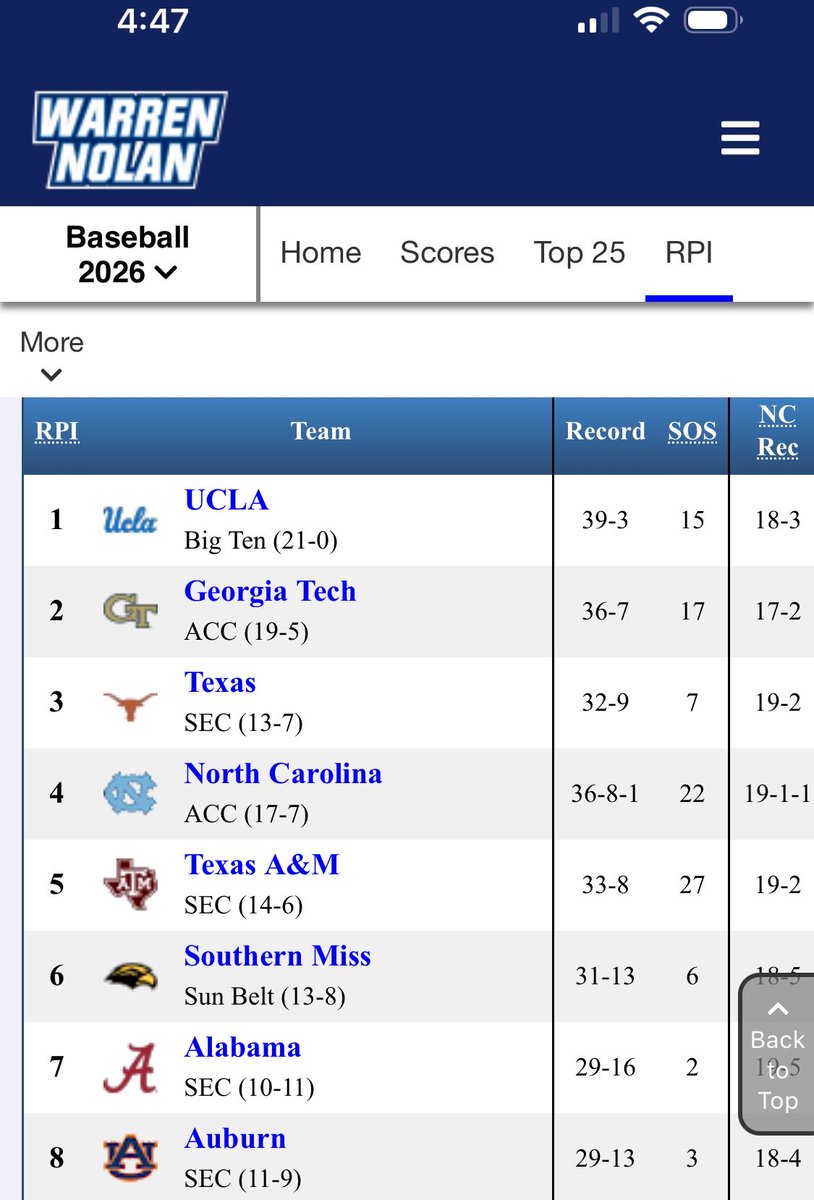
Southern Miss at #6 RPI after a solid week at 3-1, with a road series victory vs South Al and a mid week win vs Tulane. @KendallRogers @d1baseball
USMVoice tweet media
English
0
6
41
1.4K
Stan Hewitt retweetledi
USMVoice
USMVoice@USMVoice·
Southern Miss RPI is at #5 🔥
USMVoice tweet media
English
0
11
98
2.2K
Stan Hewitt retweetledi
Ihtesham Ali
Ihtesham Ali@ihtesham2005·
An MIT professor taught the same math course for 62 years, and the day he retired, students from every country on earth showed up online to watch him give his final lecture. I opened the playlist at 2am and ended up watching three of them back to back. His name is Gilbert Strang. The course is MIT 18.06 Linear Algebra. Every machine learning engineer, every data scientist, every quant, every self-taught programmer who actually understands how AI works learned the math from this one man. Most of them never set foot on MIT's campus. They just opened a free playlist on YouTube and let him teach. Here's the story almost nobody tells you. Strang joined the MIT math faculty in 1962. He retired in 2023. That is 61 years of standing at the same chalkboard teaching the same subject to 18-year-olds. The interesting part is what he did when MIT launched OpenCourseWare in 2002. Most professors were skeptical. They worried that putting their lectures online would make their classrooms irrelevant. Strang did not hesitate. He said his life's mission was to open mathematics to students everywhere. He filmed every lecture and gave it away. The decision quietly changed how the world learns math. For decades linear algebra was taught the wrong way. Professors started with abstract vector spaces and proofs about field axioms. Students drowned in the abstraction. Most never recovered. They walked out believing they were bad at math when they had simply been taught in an order that nobody's brain is built to absorb. Strang inverted the entire curriculum. He started with matrix multiplication. Something you can write down on paper. Something you can compute by hand. Something you can see. Then he showed his students that everything else in linear algebra eigenvectors, singular value decomposition, orthogonality, the four fundamental subspaces was just a different lens for understanding what the matrix was actually doing under the hood. His rule was strict. If a student could not explain a concept using a concrete 3 by 3 example, that student did not actually understand the concept yet. The abstraction was supposed to come last, not first. The intuition was the foundation. The proofs were just confirmation that the intuition was correct. The second thing Strang changed was the classroom itself. He said please and thank you to his students. Every single lecture. He paused mid-derivation to ask "am I OK?" to check if anyone was lost. He never used the word "obviously" or "trivially" because he knew exactly what those words do to a student who is one step behind. He treated 19-year-olds learning math for the first time the way he treated his own colleagues. With patience. With respect. With the assumption that they belonged in the room. For 62 years. The result is something that has never happened in the history of education. A single math professor became the default teacher of his subject for the entire planet. Universities in India, China, Brazil, Nigeria, every country with a computer science department, started telling their own students to just watch Strang's lectures. The University of Illinois revised its linear algebra course to do almost no in-person lecturing. The reason was honest. The professor said they could not compete with the videos. His final lecture was in May 2023. The auditorium was packed with students who had never met him before. He walked to the chalkboard, taught for an hour, and at the end the entire room stood and applauded. He looked confused for a moment, like he genuinely did not understand why they were cheering. Then he smiled and waved them off and walked out. His written comment under the YouTube video of that final lecture was four sentences long. He said teaching had been a wonderful life. He said he was grateful to everyone who saw the importance of linear algebra. He said the movement of teaching it well would continue because it was right. That was it. No book promotion. No farewell speech. No legacy management. The man whose teaching is the foundation of modern AI just thanked the audience and went home. 20 million views. Zero ego. The entire engine of the AI revolution sits on top of math that millions of people learned for free from one quiet professor in Cambridge. The course is still on MIT OpenCourseWare. Every lecture, every problem set, every exam, every solution. Free. The most important math course of the 21st century is sitting one click away from you. Most people will never open it.
Ihtesham Ali tweet media
English
547
8.3K
32.2K
2.4M