Steve Diamond

407 posts

Steve Diamond

Steve Diamond

@Stephenfdiamond

I study law, politics and political economy high above Silicon Valley.

Silicon Valley Katılım Aralık 2025
129 Takip Edilen10 Takipçiler
Steve Diamond retweetledi
Ed Elson
Ed Elson@edels0n·
I read all 277 pages of SpaceX's IPO filing so you don't have to. Losses up 700%. Revenue decelerating. 107x price-to-sales multiple. It's a trainwreck. Full breakdown below 👇
Ed Elson@edels0n

x.com/i/article/2059…

English
191
1.5K
4.5K
306.9K
Dean Baker
Dean Baker@DeanBaker13·
I assume SpaceX shareholders, especially the accidental ones in index funds (good time to get out), could sue NASDAQ for these rule changes.
Heidi@blockchainchick

The SpaceX IPO is the most brazen retail fleecing in modern market history. NASDAQ has REWRITTEN the index rules specifically for this listing. The 10% minimum free float requirement: gone. The 3 to 12 month seasoning period before index inclusion: cut to 15 trading days. Companies with small floats can now be weighted at 3x their actual float. Translation: every passive index fund, every 401k, every pension is about to be force-fed SPCX whether they want it or not. And what exactly are they buying? Class A shares carrying ONE vote each, while Musk holds 93.6% of the Class B super voting shares at TEN votes each. That gives him 85.1% of voting power on a 42% economic interest. He cannot be outvoted. He cannot be removed. CEO, CTO and board chairman simultaneously. For reference: Zuckerberg controls 61% of Meta. Buffett 35% of Berkshire. Musk: 85.1%. SpaceX is also claiming "controlled company" status, exempting it from needing a majority of independent directors. Shareholders waive the right to a jury trial. They waive the right to class actions. Mandatory arbitration only, courtesy of an SEC rule change pushed through on a party line vote last September. $1.75 trillion valuation. $80 billion raise. Largest IPO in history. The rules of the game were quietly rewritten so one man could extract maximum capital from retail while answering to no one.

English
16
66
741
70.6K
Steve Diamond retweetledi
Heidi
Heidi@blockchainchick·
The SpaceX IPO is the most brazen retail fleecing in modern market history. NASDAQ has REWRITTEN the index rules specifically for this listing. The 10% minimum free float requirement: gone. The 3 to 12 month seasoning period before index inclusion: cut to 15 trading days. Companies with small floats can now be weighted at 3x their actual float. Translation: every passive index fund, every 401k, every pension is about to be force-fed SPCX whether they want it or not. And what exactly are they buying? Class A shares carrying ONE vote each, while Musk holds 93.6% of the Class B super voting shares at TEN votes each. That gives him 85.1% of voting power on a 42% economic interest. He cannot be outvoted. He cannot be removed. CEO, CTO and board chairman simultaneously. For reference: Zuckerberg controls 61% of Meta. Buffett 35% of Berkshire. Musk: 85.1%. SpaceX is also claiming "controlled company" status, exempting it from needing a majority of independent directors. Shareholders waive the right to a jury trial. They waive the right to class actions. Mandatory arbitration only, courtesy of an SEC rule change pushed through on a party line vote last September. $1.75 trillion valuation. $80 billion raise. Largest IPO in history. The rules of the game were quietly rewritten so one man could extract maximum capital from retail while answering to no one.
English
293
1.5K
5.6K
751.7K
Steve Diamond retweetledi
Sonny Rollins
Sonny Rollins@sonnyrollins·
It is with deep sorrow and profound love that we announce the passing of Sonny Rollins. The Saxophone Colossus died this afternoon at his home in Woodstock, NY at the age of 95. 1/2 conta.cc/4wFIDrM
Sonny Rollins tweet media
English
480
6.7K
15.9K
840.9K
Steve Diamond
Steve Diamond@Stephenfdiamond·
@Tyler_A_Harper This hullabaloo is all because the right wing knows it cannot ever acknowledge the democratic content of Marx’s core principles so it labels any form of authoritarian leftism as “marxism.”
English
0
0
1
52
Tyler Austin Harper
Tyler Austin Harper@Tyler_A_Harper·
On the academia is full of Marxists debate: it’s illustrative to look at Mellon, the largest source of academic humanities funding by orders of magnitude. Projects tagged w/ Marxism in their grant database? 0 Gender studies? 46 Black studies? 25 Social Justice? 42 Latinx? 451
Tyler Austin Harper tweet media
English
77
54
537
150K
John Arnold
John Arnold@johnarnold·
Highly recommend “How to Rule the World.” It’s the social commentary book of the 'fake it till you make it' era. Written by the 17-year-old who brought down Stanford’s president, it shows how a toxic mix of power, money, and hubris has transformed the school and SV more broadly.
English
13
40
580
94.8K
Frank Conniff
Frank Conniff@FrankConniff·
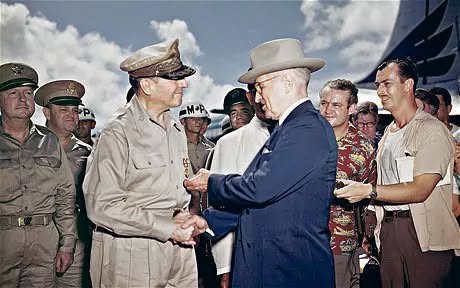
The guy in the loud shirt standing just behind Truman as he pins a medal on his frenemy MacArthur is my dad, the OG Frank Conniff.
Frank Conniff tweet media
English
36
60
963
16.7K
Steve Diamond
Steve Diamond@Stephenfdiamond·
@barttels2 @johnarnold @tab_delete 21. Wikipedia: “He matriculated at Stanford University in 2022, when he was 17, and joined The Stanford Daily. He expects to graduate in June 2026 with a degree in history.”
English
1
0
0
41
Steve Diamond retweetledi
George Noble
George Noble@gnoble79·
$SPCX is an utter travesty. The IPO, in its current proposed structured, must not be allowed to happen. Index funds and your 401k should not be the exit liquidity for this pile of garbage. I ask all lawyers of good conscience to please contact me by DM to explore what might be done to stop this IPO.
English
29
31
181
23.4K
Steve Diamond retweetledi
Swearing Sports News
Swearing Sports News@SwearingSport·
Jürgen Klinsmann: “There were 70,000 people, we were warming up seriously. While ‘Live Is Life’ was playing, Maradona started juggling the ball. We stopped warming up, because there was nothing more we could do except watch him.”
English
155
1.1K
10.7K
882.7K
Steve Diamond retweetledi
Tyler Austin Harper
Tyler Austin Harper@Tyler_A_Harper·
This conversation is extremely annoying because I am not remotely invested in denying that academia is a left political monoculture and that this has caused problems, but words mean things and there just are not a bunch of Marxists or economic radicals running around the faculty.
English
11
9
111
7K
Steve Diamond
Steve Diamond@Stephenfdiamond·
@ProfDBernstein He did it to protect whites whom he realized were destined to be a minority at some point: Volume 50 | Number 3 Article 2 1-1-2010 Diversity 's Strange Career: Recovering the Racial Pluralism of Lewis F. Powell, Jr. Anders Walker digitalcommons.law.scu.edu/lawreview
English
0
0
0
57
David Bernstein
David Bernstein@ProfDBernstein·
Justice Powell in Bakke, instead of coming up with the diversity thing which has caused no end of terrible policy, could haved end the affirmative action debate by allowing, not requiring (and prohibiting accreditation agencies from requiring), institutions to have up to a 5% (or some such) quota for African Americans, limited to descendants of American slaves and not immigrants. The rationale would have been the special history of African Americans and the need to help ensure they don't lack representation in major institutions of American society, a compelling government interst. Totally ban the use of race or ethnicity of immigrant groups: no more preferences for Black immigrants, Hispanics, or Asian Americans (in government contracting). Carve out some special rules for the small % of self-identified American Indians who live on reservations. That's it. Historical note: In Bakke itself, most of the quota beneficiaries were Hispanic or Asian, not Black, even though the case was portrayed in the media, and by Justice Marshall in his eloquent dissent, as Black vs. White.
English
11
4
60
5.6K
Steve Diamond
Steve Diamond@Stephenfdiamond·
@WKCosmo Wonder what she would have said had she known what he was up to off screen
English
0
0
1
12
Will Kinney
Will Kinney@WKCosmo·
Camille Paglia is the counterexample to the idea that academic writing has to be impenetrable Butlerian sludge. She's insane, but she's a cracking good writer. thetimes.com/culture/books/…
English
9
14
139
9K
Richard Salsman
Richard Salsman@RichardSalsman3·
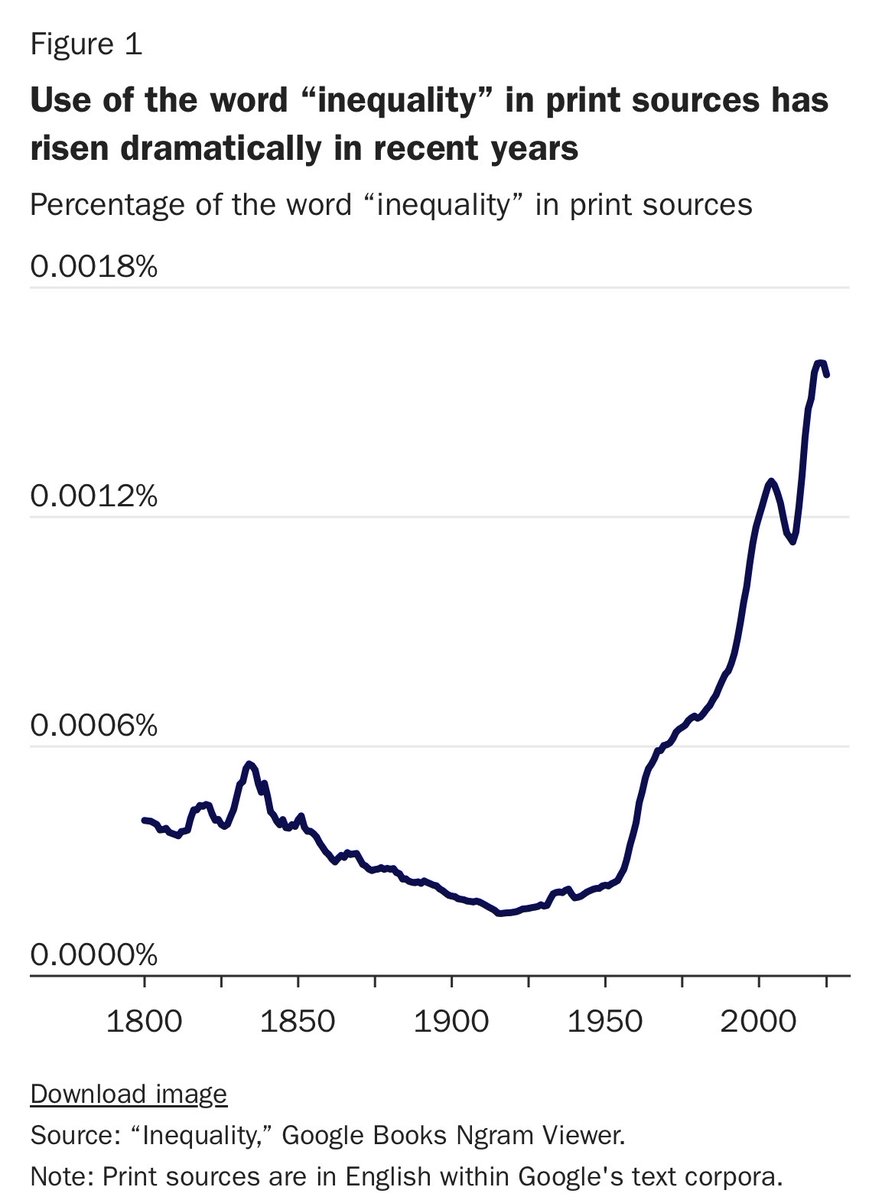
Under a more individualist, purely capitalist America (1825-1925) there was a multi-decade decline in an already low level of mentions of INEQUALITY. Then came “progressivism,” collectivism, welfarism, envy, and a skyrocketing of print mentions of INEQUALITY, not because it was celebrated but because it was excoriated. The shameful, anti-capitalist anti-Americanism persists to this day, indeed getting worse this century. cato.org/policy-analysi…
Richard Salsman tweet media
English
3
4
21
605
Steve Diamond
Steve Diamond@Stephenfdiamond·
@posta_octavian so you think the english and irish workers were correct in hating each other?
English
1
0
1
130
Octavian 🇪🇺
Octavian 🇪🇺@posta_octavian·
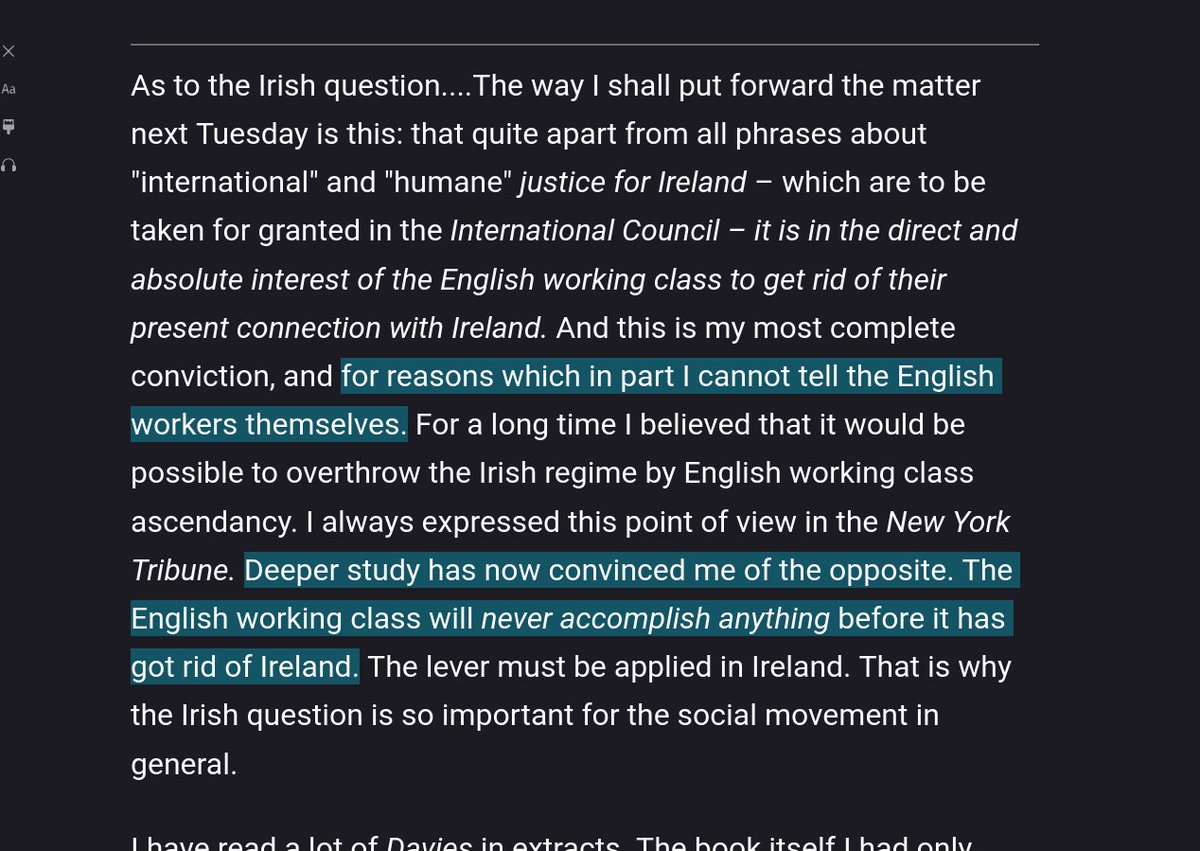
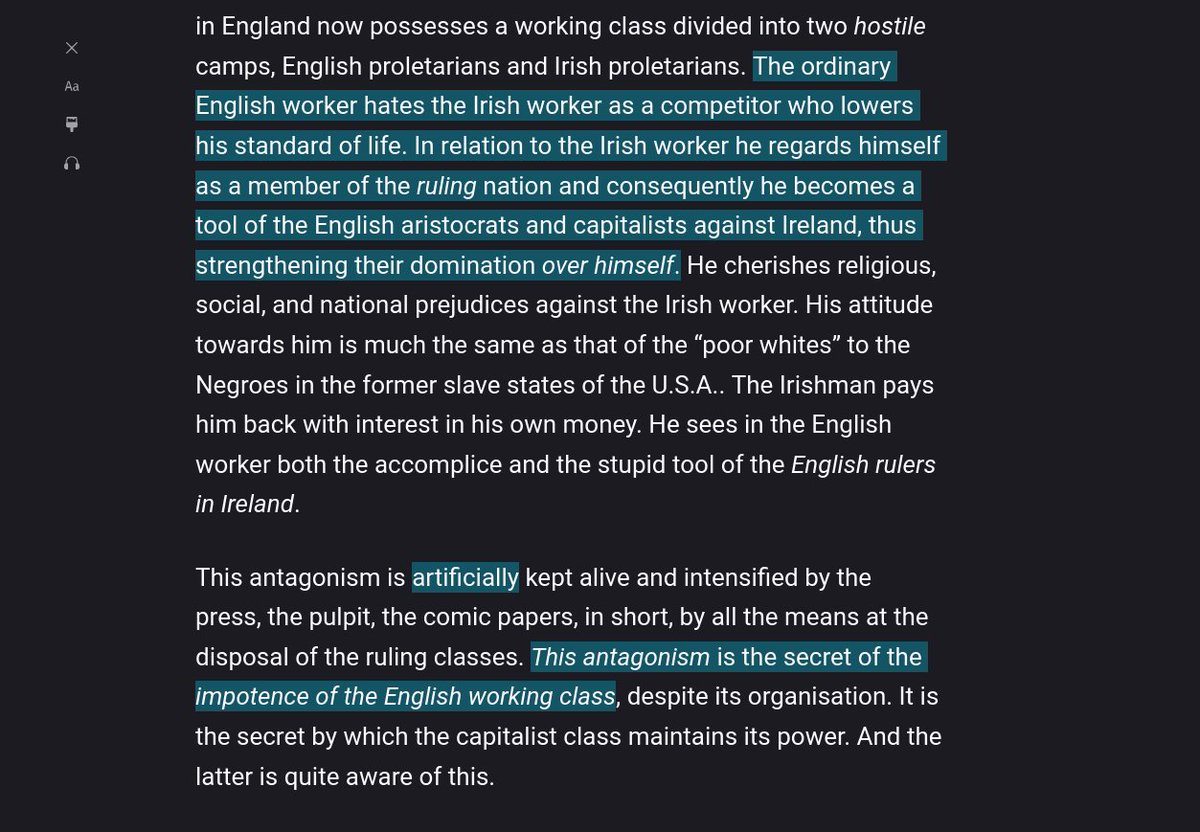
Marx struggled quite a bit with this. The basic assumption of communism is that there's a single, identical, collective interest of the global proletariat by virtue of their relation to capital (as propertyless individuals). The big question for communists then is why isn't the proletariat realising this collective international interest and why aren't they organising as such to pursue their interests as workers. In other words, why aren't they just thinking Rationally Enough to realise it? One problem for Marx was that the English and the Irish proletariat didn't unite or work together, mainly because the English proletariat sided with the empire and wasn't too keen to accept Irish nationalism and saw the Irish as competitors, and the Irish proletariat was on the other hand not too keen about being part of the British Empire. He outright says he expected them to work together, which then didn't happen. Look how he describes in a letter (first pic) to Engels that Irish needs to emancipate itself from the working class, so that the working class focuses on its struggle as the working class, but that he "cannot tell the working class" themselves. Basically, he, Marx, as the great intellectual, knows better than the working class themselves what's good for them, and his job now is to manipulate things in a way that is good for the working class themselves, even if they themselves are not aware of it. Basically he wants to be the catalyst for Hegel's Cunning of Reason. There's constantly all these factors that supposedly prevent the working class from thinking Rationally and doing what's Right (according to Marx). The classic "billionaires tell the English to hate the Irish to divide them" trope was actually thought of by Marx all the way in 1870. The history of communism is just a long, very long list of copes to try to explain why the proletariat is not thinking rationally and isn't coming to the "correct" conclusion of communist revolution. From Stalinist purges and de-kulakisation, to the Maoist cultural revolution, to Adorno and Horkheimer's Culture Industry, to Gramsci's "cultural hegemony"... it's all this. Over and over and over. They simply do not want to accept that there could be genuinely rational and legitimate reasons to not do communist revolutions and build "international solidarity".
Octavian 🇪🇺 tweet mediaOctavian 🇪🇺 tweet media
Lavader@Lavader_

The notion that if everyone on Earth just thought Rationally™ hard enough, they'd all collectively arrive at exactly the same Conclusion is a fantasy that needs to die as soon as possible.

English
27
106
758
53.8K
Steve Diamond
Steve Diamond@Stephenfdiamond·
@PhilWMagness Bill Ayers wouldn’t recognize Marx even if the old mole sat in his UIC office.
English
0
0
0
223
Phil Magness
Phil Magness@PhilWMagness·
Here you go, Nick. A list of 100 currently living Marxist professors: David Abraham — University of Miami (Law, retired) Ervand Abrahamian — CUNY Baruch College (History, emeritus) Jaafar Aksikas — Columbia College Chicago (Cultural Studies) Jack Amariglio — Merrimack College (Economics, emeritus) Bill Ayers — University of Illinois Chicago (Education, emeritus) Asatar Bair — Riverside City College (Economics) Rick Baldoz — Oberlin College (Sociology) Gopal Balakrishnan — UC Santa Cruz (History) Tithi Bhattacharya — Purdue University (History) Bruno Bosteels — Columbia University (Latin American Studies) Samuel Bowles — Santa Fe Institute (Economics) Neil Brenner — Harvard University (Urban Theory) Robert Brenner — UCLA (History) Wendy Brown — Columbia University (Political Science) Ben Burgis — Morehouse College (Philosophy/Logic) Michael Burawoy — UC Berkeley (Sociology, emeritus) Paul Burkett — Indiana State University (Economics) Charisse Burden-Stelly — University of Wisconsin Madison (African American Studies) Hazel Carby — Yale University (African American Studies, emeritus) Vivek Chibber — NYU (Sociology) Ronald H. Chilcote — UC Riverside (Political Science, emeritus) Harry Cleaver — UT Austin (Economics, emeritus) George Ciccariello-Maher — formerly Drexel University (Politics) Joshua Clover — UC Davis (English) Angela Davis — UC Santa Cruz (History of Consciousness, emerita) Greg Dawes — NC State University (Latin American Studies) Jodi Dean — Hobart and William Smith Colleges (Political Science) Cedric de Leon — UMass Amherst (Sociology) Lisa Duggan — NYU (American Studies) Roxanne Dunbar-Ortiz — CSU East Bay (History, emerita) Silvia Federici — Hofstra University (Political Philosophy, emerita) Samuel Farber — CUNY Brooklyn College (Political Science, emeritus) Johanna Fernández — CUNY Baruch College (History) Duncan K. Foley — New School for Social Research (Economics, emeritus) Barbara Foley — Rutgers University (English, emerita) John Bellamy Foster — University of Oregon (Sociology) Harriet Fraad — New School (Psychology) H. Bruce Franklin — Rutgers University (English, emeritus) Nancy Fraser — New School for Social Research (Philosophy) Grover Furr — Montclair State University (English) Michael Goldfield — Wayne State University (Political Science) Alyosha Goldstein — University of New Mexico (American Studies) Michael Hardt — Duke University (Literature) David Harvey — CUNY Graduate Center (Anthropology, emeritus) Gerald Horne — University of Houston (History) Michael Hudson — University of Missouri Kansas City (Economics, emeritus) Aaron Jaffe — SUNY Old Westbury (Philosophy) Adrian Johnston — University of New Mexico (Philosophy) Sharryn Kasmir — Hofstra University (Anthropology) Robin D.G. Kelley — UCLA (History) Andrew Kliman — Pace University (Economics) Karl Klare — Northeastern University School of Law (Labor & Employment Law) David Laibman — CUNY Brooklyn College (Economics, emeritus) Paul Le Blanc — La Roche University (History) Li Minqi — University of Utah (Economics) Peter Linebaugh — University of Toledo (History, emeritus) George Lipsitz — UC Santa Barbara (Black Studies) Stephanie Luce — CUNY School of Labor and Urban Studies (Labor Studies) Biju Mathew — Rider University (Business) Paul Mattick Jr. — Adelphi University (Philosophy) Robert McChesney — University of Illinois (Communications, emeritus) Randall H. McGuire — SUNY Binghamton (Anthropology) Peter McLaren — Chapman University (Education, emeritus) David McNally — University of Houston (Political Science) Jodi Melamed — Marquette University (English) Salar Mohandesi — University of Pennsylvania (History) Jason W. Moore — Binghamton University (Sociology) Fred Moseley — Mount Holyoke College (Economics) Kirstin Munro — New School for Social Research (Economics) Immanuel Ness — CUNY Brooklyn College (Political Science) Bertell Ollman — NYU (Politics) Christian Parenti — CUNY (Journalism/Economics) Michael Perelman — California State University Chico (Economics, emeritus) Michael J. Piore — MIT (Economics, emeritus) Minnie Bruce Pratt — Syracuse University (Writing, emerita) Barbara Ransby — University of Illinois Chicago (History) Adolph L. Reed Jr. — University of Pennsylvania (Political Science, emeritus) Touré Reed — Illinois State University (History) Gabriel Rockhill — Villanova University (Philosophy) David Roediger — University of Kansas (American Studies) John Roemer — Yale University (Economics) William I. Robinson — UC Santa Barbara (Sociology) Mike Rotkin — UC Santa Cruz (Lecturer) E. San Juan Jr. — University of Connecticut (English, emeritus) Anwar Shaikh — New School for Social Research (Economics) Tommie Shelby — Harvard University (Philosophy/African American Studies) Nikhil Pal Singh — NYU (Social and Cultural Analysis) Robyn Spencer — Lehman College CUNY (History) Neferti Tadiar — Barnard College (Women's Studies) Keeanga-Yamahtta Taylor — Princeton University (African American Studies) Alberto Toscano — UC San Diego (Sociology) Mark Tushnet — Harvard Law School (Constitutional Law, emeritus) Alan M. Wald — University of Michigan (English, emeritus) Thomas E. Weisskopf — University of Michigan (Economics, emeritus) Richard Wolff — New School for Social Research (Economics, emeritus) John Womack — Harvard University (History, emeritus) Robert Wrenn — University of Maine (Economics, emeritus) Michael D. Yates — formerly University of Pittsburgh at Johnstown (Economics) Gale A. Yee — Episcopal Divinity School (Biblical Studies) Michael Zweig — SUNY Stony Brook (Economics, emeritus)
Nick Burns@NickBurns

@CliffordAsness @PhilWMagness If that’s anywhere near true then it would be easy to name hundreds of actual, bona fide Marxist professors. But somehow no one can?

English
96
106
784
415.7K