RumptyTumptyTum
142 posts


@PMarlowe1939 It should be painful for everyone but instead of trying to claw desperately for that power they jump ship as soon as the yankbucks come out


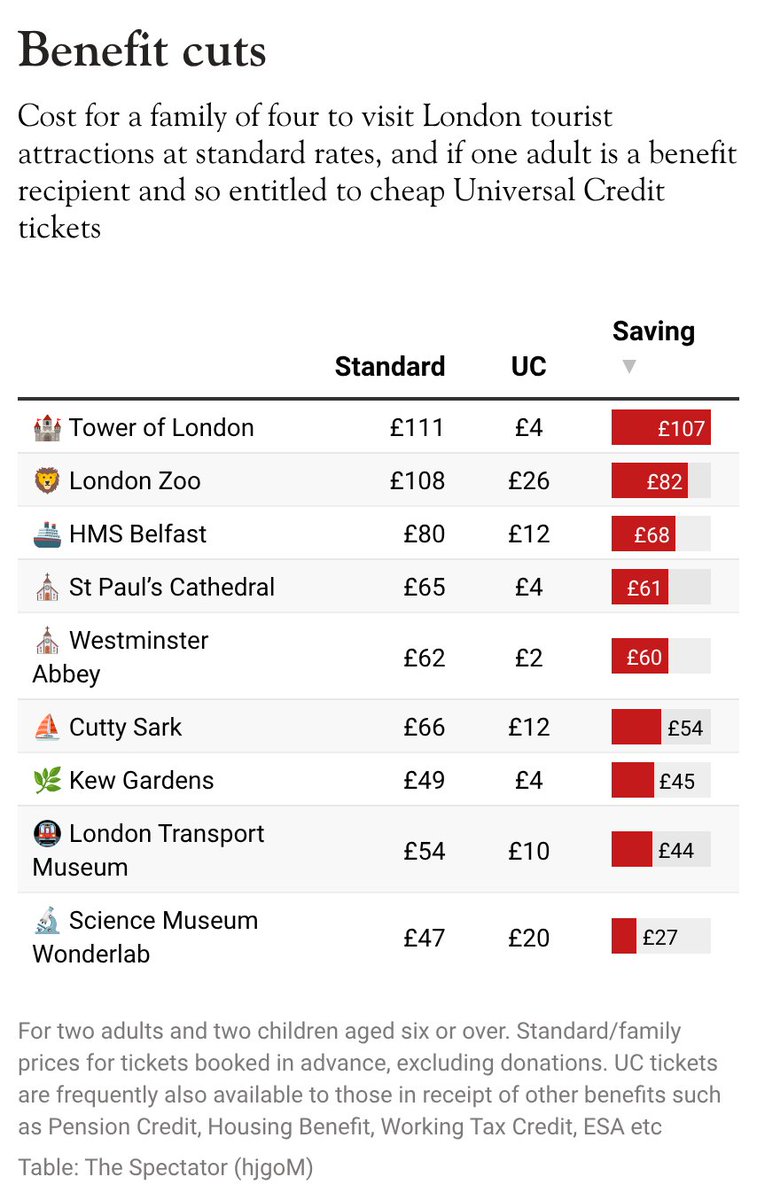
Is this fair?

@albieamankona They're not private organisations in any real sense though. For example, Historic Royal Palaces, which runs the Tower of London, is governed entirely via appointees of the Secretary of State for Culture, Media and Sport.

No. Working people are being taken for a ride. Under a Reform UK government you won’t be able to use benefits to get discounts like this.


@albieamankona They're not private organisations in any real sense though. For example, Historic Royal Palaces, which runs the Tower of London, is governed entirely via appointees of the Secretary of State for Culture, Media and Sport.

The first time I set foot in the White House as a Labour political adviser, in spring 2024, to see a then all-powerful Jake Sullivan as the US National Security Adviser, I went as an Atlanticist. By my final visit to the West Wing in January, accompanying David Lammy as his aide to see J.D. Vance, I was an Anglo-Gaullist. In between lay the humiliation of Chagos, twists and turns over Ukraine, surprise American strikes on Iran and the realisation that our closest ally, the superpower we had built our entire security around, had become erratic, emotional and unpredictable. ✍️ Ben Judah Article | spectator.com/article/de-gau…


We're not going to travel beyond the solar system, according to Leonard Susskind. And neither are aliens, coming to visit us. We may not be alone, but we are stuck here for, essentially forever. 1. The nearest star is 4.24 light years away. The fastest spacecraft ever built would require 6,600 years to get there. 2. Surely we can just build faster spacecraft. The problem is to get to anywhere close to the speed of light, we need exponentially more energy. 3. Chemical rockets will just not work. Even fusion rockets won't work. Even 10% of the speed of light is not achievable. The Tsiolkovsky Rocket Equation prevents it. 4. Interstellar dust becomes hand grenades when traveling anywhere close to the speed of light. Ships break. 5. Space radiation will kill us over the time need to travel interstellar distances. Impossible to protect without massive shields, which require massive energy to accelerate and de-accelerate.

We're not going to travel beyond the solar system, according to Leonard Susskind. And neither are aliens, coming to visit us. We may not be alone, but we are stuck here for, essentially forever. 1. The nearest star is 4.24 light years away. The fastest spacecraft ever built would require 6,600 years to get there. 2. Surely we can just build faster spacecraft. The problem is to get to anywhere close to the speed of light, we need exponentially more energy. 3. Chemical rockets will just not work. Even fusion rockets won't work. Even 10% of the speed of light is not achievable. The Tsiolkovsky Rocket Equation prevents it. 4. Interstellar dust becomes hand grenades when traveling anywhere close to the speed of light. Ships break. 5. Space radiation will kill us over the time need to travel interstellar distances. Impossible to protect without massive shields, which require massive energy to accelerate and de-accelerate.

Japan has the world’s best railway system. 28% of Japanese passenger-kilometers are by rail. Germany manages 6.4%, and the USA manages 0.25%. Just one Japanese company, JR East, carries more passengers than China’s entire railway system, and four times as many than Britain’s. What is the secret of its success? worksinprogress.co/issue/why-japa… Part of the answer is that Japanese railway companies don't just operate trains. They run hospitals, supermarkets, department stores, amusement parks, office complexes, and retirement homes around their railway stations. One of them co-built Tokyo Disneyland. Another owns a baseball team. A third created its own all-women musical theater in 1914, which is still running today. The logic is elegant: a railway increases the developable value of land around its stations, but normally that value accrues to landowners, not the railway operator. Japanese railway companies captured this value by owning and developing the land themselves. About half of the revenue of Japanese railway companies comes from ‘side businesses’ like these. Allowing railway operators to capture more of the value they created meant that more lines were profitable, making a far larger system financially viable. This may sound like a radically novel approach. But in fact, an exactly similar system existed in nineteenth-century America. The success of Japanese railways does not lie in some unreplicable feature of Japanese culture: it lies in good policy. If they learnt the right lessons from it, many countries could replicate Japan’s success. Read more (much more) in @Borners1's & @carto_graph's new piece for @WorksInProgMag Issue 23.

There is no fundamental quarrel between Britain and Iran and the Prime Minister should say so.

Be aware that @jfwduffield has been hacked. The hacker is sending DMs to his followers, asking you to vote in an X competition. It directs you to what appears to be an X page that asks for your password.