
Sabitlenmiş Tweet

@AstronoLive @ken_caudle Wondering how many Flat Earthers have reached out to the thousands of members of the Astronomical League over the years, offering to help them "re-measure" the distance to the sun.
🤔
English
CuriousNeuron
2.7K posts

@StillBuffering2
Passionate about the universe and everything that’s in it.






45 years ago Today, Voyager 2 captured this view of Saturn with its moons.


More papers detailing the "MEASUREMENT OF EARTH'S ORBITAL VELOCITY" Title: Long-Term Variations of Daily Insolation and Quaternary Climatic Changes Authors: André L. Berger Journal: Journal of the Atmospheric Sciences Publication Year: 1978 Volume/Issue: Volume 35, Issue 12 Pages: 2362–2367 DOI: 10.1175/1520-0469(1978)035<2362:LTVODI>2.0.CO;2 Citations: ~3189 (highly cited classic for trigonometric formulas and long-term variations of Earth's orbital elements used in insolation calculations) Summary: Provides trigonometrical formulas for direct spectral analysis and computation of long-term variations in Earth's orbital elements (eccentricity, obliquity, precession) relevant to Quaternary climate changes. Title: Long-term variations of caloric insolation resulting from the Earth's orbital elements Authors: André L. Berger Journal: Quaternary Research Publication Year: 1978 Volume/Issue: Volume 9, Issue 2 Pages: 139–167 DOI: 10.1016/0033-5894(78)90064-9 Citations: ~1869 Summary: Proposes solutions for Earth's orbital elements (including terms up to second/third degree perturbations) and computes caloric insolation variations; a cornerstone for paleoclimatic modeling of orbital forcing. Title: Insolation values for the climate of the last 10 million years Authors: André Berger and Marie-France Loutre Journal: Quaternary Science Reviews Publication Year: 1991 Volume/Issue: Volume 10, Issue 4 Pages: 297–317 DOI: 10.1016/0277-3791(91)90033-Q Citations: ~5342 (extremely highly cited) Summary: Proposes new values for Earth's orbital and rotational parameters (eccentricity, obliquity, precession) over the last 10 Myr, widely used as a reference for paleoclimate studies and insolation reconstructions. Title: Orbital, precessional, and insolation quantities for the Earth from -20 Myr to +10 Myr Authors: J. Laskar Journal: Astronomy & Astrophysics Publication Year: 1993 (building on 1986/1988 works) Citations: ~796 (for this specific paper; Laskar's series is foundational) Summary: Provides numerical solutions for Earth's orbital elements and precession over extended timescales, a key reference for accurate long-term integrations. Title: The Planetary and Lunar Ephemerides DE430 and DE431 Authors: William M. Folkner et al. (JPL/NASA) Journal/Publication: IPN Progress Report 42-196 Publication Year: 2014 (but based on long-standing DE series; DE405/DE421 predecessors from 1990s/2000s are classics) Citations: ~1468 Summary: Modern high-precision ephemeris providing fitted orbital parameters for Earth (and other bodies) from observations; DE series papers are standard references for current/best orbital elements of Earth.
@TheGlobeIsDead Wrong. Here is a Falcon 9 rocket landing on a drone ship behind the curvature of the Atlantic Ocean. The super bright flame gets obscured, so it’s not caused by a “limit of vision” as you people like to claim. In fact my scope resolves the width of the rocket even as it lands.




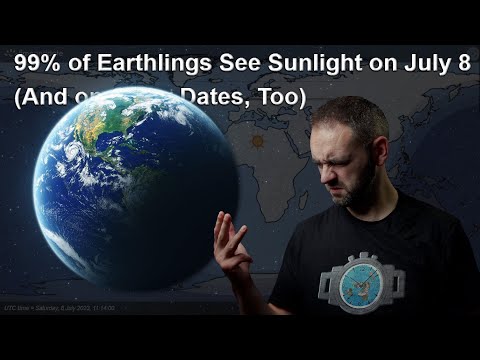
Today is the day that proves the globe model is fake. All you need to do is pay attention and stop thinking nobody would ever lie to you. Y'all look so childish hanging on to fairytales. I bet y'all still believe in Santa and the tooth fairy.

