

Dave Stokes
20.8K posts


Huey Lewis & the News were everywhere… hit after hit, sound of the 80s… then one day it just kinda went quiet. Ever catch yourself wondering whatever happened to Huey Lewis?
English
Dave Stokes retweetledi

Dave Stokes retweetledi

I just added Jepsen blog to @PlanetMysqlComT.
github.com/oursqlcommunit…
English
Dave Stokes retweetledi

The 40 Percent Rule: How Organizations Quietly Lose Competence
There is a rule of thumb that has been passed around operations and turnaround circles for decades. It is rarely taught in business school anymore, but those of us who have watched organizations get gutted by private equity or aggressive cost, outsourcing, and offshoring have seen it play out repeatedly.
We are all witnessing it ...because Financial folks aren't aware of it and think a warm body is all an org chart needs.
It starts with layoffs justified for financial reasons. About three months later the first cracks appear. The experienced people who kept systems running through undocumented workarounds and tribal knowledge are gone. The new staff assumed those tasks were obvious. The organization hobbles along at first, but the clock has started.
Then the 40 percent rule kicks in.
Any organization that replaces more than 40 percent of its core technical and operational personnel within a 3 yr period, typically crosses into intellectual bankruptcy roughly two years later. By year three the loss of institutional know-how becomes irreversible. The company breaks down into silos that spend most of their time firefighting until competitors take their customers or the organization slowly decomposes.
This pattern is not theoretical. It has been observed across multiple large corporations over the last century whenever finance or HR fully takes over hiring and firing decisions. Amazon is currently tracking this trajectory in real time. Microsoft appears to have passed the point several years ago.
From an engineering perspective this is straightforward systems failure analysis. Tacit knowledge - the undocumented glue that holds complex operations together, cannot be transferred or recreated at the same speed it is removed. When you lose too much of it too quickly, the remaining staff no longer have enough context to rebuild what is missing. The decay then becomes self-reinforcing.
This explains why so many organizations that looked healthy on paper suddenly begin missing deadlines, burning cash, and losing market position two to three years after major workforce reductions. Downtime events, meetings to say- we cant do that any longer (as if it were intentional). The balance sheet improved for now. The institutional competence did not.
Yes the balance sheet always improves because it takes a while for customers to find a new source and for the new companies to form to take the business.
Engineers usually see the warning signs first because we are the ones forced to keep undocumented systems alive long after the experienced people are gone.
Real question for the engineers, operators, techs and turnaround people reading this:
What was the earliest operational signal you noticed when your organization crossed the 40 percent threshold?
Comment if you have experienced similar below. No names needed - just the signs you saw on the ground.
Bookmark this if you have watched a once-strong company slowly lose its ability to execute after heavy cuts.
Tech Wednesday
English
Dave Stokes retweetledi

Hobby project, MySQL compatible server and client, both 100% Rust. Storage engine is LSM.
Lots of vibe coding for the boring parts and fine tuning by hand. The results are quite impressive. There is lots of room to improve further, this is looking good. The more interesting part was writing the parallel query infrastructure.
Best of all, the memory usage is capped following an Oracle style SGA and an arena allocator for temporary memory usage. If the server runs out of memory while executing any SQL it will return an OOM to the client instead of crashing.
sql:test> insert into test.t select * from test.t;
Query OK, 167772160 row(s) affected (3.90 mins)
sql:test> select count(*) from test.t;
COUNT(*)
335544320
1 row(s) (16.28 secs)
sql:test>
English
Dave Stokes retweetledi

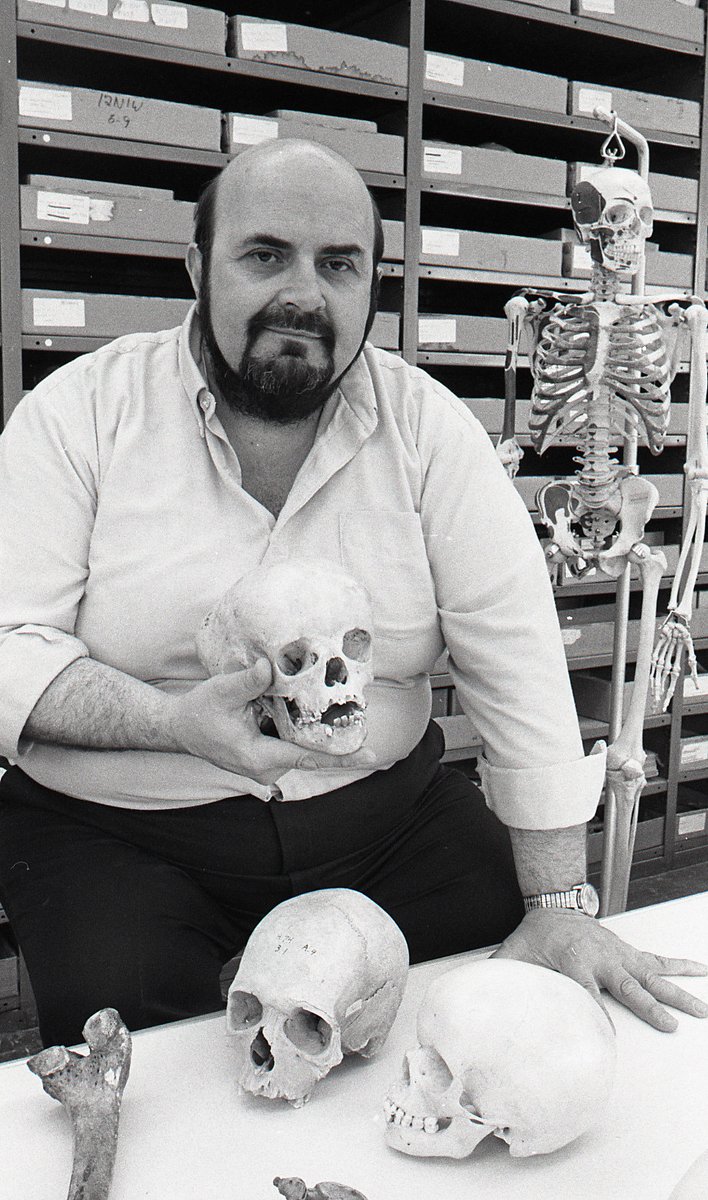
In 1980, a bioarchaeologist at Emory University named George Armelagos was studying ancient human bones from Sudanese Nubia, the kingdom that flourished along the Nile south of Egypt between roughly 350-550 CE, when something stopped him. Under ultraviolet light, the bones glowed.
They fluoresced with a distinctive yellow-green color that Armelagos recognized immediately, because the same glow appeared in the bones of modern patients who had been treated with tetracycline.
The antibiotic binds tightly to calcium and phosphorus in bone tissue as the body metabolizes it, leaving a permanent fluorescent marker. What Armelagos was seeing in bones nearly two thousand years old was chemically identical to what he saw in twentieth-century medical subjects.
The archaeological community was skeptical. The received history of antibiotics began with Alexander Fleming’s discovery of penicillin in 1928, and tetracycline itself was not isolated until 1948. The idea that a pre-literate population in the Nile valley had been routinely ingesting it seemed implausible, and the initial findings were dismissed as post-mortem contamination from soil bacteria.
Armelagos spent three more decades building the case. He eventually partnered with Mark Nelson, a leading tetracycline specialist at Paratek Pharmaceuticals, who agreed to perform a definitive chemical analysis.
The process required dissolving the ancient bones in hydrogen fluoride, one of the most corrosive and dangerous acids in existence. What the resulting liquid-chromatography mass-spectrometry analysis found was not a trace of tetracycline.
The bones were saturated with it. Multiple tetracycline variants were identified, including chlortetracycline and oxytetracycline, in concentrations indicating sustained exposure beginning in early childhood and continuing throughout life.
Ninety percent of the Nubian individuals tested showed the labeling. The exposure had not been accidental or occasional. It had been lifelong and deliberate.
The source was their beer.
Ancient Egyptian and Nubian brewing began with grain, typically emmer wheat or barley, which in that region was naturally contaminated with Streptomyces, a soil bacterium that produces tetracycline as a metabolic byproduct.
The grain was germinated, made into bread, then incompletely baked to preserve an active center, and finally fermented in vats of water. The standard practice was to seed each new batch with ten percent of the previous one, which kept the Streptomyces culture alive and active from batch to batch in a continuous chain.
The resulting brew was thick, sour, low in alcohol, and highly nutritious. Everyone drank it, including children as young as two years old.
The critical question Armelagos could not fully resolve was whether the Nubians understood what they were doing. The consensus among researchers is that they almost certainly did not know the mechanism.
They had no concept of bacteria, no understanding of antibiotics as a drug class, and no language for what tetracycline was doing in their bodies.
What they likely did know, accumulated through generations of observation and passed down as practical knowledge, was that this particular preparation of beer had medicinal effects.
Ancient Egyptian and Jordanian medical texts record beer being used to treat gum disease, wounds, and other infections.
The brewing method that produced tetracycline appears to have been deliberately maintained and refined over centuries, not by any understanding of the chemistry involved, but by the accumulated recognition that it worked.
#archaeohistories
English
Dave Stokes retweetledi

My post on Friday regarding the estate tax proposal in New York got 600,000+ views, so clearly this struck a nerve. Some individuals asked me to back up what I said so I am going to discuss what happens when states push tax policy past the breaking point. Here is what the data shows and it’s worse than most people realize. According to IRS migration data, New York has lost $111 billion in net adjusted gross income over the last decade from residents moving to other states. That’s not hypothetical, that’s $111 billion in taxable income that used to fund schools, subways, police, and infrastructure that is now funding those things in Florida and Texas rather than New York. California lost $102 billion over the same period. Florida gained $196 billion. Texas gained $54 billion. That’s not a coincidence, it’s a pattern.
Between 2018 and 2024, 561 companies relocated their headquarters across the country. The San Francisco Bay Area lost 156 corporate headquarters. Los Angeles lost 106. New York City lost 27. Meanwhile Dallas alone gained 100, Austin gained 81, and Nashville gained 35. This didn’t come to a halt in 2025 or 2026. Palantir $PLTR which was the largest publicly traded company in Colorado, announced in February that it was moving its headquarters from Denver to Miami. It was PLTR’s second move in six years after leaving Silicon Valley in 2020. The governor of Colorado said he found out through a social media post. ExxonMobil’s $XOM board unanimously recommended that shareholders approve reincorporating the company from New Jersey to Texas after 144 years at the vote in May. Exxon has physically operated out of Texas since 1989, and its CEO said Texas has created a policy environment that allows them to maximize shareholder value. Chevron $CVX completed its move from California to Houston. In-N-Out Burger is opening a 100,000-square-foot eastern headquarters near Nashville and is leaving California. These aren’t outliers anymore as this is becoming the new normal.
It’s not just corporate headquarters moving. Entire financial ecosystems are relocating. Citadel, one of the most profitable hedge funds in the world, moved its headquarters from Chicago to Miami in 2022 and has been building out aggressively ever since. They’re constructing a massive new waterfront headquarters in Miami’s Brickell financial district. Elliott Management moved to West Palm Beach. Carl Icahn moved Icahn Enterprises from New York to Sunny Isles Beach. Cathie Wood’s ARK Investment Management relocated to St. Petersburg. Goldman Sachs $GS is building a $500 million campus in Dallas designed to house over 5,000 employees. JPMorgan Chase $JPM and Wells Fargo $WFC have both invested hundreds of millions into massive new campuses in the Dallas-Fort Worth area. Wells Fargo is also moving its wealth management division from San Francisco to West Palm Beach. NYSE Texas a reincorporation of the 143-year old Chicago Stock Exchange officially launched in Dallas in early 2025. The Texas Stock Exchange which is a brand new national securities exchange backed by over $160 million from BlackRock $BLK , Citadel Securities, and Charles Schwab $SCHW is set to begin trading by the end of this year. Nasdaq has also expanded its Texas presence with operations in Irving.
When you have that level of financial infrastructure being built in a single metro area, that’s not a trend it’s an ecosystem being constructed from scratch to compete directly with New York. Each of these moves represents not just a company but thousands of high-paying jobs, billions in local economic activity, and a signal to every other firm still on the fence that states with competitive rather than restrictive policy are creating enticing operating environments.
Currently over 1 million residents have left New York for other states since 2020 according to the latest Census estimates. International immigration has partially offset the population headcount, but it hasn’t replaced the tax base. The people leaving earn significantly more on average than the people arriving. Almost 1,700 millionaires changed their address out of New York in 2024 alone. Millionaires paid 44.6% of all personal income tax collected in the state last year. The proposed response to this fragility is to drop the estate tax threshold from $7.1 million to $750,000, raise the top rate to 50%, add a new 2% income tax surcharge on millionaires, increase corporate taxes, and add a capital gains surcharge. Under these proposals, the combined federal, state, and city top marginal rate on high earners in New York City would approach 54%. That’s a policy framework that ignores everything the last decade of data has told us.
The Dallas mayor just publicly predicted an “avalanche” of NYC financial firms heading to Texas under these policies. Florida realtors are seeing a surge of inquiries from wealthy New Yorkers. Cities like Miami, Austin, and Nashville are building entire ecosystems including schools, cultural centers, and financial services clusters which are designed specifically to attract the people New York is pushing out. Ken Griffin and Stephen Ross just launched a $10 million campaign called “Ambitious Accelerated” to recruit more businesses to what they’re calling Florida’s “Tech Gold Coast.” They’re not waiting for New York to figure it out. They’re actively recruiting our talent, our capital, and our tax base.
That’s what makes this moment so critical. We are in the middle of the most competitive environment for jobs, businesses, and investment that this country has ever seen. States are actively building infrastructure to attract employers and high earners. This is the time to compete, not to double down on the same policy approach that has been pushing wealth and businesses to lower-tax states for a decade. Texas entered its latest legislative session with a $24 billion surplus while having no personal or corporate income tax. Think about that for a moment, no personal or corporate income tax and they have a $24 billion surplus. Florida added more new businesses than any other state in 2024, with over 266,000 formed in a single year. These states didn’t create an attractive business landscape out of thin air. They made deliberate policy choices to create environments where businesses want to operate, where employers want to hire, and where working people can actually build something without the ground shifting underneath them every budget cycle.
This matters because of what it means for everyday people. When a company relocates its headquarters, it doesn’t just move a sign, the entire company leaves, from the executive team to the support staff. It doesn’t stop there because that's only internal. Externally, all of the trades that may do work for the company will no longer receive those phone calls. The restaurants will no longer see those repeat customers. The tax revenue from those paychecks won’t be collected, and future job growth in the community from that company will cease to exist. When Dallas gained 100 corporate headquarters over six years, that meant tens of thousands of new jobs, new residents spending money, new homes being purchased, new small businesses opening to serve those people. That’s how local economies actually grow. That’s how neighborhoods stay alive, and when a corporate headquarters leaves a city, the exact opposite happens. The jobs thin out, the spending dries up, the small businesses that depended on that foot traffic start closing, and the tax base that funded public services shrinks.
New York has every natural advantage in the world. The talent, infrastructure, culture, and institutions are all here, but it won’t be enough if the policy environment drives away the employers and investors who create opportunities for everyone else. The states that are growing right now aren’t growing by accident. They made a decision to be competitive. They kept tax burdens manageable, they created regulatory clarity for businesses, and they built an environment where employers want to expand and hire. New York has every tool to do the same thing. The question is whether the people making the decisions recognize that we’re in a competition and right now, we’re not acting like it.
Here’s the part nobody in Albany wants to hear. The people who leave don’t just take their tax returns with them. They take their fundraising networks, philanthropy, job creation, and spending to a new economy. A city that once attracted the world’s most ambitious people risks becoming a place they leave once they’ve made it, or worse, a place they never lay down roots. That’s not ideology. It’s an economic reality that the IRS, Census, and corporate relocation data have been telling us. I said it in my first post, and I’ll say it again. When you tax people past the point where the math makes sense, they leave. When they leave, the burden falls on everyone who doesn’t have the resources to relocate. It’s time to take a common-sense approach to policy and make the great state of New York competitive again. New York has a decision to make. Either it continues down this path and alienates more taxpayers or it becomes more competitive.
I love this state, but I am extremely worried for it’s future. We should be building a thriving ecosystem with an abundance of opportunities for New Yorkers, but instead we are pushing entrepreneurs and businesses to states that are more competitive with policy. Is this really the path we want to take not only for the current residents but for the next generation?
@amitisinvesting @basispointpod @chamath @Jason @BillAckman @kevinolearytv @patrickbetdavid @PBDsPodcast
English
Dave Stokes retweetledi

Dave Stokes retweetledi
Seems obvious in hindsight, but took me some time. I wanted to implement a parallel scan in an LSM and since I was familiar with the B+tree parallel scan, I couldn’t map a good way of mapping the BTree model to an LSM. Until this obvious difference sunk in.
- B-tree parallel scan: you can parallelize by tree topology. Each sub tree owns a disjoint range. Since the ranges are ordered simple concatenation suffices to maintain key order.
- LSM parallel scan: you have to parallelize by range sharding over a common snapshot. In an LSM the data for one key range is usually spread across many sorted runs at multiple levels plus the memtable. So a scan is not “walk one subtree.” It’s a little more involved:
So for a full LSM parallel scan you typically:
- Take one snapshot,
- Split the global keyspace into disjoint ranges,
- Run one iterator per range,
- Each iterator merges the relevant memtable/SST sources for its own range,
- Concatenate the outputs in range order.
The first two steps more or less make it equivalent to what you get for free in a Btree .
English
Dave Stokes retweetledi


Dave Stokes retweetledi

🚨In 1700s, French mathematician Georges-Louis Leclerc took a needle, a wooden floor, and a question that sounds almost childishly simple.
If you drop a needle randomly onto a surface ruled with parallel lines, and the needle's length equals the distance between those lines, what are the odds it crosses one of them?
The answer is 2 divided by pi.
No circles anywhere in that experiment. No curves, no arcs, no radii. Just a straight needle falling onto straight lines through pure chance. And pi crawls out of the probability like it was hiding there the entire time, waiting for someone to ask the right question.
Mathematicians call this Buffon's Needle, and it remains one of the most conceptually violent results in the history of probability. You can physically recreate it on your kitchen floor. Drop a needle 500 times, count the crossings, divide, and you will approximate pi to several decimal places through nothing but randomness and straight lines. The circle was never in the room. Pi showed up anyway.
This is what separates pi from every other mathematical constant. It doesn't stay inside its original context. It migrates. Euler discovered it hiding inside the sum of the reciprocals of all squared integers, a problem involving no geometry whatsoever. The Gaussian bell curve that governs how errors distribute in measurements, how heights vary in a population, how quantum particles spread across space, carries pi in its foundation even though the curve itself was never constructed from a circle.
Physicist Eugene Wigner wrote a paper in 1960 that never got the mainstream attention it deserved. He called it "The Unreasonable Effectiveness of Mathematics in the Natural Sciences." His central bewilderment was precisely this pattern: mathematical structures developed in complete abstraction, with zero intention of describing physical reality, keep turning out to be the exact language the universe was already using before anyone looked.
Pi is his strongest case. It wasn't engineered to fit physics. It was found already fitted, in places nobody thought to look for it, in systems that share nothing geometrically with a circle.
The needle doesn't know about circles. The universe apparently does.

The Curious Tales@thecurioustales
English
Dave Stokes retweetledi

Just used the branching feature on @PlanetScale Postgres for the first time. It was super helpful to be able to run a complex migration against our full production DB on identical hardware. The full metrics dashboard also made it easy to evaluate production impact.
English
Dave Stokes retweetledi

Dave Stokes retweetledi

Had a parent-teacher conference this morning
My wife told me not to come
I came anyway
She said "please just listen and nod"
I said "I always listen"
She said "you listen like you're sitting in a boardroom looking for something to challenge"
That's how listening works
Nice classroom
Small chairs
I am 6'4" and was seated at a desk designed for someone who still believes in Santa Claus
My knees touched my chest
The teacher introduced herself
Shared her identified pronouns
I shared my identified adjectives
Smart and handsome
My wife closed her eyes
The teacher had a folder
Color-coded tabs
I respected the organization
She said our son is "a pleasure to have in class"
My wife smiled
I waited
That sentence is never the whole report
It's the executive summary before the risk section
She said "however"
There it is
She said he "asks a lot of questions"
I said "good"
She said "during quiet time"
I said "when is quiet time?"
She said "it's when students are expected to work independently and in silence"
I said "so he's the only one trying to get information and you've structured the environment to prevent it?"
My wife put her hand on my arm
I continued
The teacher said he recently told another student that "sharing pencils doesn't make sense if nobody brings their own"
I said "that's an accurate observation"
My wife squeezed harder
The teacher said she's concerned about his "resistance to group activities"
I said "he's not resistant. He just doesn't see the value of doing more work for the same grade."
The teacher said he also corrected her math on the whiteboard
I said "was he right?"
She paused
She said "that's not the point"
I said "it's a little bit the point"
My wife stood up
Sat back down
Compromise
The teacher pulled out an evaluation sheet
Categories like "works well with others" and "follows directions" and "respects classroom norms"
All subjective
Not a number on the page
I asked how these are graded
She said "based on observation"
I said "so one person's opinion with no second review?"
She said "it's professional judgment"
I said "my auditors say that too. Right before I disagree with them."
She looked at my wife
My wife said "I'm sorry about him"
I said "I'm sitting right here"
My wife said "I know"
The teacher said overall he's a bright kid and she just wants to make sure he learns to "collaborate"
I said "collaboration is important. But so is recognizing when you're the only one doing the work. He'll learn that again in college. And again in the real world. Might as well start now."
Nobody spoke
The teacher closed her folder
She said "I think we've covered everything"
I said "one more thing"
She braced herself
I said "his reading is above grade level. His math is strong. He asks hard questions and corrects mistakes when he sees them. I just want to make sure this school knows what it has."
The teacher looked at me differently
My wife looked at me differently
I said "that's all"
We left
In the car my wife was quiet
Then she said "he's turning into you"
I said "is that a good thing?"
She didn't answer
From the backseat he said "dad, why does the teacher count off for asking questions? Isn't that the whole point of school?"
I looked at my wife
She looked out the window
I said "yes. It is."
He said "I don't think she likes when I'm right"
I didn't say anything
Neither did my wife
Small chairs
Color-coded tabs
No follow-up items
But the kid's going to be fine
Sent from my iPhone
English
Dave Stokes retweetledi

Yesterday Mark Cuban reposted my work, DM'd me, and told me to keep telling my story.
So here it is.
I'm a Master Electrician. IBEW Local 369. 15 years pulling wire in Kentucky. Zero coding background. I didn't go to Stanford. I went to trade school.
Every week I'd show up to a home where someone just bought a Tesla or a Rivian. And every time, someone had already told them they needed a $3,000-$5,000 panel upgrade to install a charger.
70% of the time? They didn't need it.
The math is in the NEC — Section 220.82. Load calculations. But nobody was doing them for homeowners. Electricians upsell. Dealers don't know. And the homeowner just pays.
I got angry enough to build something about it.
I found @claudeai. No coding experience. I just started talking to it like I'd explain a job to an apprentice. "Here's how load calcs work. Here's the NEC code. Now help me build a tool that does this."
6 months later — @ChargeRight is live. Real software. Stripe payments. PDF reports. NEC 220.82 calculations automated. $12.99 instead of a $500 truck roll.
I'm still pulling wire. I still take service calls. I wake up at 5:05 AM for work.
But something shifted.
Yesterday @vivilinsv published my story as Claude Builder Spotlight #1. Mark Cuban saw it. The Claude community showed up. And for the first time, I felt like this thing I built in my kitchen might actually matter.
I'm not a tech founder. I'm a dad who wants to coach little league and be home for dinner. I just happened to build something that helps people.
If you're in the trades and thinking about using AI — do it. The barrier isn't technical skill. It's believing you're allowed to try.
EVchargeright.com
English
Dave Stokes retweetledi

Dave Stokes retweetledi

- A sysadmin wrote a config file
- That config file became a best practice
- That best practice became a Stack Overflow answer
- That Stack Overflow answer trained an AI model
- That AI model became a $20/month coding assistant
- That coding assistant now writes config files
The knowledge you gave away for free
is being sold back to you with a chat interface.
And they’re calling it the future of engineering.
English
Dave Stokes retweetledi

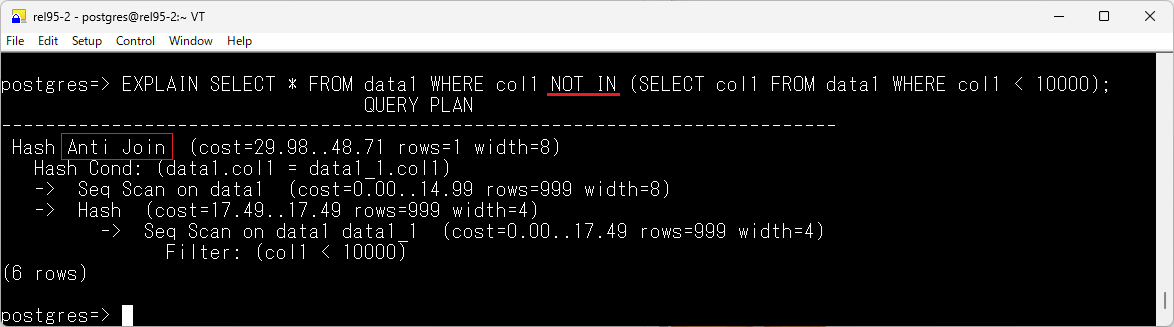
PostgreSQL 19 dev: Convert NOT IN sublinks to anti-joins when safe
Author: @pgsql_guo
git.postgresql.org/gitweb/?p=post…
English
Dave Stokes retweetledi

Learning the riff that started it all. 🎸
Shoutout to TikTok user u/strumwithme1 for diving into the guitar tabs for “Boom Boom” by John Lee Hooker and keeping that groove alive.
#JohnLeeHooker
English