Stoyan Barakov
405 posts

Stoyan Barakov
@Stoyan_Barakov
Crazy heart Firestarter Чешит

Sofia, Bulgaria Katılım Şubat 2014
117 Takip Edilen41 Takipçiler

@therealaskilroy @kirawontmiss Why don't people like you understand that the world doesn't owe anything to anybody? Earn your money or GTFOH and go beginning on the street like a proper beggar.
English

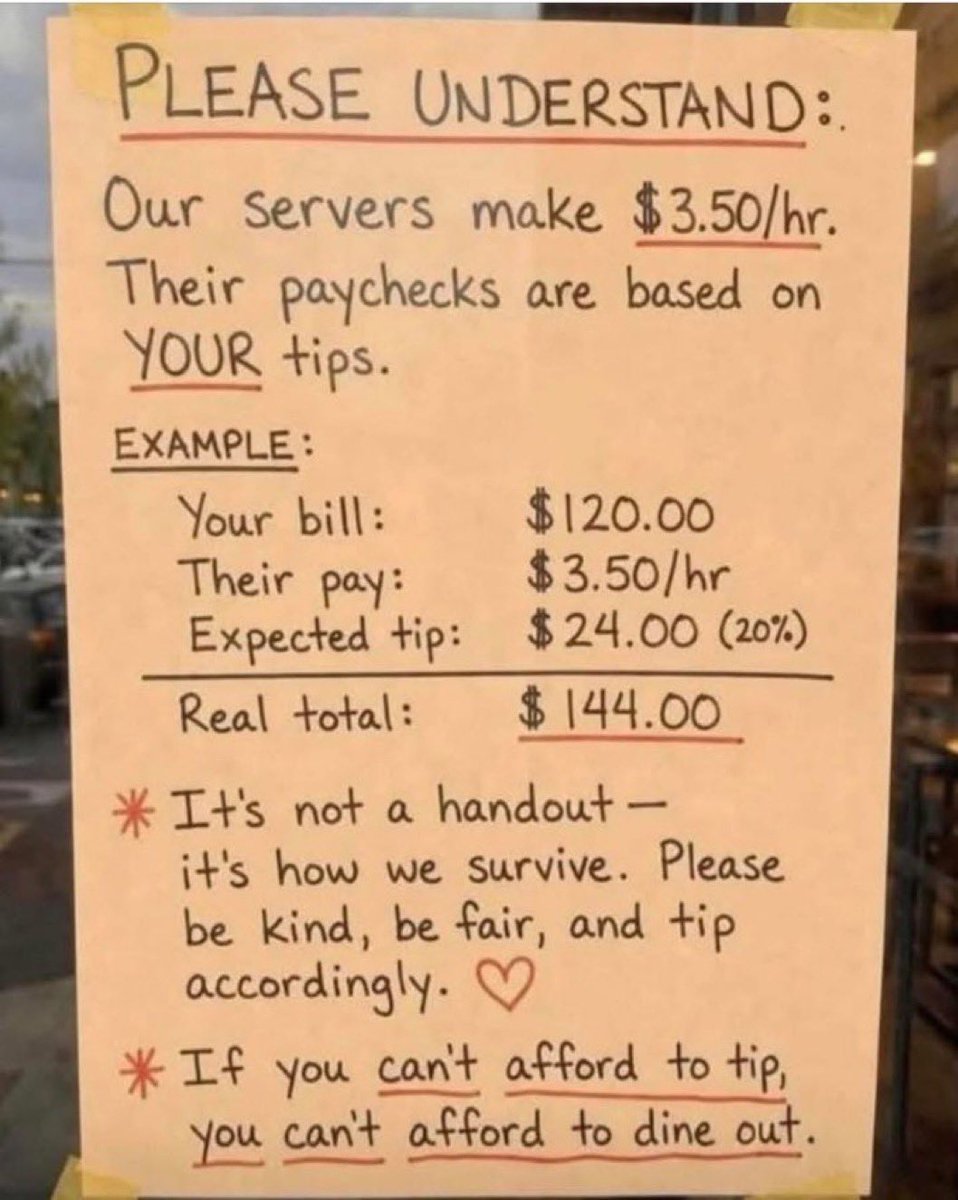
Why do people not understand that the legal Minimum Wage for servers that receive tips is LESS than normal minimum wage? They rely on tips to earn their living. It’s not “tipping culture out of control”. This is how our system was set up and works. And they are automatically taxed based receipts. So if you’re not willing to tip decently, get fast food.
English

@giveashitnature A living hedge is the proper solution. It's less of a fire threat, and depending on the bush it can grow taller than humans, so you have privacy as well.
English

Need a fence? What you really need is a deadhedge.
It's a barrier made of dead branches stacked between two rows of posts. You feed it with branches, fallen limbs, and woody yard debris. Over a season it becomes denser than most commercial fencing. Over years, the bottom layers compost down and the top gets refilled with whatever you trim that week.
Wrens, robins, and ground-foraging birds nest in the structure. Hedgehogs, field mice, frogs, and toads shelter in the base. Solitary bees, ladybirds, and beetles overwinter in the cavities.
Germany has been planting deadhedges as wildlife corridors since the 1990s. The UK uses them for riverbank restoration.
A wood fence costs thousands of dollars and supports no wildlife. A deadhedge costs nothing, gets denser every year, and provides habitat for dozens of species you want in your yard anyway.


English

@TimurNegru No pic, because AI can find the location by the pic
English

I see this all the time and it's crazy how very little agents want to do especially given how much they can make.
No exact location is due to them being afraid of buyers going directly to the owners, thus circumventing them. But everything else like pics, description - I mean this is so easy to do right? Especially since this info is key to catching a buyer's attention.
Lionel Rudaz@lionelrudaz
🇨🇭The state of real estate in Switzerland. 🖼️ No pic 📍 No location 🤓 Unclear details 🙈 Barely a description Asking price close to 1M for a very old apartment in the countryside. Not worth spending more than 20 min for the agent. It's only 30k of commission after all. 🤷♂️
English

@simeon_Ice @remarkmarketing Found the corporate bootlicker.
English

@remarkmarketing HR is a key component of an organization. They basically manage the workforce. From recruitment and selection, training and development, compensation and benefit administration, payroll management, employee relations, etc.
They keep the workplace sane and conducive
English

@Godspeedpls @remarkmarketing This is so true. Underated opinion
English

@remarkmarketing Most people in HR got there by the role falling in their lap. Most people who actually studied it are kept out by “the gatekeepers of HR” nonetheless I share the same sentiment.
English
Stoyan Barakov retweetledi

@remarkmarketing Companies are finally realizing they’re spending $5 million a year on a department that costs them $15 million worth of productivity every year to prevent a possible $3 million lawsuit.
English

@Shaytoshi @benjamincowen the older the asset the slower it moves. The eventual breakout above 5,000 will be glorious
English

@sammysan97 @TimurNegru For us 80 miles is a lot, no one likes to drive unless necessary.
Also many of our roads are narrow and with potholes.
For example for me everything above 40 min drive is far. I drive 15 minutes to work.
Our travel distances can be shorter than the USA, and we like to walk
English

@TimurNegru 160km is like 80 miles; that's 2 hours of driving tops. The European mind once again struggles to comprehend how far Americans are willing to drive.
English

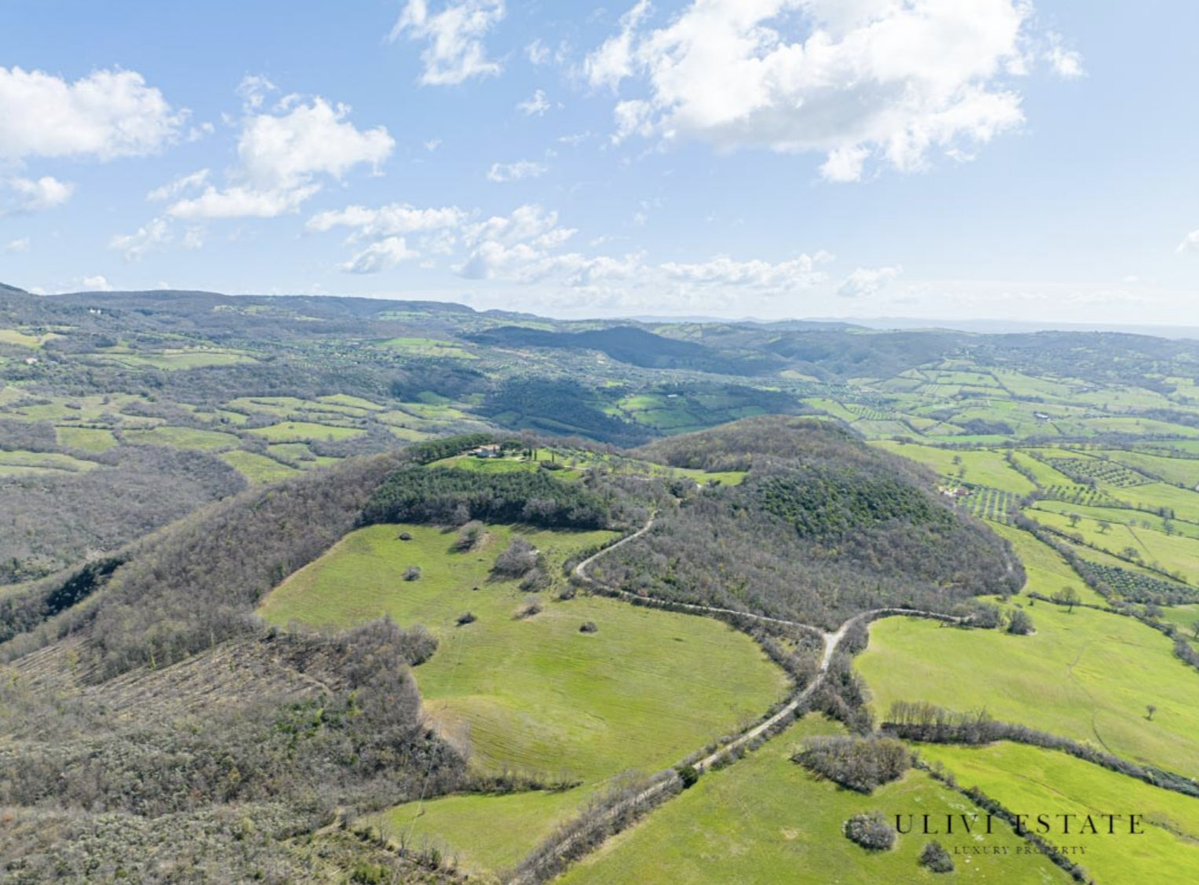
Someone is selling an entire hill in Tuscany. 45 hectares, for €1.3M ($1.5M).
That's 111 acres of southern Tuscan countryside with a 500m² stone farmhouse on top, 9 bedrooms, 7 bathrooms, a pool, and an outdoor wood-burning oven.
The estate sits at 400m altitude on a privately owned hill near Saturnia, 8 km from the famous thermal baths and 50 km from the Tyrrhenian Sea. The farmhouse was built in the early 1800s by the Piccolomini Counts as the steward's residence for what was once a much larger estate. The current 45 hectares break down as 37 ha of woodland, 7 ha of arable land, and 1 ha of olive grove with 50 trees. It borders a nature park and the Albenga River.
What makes the price interesting is the land. 45 hectares fully consolidated and bordering a protected park is rare at this level in Tuscany. Most farmhouses in this price range come with 1-3 hectares of land. Here you're buying the hill itself.
The trade-off is access. You're 160 km from Rome airport and 200 km from Pisa, so this isn't a fly-in-for-the-weekend kind of place. Then again, if you're buying a hill in Tuscany, being hard to reach is probably the point.
How much would something like this cost where you live?


English
Stoyan Barakov retweetledi

Same people are usually loud and don't respect personal bounds
Raksha@caraksha103
Coworkers hate a quiet person that minds their business
English
Stoyan Barakov retweetledi

Nokia could have invented the iPhone. Three years before Apple did, a Nokia engineer walked into a meeting in Finland with a working prototype: a touchscreen phone with full internet access. Management killed it. The device looked too expensive and too risky to sell. The same year, Nokia also rejected a proposal for an online app store. Apple would launch the same idea four years later.
In 2007, Nokia controlled 40% of the world's mobile phone market and was worth more than $150 billion. By 2013, it had sold its phone business to Microsoft for $7.2 billion. The company that defined the cell phone became irrelevant in less time than it takes most kids to finish high school.
In 2016, two professors from INSEAD and Aalto University spent years interviewing 76 Nokia executives, engineers, and consultants for a research paper. Their conclusion: nobody at the company could have an uncomfortable conversation.
Senior leaders were described as "extremely temperamental." One consultant remembered then-CEO Jorma Ollila shouting at people "at the top of his lungs" in front of fifteen other vice presidents. Middle managers learned the rules fast. Bad news got you fired, so they stopped delivering it.
The engineers knew Nokia's operating system could not compete with what Apple was building for the iPhone. One design team submitted 500 separate proposals to fix it between 2001 and 2009. Not a single one got approved. When a middle manager once suggested that a colleague push back against a top executive, the colleague refused. He "didn't have the courage; he had a family and small children."
The top managers were also afraid, just of different things. They worried about looking weak to investors. So they publicly defended the old operating system while privately knowing it was dying. The middle managers heard the demand for optimism and supplied it. For four years, the people who knew the company was sinking could not get that message to the people who could do something about it.
Researchers call this shoot-the-messenger culture. It shows up in cockpit recordings before plane crashes, in hospital records before preventable deaths, and in the investigations of the 2008 financial crisis. The cost of avoiding a difficult conversation is always paid later, with interest.
Nokia's case is unusual because the math is so clean: the silence cost roughly $143 billion in market value and an entire company. The discomfort would have cost a few bad meetings.
Pengu@Penguxn
if you think uncomfortable conversations are hard wait until you see the results of not having them
English

@ruhan_q Their dollar went wayyy further back then so it was bearable, now there is no motivation because you start off making not enough to live.
English

@M9558750394349 @omgsidewalks Who told you that we strive to be in the C-suite? Half of them are sociopaths by necessity, who ruin their personal lives and health.
English

@omgsidewalks Yeah you do that while your competitors work well under pressure. Someday those who do thrive in that environment will be in the C-suite telling you what to do.
English

There is absolutely NO reason any of us should have to thrive in a fast-paced environment or work well under pressure. Most of our daily work is not an emergency, and our culture of fake urgency and immediacy, just to make more profit for the C-suite, is burning people out.
EDOSE✨@iam_biglad1
Hot take;
English

@elonmusk These are the straight deaths, no one counts the ruined lives of millions more
English


@reimufan099 Speak for yourself. I watch historic documentaries, how to videos, financial, bjj and everything in between
English

@OrevaZSN Lots of people will regret on their deathbed crying for just ten more minutes of Team meeting. Begging for WiFi just to check Jira tickets one last time
English

@OrevaZSN But bills have to be paid. The worst is seeing people that depend on you in need.
English