Success

47 posts

Success banner
Success

Success

@SuccessVsdworld

Silence Over Noise. ML || DL || Quant

Sierra Leone Katılım Haziran 2024
48 Takip Edilen58 Takipçiler
Success
Success@SuccessVsdworld·
@belindmo Oh this is nice... Since you already tried the JSON route, tried adding WandB? It's supported in nanoGPT-style code. Every run auto log all hyperparam, val_bpb, and training curves. And the dashboard makes it quite easy to scan all 38 runs and spot silent/weird failures.
English

1
0
3
41
Belinda
Belinda@belindmo·
On a whim, I decided to run an agent to optimize model pretraining using autoresearch, for 38 hours over 38 experiments on Claude Opus 4.6, cost $173.15 in API credits. Question is... how do I spend the least amount of time to validate all experiments were run properly? 🫠
Belinda tweet media
English
1
0
8
447
Success retweetledi
Jenny Zhang
Jenny Zhang@jennyzhangzt·
Introducing Hyperagents: an AI system that not only improves at solving tasks, but also improves how it improves itself. The Darwin Gödel Machine (DGM) demonstrated that open-ended self-improvement is possible by iteratively generating and evaluating improved agents, yet it relies on a key assumption: that improvements in task performance (e.g., coding ability) translate into improvements in the self-improvement process itself. This alignment holds in coding, where both evaluation and modification are expressed in the same domain, but breaks down more generally. As a result, prior systems remain constrained by fixed, handcrafted meta-level procedures that do not themselves evolve. We introduce Hyperagents – self-referential agents that can modify both their task-solving behavior and the process that generates future improvements. This enables what we call metacognitive self-modification: learning not just to perform better, but to improve at improving. We instantiate this framework as DGM-Hyperagents (DGM-H), an extension of the DGM in which both task-solving behavior and the self-improvement procedure are editable and subject to evolution. Across diverse domains (coding, paper review, robotics reward design, and Olympiad-level math solution grading), hyperagents enable continuous performance improvements over time and outperform baselines without self-improvement or open-ended exploration, as well as prior self-improving systems (including DGM). DGM-H also improves the process by which new agents are generated (e.g. persistent memory, performance tracking), and these meta-level improvements transfer across domains and accumulate across runs. This work was done during my internship at Meta (@AIatMeta), in collaboration with Bingchen Zhao (@BingchenZhao), Wannan Yang (@winnieyangwn), Jakob Foerster (@j_foerst), Jeff Clune (@jeffclune), Minqi Jiang (@MinqiJiang), Sam Devlin (@smdvln), and Tatiana Shavrina (@rybolos).
Jenny Zhang tweet media
English
157
661
3.6K
497.9K
òdòdó 🌹
òdòdó 🌹@adedola_csv·
My first data engineering role rejection letter. Let’s have it!!! 😂😂😂
English
1
0
1
55
Claude
Claude@claudeai·
Introducing Code Review, a new feature for Claude Code. When a PR opens, Claude dispatches a team of agents to hunt for bugs.
English
2.1K
5.1K
62.5K
23.5M
Success
Success@SuccessVsdworld·
@xeraa @elastic @elastic_devs super easy... Used 3 YAML workflows (~30 lines each), agent builder auto-picks them as tools. best part - elasticsearch IS the queue. no kafka needed. workflows write to indices, runners poll, agent queries with ES|QL. took roughly 4hours to fully finish👀
English
0
0
2
31
BioAIDevs
BioAIDevs@BioAIDevs·
Meet BIOS, an AI Scientist built to orchestrate complex biomedical research. • Global SOTA on Data Analysis Benchmarks: BixBench 48.78% open-answer, 55.12% multiple-choice + refusal, 64.39% multiple-choice (no refusal) - outperforming systems like Edison Scientific and Kepler. • Human-in-the-Loop or Autonomous Mode: Intermediate checkpoints let researchers guide investigations mid-flight as insights emerge. No more waiting hours for batch runs + reruns to get results. Or, run in fully autonomous mode for extended investigations. • Persistent World State: Rather than losing context as conversations grow, world state ensures investigations build on insights within each research cycle and across sessions. • Subagent Swarm: BIOS orchestrates subagents specializing in research functions (Literature Review, Data Analysis, Novelty Detection) and, soon, research domains (microbiology, longevity, genomics). BIOS is available now in Beta with free + paid tiers, exclusive launch pricing and, for limited time, free full access to academic users with a .edu email address. Pro, Researcher and Lab subscription tiers offer discounted packages on monthly credits. Our usage-based pricing is competitive and in some cases significantly cheaper than leading scientific agents. Try BIOS and read our paper in the links below ↓
English
11
37
176
66.8K
Chisom Rutherford
Chisom Rutherford@ruthefordml·
Today I defended my final year research project. Over five months, my research group studied 213 doctors to determine their knowledge of AI and how they use it in their practice. We got very surprising results! Looking forward to conducting many more research in health AI.
Chisom Rutherford tweet media
English
85
64
576
18.8K
Tereza Tizkova
Tereza Tizkova@tereza_tizkova·
Launch of Open Lovable is here! Proud that @e2b AI cloud is powering this product 🫡 Congrats to the team!
Developers Digest@devdigest

Open Lovable is live and now has 6,000+ Github stars 💜 💙 It's an Next.js app I built that instantly reimagines any website and generates full React apps in seconds. Powered by @firecrawl, @GroqInc, @e2b and more. Here's a complete breakdown of the project in 4 minutes👇

Prague, Czech Republic 🇨🇿 English
3
2
36
1.9K
Success
Success@SuccessVsdworld·
@ruthefordml Ok but predicting multiple tokens at once... how do they keep it from going off track?
English
0
0
0
7
Chisom Rutherford
Chisom Rutherford@ruthefordml·
Traditional language models create text one token at a time, which can be slow. Apple’s new “multi-token prediction” approach lets models predict several tokens at once, making them faster and more efficient.
Chisom Rutherford tweet media
English
2
1
12
518
🔧∑Y
🔧∑Y@yusufabol_·
@SuccessVsdworld Yeah, two projects 1. A multi-class plant disease detector with LLM treatment assistance. 2. Develop a smart OCR system for invoice data.
English
1
0
1
51
🔧∑Y
🔧∑Y@yusufabol_·
Picked up a Computer Vision course. Halfway in, it feels like a Photoshop tutorial(hearing words like resizing, sharpening, Gaussian blur, filters, textures and so on). The only difference? I am coding it instead of clicking it.
English
1
0
5
290
Success
Success@SuccessVsdworld·
@samireey Since you're diving into finetuning + evals, you might wanna peek at Unsloth... crazy efficient, esp. for local fine-tuning👀
English
0
0
0
20
samir
samir@samireey·
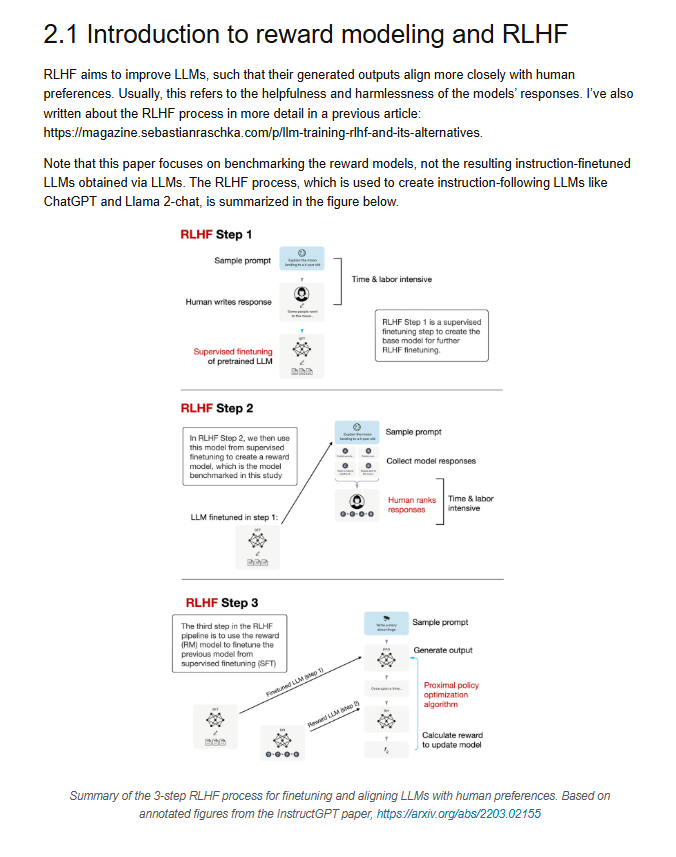
ML grind day 138/365🎯 (finetuning llms) > studied llm evaluation techniques/models > explored llm APIs (openrouter, togetherai) > little bit dive into DoRA , reward modeling + RLHF > started collecting project ideas [will start with guided ones]
samir tweet mediasamir tweet mediasamir tweet mediasamir tweet media
samir@samireey

ML grind day 137/365🎯 (finetuning llms) > visualized how LoRA saves memory > how quantization handled hardware limits > used QLoRA + PEFT to finetune normal gpu(not my code btw) > read a few book pages

English
3
3
24
3.8K
MUYIWA
MUYIWA@Muyiiwaa·
Can you implement transformer architecture from scratch in plain Numpy?
English
5
2
17
1.2K