
Super Thinking

7.3K posts

Super Thinking banner
Super Thinking

Super Thinking

@Super_Thinkiing

Get smarter. Books | Philosophy | Psychology | Inspiration | Productivity

100 mental models link: Katılım Eylül 2021
17 Takip Edilen195.3K Takipçiler
Super Thinking retweetledi
Frank Curzio
Frank Curzio@FrankCurzio·
The next billion dollar company isn't in Silicon Valley... It's in the Norwegian Fjords. And it's quietly building energy grids to power the 2030s. I've been watching it for 90 days - here's how early investors can make an absolute fortune:
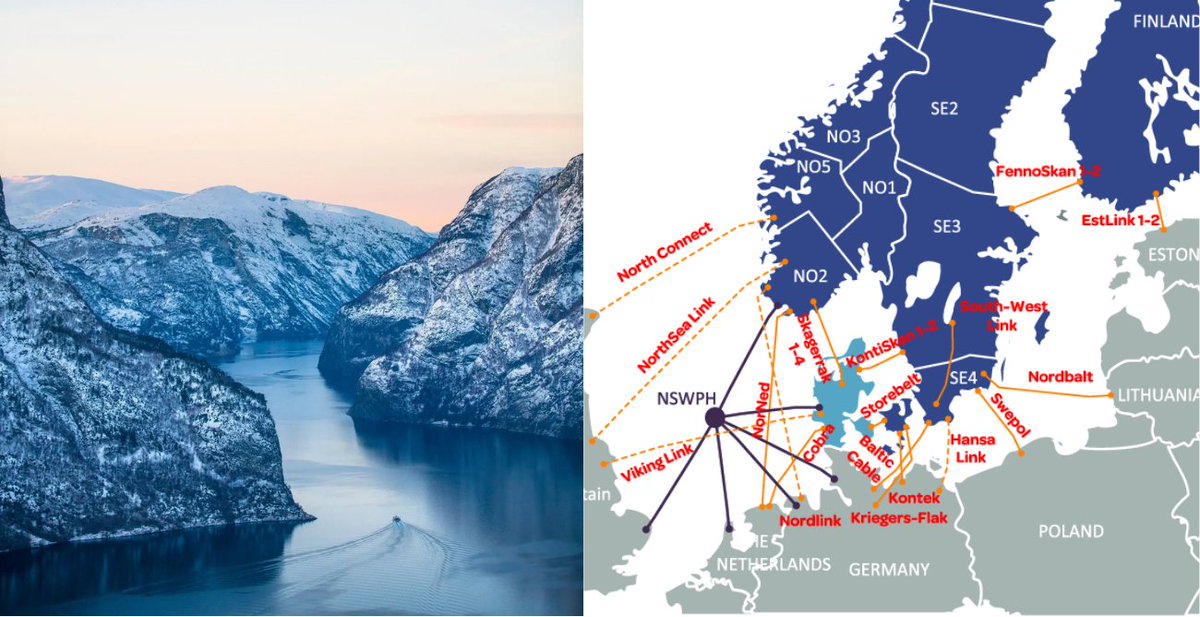
Frank Curzio tweet media
English
1
4
12
1.4K
Super Thinking
Super Thinking@Super_Thinkiing·
Be humble out of respect, not fear
English
2
5
37
648
Super Thinking retweetledi
Sharran Srivatsaa
Sharran Srivatsaa@sharran·
I spent 3 years telling people I was writing a book called "Underdog." The few times I sat down, I was kinda excited to write. But I didn’t write much because I always found something more important to work on. After making no real progress and feeling like a fraud, I tried a different solution. I hired a ghostwriter. I now have a finished manuscript sitting on my computer. Complete book. Ready to publish. I’m not publishing it. I just don’t love it. But… At dinners, I'd casually mention my "book project." In meetings, I'd reference insights from "the book I'm working on." On social media, I'd post mildly thoughtful updates about my writing process. I had such good reasons for not publishing. I was refining the concept. I wanted to add more research. I wanted it to be perfect, you know? All lies. I didn't actually want to write "Underdog." I wanted to be someone who had written "Underdog." That’s the trap. Most people are chasing the identity, not doing the work. After 3 years of this charade, I finally got honest with myself. I looked at the manuscript and asked myself: "If I could magically have 'Underdog' become a bestseller right now, but absolutely no one would ever know I wrote it, would I still want it?" The answer was no. That told me everything. So I stopped. Closed the file. Put it in a folder called “Lessons Learned.” And moved on. I started working on things I actually wanted to do. Things that excited me even when no one was watching. It turned out okay. I built 2 billion dollar companies, invested in 100+ deals, and bought over 3,000 units of real estate. Try this test on every goal you've been "working on" for more than three months. Strip away all the external validation. Remove the social proof, the impressive conversations, the identity upgrade. If you could have the result but no one would ever know, would you still want it? If you hesitated for even a second, congratulations. You just discovered why you keep failing. You're performing goals instead of pursuing them.
English
7
4
37
2.3K
Super Thinking
Super Thinking@Super_Thinkiing·
A wise person learns even from idiots
English
15
24
208
3.4K
Super Thinking retweetledi
Air
Air@airHQ·
Introducing Air Canvas. Because to Air is human.
English
6
98
166
556.8K
Super Thinking retweetledi
Dr. Eric Berg
Dr. Eric Berg@dr_ericberg·
Walking is one of the most underrated tools for supporting mental health. Here’s why long walks can help reduce anxiety and depression: 🧵
English
30
77
486
50.7K
Super Thinking
Super Thinking@Super_Thinkiing·
It's not about being the smartest. It's about believing you're capable enough
English
16
20
136
2.4K
Super Thinking retweetledi
Goku
Goku@YourDocGoku·
David Sinclair said: "You can reverse aging by 75% in 6 weeks… by reinstalling the "software" of the body so that it's young again." This idea sprouted when he proved in his first experiment that you can accelerate aging in mice: "We took two mice born on the same day—same age, same genetics. We 'scratched the CD' of one mouse, corrupting its software and accelerating its aging. The result was dramatic. One looked far older than its brother." He believed if you can give aging, you can also take it away. Tomorrow, I'll share his experiment on how he reversed aging in mice (and then Monkeys). — @davidasinclair
English
16
103
690
70.4K
Super Thinking retweetledi
John Cumbers
John Cumbers@johncumbers·
Bruce Friedrich said: “Every year for as long as records have been kept [since 1961], the world has consumed more meat.” Meeting that demand is increasingly unsustainable. As mentioned in my previous post, the reason is because: “It takes about 90 calories into a chicken to get one calorie back out in the form of that animal's meat.” So we have to farm them at a massive scale to compensate for the inadequate amount of meat. It’s roughly the same with fish and pigs. That inefficiency is one reason why, according to the UN Food and Agriculture Organization, more than three billion people still can't afford a nutritious diet. — @BruceGFriedrich
John Cumbers@johncumbers

When explaining the fundamental flaw with the current agricultural system, Bruce Friedrich said: "For about 12,000 years we have been raising animals for meat in roughly the same way: we farm them." This is an incredibly inefficient process, where up to 99% of what we feed animals goes toward keeping them alive, leaving 1% in animal meat for us to consume: "It takes about 80 calories to feed a fish, 90 calories into a chicken or 110 calories into a pig to get one calorie back out in the form of that animal's meat." Because such a small percentage of the animal comes back as meat, we have to farm them at a massive scale to compensate. This increases the scale of the end-to-end agricultural operation - growing vast quantities of crops, shipping them to feed mills, operating those mills, shipping the feed to farms, operating the farms, then shipping animals to slaughterhouses and operating those too. Every step in that chain drives up the cost of land, crops, and ultimately the price of the meat when we buy it at the grocery store. Since meat is essential to human health, this has played a major factor in us maintaining our health. "More than three billion people according to the 2025 numbers from the UN Food and Agriculture Organization are unable to afford a nutritious diet. And more than 750 million people are living in nutritional deficit. Which is to say that they're starving." — @BruceGFriedrich

English
1
19
24
4.4K
Super Thinking retweetledi
Felix Prehn 🐶
Felix Prehn 🐶@felixprehn·
Gold just had its worst weekly performance since 1983. But this makes zero sense - it's the ultimate save haven asset that institutions and investors buy during times of crisis. In this thread, I'll cover the two reasons behind this unexpected crash:🧵
English
18
27
204
47.9K
Super Thinking retweetledi
The Trading Geek (Brad Goh)
The Trading Geek (Brad Goh)@Bradgohtrades·
Defining the market structure is how you build your trade bias. There are only two types of structures you NEED to pay attention to: 1) Swing for your trading range 2) Internal for short-term moves This thread covers how to identify both to determine your trade bias: 🧵
English
6
22
63
5.9K
Super Thinking retweetledi
Julian Issa
Julian Issa@juliankissa·
Dr. Aseem Malhotra said: "You were 2-4x more likely to SUFFER a serious adverse event from the COVID mRNA vaccine than you were to be hospitalized with COVID." Think about that for a second. There was a higher chance you suffered a serious health problem AFTER taking the vaccine than before it. Yet everyone was forced to take it... He explained how it was driven by profits where industry influence controlled the narrative around it: "Most of the information doctors use from drug trials is essentially corrupted by commercial influence to exaggerate the safety and benefits of the product... So a lot of the research is basically marketing in disguise and then that gets amplified by the media and that shapes a narrative and a mindset." — @DrAseemMalhotra
Julian Issa@juliankissa

Here's my conversation with award-winning cardiologist Dr. Aseem Malhotra (@DrAseemMalhotra) (00:00) – Opening: COVID vaccines, risks, and early controversy (02:15) – Dr. Aseem Malhotra on being labeled “quack doctor” (04:52) – Reanalysis of Pfizer and Moderna trials (07:30) – AstraZeneca, yellow card data, and ignored safety signals (11:05) – Lockdowns, control, and the transfer of wealth (14:40) – The Great Barrington Declaration and suppression of debate (19:55) – COVID risks exaggerated: real infection fatality rates revealed (25:10) – Mandates, trust, and why honesty in medicine matters (34:11) – Redefining health: mental, physical, and social wellbeing (39:50) – Spike protein persistence and vaccine injury concerns (44:02) – Truth, trust, and collapse of legacy media narratives (53:20) – Looking ahead to (2030) hope, reform, and health outcomes (54:40) – Social media, big tech, and the mental health crisis

English
1
20
28
3.9K
Super Thinking
Super Thinking@Super_Thinkiing·
Freedom is to be rich without anybody knowing you're rich
English
14
31
256
4.2K
Super Thinking retweetledi
Animesh Koratana
Animesh Koratana@akoratana·
Introducing: PlayerZero The world's first Engineering World Model that puts debugging, fixing, and testing your code on autopilot. We've raised $20M from Foundation Capital, @matei_zaharia (Databricks), @pbailis (Workday), @rauchg (Vercel), @zoink (Figma), @drewhouston (Dropbox), and more PlayerZero frees up 30% of your engineering bandwidth by: 1.⁠ ⁠Finding the root cause for bugs & incidents in minutes that engineering teams take days to identify. 2.⁠ ⁠Predicting in minutes, edge case issues that a 300-person QA team would take weeks to find. ------ Here's why this matters: No one in your org has a complete picture of how your production software actually behaves. Support sees tickets. SRE sees infra. Dev sees code. Each team builds their own fragmented view - and none of these systems talk to each other. When something breaks, everyone scrambles to stitch the picture together by hand. PlayerZero connects all of it into a single context graph - → The Slack thread where your lead said "we went with X because Y fell apart in prod last time" → The PR review where an engineer explained the tradeoff → The lifetime history of your CI/CD pipeline, observability stack, incidents, and support tickets So you can trace any problem to its root cause across every silo. And it compounds. Every incident diagnosed teaches the model something new. The longer it runs, the deeper it understands - which code paths are high-risk, which configurations are fragile, which changes tend to break which customer flows. So when you sit down to debug a live issue, you have your entire org's collective reasoning and production memory behind you - instantly. ------ Zuora, Georgia-Pacific, and Nylas have reduced resolution time by 90% and caught 95% of breaking changes and freeing an average of $30M in engineering bandwidth. ------ Our guarantee: If we can't increase your engineering bandwidth by at least 20% within one week, we'll donate $10,000 to an open-source project of your choice. Book a demo - bit.ly/3NlLMeN
English
866
798
5K
2.5M
Super Thinking retweetledi
Sharran Srivatsaa
Sharran Srivatsaa@sharran·
Boss: What have you accomplished this year? Me: Freezes Early in my career, I was working at a multi-million dollar company. At the time I didn’t have any dashboards or reporting systems. I was running purely on instinct and I didn’t even know it. That embarrassment of not knowing the answer taught me something I never forgot: You can’t manage what you don’t measure. If this sounds like you, you're setting yourself up for failure before the week even starts. Here are the 4 systems I implemented that changed everything for me: 1/ Run on insight, not instinct Spend 30 minutes every Monday reviewing your numbers before making decisions. If you can’t measure it, you’re gambling. 2/ Protect your priority hours Block your 5 most important time slots before the week starts. Treat them like board meetings. Everything else fights for what’s left. 3/ Pre-commit to 3 non-negotiables Every Sunday, pick 3 priorities that actually move the needle. Write them down. When things get chaotic during the week, your priorities don’t. 4/ Define success before you start Write Friday’s end-of-week report on Sunday. When you know what winning looks like, execution becomes simple. Most people leave their week up to chance. Top performers design it in advance. Install these systems and your results become predictable.
English
5
12
56
3.2K
Super Thinking
Super Thinking@Super_Thinkiing·
Never force people to choose you
English
21
55
330
5.3K