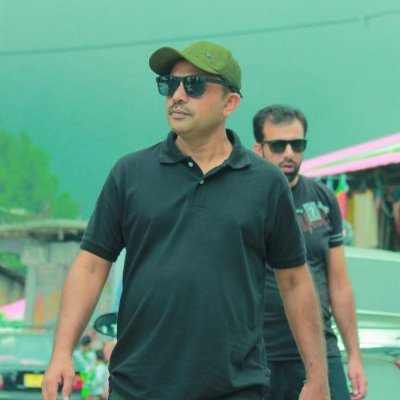
@brethrenfpurity Lol, I have a feeling that he is being deliberately promoted. Bata recently boarded him as a research fellow at AMI, and now this.
Pohanchi wahin pe khaaq...
Reformist Shi'ism claims to be rational and logical, and ends up allying with the worst, most illogical, and most indefensible views from the Salafi Dawah.
That's why they have nothing to do with philosophical Shī'ism, even if they might agree on some tertiary points.
A cargo carrier travelling from Sharjah to Karachi lost communication at around 9:32 this evening after it reported technical problems with its navigational system. The Boeing 737-400 operated by K2 Airways has disappeared near Ormara, Balochistan, an official said. Rescue teams have been dispatched to the deep waters to search for the debris and possibly the two pilots on-board.
@mazdaki@QasimZaidi_@SyedIHusain@Khalid_Munir میں خود واقف نہیں تھا۔ میری والدہ بھی بتاتی ہیں کہ انہوں نے یہ نوحہ اپنے بچپن میں سنا ہے۔ ابھی ایک پرانی پوسٹ دیکھی جس پر ڈاکٹر عقیل عباس صاحب کا یہ کمنٹ ہے:
Jacobabad hit a heat index of 51°C this June. Researchers from @KarachiUrbanLab spent time in its informal settlements and surrounding villages. And what they found isn't just about temperature.
Thread🧵
The Dream of an Old Woman: Mourning al-Ḥusayn in 4th Century Baghdad
Al-Muḥassin b. ʿAlī al-Tanūkhī (b. 327, d. 384) was born in Basra and like his father served as a qāḍī (judge) in various cities across the Islamic world including Baghdad. His position allowed him access to high-ranking officials, wealthy merchants, prominent intellectuals, and ordinary members of the public.
One of his most prominent works is Nishwār al-Muḥāḍara wa Akhbār al-Mudhākara, an impressive collection of anecdotes, poetry, historical accounts, and snatches of conversation that he witnessed first-hand or heard throughout his life and which he recorded faithfully.
The importance of this work comes from the fact that it provides a rich window into the daily lives, social customs, humour, administrative practices, and morality of a bygone era.
This is one of the most fascinating stories that he records:
My father narrated to me. He said: Abū al-Ḥasan al-Kātib (the secretary) came to us one day and asked: “Do you know a man in Baghdad called Ibn Aṣdaq?” No one in the gathering knew of him except myself. I said: “I do. How did you come to inquire about him?” He asked: “What does he do?” I replied: “He recites elegiac poetry (nawḥ) for al-Ḥusayn” Abū al-Ḥasan began crying and explained:
“I live with an old woman who looked after me (when I was small). She comes from Karkh Juddān and has a barbarous tongue. She mostly speaks Nabataean and can barely speak proper Arabic let alone recite poetry, yet she is a righteous Muslim woman, fasts a lot, and prays tahajjud. She woke up terrified in the middle of the night yesterday, her bed is close to where I sleep, shouting: ‘Abū al-Ḥasan!’ I said: ‘What’s with you?’
She said: ‘Come to me’ I came to her and found her trembling. I asked her: ‘What has happened to you?’
She said: ‘I prayed my nightly portion and slept. I saw myself in a dream just now walking along one of the streets of Karkh (famous quarter in Baghdad) and came across a clean and bright room, (made) of fine teak, with the door open, and ladies standing near it. I said to them: ‘Who has died? What is the news?’ So they pointed towards the inside of the room. I entered. It was an elegant room, excessively beautiful, and in the middle was a young woman, I have never seen one more beautiful or more radiant than her. She was wearing a beautiful, white, soft, Marwī garment and her head was covered in an excessively white wrap. In her lap was the head of a man with blood pouring out. I said: ‘Who are you?’ She said: ‘No bother. I am Fāṭima the daughter of the Messenger of Allah. This is the head of my son al-Ḥusayn. Convey (a message) from me to Ibn Aṣdaq that he should recite:
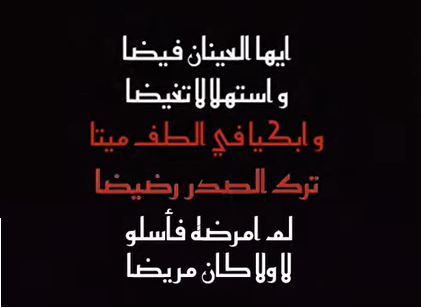
لم أمرّضه فأسلو ... لا ولا كان مريضا
I did not nurse him through sickness so that I might find solace
No, nor was he even sick!’
Then I woke up terrified!’
The old woman pronounced it lam umarriṭhu, with a ṭā, because she is not capable of pronouncing ḍād correctly.
I comforted her until she slept.
Then he (i.e. Abū al-Ḥasan) said to me (i.e. al-Tanūkhī’s father): “O Abū al-Qāsim, since you know the man (i.e. Ibn Aṣdaq) then I entrust the matter to you, and it is binding on you, until you convey it to him’
I said: “I hear and obey the command of the mistress of the women of the worlds!”
He (i.e. al-Tanūkhī’s father) said: “This was in the month of Shaʿbān. The people in those times would face severe difficulty when making their way out to al-Ḥāʾir (i.e. Karbala) because of the Ḥanbalīs. I acted with discretion and managed to leave (Baghdad). I was in al-Ḥāʾir on the night of 15th Shaʿbān. I asked around for Ibn Aṣdaq until I saw him. I said to him: ‘Fāṭima, peace be upon her, instructs you to recite the poem which contains (the line):
I did not nurse him through sickness so that I might find solace
No, nor was he even sick!’
I had never heard of the poem before.
He (i.e. Ibn Aṣdaq) was alarmed at that and I related the story to him and to all those in the audience. They began crying loudly and he did not recite on that night except this (one) poem.
It begins:
أيّها العينان فيضا ... واستهلّا لا تغيضا
O two eyes, flow forth
And pour out, do not cease
It was composed by a one of the Kufan poets.
I returned to Abū al-Ḥasan (al-Kātib) and reported to him what had transpired.”
Reference: Nishwār al-Muḥāḍara wa Akhbār al-Mudhākara ed. ʿAbbūd al-Shāljī, (Beirut: Dār Ṣādir, 1995), v. 2, pp. 230-232, n. 123.
Note: When one gets to tend to the terminally sick they get time to prepare themselves mentally for the sick person’s departure, but the poem attributes to Fāṭima the grief that al-Ḥusayn’s death was sudden and very brutal for “he was not sick!”
There is much to learn here about how mourning ceremonies were conducted in those times and about public Shia culture.
🚨 Anthropic just showed a 27-minute workshop on how to actually do prompts for Claude.
Taught by the people who built it.
Free. No registration. No paywall.
I've seen $300 courses that don't cover what they teach in the first 8 minutes.
Watch it and bookmark it now.
With the passing of Dr. Bashir Badr, a glorious chapter of the modern Urdu ghazal comes to an end. He was a poet of the masses, bringing Urdu poetry out of complex metaphors and into the beating hearts of everyday people. From love to profound philosophy, he wrote with unparalleled grace.
After a long struggle with his health, Badr Sahab passed away today. Our thoughts and prayers are with his family, friends, and fans.
Alvida Bashir Badr Sahab | Rest In Peace.
#BashirBadr#Rekhta#Tribute
A breathtaking take-off from Gilgit Airport, the aircraft looks tiny against the mighty Karakoram mountains. Beautiful, humbling, and equally challenging. Islamabad–Gilgit route is among the most challenging air corridors, requiring highly experienced pilots to navigate narrow valleys, harsh winds, and unpredictable weather. The mountains inspire awe - and respect!!
Raza Mohsin needed motor testing equipment for the @VLEKTRA factory. China was too expensive. A local engineer took an advance and delivered something that never worked.
Then someone walked in with a different offer.
No degree. No English. No CV. His only credential was 15 years of working alongside his electrician father.
What happened next is the best argument I've heard for where Pakistan's real talent actually lives.
بیوقوفوں سوسائٹیز گاڑی سیکھنے کی جگہ نہیں ہوتیں،
آپ اپنی اور بچوں کی زندگیوں کو خطرے میں ڈال رہے ہیں۔
ڈرائیونگ سیکھنی ہے تو خالی گراؤنڈ میں جا کر سیکھیں۔ اپنا نہیں تو کم از کم دوسروں کا ہی خیال کر لیں۔