Sylvia Nonso Amadi

1.5K posts

Sylvia Nonso Amadi

Sylvia Nonso Amadi

@Sylcci

A great person with much love for godly things.

Lagos, Nigeria Katılım Ocak 2022
563 Takip Edilen75 Takipçiler
Sylvia Nonso Amadi retweetledi

Ibrahim Majed
Ibrahim Majed@IbrahimMajed·
𝗪𝗔𝗥 𝗢𝗡 𝗜𝗥𝗔𝗡 𝗪𝗜𝗟𝗟 𝗖𝗢𝗦𝗧 𝗧𝗛𝗘 𝗨.𝗦. 𝗔𝗡𝗗 𝗜𝗦𝗥𝗔𝗘𝗟 𝗧𝗛𝗘𝗜𝗥 𝗚𝗨𝗟𝗙 𝗔𝗟𝗟𝗜𝗘𝗦 The most serious long-term consequence of the war on Iran is not limited to the battlefield, it is the growing risk of regime instability across parts of the Gulf. For decades, many of these governments built their security around one central assumption: that alignment with the United States would guarantee their protection. That assumption is now being tested, and increasingly, it is being seen as unreliable. Despite strong ties, military bases, and defense agreements, the region remains exposed to threats and instability. This undermines the core pillar on which these regimes based their sense of security. As this perception spreads, it begins to erode confidence from within. When leadership is seen as dependent on external protection that fails to deliver in critical moments, it weakens both legitimacy and authority. This is especially dangerous in systems where stability relies heavily on control, security, and economic continuity. Over time, pressure builds internally. Populations and power structures alike begin to question strategic choices and alliances. This can lead to fractures within ruling elites, growing dissatisfaction among citizens, and a shift in the balance of power inside these states. History shows that prolonged regional wars often produce internal political consequences in neighboring countries. In this case, the combination of external vulnerability and internal doubt creates the conditions where political systems are forced to change, whether gradually through reform or abruptly through leadership shifts. In that sense, the war on Iran is not just a military conflict, it is a stress test for Gulf regimes. If the current trajectory continues, some of these governments may not survive it in their current form.
Ibrahim Majed tweet media
English
6
45
132
5.5K
Sylvia Nonso Amadi retweetledi
Jack Prandelli
Jack Prandelli@jackprandelli·
🚨 Africa is a $3.32 trillion economy in 2026 Yet it holds the resources that could make it $10 trillion if it controlled what's underneath it👇 The biggest economies: 🇿🇦 South Africa $444B 🇪🇬 Egypt $400B 🇳🇬 Nigeria $334B 🇩🇿 Algeria $285B 🇲🇦 Morocco $196B Now look at what those numbers hide: 🇨🇩 DR Congo $88B GDP Sits on $24 trillion in mineral wealth. Cobalt. Copper. Coltan. Every EV. Every phone. Every weapon. Runs through here. 🇳🇬 Nigeria $334B GDP 2nd largest oil reserves in Africa. Still imports refined fuel. 🇩🇿 Algeria $285B Africa's largest gas exporter. Europe's new lifeline after Russia. Here's the brutal truth: 📌 3 countries control 35% of Africa's entire GDP 📌 The richest nations in resources have the poorest GDPs 📌 The wealth leaves. The poverty stays. Africa doesn't have an economic problem. It has a value capture problem 💡 Subscribe to my newsletter for weekly breakdowns on commodities & geopolitics ☑️Link in my bio
Jack Prandelli tweet media
English
4
21
46
2.2K
Sylvia Nonso Amadi retweetledi
HealthRanger
HealthRanger@HealthRanger·
Funny how the U.S. demands Iran reopen the Straight of Hormuz as public infrastructure when the same U.S. routinely restricts other countries from using what I call the "Financial Strait of SWIFT." The U.S. wields its financial control over the SWIFT system as an economic weapon against countries like Russia, Iran, China, North Korea, Cuba and many more, all via economic sanctions. To then argue that no country has the right to close a waterway because it's "public infrastructure" is entirely disingenuous. The U.S. empire has zero belief in open infrastructure to empower the world. It just wants control over all the chokepoints so it can weaponize them and punish countries for disobedience.
English
0
306
814
13.6K
Sylvia Nonso Amadi
Sylvia Nonso Amadi@Sylcci·
@NuesDaily @1eedriz Ethnic group in the country has been working tirelessly to dismantle the hegemony of Tigray which of expectedly stir violent reactions. Centuries of domination and subjugation of the Oromo
English
0
0
0
55
Sylvia Nonso Amadi
Sylvia Nonso Amadi@Sylcci·
@NuesDaily @1eedriz Ethiopian issue is peculiar. The regions don’t control their resources. The koko is that after the fall of Deng regime in 1991 , Tigrayans the third largest ethnic group in the Country dominated every sphere of governance and economy until the Abiy Ahmed an Oromo the largest
English
0
0
0
57
-valar morghulis-
-valar morghulis-@eldivine·
I have said this many many times. The only stable path forward for Nigeria is semi autonomous ethnic regions designed to be fractal. That way even if your ethnicity is only half a lga big, it has its own autonomy and structure. With it people's incentives to invest and Develop their area kicks in knowing no one can legally take away or destroy what they've built. Country needs a re-constitution.
Abdulsamad@richtosho

Hear what he said about Nigeria

English
12
55
173
19.9K
Sylvia Nonso Amadi retweetledi
Compere-JOT
Compere-JOT@JosephOlawumiT·
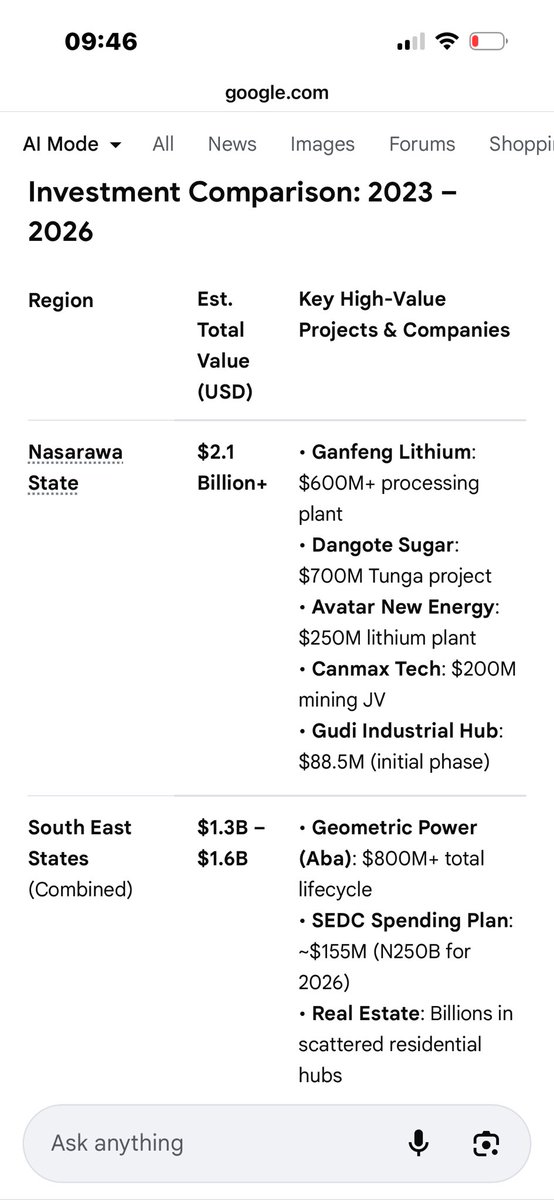
@mrlurvy I asked for a comparison of investment inflows between ONLY Nassarawa State and the ENTIRE five South Eastern States combined in the last three years and the result are obvious. I don’t understand irredeemable penchant to downplay others to glorify theirs. Live and let live!
Compere-JOT tweet media
English
0
2
2
426
Sylvia Nonso Amadi retweetledi
Mayowa A. Balogun
Mayowa A. Balogun@Sweeegu·
It is amazing (and simultaneously painful) to watch REAL countries take a long term view and approach to foreign policy. Brazil (one of the biggest oil producers) is also currently benefitting from long term planning related to biofuels apple.news/A62JyJLxKS2Sc_…
Mayowa A. Balogun tweet mediaMayowa A. Balogun tweet media
English
0
1
4
253
KING ELOM👑🌕
KING ELOM👑🌕@iamNeare·
@Sylcci They always have their eyes on AFRICA, it's where the resources needed to power Ai surveillance n weapons are located. Worst part is, our leaders are not even trying
English
1
0
5
82
KING ELOM👑🌕
KING ELOM👑🌕@iamNeare·
I dey laff all this ignorant takes on Singapore n Lee Kuan Yew genius Singapore is right at the place the West wants it to be Breton Woods order placed every country in its place, n any country that tries to challenge that is demonized U.S at the top Controlling FINANCES.../1
English
20
53
210
6.6K
Sylvia Nonso Amadi retweetledi
Raz Zimmt
Raz Zimmt@RZimmt·
Some insights on Iran’s situational assessment nearly a month into the campaign: A. Iran is interested in a ceasefire. However, from its perspective, there is a worse scenario than a ceasefire, namely, a temporary ceasefire. Following the 12-day war in June, senior Iranian officials and commentators warned that it would only be a temporary ceasefire and that the U.S. and/or Israel would resume attacking Iran in the near future. Tehran is not prepared for endless cycles of war and therefore insists on ending the current campaign with guarantees that no further attacks will occur. B. Surrender has never been part of the Islamic Republic’s lexicon and is not on the table even a month after the outbreak of the war. Regardless of the Iranian leadership’s current assessment of its situation, it is not willing to concede to American demands. This is also tied to the identity of Iran’s current leadership, which is largely composed of veterans of the Islamic Revolutionary Guard Corps, whose formative experience is the Iran–Iraq War. Iran’s leaders belong to hardline circles that not only viewed the 8-year war as a national trauma shaping their strategic outlook, but also adopted the revisionist narrative of a “stab in the back,” according to which Khomeini was forced to “drink the poison chalice” after being betrayed and misled by politicians led by Akbar Hashemi Rafsanjani and Mir-Hossein Mousavi, who compelled him to accept a ceasefire with Iraq. Will the new leadership in Tehran nevertheless be willing to make certain compromises that Iran rejected prior to the war? Possibly. Will it eventually conclude that it cannot bear the costs of the war and become willing to make even more far-reaching concessions? Perhaps. But for now, this is clearly not on the agenda. C. To this should be added Tehran’s current assessment, which is based on several assumptions: 1) They believe that, after the initial blow they suffered in the early days of the war, they have managed to adapt to the situation. 2) They assess that there is currently no significant threat to regime stability. The growing number of reports citing intelligence assessments and leadership circles in Washington and Jerusalem that the war will not lead to the collapse of the Iranian regime, alongside the adjustments made by security forces to attacks on IRGC bases, Basij headquarters, and internal security forces, reinforce this assessment in Tehran. 3) Tehran has adopted a “mindset of achievement” (and perhaps even a sense of victory), based on the belief that not only will the Islamic Republic survive the war, but that it can leverage its asymmetric capabilities—foremost among them the (partial) closure of the Strait of Hormuz and attacks on critical infrastructure in Gulf states—as a strategic leverage. This could enable Iran not only to return to the pre-war status quo but also to establish a new regional architecture based on recognition of its sovereignty over the strait, and possibly even the withdrawal of U.S. forces from the region, taking into account Iran’s regional standing and its capacity to inflict damage on the global economy. 4) In Tehran’s assessment, the two main escalatory options available to the U.S. are strikes on Iran’s energy and electricity infrastructure, and a ground operation to seize control of the strait or one of the islands (Khark or Abu Musa). Iran does not ignore this possibility, but believes that its own escalation could at the very least disrupt American plans. In the event of strikes on Iranian infrastructure, Iran has the capacity to retaliate in ways that would severely damage critical infrastructure across the region. In the case of a ground operation (even if successful), it is doubtful that it would allow for the immediate reopening of the strait. Seizing Khark Island would expose U.S. forces to Iranian fire, and it is uncertain whether the high economic cost to Iran would translate into immediate Iranian concessions, as Tehran may be able to absorb the economic consequences for weeks or even months while continuing to impose high costs on U.S. forces, regional states, and the global economy. Even a successful operation in the strait itself would not necessarily prevent Iran from continuing to threaten tanker traffic, for example, by drones, and this alone provides a level of deterrence that could prevent the resumption of activity in the strait even in the event of a successful U.S. military operation. In sum, Iran is open to diplomacy, negotiations, and possibly even significant compromises—but without relinquishing minimum demands, including guarantees against the resumption of hostilities, sanctions relief (which could be framed as reparations), and the preservation of certain nuclear capabilities, especially missile capabilities. If an agreement with the U.S. cannot be reached based on Iran’s position, Tehran is prepared to continue a prolonged war of attrition, based on its assessment that its resilience and stamina are greater than those of the U.S. and its regional allies. In any case, from Tehran’s perspective, the cost of total capitulation remains far higher than the risks of continuing the war.
English
19
88
286
93.5K
Sylvia Nonso Amadi
@iamNeare The last two wars diverted their attention from China. Within that period, China developed at the speed of light
English
1
0
6
110
Sylvia Nonso Amadi retweetledi
Christian Wolf
Christian Wolf@KrischanWolf·
The Romans are truly a bad example. Their lengthy and largely unsuccessful wars with Persia were one of the main reasons why the still unified empire split. Later, East Rome (Byzantium) and Persia exhausted each other so much in their wars that both empires could not fend off the Islamic expansion. One could likely say: without the exhausting wars between East Rome and Persia, we would not have to deal with the current situation, as Islam would never have become as powerful as it is now.
English
30
18
332
85K
Sylvia Nonso Amadi retweetledi
Tiberius
Tiberius@tiberiusfiles·
America…? A moral compass…? *clears throat* The United States was built on genocide and ethnic cleansing In 1898 it declared itself a ‘global power’ by crushing independence movements in the Philippines, killing at least 200k Filipino civilians From 1912 to 1933 it occupied Nicaragua, violently suppressing nationalist movements From 1915 to 1934 it invaded and occupied Haiti, essentially legalising slave labour From 1916 to 1924 it done the same to the Dominican Republic In 1945 it needlessly dropped two atomic bombs on civilians days before they knew Japan was to surrender, in a ‘display of strength’ to the Soviets In 1953 it overthrew Iran’s democracy in an act of pure self-interest In 1954 it overthrew Guatemala’s democracy leading to decades of violence In 1965 it backed mass killings in Indonesia, enabling the murder of up to a million people In the 1960’s and 1970’s it carpet-bombed Vietnam, killed millions, and poisoned the land From 1969 to 1973 it also carpet-bombed Cambodia with similar effects In 1973 it installed a dictatorship in Chile through a military coup From 1979 to 1989 it armed and funded Afghan militias, destabilising the country for decades In the 1990s it strangled Iraq with sanctions, devastating millions In 2003 it invaded Iraq on a lie, leading to a million dead In 2011 it destroyed Libya, turning a functioning state into a failed one where slave markets now exist In the 2020s it continues unabated, funding and arming the Gaza genocide and more atrocities across the Middle East This is not even close to an exhaustive list of US crimes So, what’s very, very important to understand is not that the United States has lost its ‘moral compass’ — it’s that it’s lost its ability to rewrite history in real time because the internet exists It has lost total control of the narrative Or, in short, now we’re able to see what it really is, and always has been
unusual_whales@unusual_whales

"The world is watching America lose its moral compass and its global credibility," per the Hill. Do you agree?

English
94
2K
4.7K
68.4K
Sylvia Nonso Amadi retweetledi
Sony Thăng
Sony Thăng@nxt888·
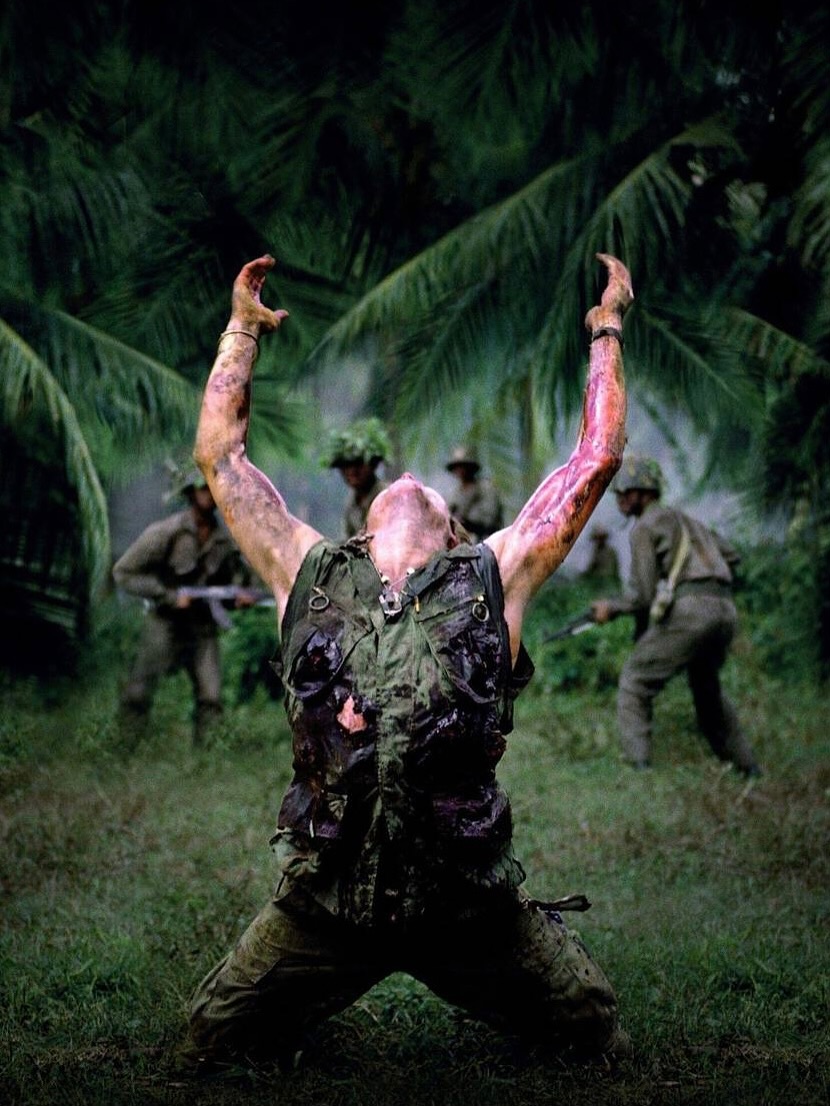
There is a mythology the U.S. built around the American War in Vietnam. It goes like this: Young idealistic soldiers were sent into an unwinnable situation by confused politicians. They came home broken and unappreciated. It was a tragedy. A mistake. A lesson learned. Notice what that story does. It centers Americans. Their trauma. Their confusion. Their homecoming. Their feelings. In this story, the Vietnamese people are a backdrop. A jungle. An obstacle. An abstraction. Three million dead Vietnamese people are the scenery for a story about American self-discovery. They made hundreds of movies about Vietnam. The Deer Hunter. Apocalypse Now. Platoon. Full Metal Jacket. Born on the Fourth of July. Hamburger Hill. Count how many of them center a Vietnamese character with a full human life, a family, a name you remember after the credits roll. They turned our genocide into their coming-of-age story. They lost the war and still managed to make themselves the main character. And then, with extraordinary arrogance, they put their soldiers' names on a wall in Washington and call it a memorial, as if the dead to be mourned were the people who flew 10,000 miles to do the killing. Where is the wall for our three million? There isn't one. Because in their telling, we were never quite real enough to mourn.
Sony Thăng tweet media
English
404
3.4K
8.6K
127.5K
Aare kurunmi kakanfo
Few days ago, some people mocked Hausa ethnic nationalism as a farce and now we can see that it is real not a farce. The reality is now staring us in the face. Hausa nationalism is back and it will get support not just in Nigeria but also in Niger republic and places like Ghana. This is beginning of the destruction of the Dan Fodio structures in the core North and this can only happen because of democracy. For the Fulani to stop this, they will need to do a coup and stop democracy, which is impossible. They will also need to radically expunge Hausa intellectuals like this who can face the camera and speak this way. Finally, they will need to keep Arewa out of Nigeria in order to prevent Hausa nationalists from getting influenced by middle belt nationalists, Niger delta nationalists and Yoruba nationalists. In conclusion, like I have always said, in Geopolitics, Ethnic brotherhood is superior to religious brotherhood. Think Yoruba First!
The Yoruba Times@TheYorubaTimes

🇳🇬🗣️ HAUSA INDIGENOUS MOVEMENT LEADER: "Hausa and Fulani Are Not One People — Fulani Took Every Political Position in the North, Yet We Are Still Being Killed by Fulani Herders and Terrorists" A leader of the Hausa Indigenous Movement has spoken out, declaring that Hausa and Fulani are not the same ethnic group. He accused the Fulani of dominating every political position in the North, leaving Hausa people with nothing, while Hausa communities continue to be killed by Fulani herders and terrorists. His remarks have reignited debate over ethnic identity and power dynamics in Northern Nigeria, challenging the long-held narrative of a monolithic "Hausa-Fulani" bloc. The statement also underscores growing tensions between the two groups amid persistent insecurity in the region.

English
25
106
274
9.2K
The Yoruba Times
The Yoruba Times@TheYorubaTimes·
🇳🇬🗣️ HAUSA INDIGENOUS MOVEMENT LEADER: "Hausa and Fulani Are Not One People — Fulani Took Every Political Position in the North, Yet We Are Still Being Killed by Fulani Herders and Terrorists" A leader of the Hausa Indigenous Movement has spoken out, declaring that Hausa and Fulani are not the same ethnic group. He accused the Fulani of dominating every political position in the North, leaving Hausa people with nothing, while Hausa communities continue to be killed by Fulani herders and terrorists. His remarks have reignited debate over ethnic identity and power dynamics in Northern Nigeria, challenging the long-held narrative of a monolithic "Hausa-Fulani" bloc. The statement also underscores growing tensions between the two groups amid persistent insecurity in the region.
English
56
212
425
29.9K