TCL
14.2K posts
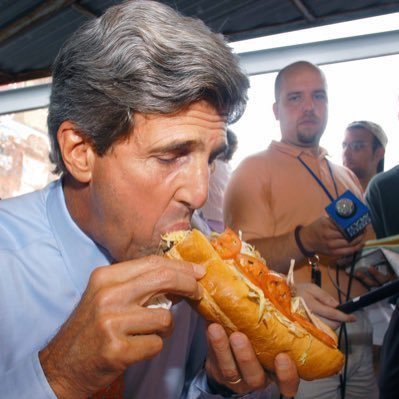
@ryangben @AliceFromQueens People lost their shit when Obama slightly bowed to some Saudi sheikh
English

@AliceFromQueens Cope what? He bent over in a picture? You are a silly lady.
English

Not to be annoying but Israel/Palestine has been on people’s radars as a major cause for decades and decades. We held debates about it at my high school.
Coddled Affluent Professional@feelsdesperate
From ‘George Floyd’ to ‘Palestine’ it’s fascinating to watch them try to cargo-cult in new ideological orthodoxies to sacralize the Omnicause. It’s going to be weird for the foreseeable future.

English
TCL retweetledi
TCL retweetledi

This is not faith, its fear 👇
Tokyo@otokyo__
Dear atheist, What if, after you die, you find out that God is real all along? You lose.
English
TCL retweetledi

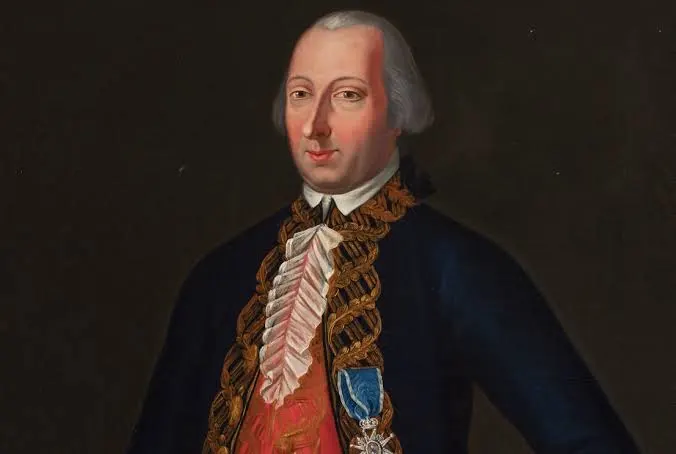
245 years ago today, a 35-year-old Spanish nobleman fired a single artillery shell that redrew the map of North America, broke British power in the Gulf of Mexico, and arguably saved the American Revolution. His name was Bernardo de Gálvez. He's not in your textbook. He should be.
When Spain entered the war against Britain in June 1779, the American cause was bleeding out. Washington's army was unpaid and shrinking. The Continental dollar was worth pennies. The British had taken Savannah and were preparing to take Charleston. France was helping, but France alone couldn't bankrupt the British Empire.
Spain could. And in New Orleans sat the man who would prove it.
Bernardo de Gálvez y Madrid was 33 years old, the governor of Spanish Louisiana, a battle-scarred career officer who had been wounded fighting Apaches in northern Mexico and Algerians in North Africa. The day he learned Spain had declared war, he didn't wait for orders from Madrid. He raised an army of Spanish regulars, Louisiana Creoles, free Black militia from New Orleans, Acadian refugees, German settlers, and Choctaw scouts, and he went on the attack.
In three months he took Manchac, Baton Rouge, and Natchez. The next year he took Mobile. The British presence on the Gulf shrank to one last fortress. Pensacola, the capital of British West Florida, defended by Major General John Campbell with 1,500 redcoats, the 3rd Waldeck Regiment of German mercenaries, loyalist battalions from Maryland and Pennsylvania, and a powerful alliance of Creek and Choctaw warriors led by the brilliant mixed-race chief Alexander McGillivray.
Gálvez arrived off Pensacola in March 1781 with 7,000 men and a fleet. The Spanish naval commander, Admiral Calbo de Irazábal, refused to enter Pensacola Bay. The entrance was narrow, raked by British guns at Fort Barrancas Coloradas, and treacherous with sandbars. So Gálvez did something insane. He boarded his own little brig, the Galveztown, hoisted his personal pennant, and sailed her into the bay alone, in full view of the British batteries, daring the Royal Navy to sink him. The British fired and missed. The Spanish fleet, shamed, followed him in. For this he was awarded the right to put the words "Yo Solo," meaning "I alone," on his coat of arms by the King of Spain.
The siege ground on for two months. Gálvez was shot in the abdomen and the finger directing artillery and refused to leave the field. The British defenses at the Queen's Redoubt, also called the Crescent, held against everything thrown at them. And then, on the morning of May 8, 1781, a Spanish howitzer crew lofted a shell over the parapet. It dropped, by pure luck or perfect skill, directly into the open powder magazine.
The explosion killed roughly 100 defenders in a single instant. Waldeck grenadiers, British regulars, loyalists, all gone. The blast tore the redoubt's wall open like paper. Spanish grenadiers and Louisiana militia poured through the breach within minutes and turned the captured British guns on the inner works. Campbell knew it was over.
The next morning, May 9, white flags went up. By May 10 the entire province of West Florida belonged to Spain. Over 1,100 British troops marched out as prisoners of war.
The strategic consequences were catastrophic for Britain. The Gulf Coast was lost. The Mississippi was a Spanish river from source to sea. Britain could no longer reinforce its southern armies by sea from the Caribbean, and the Royal Navy's Caribbean squadron had to be redeployed. Five months later, Cornwallis surrendered at Yorktown, in a siege funded in part by 500,000 silver pesos that Gálvez and the people of Havana raised in a matter of days to pay French Admiral de Grasse's fleet to come north.
Without that money, no French fleet. Without the French fleet, no Yorktown. Without Yorktown, no independence on those terms.
Gálvez was made Count of Gálvez and Viscount of Galveztown. The bay he charted in Texas still bears his name, Galveston. His portrait hangs in the United States Capitol by act of Congress. In 2014, he was made an honorary citizen of the United States, an honor given to only eight people in American history, including Lafayette, Churchill, and Mother Teresa.
He died of yellow fever in Mexico City at 40 years old, three years after the war ended.
Most Americans have never heard his name.

English
TCL retweetledi

Haven’t posted on social in quite some time but can’t stay quiet in this time of loss. I’m struggling to tell all what Bobby Cox meant to me and so many others in Braves Country.
He was the leader of men and a second father to so many Atlanta Braves thru the yrs. I’m so sad today, but as I sit here watching my two youngest boys play in their championship games on the day he passed, I can’t help but shout the same things he did from the corner of the dugout. ‘Come on kid, u got this!’
We are gonna miss him so much, but his legacy is forever cemented with the success of this franchise for the last 35+ yrs. He started it as GM, continued as manager, and passing the torch to others, the Atlanta Braves will continue to be force that Bobby Cox always wanted us to be. We love you Skipper. You were our rock. I love you more than words can express.
My boys won both of their games…..Bobby had a hand, I have no doubt!
English
How come they don’t sell batteries on the train no more / I guess because the iPod came out @heems
Rock'n Roll of All@rocknrollofall
What's the lyric that you consider was written in the most clever way?
English
TCL retweetledi
TCL retweetledi

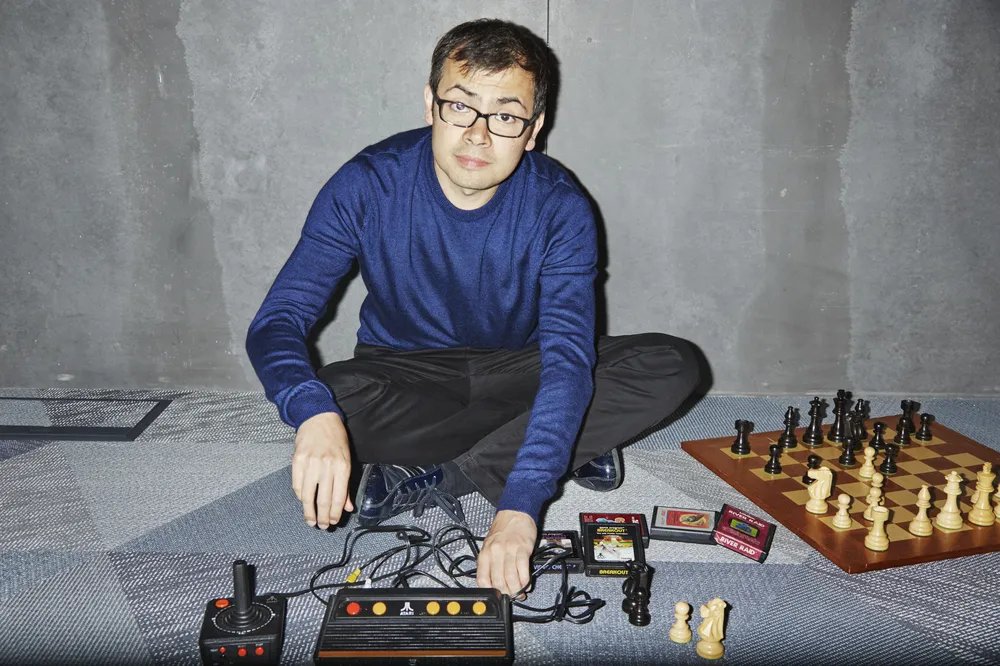
A British kid became a chess master at 13, then a bestselling video game designer at 17, then a PhD neuroscientist at 33, then the CEO of the AI lab that won the 2024 Nobel Prize in Chemistry.
People called him unfocused for twenty years. He was running the most deliberate career plan in modern science.
His name is Demis Hassabis, and the thing almost nobody understood while he was doing it was that every single step was feeding the same underlying obsession.
Here is the thread that connects the whole career, and why it matters for how anyone should think about building toward a hard goal.
The chess came first. He was born in London in 1976 and started playing at age four. By eight, he was the London champion for his age group. By thirteen, he had an international master rating that put him in the top fifty players in the world under his age bracket. He was on a track that would have made him a professional player for the rest of his life.
He walked away.
The reason he gave later, in interview after interview, is the part most people miss. He said chess forced him to think constantly about thinking itself. Every move required him to simulate what his opponent was simulating about him. He became fascinated not with winning the game, but with the process the human brain was running in order to play it. He decided chess was too small a container for the real question he wanted to answer, which was how intelligence actually works.
The video games came next. He used the money he won from chess tournaments to buy a ZX Spectrum. He taught himself to code. By seventeen, he was a lead programmer on a game called Theme Park that sold millions of copies. He could have stayed in that industry and built a career as one of the top game designers in Britain.
He walked away from that too.
He went to Cambridge, did a double first in computer science, and then made the move that looked like the strangest pivot of his life. He enrolled in a PhD in cognitive neuroscience at University College London. He was thirty. His peers from Cambridge were already running companies. He went back to graduate school to study how the human hippocampus builds memories and imagines future scenarios.
His 2007 paper on the link between memory and imagination was named one of the top ten scientific breakthroughs of the year by Science magazine. But the paper was never the point. The point was that he had spent three decades quietly building the exact combination of skills nobody else in the world had put together.
Deep intuition for how intelligent agents behave in complex systems, from a lifetime of chess. Hands-on engineering fluency, from years of shipping commercial software. And a rigorous scientific understanding of how biological brains actually produce cognition, from a PhD in neuroscience.
In 2010, he used that combination to co-found DeepMind with Shane Legg and Mustafa Suleyman. The mission statement he wrote was two sentences long and sounded absurd to most people who heard it. Solve intelligence. Then use it to solve everything else.
For the first six years, DeepMind worked almost entirely on games. Atari. StarCraft. Go. People outside the field could not understand why a lab that claimed to be building artificial general intelligence was spending hundreds of millions of dollars teaching computers to play Pong.
Hassabis kept explaining the reason in interviews and almost nobody was listening. Games were not the goal. Games were a controlled environment where you could iterate on general-purpose learning algorithms fast, measure their progress precisely, and prove to yourself that you had built something that could transfer between domains.
In 2016, AlphaGo beat Lee Sedol, the world champion at Go, in a match that had been considered decades away. And the day after that match ended, Hassabis sat down with his team lead David Silver and asked what they should do next.
The answer was the thing he had been working toward his entire life.
They turned the same deep reinforcement learning approach at a problem biology had been stuck on for fifty years. Protein folding. Given an amino acid sequence, predict the three-dimensional shape the protein would fold into. Every drug discovery effort in the world depended on it. The best computational methods could only solve a small fraction of proteins. Experimental methods took years per structure and millions of dollars per protein.
AlphaFold2 was released in 2020. Within a year, it had predicted the structure of almost every protein known to science. Two hundred million structures. Made freely available to the entire research community. More than two million researchers from a hundred and ninety countries have used it since.
In October 2024, Demis Hassabis and John Jumper were awarded the Nobel Prize in Chemistry for that work.
The line almost nobody quotes from his speeches is the one that explains the whole career. He has said, many times, that he did not build AlphaFold to solve protein folding. He built AlphaFold to prove that the approach he had been developing for thirty years could actually work on a real scientific problem. Protein folding was the demonstration. AGI was always the goal.
The chess taught him how to think about adversarial systems. The games taught him how to ship software. The neuroscience taught him how the only existing example of general intelligence actually worked. DeepMind used all three to build a method that could transfer between domains the way the human brain does. And the moment the method was ready, he pointed it at the single most important unsolved problem he could find in a domain where a breakthrough would save millions of lives.
Most people looking at his career from the outside, at any point before 2016, would have called it scattered. A chess prodigy who gave up chess. A video game designer who walked away from a gaming career. A computer scientist who detoured through neuroscience. A startup founder who burned six years on board games.
From the inside, it was the most focused career in modern science. Every step was quietly answering the same question. How does intelligence actually work, and what would it take to build one that could solve problems humans have not been able to solve alone.
The people who change a field are almost never the ones who looked focused along the way.
They are the ones who were obsessed with a single question so deep and so long that the path they took to answer it looked like chaos from the outside and like a straight line from the inside.
And they almost never get credit for the plan until decades later, when the Nobel Committee calls.

English
TCL retweetledi
@AliceFromQueens @souljagoyteller John from Cincinnati
Top Boy:Summerhouse/Top Boy (the Brit Wire)
English

@souljagoyteller Of the "quality TV" shows everyone is going to recommend--Mad Men, Breaking Bad, Americans, eg-- only the Wire lives up to its reputation.
English
@mrmikebones @SurfThrash Boy, I wore out a couple of Change Today? cassettes in 84
English