TXjedi

12.2K posts

TXjedi

TXjedi

@TXjedi

Extreme incompetence is indistinguishable from malevolence.

Texas Katılım Eylül 2008
1.1K Takip Edilen331 Takipçiler
Conner Brown
Conner Brown@BitcoinConner·
American Reserve Modernization Act You’ll be hearing a ₿it more about this soon….
English
20
36
448
26.2K
TXjedi retweetledi
Brivael
Brivael@brivael·
Hello Julia, sans aucune ironie, c'est top que tu prennes le temps de te renseigner. Mais le problème quand on lit Marx aujourd'hui, c'est qu'on prend pour acquis sa prémisse de départ, alors qu'elle a été démontée scientifiquement il y a plus de 150 ans. Toute la pensée de Marx repose sur la théorie de la valeur-travail. L'idée que la valeur d'un bien vient de la quantité de travail nécessaire pour le produire. Si tu acceptes cette prémisse, alors oui, tout son raisonnement tient. Le capitaliste "vole" la plus-value du travailleur, l'exploitation est mathématique, la révolution est inévitable. Sauf qu'en 1871, trois économistes (Menger en Autriche, Jevons en Angleterre, Walras en Suisse) découvrent indépendamment la même chose : la valeur n'est pas objective, elle est subjective et marginale. Un verre d'eau dans le désert vaut une fortune. Le même verre à côté d'une rivière ne vaut rien. Le travail incorporé est identique. Donc le travail ne détermine pas la valeur. C'est le consommateur qui valorise un bien selon son utilité marginale dans un contexte donné. Exemple concret : tu peux passer 1000 heures à tricoter un pull moche que personne ne veut. Selon Marx, ce pull a énormément de valeur (beaucoup de travail incorporé). Selon la réalité, il ne vaut rien. Parce que personne n'en veut. À l'inverse, Bernard Arnault crée des milliards de valeur non pas parce qu'il "exploite" mais parce qu'il a su anticiper et organiser des désirs humains à grande échelle. La valeur est créée par la coordination, pas extraite par le vol. Cette découverte (la révolution marginaliste) a invalidé tout l'édifice marxiste. Pas pour des raisons idéologiques, pour des raisons scientifiques. C'est pour ça que plus aucun département d'économie sérieux au monde n'enseigne Marx comme un cadre d'analyse valide. On l'enseigne en histoire de la pensée. Maintenant, le truc important. Si ton intention en lisant Marx c'est d'aider les pauvres (c'est une intention noble), alors tu vas être surprise par ce qui suit. Regarde les chiffres de la Banque mondiale. En 1820, 90% de l'humanité vivait dans l'extrême pauvreté. Aujourd'hui, moins de 9%. Cette chute historique ne s'est PAS produite dans les pays qui ont appliqué Marx. Elle s'est produite dans les pays qui ont libéralisé leur économie. Chine post-1978, Vietnam post-1986, Inde post-1991, Pologne post-1989. À chaque fois qu'un pays libéralise, des centaines de millions de gens sortent de la pauvreté en une génération. À chaque fois qu'un pays applique Marx (URSS, Cambodge, Corée du Nord, Venezuela), c'est la famine et les goulags. Ce n'est pas une opinion, c'est l'expérience la plus massive jamais menée en sciences sociales. Plusieurs milliards de cobayes humains, sur un siècle. Donc paradoxalement, si tu aimes vraiment les pauvres, la position la plus cohérente n'est pas d'être marxiste. C'est d'être pour la liberté économique. Parce que c'est empiriquement la seule chose qui a jamais sorti massivement les gens de la misère. Pour creuser, je te recommande trois lectures qui vont changer ta vision : "La Loi" de Frédéric Bastiat (court, lumineux, gratuit en ligne) "La Route de la Servitude" de Hayek "Économie en une leçon" de Henry Hazlitt Bonne lecture, et vraiment chapeau de chercher à comprendre plutôt que de rester dans tes certitudes. C'est rare.
Julia ひ@lifeimitatlife

Depuis tout à l'heure je me renseigne sur les idées de Karl Marx sincèrement je n'arrive pas à comprendre comment on peut être pour le capitalisme et même plus généralement être de droite

Français
1.5K
11.1K
48.6K
3.1M
TXjedi
TXjedi@TXjedi·
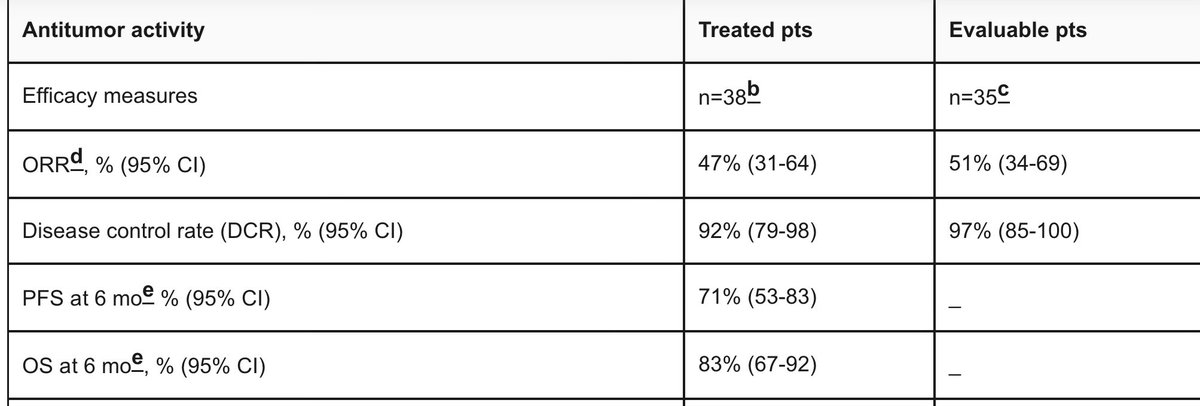
First time?
TXjedi tweet media
English
0
0
0
4
TXjedi retweetledi
Daily Wire
Daily Wire@realDailyWire·
Immediately after a gunman opened fire at the White House Correspondents' Dinner, Lincoln Project co-founder @SteveSchmidtSES blamed President Trump for "poisoning the rhetoric" in America: "He is a vile and disgusting man."
English
3.2K
3.1K
8K
717K
Ron Sovereignty Swanson⚡️🗝️
So many $STRC experts out there showing us all the ways it will fail I’m sure Saylor and Phong Le are so grateful for the napkin math, conjured during desert at IHOP Maybe all these experts should work for Strategy and point these seemingly glaring mistakes out 🤡
English
10
2
47
1.2K
TXjedi retweetledi
Tim Tebow
Tim Tebow@TimTebow·
Heaven ushered in a hero of the faith last night as my Dad was welcomed home! Many will say sorry for your loss but the truth is he’s not lost, we know exactly where he is. He’s home. Forever! I asked him last week what he looked forward to most about Heaven, and he simply said, “Jesus.” He couldn’t wait to see Jesus face to face. Praise God that his wait is over. Death has been swallowed up in victory. He’s healed and whole now. So we don’t mourn as those with no hope. See you soon Dad!
Tim Tebow tweet mediaTim Tebow tweet mediaTim Tebow tweet mediaTim Tebow tweet media
English
7.3K
9.3K
122.8K
1.9M
TXjedi
TXjedi@TXjedi·
@BoCamaro Romans 10:9 is attached to my email signature. I always hope that non believers will look it up out of curiosity.
English
0
0
1
11
🍊🍊Capt'n Cornjuice🥃🥃
Notice the date... And I am supposed to believe it was coincidence that the Pastor used Roman 10:9 to finally break my wall down and lead me Jesus? Tell me Jesus wasn't working on me a YEAR before he saved me. Tell me it wasn't already being put on my heart. Tell me he wasn't setting the stage for March 1st, 2026 for a preacher I had never met, in a church I had never attended, to look me in the eyes and ask me if I knew Jesus died for me, and then quote THIS verse.... There are no coincidences. Not with God. You couldn't write a script better than this. "That if thou shalt confess with thy mouth the Lord Jesus, and shalt believe in thine heart that God hath raised him from the dead, thou shalt be saved." 29 words.... years in the setup. 1 soul saved from Hell.
🍊🍊Capt'n Cornjuice🥃🥃@BoCamaro

The only verse of the Bible I know by heart is Roman's 10:9. "If thou shalt confess with thy mouth the lord Jesus and shalt believe in thine heart that God hath raised him from the dead, though shalt believe saved." I know this verse because on December 11th, 1999 I hit my knees in church at the alter while my mother sang a song by that title. I was about to be a father at 17 and I prayed for God to help me. 13 days later, my little girl passed away on Christmas Eve. I went from being a Christian to hating God, to simply saying there was no God, and now, 25 years later, I come back trying to find the answers. As I said, I don't belong, but I'm not where I once was.

English
14
10
218
9.7K
TXjedi retweetledi
Ryan Ray 🦏
Ryan Ray 🦏@ryanraysr·
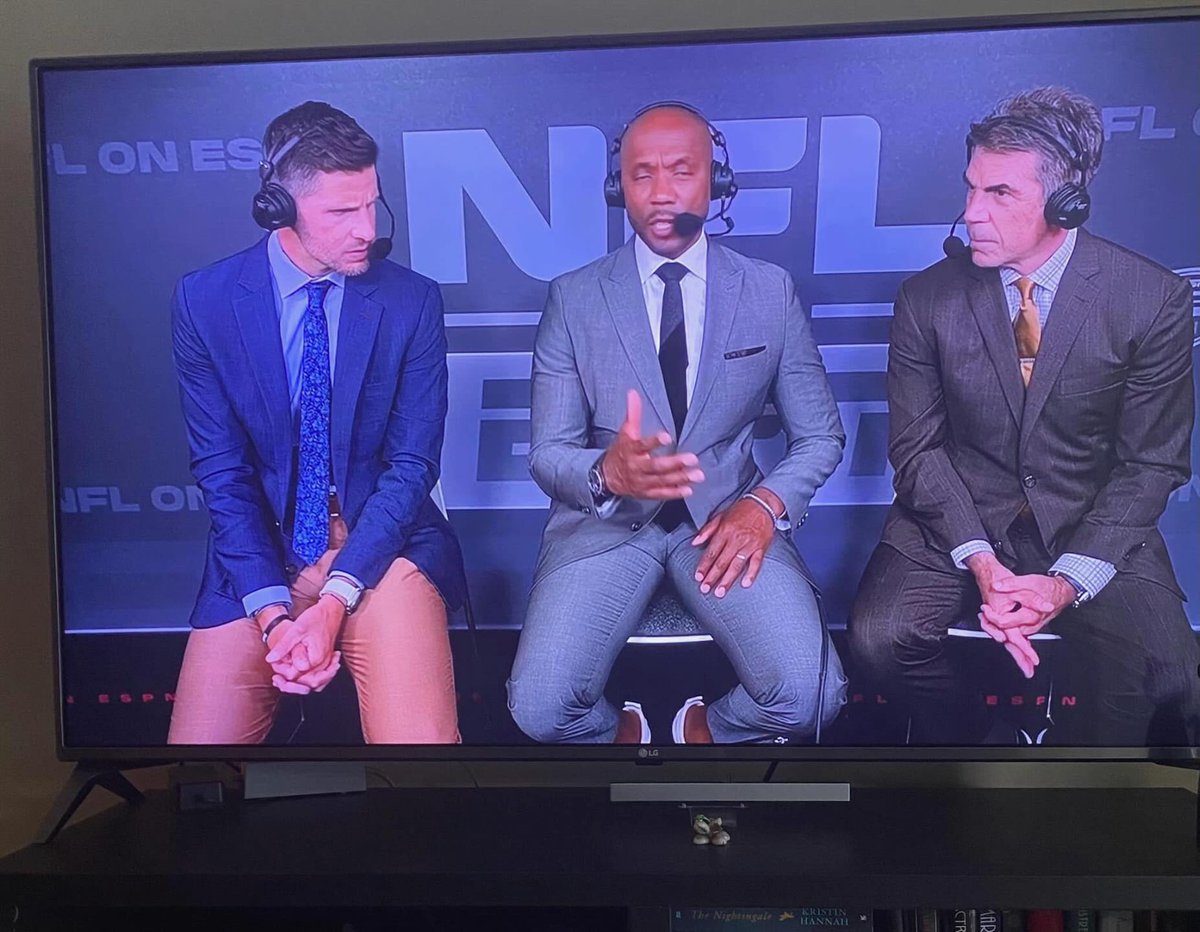
Who recommended these pants?
Ryan Ray 🦏 tweet media
English
8
11
94
7.5K
ForAmerica
ForAmerica@ForAmerica·
Man, that’s crazy. No wonder the Mets keep losing.
ForAmerica tweet media
English
556
523
6.4K
1.9M
TXjedi retweetledi
Mossad Commentary
Mossad Commentary@MOSSADil·
🎥 WATCH: A Palestinian refugee from Gaza, who arrived in the UK claiming to be fleeing a ‘genocide’, was arrested for attempted sexual assault against a 14-year-old girl. He admits: “According to Sharia law, r*ping a non-Muslim girl is legal. I only follow Allah and Sharia law” Stay connected, follow @MOSSADil.
English
105
494
1.4K
43.4K
TXjedi retweetledi
Dan Hillery
Dan Hillery@hillery_dan·
Every time I buy something other than Bitcoin I am disappointed.
English
48
21
526
13.4K
TXjedi
TXjedi@TXjedi·
@dgt10011 Instantaneous/constant payments would be like watching a faucet dripping money into your account in real time. 🤯
English
0
0
3
619
Jeff Park
Jeff Park@dgt10011·
no matter what your personal view may be on strategy, bitcoin, or corporate treausury, one thing is clear: $STRC attempting to offer semi-monthly dividend is a pretty revolutionary moment for corporate finance currently there are no issuer-originated corporate instruments that offer semi-monthly dividends. however, we know retail has been loving more frequent payments as demonstrated by the success of weekly pay suite ETFs and daily accrual money market structures. Even blackrock just shifted their money market funds GMMF and PMMF from monthly to weekly payments. thats because the premium for liquidity has never been higher. even more poetically, this is actually a win for a long-standing thesis in the broader crypto industry crypto has long imagined various "streaming payment" models where the instantaneous of payments would create a totally new concept of epochs that isn't going to limit digital money by human constraints. people are quick to think that the big revolution is 24/7 trading, but actually i believe the bigger revolution is 24/7 credit. many crypto yield products, and the basis of why tokenization can be so important (and stablecoins), sits on this obvious insight yet to be unleashed corporate bonds generally pay semi-annually. the logistics of 10b-17 aside, that means the difference in actual cash on cash return for an instrument that pays 10% semi-annually vs semi-monthly is about 25bps in effective yield. that is a big enough spread that can compound materially over 5+ years where investors were due compensation for the risk and the reason is simple. its because interest payments represents the literal physics of money- specifically the moment money's potential energy becomes kinetic energy. there is simply no reason for digital money to have ex div effects that distort liquidity discretely if the administration of such a system can plan for it. that is why what $STRC is doing matters: it sets a new standard for corporates to do better, for the benefits of their investors to achieve higher liquidity with less cyclicality one day we may yet again move from weekly to daily payments, and from daily to hourly, to instantaneous. the internet doesn't care whether the sun is rising or setting, nor will the ai agents care either. excited to root for strategy to lead the way to bridge this dream of crypto onto the traditional capital markets- if volatility is vitality, then liquidity is liberty
Michael Saylor@saylor

Strategy is proposing to pay semi-monthly dividends on $STRC, instead of monthly. No change to the annual dividend obligations or dividend rate. These proposed changes are intended to stabilize price, dampen cyclicality, drive liquidity, and grow demand.


English
64
154
1.6K
128.1K
TXjedi retweetledi
Jeff Walton
Jeff Walton@PunterJeff·
Digital Credit is way bigger than just markets It changes how people use money
English
25
33
366
17.5K
TXjedi retweetledi
Eyal Yakoby
Eyal Yakoby@EYakoby·
20 people were invited to see a video that exposes Palestinian propaganda. Every single one had the same response: “I feel like a moron.”
English
1.2K
11.2K
41.9K
1.3M
TXjedi retweetledi
Flying Raven ⚡️🇺🇸
Flying Raven ⚡️🇺🇸@OffshoreHODL·
A thought on Michael @saylor, $MSTR, Bitcoin, and stewardship: One way to understand Saylor’s role is through the idea of stewardship. He was not entrusted with everything all at once. At the start, MicroStrategy made an initial Bitcoin allocation that, at the time, looked bold but was still limited compared to what would come later. That first move was a test of stewardship. Could he take a scarce, valuable asset, hold conviction through volatility, communicate clearly, and manage it faithfully over time? He did. And because he did, he was gradually trusted with more. That is a pattern we see everywhere in life: prove faithful with a little, and over time you may be trusted with much more. In that sense, the Bitcoin network and the capital markets have “voted” on Saylor’s trustworthiness. Not because he is perfect. Not because he is beyond criticism. But because he demonstrated a rare combination of conviction, consistency, transparency, and endurance. He took responsibility for a small treasury position. He held through chaos. He kept explaining the thesis. He kept building. And now he is stewarding a much larger pool of capital. That is not just a financial story. It is a moral one. Most people think constantly about market risk. Very few think deeply enough about human risk. Human risk is the risk that: * leaders abuse power * central bankers debase currency * politicians overspend * institutions change the rules * incentives become corrupt * savers are diluted slowly and quietly That is the hidden risk embedded in fiat systems. Bitcoin was built to reduce exactly that kind of risk. It does not depend on the wisdom of a small group of people. It does not ask us to trust a committee. It does not rely on the moral integrity of politicians. It replaces human discretion with rules: fixed supply, transparent ledger, predictable issuance, decentralized verification. In other words, Bitcoin is not merely an asset. It is a monetary network designed to reduce human risk. That is why Saylor’s role matters. He is not just buying Bitcoin. He is helping build a bridge for others into a system where their savings are less exposed to corruption, manipulation, and human failure. That is a profound form of stewardship. He is taking the trust the market gave him and using it to expand access to a more reliable store of value. A store of value not based on promises. Not based on politics. Not based on money printing. Not based on the character of central planners. But based on rules. And I think that is where many people misunderstand what is happening. They think the story is: “Saylor took a big risk on Bitcoin.” The deeper story may be: “Saylor proved he could steward scarce capital wisely, and in response, more capital flowed to him so he could help scale a monetary system that asks less of flawed human beings.” That is why his work resonates with so many people. He is not merely trying to outperform. He is trying to re-architect trust. He is helping build a world where people do not have to place so much blind faith in governments, bureaucrats, or monetary authorities just to preserve the value of their labor. And that matters because human risk is everywhere, and most of it is badly underestimated. People spend years trying to measure volatility while ignoring corruption. They obsess over quarterly fluctuations while ignoring currency debasement. They fear price movement while trusting broken institutions. Bitcoin flips that equation. It says the bigger danger is not short-term volatility. The bigger danger is long-term exposure to human discretion inside the money itself. Saylor was trusted with a little, proved to be a good steward, and is now trusted with much more. But the point is bigger than Saylor. The point is that capital is flowing toward people and systems that can reduce human risk. And Bitcoin may be the most important system ever built for that purpose.
English
74
165
842
132.4K