Tahreem_Syed
5.6K posts

@Tehmii_Syed
Associate Director at CISS AJK|Lecturer at AJK University|MPhil in Peace & Conflict Studies from National Defence University, Islamabad


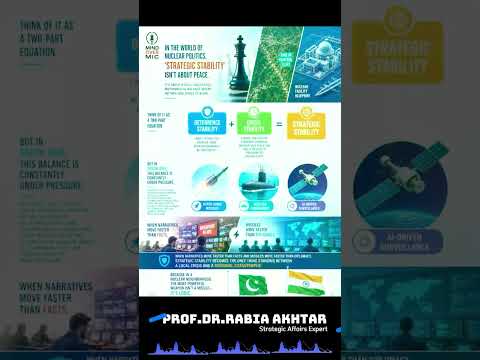
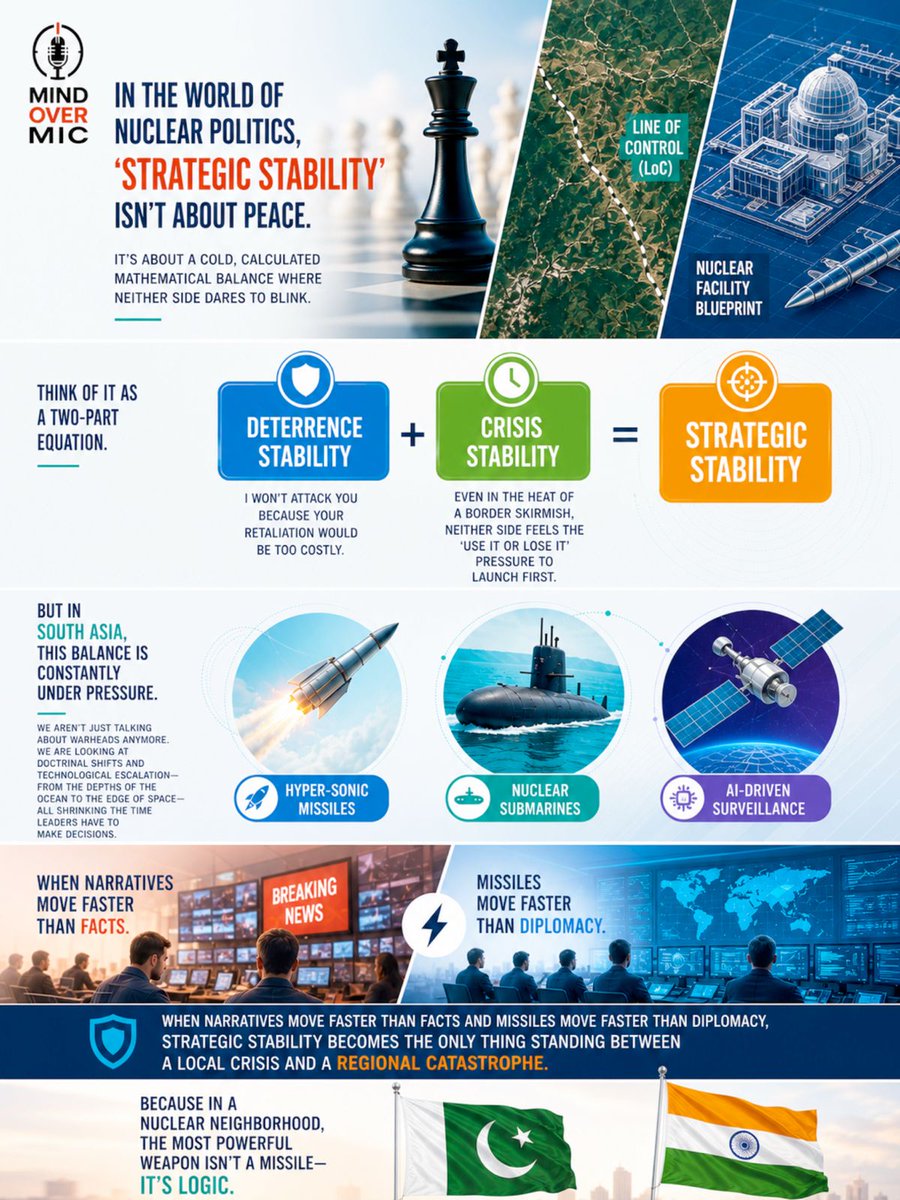
Had the opportunity to speak at a recent webinar hosted by @mahwashajaz_ on the evolving dynamics of strategic stability in South Asia, drawing on lessons from the May 2025 crisis. My central argument was simple: escalation in our region is no longer linear. It is simultaneous: military, technological, and narrative all at once. This compresses decision-making, increases ambiguity, and makes crisis management far more fragile than before. I also emphasized that deterrence today is not just about capability, but about communication and interpretability. If signals are misunderstood in a fast-moving, disinformation-heavy environment, the risks multiply. The takeaway: South Asia is entering a phase where managing escalation may matter even more than deterring it. youtu.be/134sljHXQIk?si…


1. India’s Agni-V (5,000–8,000 km range) already put all of Asia and parts of Europe within her reach. The Agni-VI is designed to be India’s first true ICBM, featuring Multiple Independently Targetable Re-entry Vehicles (MIRVs) and a range potentially exceeding 12,000 km, creating a Strategic Ripple in the region. As DRDO nears the Agni-VI milestone, a "capability gap," has been emerged. Ms. Tulsi should now question India about the threat perception and logic to acquire ICBMs. Does she ever heard about “Action-Reaction Model” of arms race? If the U.S. is viewing South Asian nuclear developments through a Global Threat lens rather than a Regional (India-Pakistan) Conflict lens, then it is the right time not to keep a blind eye regarding India’s capabilities and intent. 2.US Deputy National Security Adviser Jon Finer’s asserted once that Pakistan’s long-range missile programme is “fundamentally focused on us,” is surely a misleading statement intended on diverting attention from India’s ICBM progam. However, now the time is ripe that he asked India regarding her preparedness to launch Agni VI with a reach of 12000. Is this an attempt to fill the gap between doctrine and capabilities? If so then the West and the US need to recalibrate their preparedness. 3.Vipin Narang and Pranay Vaddi in their article How to Survive the New Nuclear Age: National Security in a World of Proliferating Risks and Eroding Constraints, published in Foreign Affairs 2025, wrote that the U.S. has entered a "third nuclear age" characterized by a "nuclear hurricane" of proliferating risks, necessitating a shift toward modernized, flexible, and counterforce-capable deterrence. The authors identify South Asia as a critical “nuclear tinderbox,” warning that India's potential adoption of a counterforce strategy against Pakistan could lead to rapid, uncontrolled nuclear escalation. The DRDO’s latest progress on the Agni-VI serves as a practical manifestation of the “eroding constraints” and “proliferating risks” described by Narang and Vaddi. India’s Agni VI will make the predictions of subject article true, especially of “Category 5 hurricane” of geopolitical risk. #DRDO #Agni #India #Modi #Pakistan @RadioactiveFrnd @ciss_ajk @CISSS_Karachi @CISS_Islamabad


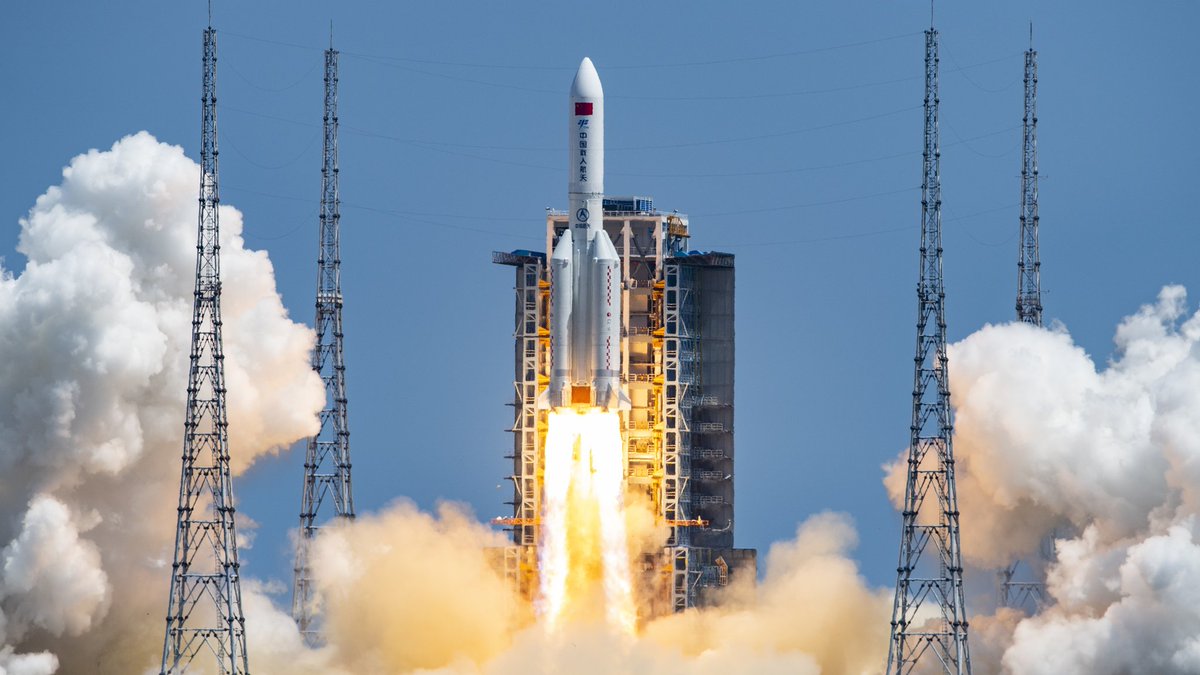
BREAKING: China is launching group of low-Earth orbit (LEO) satellites for China's state-owned satellite internet network,rival to Starlink.

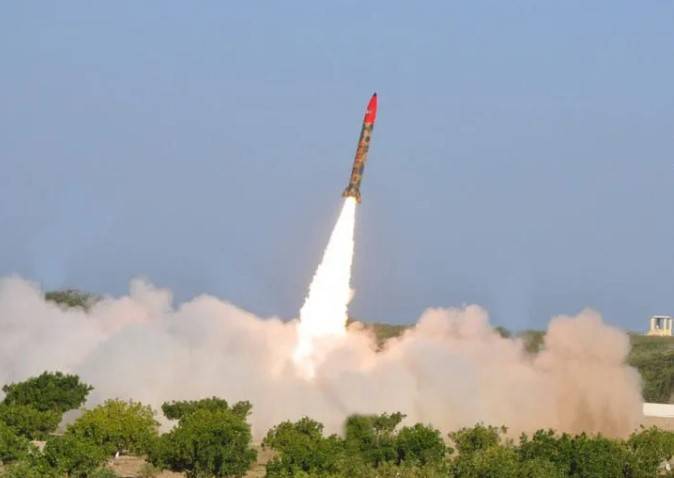
#Abdali roars through Exercise “Indus” - 450 km of precision, proven readiness, and a clear signal of credible deterrence under real-time conditions. #Pakistan #Defence #MissileTest

India’s ICBM Program: The Threat the West Refuses to See DNI Tulsi Gabbard recently warned Congress that Pakistan, whose longest-range tested missile, the #Shaheen-III, reaches only 2,750 km,“potentially could include #ICBMs in its arsenal” threatening the US homeland. A speculative projection about a missile that does not even exist. Meanwhile, India’s Agni-V (5,000–8,000 km) is operational and MIRVed. On April 30, 2026, DRDO confirmed full readiness for the #Agni-VI — a four-stage ICBM designed for 10,000–12,000 km range with #MIRV capability. Its design, completed in 2025, explicitly incorporates features to penetrate US #THAAD, Russia’s S-500, and China’s HQ-19. India is also developing conventional Agni-V variants with bunker-buster #warheads targeting missile silos and command centers. This is counterforce language, not minimum deterrence. A 12,000 km missile is excessive for China and irrelevant for Pakistan. Its range envelope covers Washington, New York, London, and Moscow. Mearsheimer’s offensive realism explains the structural reality Washington ignores: in anarchy, capabilities matter more than intentions. Today’s partner is tomorrow’s competitor. A MIRVed, THAAD-penetrating ICBM is a structural threat to the American homeland regardless of who builds it. Yet Washington sanctioned Pakistan’s National Development Complex, #NDC over solid-fuel motors while granting India an #NSG waiver, #MTCR membership, and space cooperation — materially accelerating the very ICBM trajectory it now ignores. The category error is clear: flagging a missile that doesn’t exist while subsidizing one that does. Mearsheimer would call this a tragedy of great power politics. @RadioactiveFrnd @zafarwafa1977 @AsmaKhawaja5 #India #ICBM #AgniVI #NuclearProliferation #DoubleStandards #TulsiGabbard #Pakistan #SouthAsia #OffensiveRealism #Mearsheimer #StrategicStability #NuclearDeterrence #DRDO #MissileDefense #THAAD #MIRV #NonProliferation #NPT #USIndiaDeal #GreatPowerPolitics m.economictimes.com/news/defence/d…


3/7 The critical questions are: 📍Who is Agni-VI threatening? China and Pakistan are already covered by their existing arsenal. #SouthAsia #NuclearPolicy

#Agni-VI reflects more than technological advancement it signals a shift in #strategic ambition. When #deterrence moves beyond regional requirements toward intercontinental reach, questions of intent, stability and #militarization become unavoidable. @AsmaKhawaja5 @RadioactiveFrnd @CISS_Islamabad @CISSS_Karachi @bttn_quetta @UN @ForeignOfficePk @zahirhkazmi #AgniVI #StrategicStability #NuclearDeterrence #Geopolitics #GlobalSecurity

🛡️ DRDO Chairman Kamat confirmed: India is “ready” for Agni-VI ICBM development witch’s a nuclear-capable beast with speculated 10-12,000 km range & MIRV warheads. Enough to reach Europe, US & Canada. Govt nod pending. Who is this really for? Pakistan & China are already covered by existing arsenal. In a nuclear South Asia, after Op Sindoor’s boldness, a Hindutva-driven push for global strike capability? The West watching this “minimum deterrence” stretch? #AgniVI #StrategicShift m.economictimes.com/news/defence/d… @RadioactiveFrnd @orfonline @EconomicTimes @bttn_quetta @ciss_ajk @ciss_ajk @dratiaalikazmi @arooj_kaz

The Indian Agni VI system with a range of 12000 kms is a threat to all major powers, China, Russia and even the United States. The development of such a destructive system is the act of an irresponsible and reckless state, that wants to pose a challenge to the rest of the world.